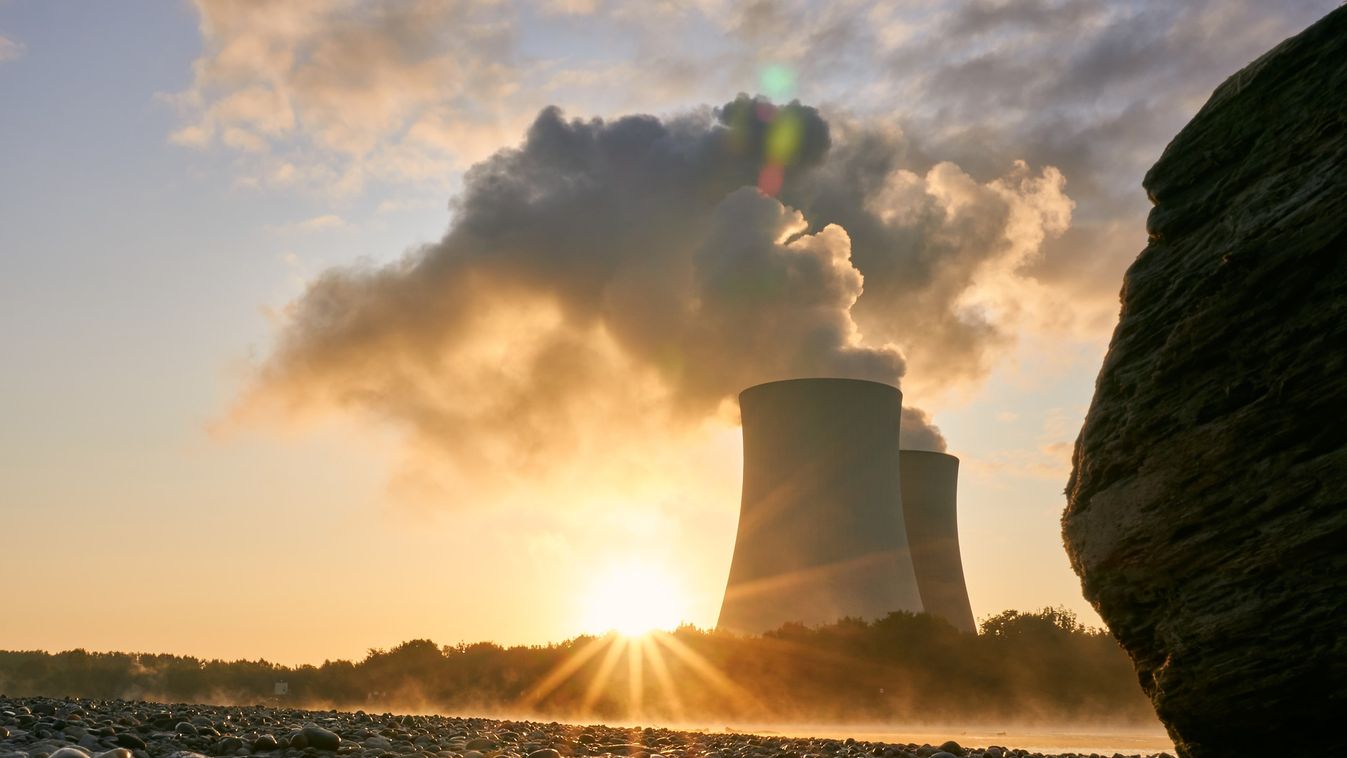
France and nuclear power, an opportunity for Europe?

Itt állíthatja be, hogy a Google keresőben elsők között legyen a Magyar Nemzet

Central Europe has chosen nuclear energy. A strategic decision that brings it closer to France

Forrás: VisegradPost2021. 12. 29. 14:52
France and nuclear power, an opportunity for Europe?
VéleményhírlevélJobban mondva - heti véleményhírlevél - ahol a hét kiemelt témáihoz fűzött személyes gondolatok összeérnek, részletek itt.

The April 2022 presidential elections are also to be taken into account: all the right-wing primary candidates, as well as Marine le Pen and Éric Zemmour, have aspirations to relaunch the construction of nuclear reactors.

European expectations in terms of nuclear energy

Emmanuel Macron's statement follows on from the common position published earlier this autumn by many European countries. The ministers of ten EU member states published in October a collective column entitled "We Europeans need nuclear power!" This timely tribune was published as Europe faced soaring gas prices. Post-electoral hesitations were weakening Germany, where negotiations for a new coalition were taking place. Indeed the Federal Republic assumes a stubborn desire to phase out nuclear power. However, the signatory countries of this common position surround the Germanic space in an interesting coalition. On one side there is France, one of the world-class players in nuclear energy; on the other, the four Visegrád countries: Poland, Hungary, Czechia, and Slovakia, extended to the east by extra-Schengen states (Bulgaria, Romania) and to the integrated western Balkans (Croatia, Slovenia), with also a Baltic partner, Finland.

The Finnish case deserves a closer look. This prosperous EU country, integrated in 1995 with Sweden and Austria to form the EU-15, is at the forefront of pro-nuclear lobbying. Five political parties, including environmentalists, form the ruling coalition. Until now, the Greens had ruled out considering nuclear energy as sustainable, which is precisely the requirement stated in the joint declaration. An updating process therefore seems to be underway, even in the far north where environmental sensitivity represents a considerable political force. Paradoxically, the dogma of entropic global warming supports the nuclear lobby's claims of "technological neutrality" regarding carbon emissions.

A new balance of power in the EU

Transnational cooperations vary depending on the subject. We know how much migration issues divide the EU's East and West. In regard to nuclear power, there is a constellation of countries facing Germany and some of its neighbours (Austria, Denmark, Belgium, Luxembourg). In the Spring, Viktor Orbán and Emmanuel Macron were able to show their solidarity on the nuclear issue, at the European summit on 25 March. A convergence of views which adds to the shared ambition to mature a European defence policy. Facing them, Germany intends to advance its pawns in the wake of Angela Merkel's 2011 early decision to phase out nuclear power. This orientation, displayed after the Fukushima accident was partly a matter of political communication in order to pull the rug out from under the environmentalists. Germany now wants to extend its choices and their consequences to Europe. The energy debate promises to be heated as winter gets colder and the price of energy higher.

European treaties allow each country to decide on its energy mix, leaving some limited room for manoeuvre to fulfil the dual objective of abundant and carbon-free energy. In the opinion of the ten European government signatories, a low-carbon future requires full recognition of nuclear power, alongside gas in a complementary fashion. In pointing out that half of the carbon-free electricity in Europe already comes from nuclear power, the signatories insist on its unavoidable nature. The aim is to obtain a neutral status for nuclear energy, as that of gas, and thus include nuclear in the European framework for sustainable financing. This is, in a nutshell, the whole issue of European taxonomy which is the subject of lobbying at the highest European level. The fight is more uncertain than ever, and the European Commission must make its decision by the end of 2021.

The absurdity of the situation should be well understood: different sources of energy are left to virtuous rivalry. Several years or decades of service and regular innovations allow investors to provide informed support to projects of their choice. But everything, in the end, seems to hang on the green taxonomy that the European Commission is slow to finalise.

Komment

Összesen 0 komment

A kommentek nem szerkesztett tartalmak, tartalmuk a szerzőjük álláspontját tükrözi. Mielőtt hozzászólna, kérjük, olvassa el a kommentszabályzatot.


Jelenleg nincsenek kommentek.

Szóljon hozzá!

Jelenleg csak a hozzászólások egy kis részét látja. Hozzászóláshoz és a további kommentek megtekintéséhez lépjen be, vagy regisztráljon!

Ne maradjon le a Magyar Nemzet legjobb írásairól, olvassa őket minden nap!

Google News
A legfrissebb hírekért kövess minket az Magyar Nemzet Google News oldalán is!

Portfóliónk minőségi tartalmat jelent minden olvasó számára. Egyedülálló elérést, országos lefedettséget és változatos megjelenési lehetőséget biztosít. Folyamatosan keressük az új irányokat és fejlődési lehetőségeket. Ez jövőnk záloga.