
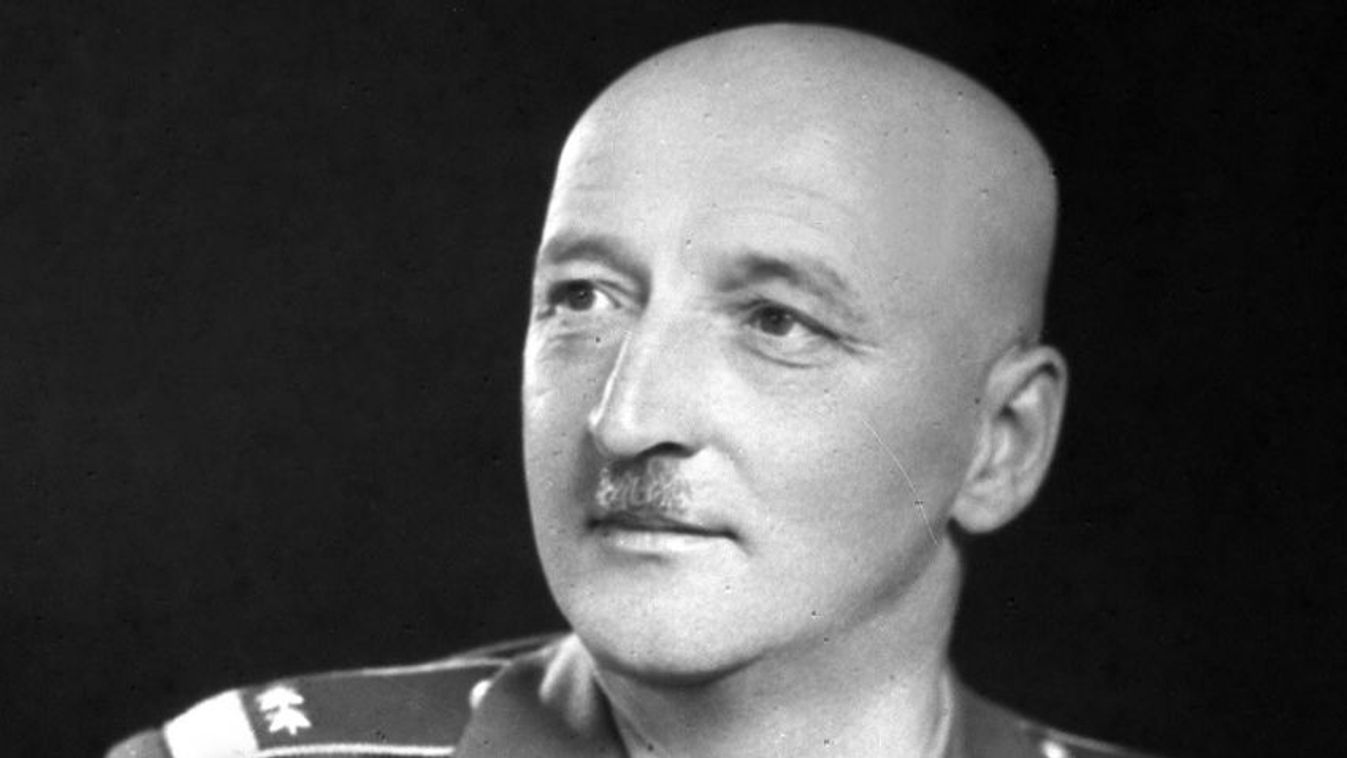

Risking his life, the good-willed commander of the Transylvanian labor draft battalion dodged an order to send a train car filled with Jewish people to the capital by sending one filled with timber instead. He was arrested on February 27, 1945 by the Arrow Cross Party and sent to prison in Sopronkőhida on March 4, but escaped already on March 29. He went on foot to the capital controlled by the Soviet army. On the 19th of April, he went to the Ministry of Defense to apply for service. He received a warm welcome, and was nominated as a leader of the supplementary military command in Mátészalka.
After a few years, he became the military commander of Nyíregyháza and he was promoted to colonel in the summer of 1947. The seemingly promising status only lasted until the end of November 1949, however. Suddenly, Reviczky, who was 53 years old at the time, was forced to retire. He received his retirement pension for just a short period when the pension payments were abruptly terminated on March 1, 1952. The colonel tried to appeal, but his claims were denied.
The period between September 1953 and October 1956 was a particularly excruciating time for Reviczky who suffered from heart-disease as he had to work in the cellar of the Fuel Trading Company (Tüker). His son, Adam Reviczky wrote, “he carried every basket and bag up the steep stairs, often voluntarily because he believed that everybody was more dejected than he.”
Imre Reviczky never hesitated to risk his life for others, but nobody was willing to take a stand for him. Just one person was interested; they contacted Mária Ember, author of the book, Hairpin Bend (Hajtűkanyar) published in 1974 on the
1944 tragedies of the Hungarian rural Jews. This individual hoped that the author, Mária Ember would give a voice to Reviczky’s story.
Adam Reviczky wrote the following: “Mária Ember, the chronicler of this dangerous era, was once contacted and told that a former colonel was working in the Tüker cellar in Vörösmarty street, measuring and delivering coal; a colonel who saved many lives in 1943 and 1944. A fascinating topic for a journalist. But she didn’t believe it. She couldn’t imagine that a man who resisted the order of the fascist regime during the catastrophes of World War II, was working in a cellar – and she didn’t even go to check it out. She is very regretful of her mistake.”
























Szóljon hozzá!
Jelenleg csak a hozzászólások egy kis részét látja. Hozzászóláshoz és a további kommentek megtekintéséhez lépjen be, vagy regisztráljon!