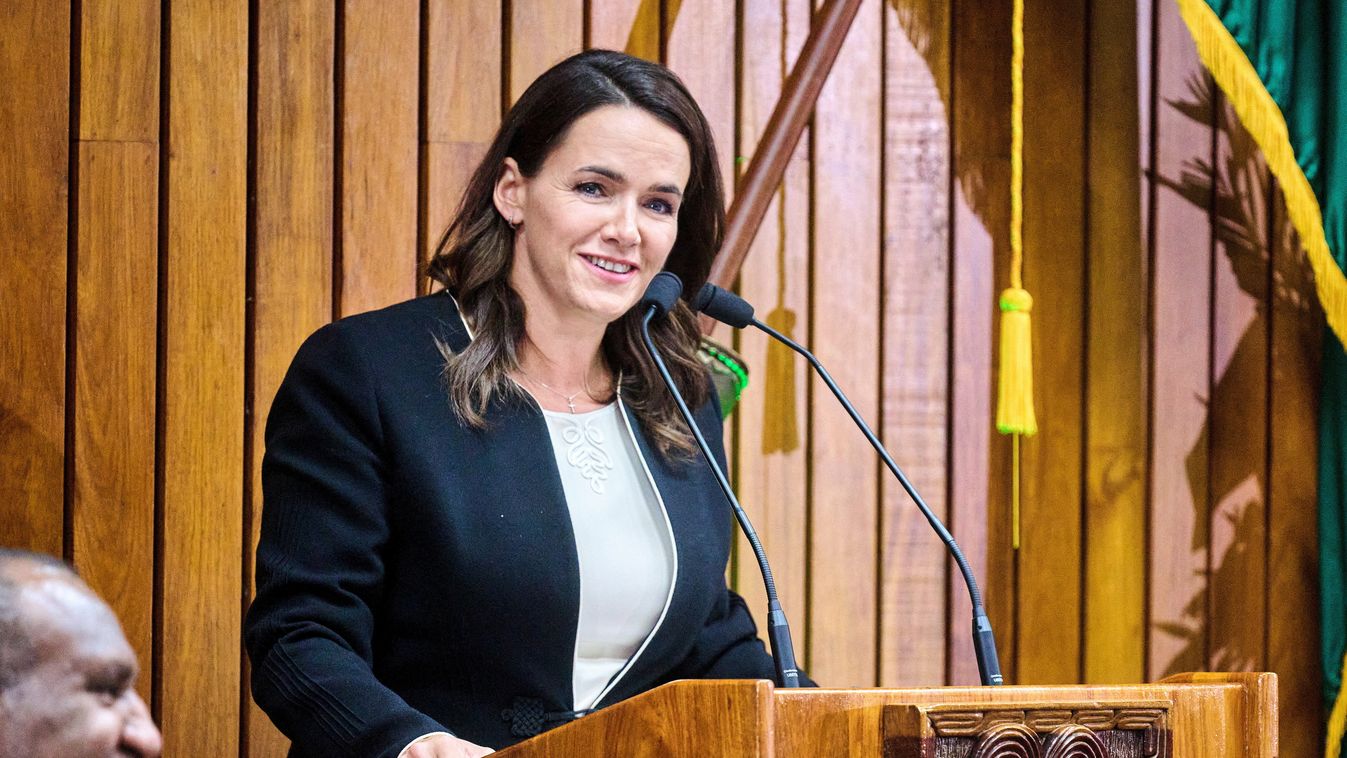
In the interview, Hungary's president described herself as a mother, a wife, a Hungarian and a Christian. "These things define me, I can't put them aside. As one of fewer than twenty female heads of state in the world, I want to show what it's like to be a conservative female leader," she said.
Regarding the anniversary of the 1956 revolution, Novak stressed that Hungarians are freedom fighters. "Hungary is historically a Christian country, as a Calvinist I would also say that we are predestined for Christianity. Our culture and holidays are Christian, but of course everyone can freely practice their faith, there is freedom of religion, Hungary's head of state added.
Many people in the West think that tolerance means giving up your national and Christian identity,
she added.
Regarding the support for families and the Hungarian president's perception of the role of women, the author of the article emphasizes that Katalin Novak wants families and women to have real freedom of choice, going completely against the outlook on the world promoted by The New York Times or The Guardian.
The future belongs to families
According to Hungary's president, young people would like to have children, but in the end they do not have as many children as they would like to. "My job as a conservative leader is to do everything I can to ensure that families have as many children as they want. I see motherhood as a privilege. You can give it up, but I want to show that it is a privilege. It is up to governments to ensure that women can choose both motherhood and a career. This is the real freedom of choice."
It is important to address the demographic crisis, she stressed.
The article highlights that Katalin Novak, while she was minister for families, did a lot to ensure that state spending on family policy reached six percent of gross domestic product (GDP) and to increase fertility rate. In addition to presenting Hungary's family policy measures, she also touched on the issue of immigration, pointing out that the Hungarian people do not regard mass immigration as a solution to the demographic problem. The author notes that Hungary is often criticized for its migration policy, which is very similar to Australia's migration policy.