PM Orban: "If There Is a Guarantee That Elections in Hungary Will Be Democratic, It Is Myself" + Video

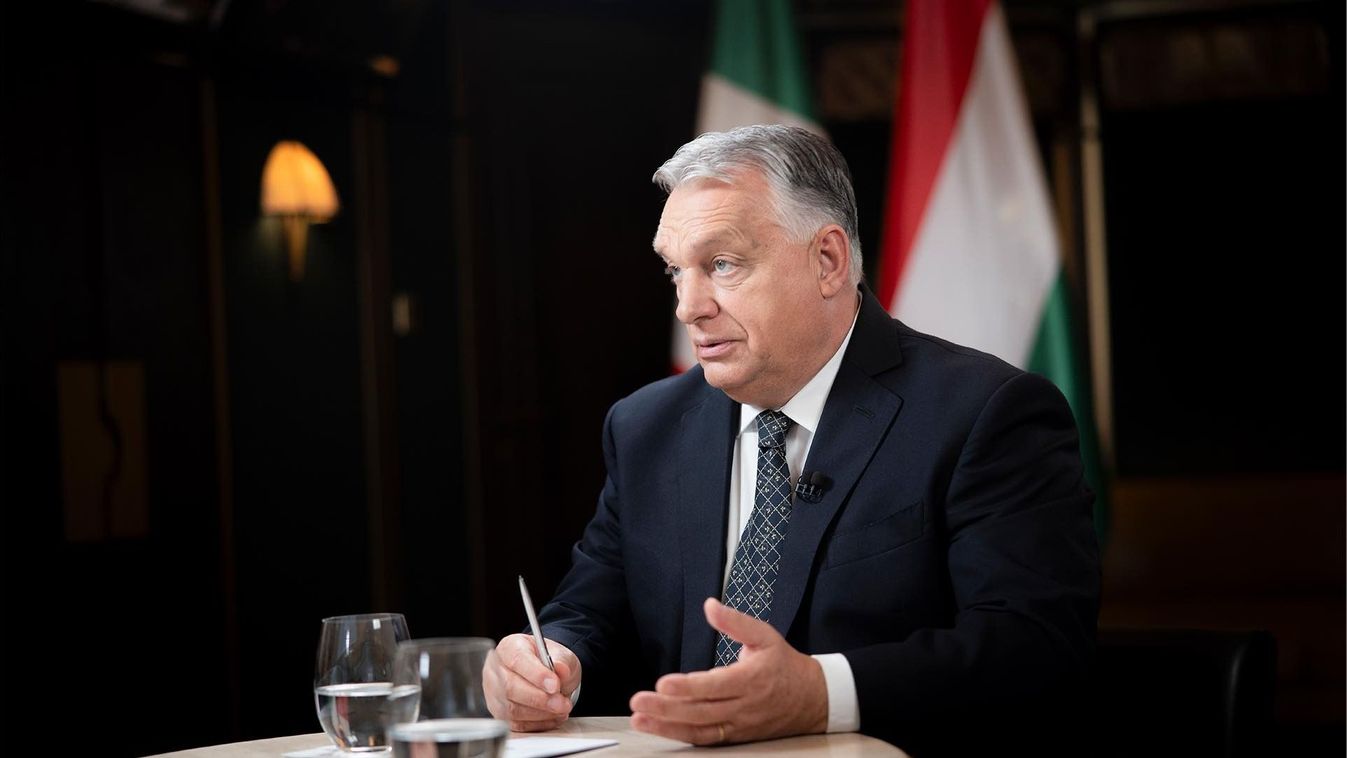
In an interview with the talk show platform Ultrahang, Prime Minister Viktor Orban first spoke about the visit of US Vice President J. D. Vance to Hungary. The conversation also covered the election campaign, coalition governance, and peace. Rising fuel prices worldwide were also discussed. Viktor Orban responded to some rumors about possible personnel changes following the elections.

2026. 04. 08. 13:29
VéleményhírlevélJobban mondva - heti véleményhírlevél - ahol a hét kiemelt témáihoz fűzött személyes gondolatok összeérnek, részletek itt.

“J. D. Vance is a man who comes from a truly difficult background, a Christian guided by his faith,” Viktor Orban told Ultrahang at the beginning of the interview when host Tamas Kiraly asked the prime minister about the US vice president as a person.

They also addressed a certain misunderstood hand gesture at the press conference that was picked up by the left-wing media. According to opposition outlets, when J. D. Vance spoke about Fidesz winning on Sunday, the prime minister signaled with that gesture that Fidesz might be losing. However, Viktor Orban revealed that the gesture simply meant the election is not over yet. As he said, the battle is still open. At the same time, the prime minister feels the race is now easier than it was a month ago.

We have just gained momentum, we are a governing party,

he added. “This is an eternal dilemma: we have to govern while campaigning, while our opponents have nothing to do. The governing parties gain momentum at the end. The starting pistol was fired on March 15,” Viktor Orban pointed out.

“I meet people on the streets, and there are are more and more of us,” the prime minister said in response to the growing number of so-called “self-incriminating” stories. He argued that these confessions “actually generate Fidesz voters, as state institutions, such as police, intelligence, military, have their own internal order, and whoever violates this turns against the uniformed ranks themselves. Moreover, they do not see the full picture and do not know what they are talking about,” he noted.

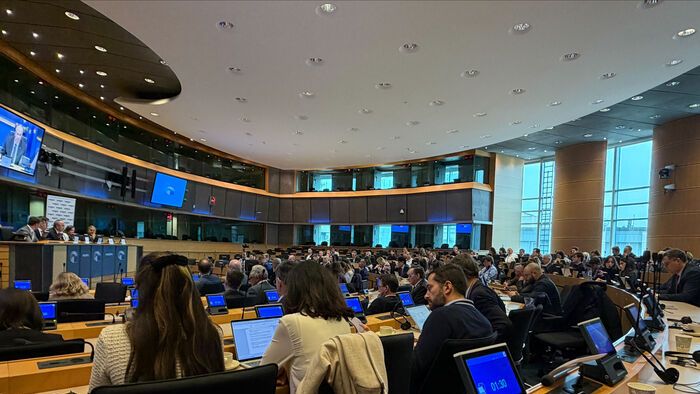
Orbán Viktor miniszterelnök Brüsszelben
Photo: AFP/Magali Cohen/Hans Lucas

“We don’t yet know what impact the fact that the virtual space is so deeply embedded in people’s lives and so deeply integrated into the campaign will have,” the prime minister said, adding that politics is a field where experience matters, and this is the first such experience in this regard.

Captains do not organize missions. Anyone who claims that is a fool,

 the prime minister stated in response to claims by Captain Szilveszter Palinkas regarding the Chad mission.

Viktor Orban discussed the peace summit with Putin

They also touched on the conversation leaked by Bloomberg, in which the prime minister spoke with Vladimir Putin. Viktor Orban said he discussed the peace summit with Russia's president. As he noted, while he called him a friend, he did not mean it in the Hungarian sense, as such relationships are very rare in politics. Their relationship, however, is transparent. He recalled that in 2009 they agreed to leave historical grievances behind and cooperate pragmatically in the future. He emphasized that there has never been a single case where either side failed to fulfill their agreements.

During Angela Merkel’s time, German–Russian relations were ahead of Hungarian–Russian relations; this has only changed since the outbreak of the war. Since then, the Germans have aligned themselves with Biden’s America, among the pro-war camp, Viktor Orban pointed out.

The issue of Nord Stream was discussed several times on the agenda of the European Council, with the Poles continuously attacking the Germans over Nord Stream 2. But no one thought anyone would have the courage to attack the pipeline. The Ukrainians, however, did, the prime minister said.

Coalition governance

“I have grown too old for coalition governance,” the prime minister said, noting that governing in coalition between 1998 and 2002 was difficult. “By the time I became prime minister, I already had a stable family. Family provides the protective shell that helps in times of trouble. Just as some friendships fade as life changes,” Viktor Orban said about his personal relationships after becoming prime minister.

“You cannot work if everyone relates to you through power. I ask everyone to relate to me based on the work. Now there is work to be done so let’s leave the nonsense aside,” he said, adding that “when we get down to work, when something has to be figured out or thought through, positions disappear. We sit at the same table so that everyone’s ideas can emerge, but that cannot be ordered.”
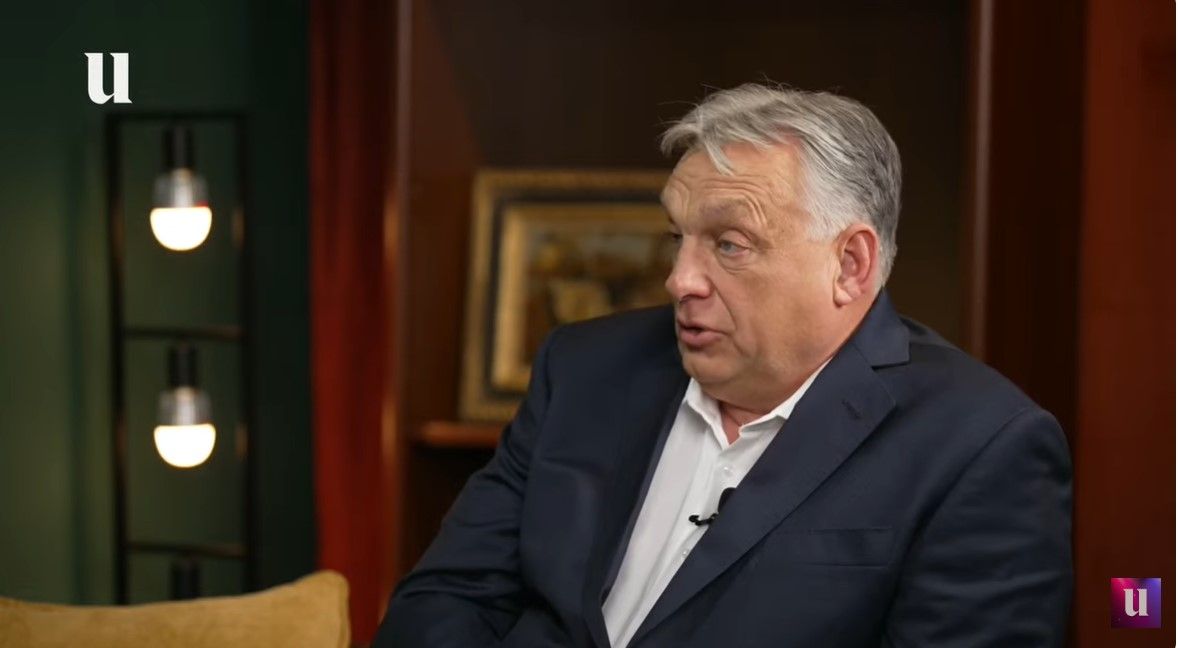
 

As he said, it is important to create a strong intellectual environment at the workplace, something he is good at, and there are no issues at home either. He does not like to take work home, but sometimes it is necessary, for example, when writing speeches. He explained his process: he writes down ideas, sends them to his staff to turn into a speech, and then finalizes them himself.

In response to a question, he also revealed that 

if there were coalition pressure on Fidesz after April 12, he would sit down with the leadership team to jointly decide whether to undertake governance in that form.

Returning to foreign policy, they also discussed Donald Trump’s threat toward Iran. The question was raised why Fidesz campaigns on being pro-peace when its two largest allies have launched wars.

Viktor Orban recalled that the US president has done everything possible to end the Russia–Ukraine war. The fact that Brussels refuses to end the war is not Trump’s fault. In the case of Iran, history has not yet delivered its verdict: is this a war for which America bears responsibility, or a step that could later lay the groundwork for a more lasting peace in the Middle East? “This could still turn out either way,” the prime minister noted.

It is not the case that I take a position and someone else tells me how it is. We conduct a foreign policy in which we avoid either-or situations. The future of NATO is a question independent of Iran. I discussed this extensively with the US vice president,

the prime minister said. Regarding Mark Rutte, he added that he has an exceptionally good relationship with him, as they have been able to resolve all previous conflicts.

NATO's was also discussed

The key question is whether NATO will remain a military alliance, or whether the United States will instead maintain bilateral relationships with the current member states, Viktor Orban pointed out. He added: “I am a cautious risk-taker. What exists in NATO today is good for us, but if NATO were to be replaced by a system of national agreements, we could even come out better, but it is not worth taking the risk.”

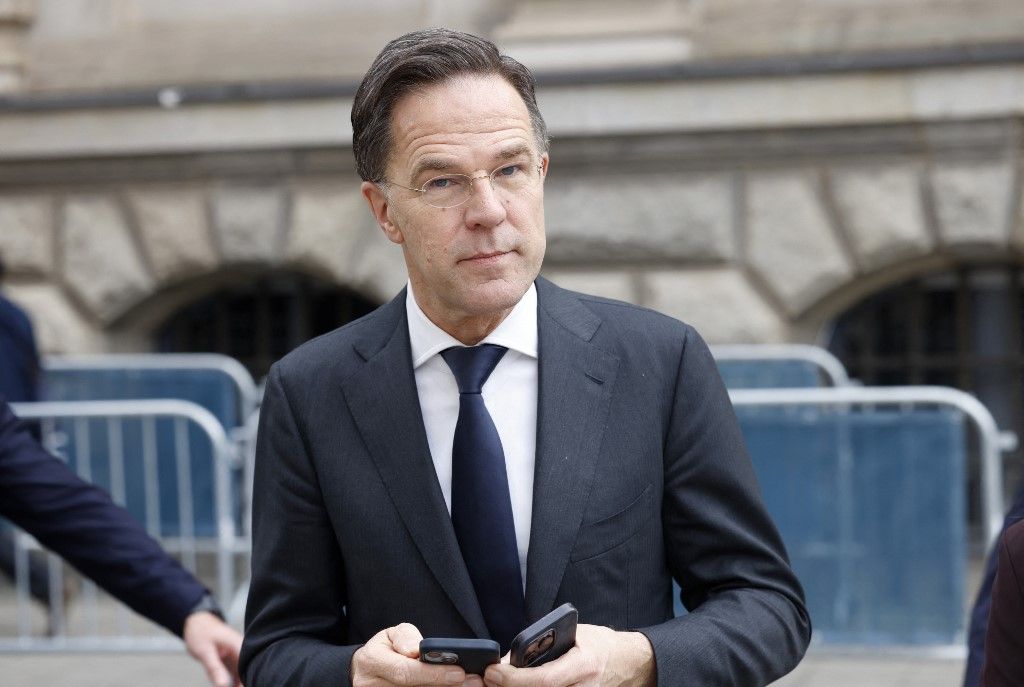
Mark Rutte, a NATO főtitkára
Mark Rutte, NATO Secretary General (Photo: AFP)

The situation within the European Union is never black and white. The goal should be to increase agreements and reduce disagreements, he emphasized. Referring to posters displayed on the streets, he said that Ursula von der Leyen and the European Commission should stand by Hungary—by an EU member state—rather than siding with Ukraine, which is not a member.

I invest a lot of energy in understanding the other side’s position, because I believe there can be reason in it. When America stepped back from behind the war, I thought the EU would have no choice but to do the same. However, that is not what happened,

the prime minister stressed.

He revealed that he had not expected Brussels to take on the risk of building an entire strategy aimed at forcing Russia to its knees through military support for Ukraine and sanctions. In his view, the European Union is only now beginning to realize that it is engaged in a gamble.

“Meanwhile, the Russians leaned back and asked for a coffee,” he said, adding that due to rising oil prices, Russia is currently in a very strong financial position.

This will be the first sign of a shutdown

The conversation also touched on the energy crisis, including forecasts suggesting that a Covid-like crisis could emerge, with global logistics collapsing. Viktor Orban outlined how such a scenario would unfold: first, fuel prices begin to rise, then Brent crude loses its benchmark role. After that, competition begins over who can secure the remaining supplies.

The first signs of a shutdown will become apparent when flight schedules are restricted,

he pointed out.

He also warned that the outlines of a financial crisis are emerging. Interest rates on loans available today are significantly higher than just a few years ago. Much of the Western economy operates on credit, and the moment is approaching when previously taken loans will mature and need to be refinanced. At that point, interest rates will be much higher, reaching levels that state economies will no longer be able to sustain. First, a financing crisis similar to that of 2007–2008 will break out, followed by a recession.

The fate of ministers

Addressing rumors about restructuring the Ministry of Foreign Affairs and Trade, he made it clear that Peter Szijjarto in foreign affairs is like Sandor Pinter in interior affairs. As for the national economy portfolio, he only said, somewhat mysteriously: “Will be a good one.”

Looking ahead to the post-election period, he also noted that while Fidesz still has room to improve among young voters and some erosion can be observed in its base, new voters have also been won over. Signature collection data shows that more than twenty percent of signatories are new supporters.

He also responded to accusations from the opposition Tisza Party that he would not hand over power in the event of an election defeat.

Perhaps it is enough to say that I spent 16 years as a leading figure in the opposition and 20 years as prime minister. There is no one in European politics who has taken over and handed over power as many times, who has won and lost as many elections as I have. If there is a living guarantee that elections in Hungary will be democratic, it is me,

he stated.

“There is the right and the left. Our Homeland (Mi Hazank) and Fidesz are on the right. It is obvious that Our Homeland has no chance, but Fidesz does in individual districts. If you want a right-wing candidate to win, vote for Fidesz in the individual race, and vote according to your party preference on the list,” the prime minister said regarding tactical voting among Our Homeland supporters. He added that this is not complicated and has been the case in every election.

“This is a deeply diverse country. Even though its edges have been cut away and large communities have been separated from us, what remains is still culturally incredibly diverse.”

For me, the campaign is like Bela Bartok collecting folk songs—I truly enjoy this work, because it is when I meet people, which is the best part,

Viktor Orban said about his nationwide tour. He added that this is a fantastic country, where people think differently in different regions, although Budapest is somewhat more uniform.

Interview after the rally

No sooner had Viktor Orban’s rally in Budapest ended than the prime minister sat down again in front of the camera to give an interview on Ultrahang. A key topic was expected to be the visit of US Vice President J. D. Vance to Hungary, who has openly stood by the prime minister. This is no surprise, as he understands Hungary and in recent years has become one of the most steadfast defenders of Hungarian sovereignty.  J. D. Vance has consistently supported Hungary’s family and migration policies while criticizing anti-Hungarian measures from Brussels.

Cover photo: Prime Minister Viktor Orban (Source: Facebook)

Komment

Összesen 0 komment

A kommentek nem szerkesztett tartalmak, tartalmuk a szerzőjük álláspontját tükrözi. Mielőtt hozzászólna, kérjük, olvassa el a kommentszabályzatot.


Jelenleg nincsenek kommentek.

Szóljon hozzá!

Jelenleg csak a hozzászólások egy kis részét látja. Hozzászóláshoz és a további kommentek megtekintéséhez lépjen be, vagy regisztráljon!

A téma legfrissebb hírei

Tovább az összes cikkhez chevron-right

Ne maradjon le a Magyar Nemzet legjobb írásairól, olvassa őket minden nap!

Google News
A legfrissebb hírekért kövess minket az Magyar Nemzet Google News oldalán is!
Országgyűlési választás2026. április 12. Minden hír a választásról

Címoldalról ajánljuk

Tovább az összes cikkhez chevron-right

Portfóliónk minőségi tartalmat jelent minden olvasó számára. Egyedülálló elérést, országos lefedettséget és változatos megjelenési lehetőséget biztosít. Folyamatosan keressük az új irányokat és fejlődési lehetőségeket. Ez jövőnk záloga.