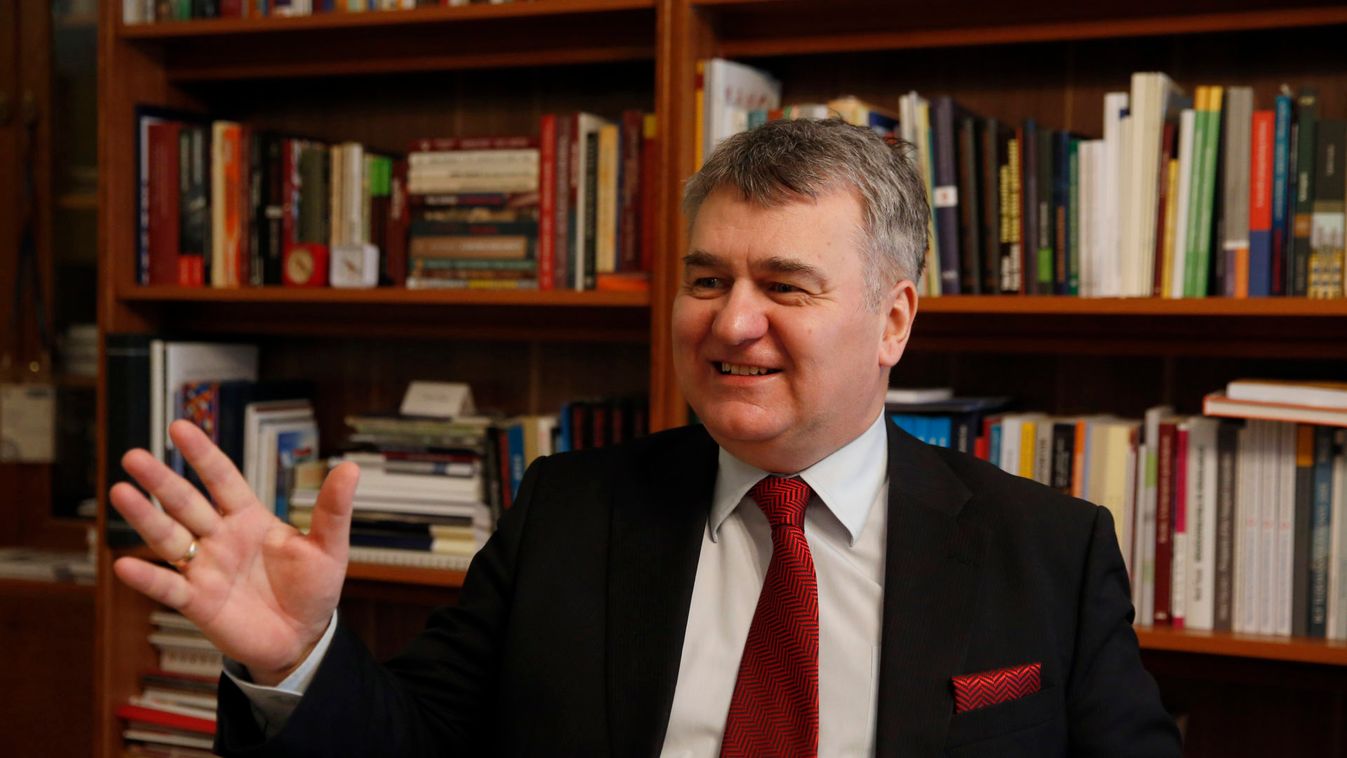
The professor also mentioned that every member state contributes to the EU budget. Developed states give more than what they receive in aid. But an agreement has been reached which Hungary will abide by and the others should as well.
“These countries got everything, which is why I emphasize that it is not support that Hungary receives from the EU, but rather repayments. Three quarters of the money received was also returned before 2010, as Western European companies won public procurement financed by EU subsidies. Currently, Hungarian-owned companies have a shot as well – and of course many don’t like this,” said the expert.
Csaba Lenter also spoke about the fact that the European Union is not a fundamentally economic alliance. It was originally created to keep the centuries-old German French conflicts, that often led to war and inferno, under control. The creation of the European community was intended to stifle the differences between the two countries by establishing mutual economic interests. The economic aspects are therefore secondary; it is not in the interest of developed states that Hungary or Bulgaria for example, be as strong as say, Germany. This does not mean that Hungary has no place in the EU, but it must be said that the EU funds are not gifts. Our country has put a lot into the “common pot” as have the other new member states.
Therefore, the resources from the current EU financial cycle cannot be considered a gift arriving to Hungary free of charge.