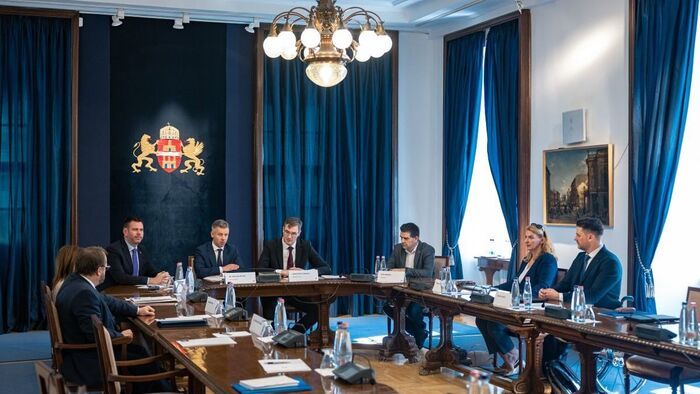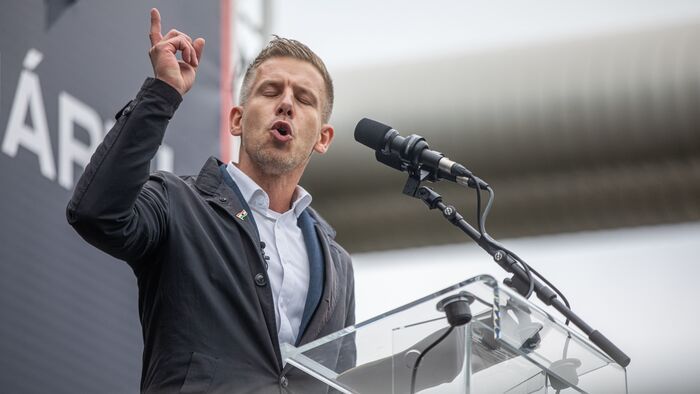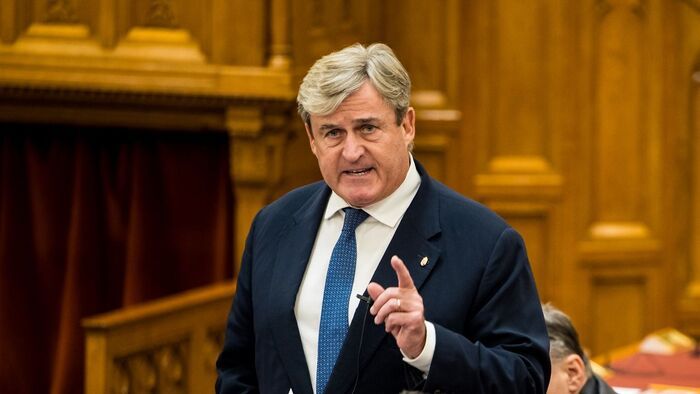
So for all of those reasons I have felt it has been necessary to really make an effort to be out there. For all the pomp and circumstance, the pictures of the Queen, Buckingham Palace, Trooping the Colour, there is another aspect of Britain which is that we're actually a very down-to-earth country, where a lot of people from around the world feel at home there. My duties are not only about meeting Péter Szijjártó, the Hungarian foreign minister, but being the sponsor of Budapest Beer Week, or taking part in the Hungarian Interchurch Aid's charity run, being on stage at the Palace of Arts (Müpa), helping the Scottish football fans to contribute money to renovate a nursery in Józsefváros. Our embassy is not just a foreign government's office, we're not just nice diplomats living a nice life in Rózsadomb, but I and my team and my embassy are part of this community.
– Your four and a half year term here in Budapest was defined by Brexit. You arrived a few months before the 2016 referendum and will leave a few months before the United Kingdom and the European Union hopefully agree on a free trade deal. How different has your term here been because of Brexit compared to your stay in Bucharest for example?
– It's difficult to say, because I'd have to try to imagine what life would have been like here as an ambassador without Brexit. When I applied for the job in the summer of 2014, Brexit wasn't on the cards, a referendum wasn't on the cards. So I wanted to strengthen the bilateral relationship, keeping in mind that we've never had so many Hungarians living in the UK. In a way, Brexit has added an extra layer of difficulty in terms of the sheer quantity of work involved, in terms of explaining why we made the decision to leave the European Union, what our position was during the withdrawal negotiations, and explaining the several months of parliamentary uncertainty. What it did do is that our decision to leave the European Union has made it even more important that we put greater emphasis on trying to strengthen the bilateral relationship. After Hungary joined the European Union in 2004, certain elements of the bilateral relationship dissapeared because they were being dealt with in Brussels. My aim and objective was that by the time we leave the European Union, our bilateral relationship is in a better place. I think the defence relationship with Hungary is significantly better – I can very much thank the two Hungarian ministers of defence, István Simicskó and Tibor Benkő for that. The economic relationship is stronger, there are more British companies here, more people working for them. There are more young Hungarian companies expanding into the UK.
Politically the relationship remains very good. No other European Union country has been as sympathetic, supportive or as honourable as Hungary.