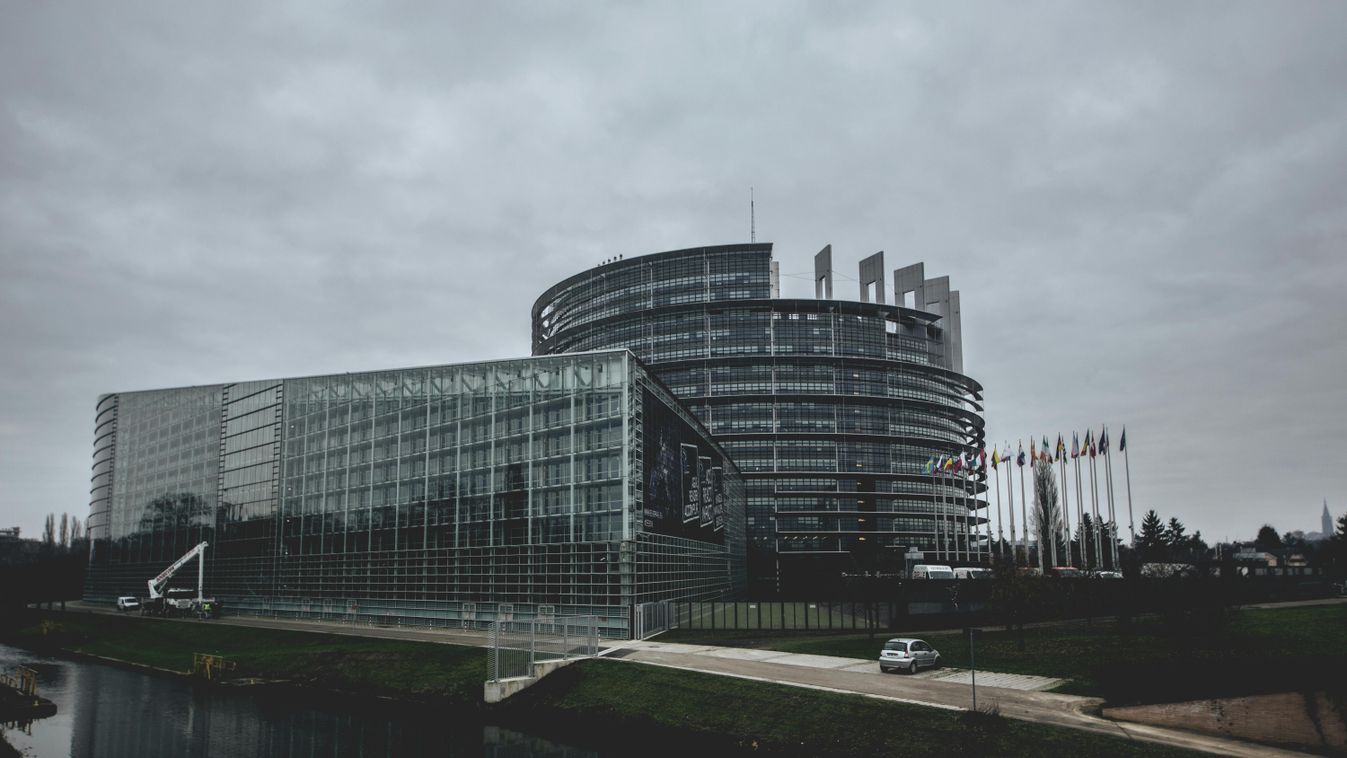
Not only will the European Parliamentary elections be held in June, putting MEPs under scrutiny, but shortly after the European Commission will also be renewed, opening up a real opportunity to change the current direction of Europe, and the Center for Fundamental Rights would like to contribute to this change with its series of events,
Istvan Kovacs stressed.
"Our aim is to contribute to the process that will lead to a new direction for the current leadership of the European Union. A new direction is crucial, if for no other reason, because a glance at the current chessboard shows that the officers within the European Union, whether in the European Parliament, the Council or the Commission, all play by the same political logic: they are pro-war, support illegal migration and, of course, want to impose gender ideology on the member states."
"Various European politicians and institutions often decry Hungary as a corrupt country and say that the rule of law is constantly being violated. All this without anyone ever being able to provide any tangible proof of this," the strategic director stressed.
The subsequent panel discussion focused on corruption in the European Parliament. Harald Vilimsky, MEP of the Austrian Freedom Party (FPO), stressed that Hungary and Prime Minister Viktor Orban play a key role in Europe.
They have a prime minister who is extremely popular and also has the support of Austria,
he stated.
The Austrian MEP also stressed the need to uncover the EU-level corruption and to know the details of the case. In his opinion, lobbyists must be banned from Brussels to start the process of change. And nation states must be given back power within the Bloc to counter efforts towards federalism.
Commenting on the influence peddling case, Fidesz MEP Erno Schaller-Baross said of the MEPs implicated that
it is quite clear that their political careers are over. But the Socialist Party in Brussels will survive, despite bleeding from innumerable wounds. But the bottom line, the problem here is that the whole institution, the Parliament itself and, unfortunately, especially the European People's Party and the large parties in the European Parliament are all complicit as not one of them wants to repeatedly talk about these matters.
Attila Kovacs, EU Research director at the Center for Fundamental Rights, noted that a year and a half after the biggest corruption scandal in the European Union broke, we still do not know the truth about the case.
The real consequences for the left-wing European Parliamentary groups: they seem to have survived the scandal unscathed as yet,
the research director pointed out, adding that he thought the event would shake people up and bring about more profound changes, but it didn't.