Viktor Orban: We Pulled Hungary Out of Crisis — We Will Not Throw Away the Past 16 Years + Video

The Hungarian right faces major intellectual and political challenges ahead.

2026. 05. 09. 12:50
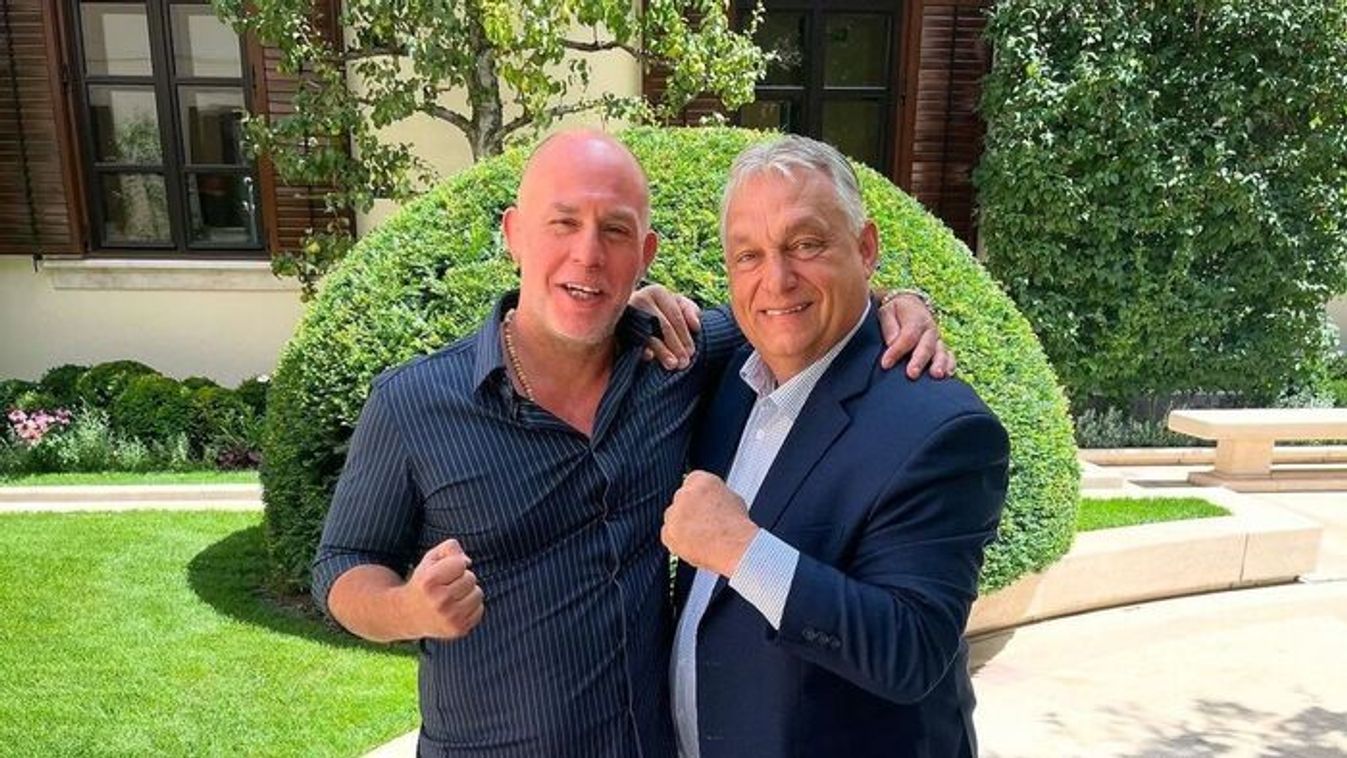
Viktor Orban and Laszlo Pityinger (a.k.a. Dopeman (Source: MW)
VéleményhírlevélJobban mondva - heti véleményhírlevél - ahol a hét kiemelt témáihoz fűzött személyes gondolatok összeérnek, részletek itt.

He emphasized that governing is difficult and requires courage, adding that while anyone willing to govern deserves recognition for taking on the task, only time will tell whether the new government’s performance merits praise as well.

“The first quarter proves that the outgoing government successfully led the country out of crisis,” 

Viktor Orban said.

The former prime minister acknowledged that his government achieved successes during the past sixteen years but also made mistakes. Every government makes mistakes, he argued, and this often made it difficult for intellectuals to fully support the ruling coalition. In his view, however, that situation has now changed and conservative thinkers have been “set free” so to say.

Orban recalled that his government imposed levies on banks and multinational corporations amounting to 15 billion forints, which he said financed family support programs and the restoration of the 13th-month pension payment.

There are enormous forces working against us to take that money back,

Orban pointed out.

“The multinationals are coming,” the outgoing prime minister warned in reference to members of the incoming government whom he described as tied to foreign investment funds. He argued that Hungarians do not want to be exploited and insisted that a national resistance still exists.

According to Orban, the first major battle will concern whether state assets — including shares in MOL and Richter, gas storage facilities, and Budapest Airport — remain under national control. He noted that over the past sixteen years, the government had doubled state assets and tripled Hungary’s gold reserves. These achievements, he argued, must be protected, and the incoming government should not be allowed to raise taxes. A government cannot go against the will of the people, so their is opportunity for the right to put up resistance.

Following a post-election analysis, Orban said Fidesz–KDNP won among voters over 40 by margins of 44–47 percent, but lost heavily among younger voters, with support among those under 40 falling to 19 percent against 75 percent for the opposition.

“Young people are looking for something different, and from someone different,” PM Orban said while reflecting on the causes of the electoral defeat. He added that on TikTok, Fidesz drew only 25 percent viewership compared to Tisza’s 70 percent.

Orbán described the result as painful but said it also made clear that immediate generational renewal was necessary within Fidesz. For that reason, older leaders over 60 had stepped back to make room for younger politicians.

The political leadership of Fidesz must be rejuvenated immediately. That is why the generation in its forties has moved forward while the sixty-plus generation has stepped back within the party. The elders belong in the council, the young belong in battle,

 he said.

Addressing possible future investigations into his government, Orban declared:

“I obeyed the law and ensured that others obeyed it as well. Anyone may question me, and everyone will receive the correct answers — thoroughly and exhaustively.”

Explaining why he declined to take up a parliamentary mandate, Orban said:

“I am sixty-three years old. I love my country, I serve my country, and I remain at its disposal. I will continue working, but only on work that has meaning. At sixty-three, I have no time to waste.”

Orban also reflected on generational divides. He said,

Those with families and pensioners understood and appreciated the government’s assistance programs, while younger people — despite receiving significant support as well — chose something different. I suspect this was not primarily about material issues, but rather about cultural change. We must understand this, because if we cannot reach young people, what will become of our country?

he asked.

He added that if there is conflict between generations, older and more experienced people bear greater responsibility for resolving it.

“It should have been my job to do more. I am searching for the answer because I do not want to get locked in to my own generation,” Orban said, adding that he wants to continue engaging directly with younger Hungarians.

In terms of what may have contributed to the generational divide and the lack of trust young people have in older generations, he said "Elderly people are taken care of by the pension system, while young people by the school system." Orban argued that "patriotism can only be built upon strong families". 

A mother takes on a battle through childbirth — one that can even cost her life. Everything begins there. Then there is a father who participates in building the family. That is how a family of three or more is formed. No one stands alone in the corner; it is a unity. I supported that unity because the nation is built on families, and at the center of the family stands the mother. That is why our government gave particular support to mothers,

he explained.

Orban stressed that 

"patriotic politics cannot be based on anything other than the family, which is the foundation of the nation. That is why our family policy focused heavily on mothers,"

he added.

Discussing social media and younger voters, PM Orban acknowledged that he was unable to adapt to the “three-second attention span” demanded by TikTok-style campaigning.

He also offered an economic explanation for the election result, arguing that "without the war and Brussels’ failed policies, Hungary’s economic growth would not have slowed. If we had been able to achieve two or three percent economic growth, we might have won the election. But that did not happen. Growth is only now becoming visible this quarter,” he said.

Orban argued that while his government had to explain complex economic realities, the opposition’s message was much simpler: life would improve under their leadership.

The outgoing prime minister also defended his government’s economic diversification policies, saying 

Our economic policies serve Hungarian interests and should not be dismantled by the incoming administration. 

He added that he had not yet seen any serious tax plan, debt-management strategy, employment proposal, or wage-growth program from the new government.


On the possibility of future investigations, Orbán reiterated that he has lived “like a conscripted soldier” since 1990, with every minute and every forint scrutinized, and therefore has nothing to fear from inquiries.

Addressing the case involving former central bank governor Gyorgy Matolcsy, Orban noted that the government has no authority over the central bank and that any criminal matters must be handled by law enforcement authorities.

He also contrasted Hungary’s former two-thirds Fidesz governments with unstable coalition governments elsewhere in Europe, arguing that Fidesz had been able to govern effectively because of its strong parliamentary mandate.

Reflecting on the physical toll of office, Orban noted that he had served as prime minister for eighteen hours a day since 2010. While admitting he is overweight, he said his eyesight and blood pressure remain healthy, though he could feel the office gradually wearing down his body. He added that both Helmut Kohl and Angela Merkel stepped back for similar reasons.

Orban also revealed that the day after the election he received “one of the most important phone calls of his life” from his former football teammates: “Sixteen years of officially excused absence — a game of football tennis next week.”

Speaking about the future of his political role, Orban joked that at 63 he would not be attending “random leisurely parties” at Heroes’ Square. He praised the younger generation of Fidesz politicians, saying many of them had previously remained in his shadow.

Orban also addressed criticism targeting him - for example from actor and activist Aron Molnar, known as NoAr.

“Here is someone attacking the past sixteen years, only for it to emerge that throughout this time he was continually appearing in films and receiving state funding for it,” Orban said.

He also touched on the problem of pollsters.

This election also highlighted how unreliable public opinion polling had become. Some pollsters sought to measure reality, while others aimed to actively shape public opinion.

Which is why, he said, no analyst or pollster is completely without fault.

“The pro-nation side cannot be renewed through top-down politics, because then it would remain centrally directed. We must reorganize ourselves from the ground up, and I will also have a role in that,” Orban declared.

He added that he has not yet decided whether he will remain publicly active, speak only on selected issues, or continue speaking regularly.

“One thing is certain: there will be a Fidesz congress on the 13th, where many important decisions will be made. Whatever happens, I will always stand in service of my country,” 

the outgoing prime minister said.

Orban concluded with a warning about Hungary’s relationship with Brussels. “If someone goes to Brussels and gives up the country’s sovereignty, we will pay an enormous price for it later. Moving away from the patriotic position would be a massive strategic mistake.”

If you do not fight Brussels, they will trample you, suppress you, and exploit you,

Viktor Orban warned.

Cover photo: Viktor Orban and Laszlo Pityinger (a.k.a. Dopeman (Source: MW)


Komment

Összesen 0 komment

A kommentek nem szerkesztett tartalmak, tartalmuk a szerzőjük álláspontját tükrözi. Mielőtt hozzászólna, kérjük, olvassa el a kommentszabályzatot.


Jelenleg nincsenek kommentek.

Szóljon hozzá!

Jelenleg csak a hozzászólások egy kis részét látja. Hozzászóláshoz és a további kommentek megtekintéséhez lépjen be, vagy regisztráljon!

A téma legfrissebb hírei

Tovább az összes cikkhez chevron-right

Ne maradjon le a Magyar Nemzet legjobb írásairól, olvassa őket minden nap!

Google News
A legfrissebb hírekért kövess minket az Magyar Nemzet Google News oldalán is!

Címoldalról ajánljuk

Tovább az összes cikkhez chevron-right

Portfóliónk minőségi tartalmat jelent minden olvasó számára. Egyedülálló elérést, országos lefedettséget és változatos megjelenési lehetőséget biztosít. Folyamatosan keressük az új irányokat és fejlődési lehetőségeket. Ez jövőnk záloga.