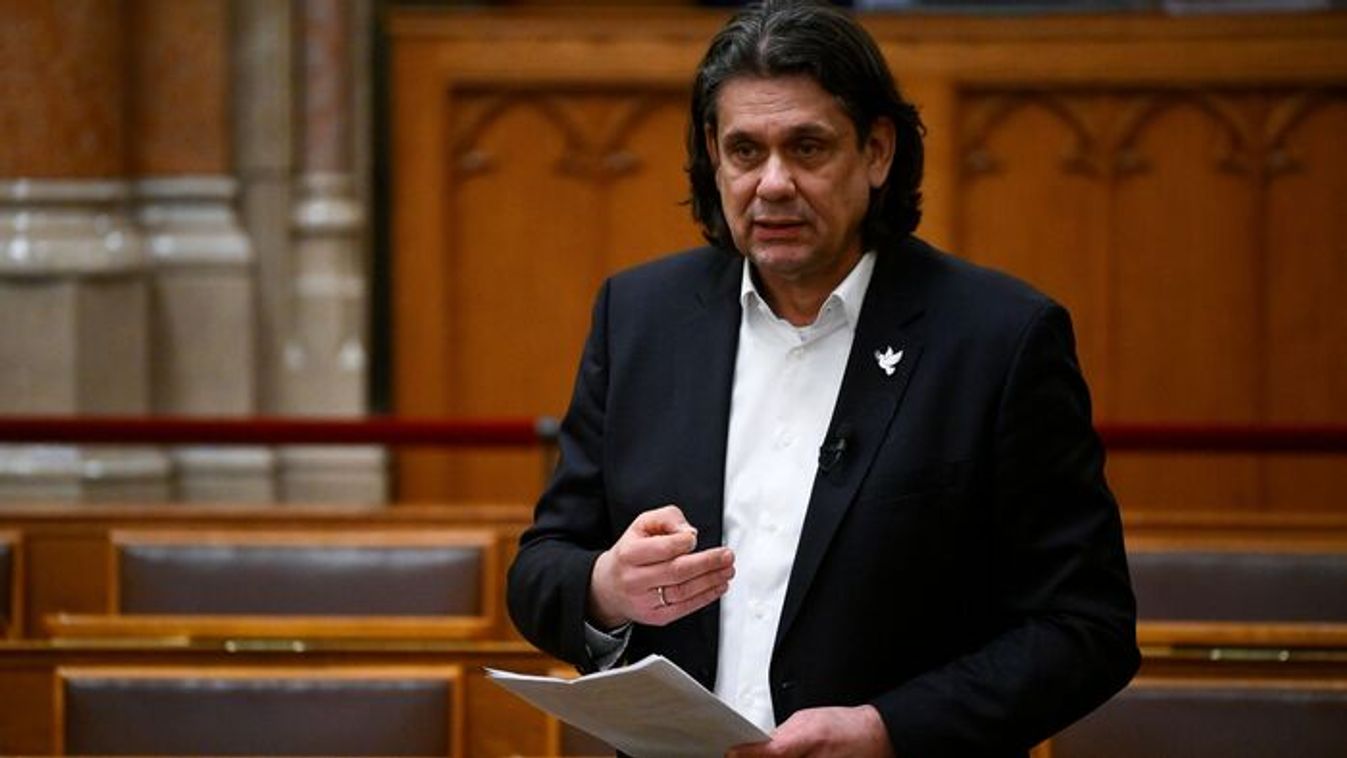
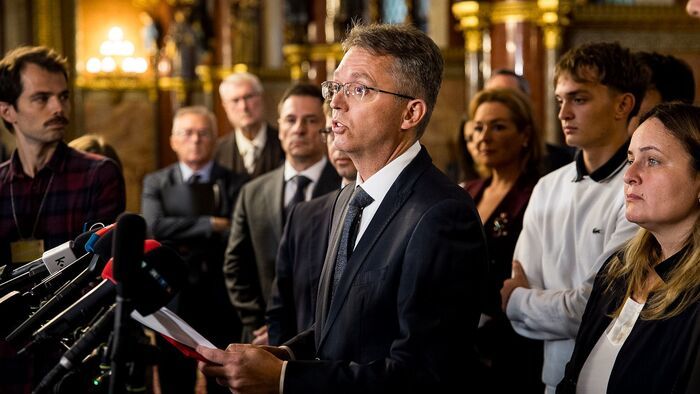
In an interview with Kossuth Radio, Tamas Deutsch responded to a question from the host, who said that according to Viktor Orban, Hungary has the right to veto, while Ursula von der Leyen claims that the prime minister is not keeping his word.

The use of terms like “veto,” “blocking,” or “obstruction” distorts reality because they do not accurately reflect the legal framework of how the European Union operates, he explained, adding that even the terminology itself misrepresents the actual situation.
If, for example, 20 out of 27 member states support a decision while 7 do not, then it is not a matter of seven countries “blocking,” but rather that full agreement has not been reached, he highlighted, adding that
in such cases, one should not speak of a veto, but of the fact that the conditions for a decision have not been met.
According to Deutsch, the current dispute falls into this category. The 90 billion euro loan intended for Ukraine requires a modification of the EU budget, which in turn requires the agreement of all member states.
The politician said Hungary cannot support the decision because Ukraine is violating its agreement with the European Union and is blocking oil deliveries to Hungary. As he put it, as long as “the Ukrainians do not deliver the oil purchased from Russia to Hungary and, through us, to Slovakia,” there is no way to support the budget amendment required for the loan.
He emphasized:
Viktor Orban, “engaging in a tough fight,” stood up for Hungarian interests at the Brussels summit, and this, in his view, demonstrates that the government does not yield to pressure.
In the interview, he also sharply criticized the Tisza Party. He stated that the party is acting in cooperation with Brussels and Kyiv and supports the withholding of EU funds. He called this an “undeniable fact supported by numerous pieces of evidence,” and argued that such actions amount to interference in Hungary’s election campaign.
He said that the Tisza Party and its partners in Brussels have agreed to exert pressure on Hungary by withholding EU funds in order to gain political advantage.
The MEP for Fidesz also stated that, in his view, the European Union is “completely isolated,” as it lacks meaningful diplomatic relations with the United States, Russia, and China. In contrast, he said Hungary maintains active relations in multiple directions, which strengthens the country’s room for maneuver.
He emphasized that Hungary has the option to procure oil from alternative sources as well, for example through its relations with Turkic states, which could be particularly important in the current situation surrounding Ukrainian oil deliveries.


Szóljon hozzá!
Jelenleg csak a hozzászólások egy kis részét látja. Hozzászóláshoz és a további kommentek megtekintéséhez lépjen be, vagy regisztráljon!