The land-launch weapons are either ballistic or cruise missiles, many of which have an intercontinental range, capable of reaching even very distant targets such as the US, Europe and virtually anywhere in the world. Submarine-launch nuclear missiles are difficult to locate as they can be concealed practically anywhere under the world's oceans. The great advantage of a nuclear triad is that it provides Russia with greater deterrent power, as well as superior strategic capability and flexibility. The shocker is that most of these weapons are always ready to be deployed at the ukase of the supreme commander.
A Single Missile Could Destroy the Capital + Video
 Itt állíthatja be, hogy a Google keresőben elsők között legyen a Magyar Nemzet
Dozens of pro-war politicians have brought humanity to the brink of a danger not seen since the Cold War. The escalating spiral of the Russia-Ukraine war has reached a dangerous stage, with the lives of eight billion people at stake due to the war doctrines of the power blocs butting heads. Russian President Vladimir Putin has made it clear on several occasions that he is ready to unleash nuclear weapons. As the Ukrainians are losing the Russo-Ukrainian war despite massive Western support, warmongering French President Emmanuel Macron and his followers have already raised the prospect of nuclear weapons. We are in the twenty-fourth hour, the question is what impact would a nuclear war have. What is the range of Russian missiles, and what would happen to Budapest? These are the questions we sought to answer.
2024. 05. 09. 15:27
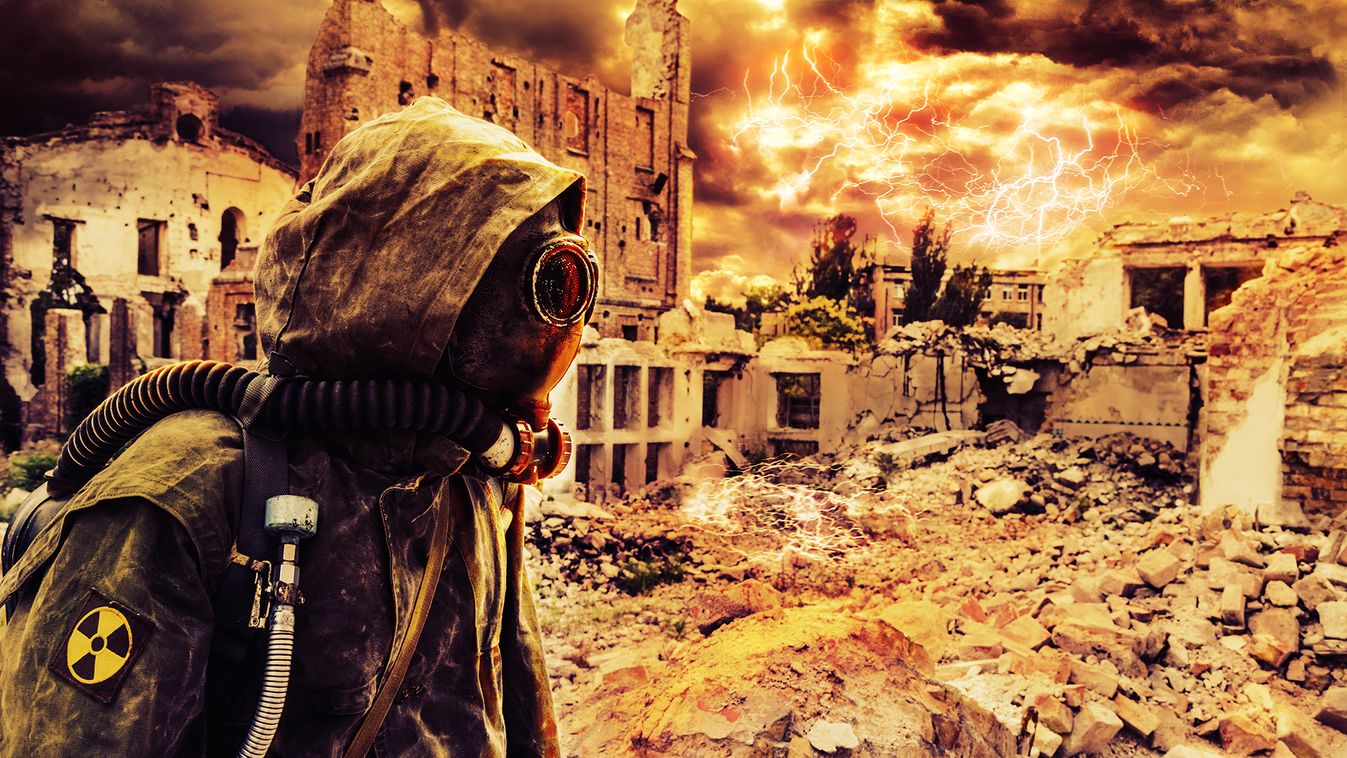
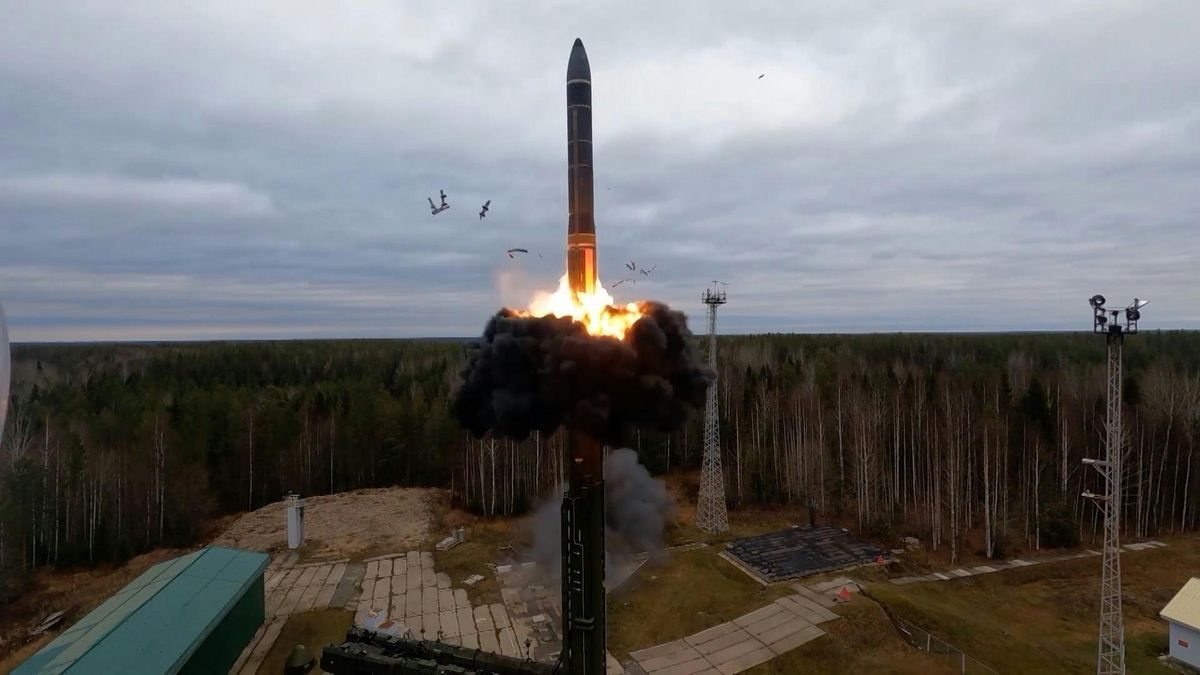
Today's civilization would collapse in a nuclear war
Nuclear war would change the history of mankind once and for all. After the war itself and the explosion of hundreds and thousands of nuclear warheads, the worst-case scenario is that mass conflagrations will destroy everything within an area of tens of thousands of square kilometers, killing hundreds of millions within hours.
További IN ENGLISH híreink
Then nuclear war would trigger a nuclear winter that could kill billions, making the planet completely uninhabitable and killing 99 percent of humanity. The few "lucky" survivors would pray, wishing they were among the dead because of the brutal consequences of nuclear war. Human civilization would inevitably cease to exist completely and forever, and in effect, warmongering politicians would send humanity back to the stone age. For only a few politicians would decide about the lives of eight billion people, who would have no say in what course their lives should take.
In our series of articles, we present some of the most devastating Russian nuclear weapons that can reach almost anywhere on the planet, and which Western weapons are unable to match because of Russia's advanced technology.
RS-24 Yars
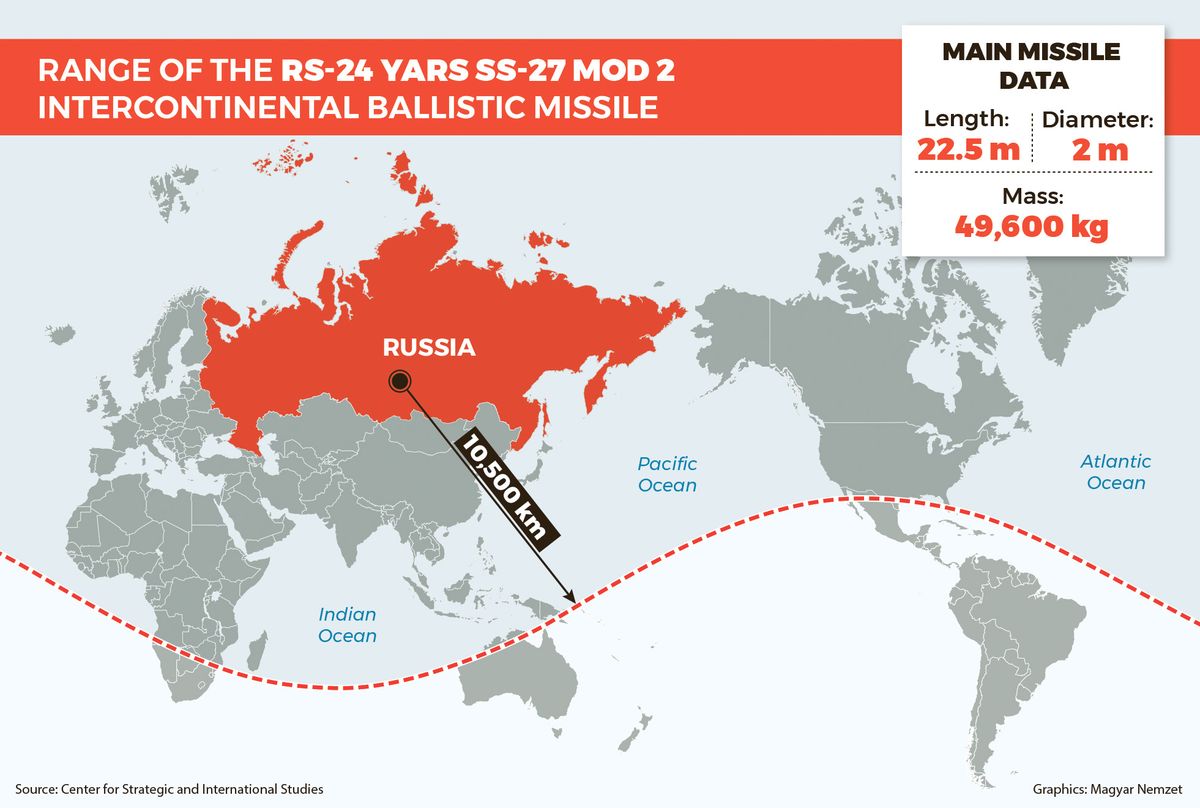
The RS-24 Yars is a three-stage solid fuel missile that reportedly carries three re-entry vehicles and penetration aids. The weapon entered service in 2010, but details are limited due to Russian classification. Yars can be deployed in two ways: from a road vehicle and from a missile silo. The nuclear weapon has a range of approximately 11, 000 kilometers.
The missile is estimated to be 22.5 meters in length and 2 meters in diameter. The missile is fitted with a system that allows it to maneuver in air, space and during re-entry.
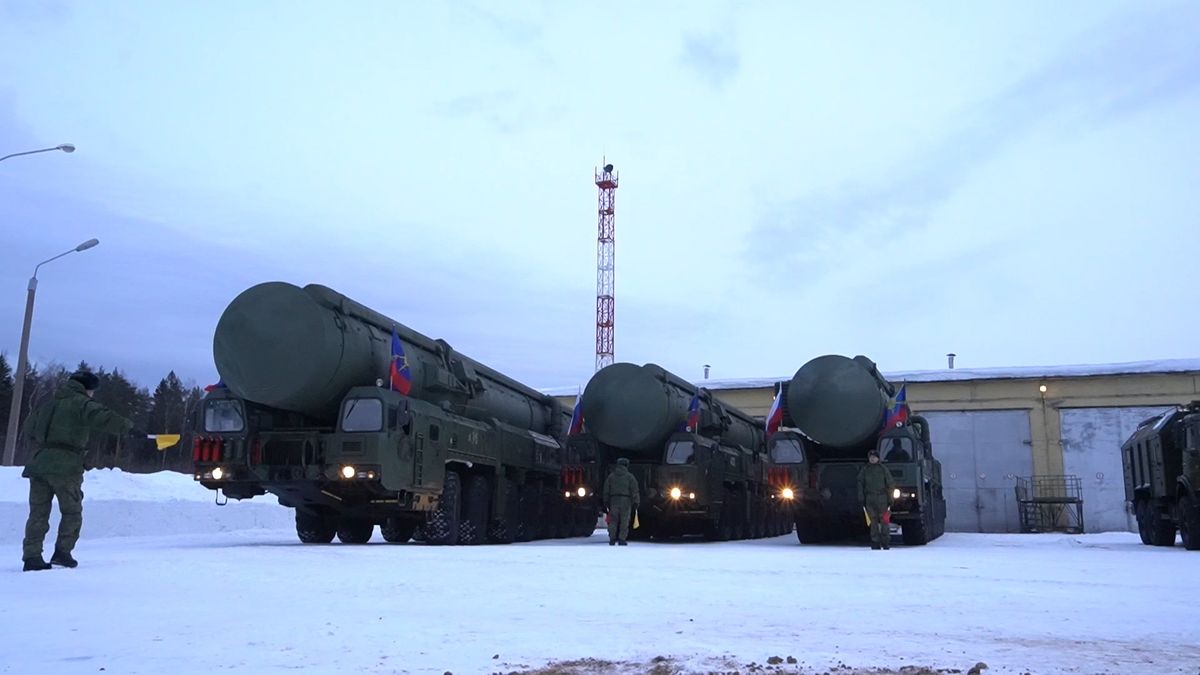
The total launch weight of the RS-24 is assessed to be 47 tonnes. According to information from the manufacturer, the Yars is capable of penetrating both highly protected targets and any current ballistic missile defense system, meaning that not even the United States or any NATO country has an interceptor system capable of disabling Russia's intercontinental ballistic missile.
The intercontinental ballistic missile can be armed with up to ten warheads, up to 1.5 megatons. To illustrate, the atomic bomb dropped on Hiroshima was 15 kilotons, while the bomb that destroyed Nagasaki weighed 21 kilotons.
További IN ENGLISH híreink
The graphic below illustrates how far the devastating Russian intercontinental ballistic missile with multiple nuclear warheads could reach with a range of 11,000 kilometers. One of the most advanced Yars reaches China, almost all of Africa, the entire territory of the United States and Canada. And with the slightest Russian effort, the missile could easily level any European capital to the ground because of its massive range.
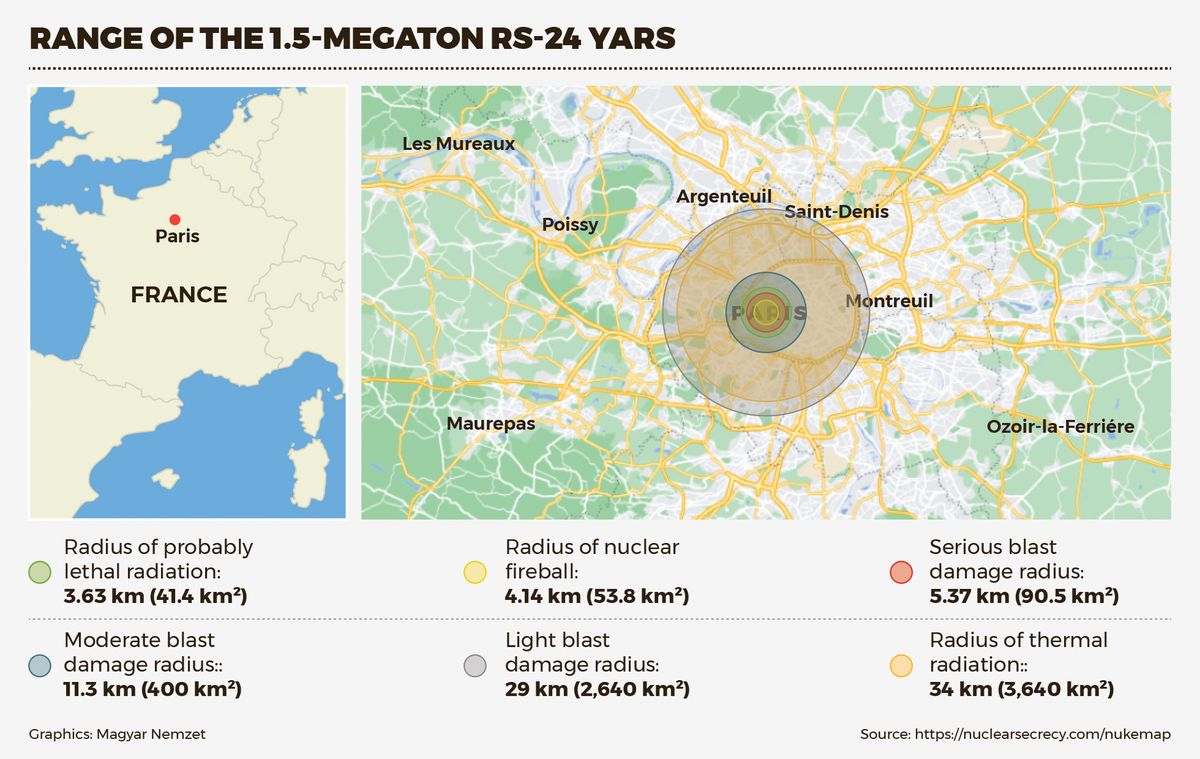
The two graphics below show the devastation that Yars would wreak in the event of a strike on a city. To illustrate, we used Budapest and Paris as examples so that it is clearly seen what the dreaded Russian weapon could do, say, if Russia hit NATO capitals. For Budapest, the radius of the fireball would be 1.42 kilometers, covering 6.3 square kilometers. The maximum size of a nuclear fireball and the magnitude of damage depend on the height of the detonation. When it hits the ground, the amount of radioactive fallout increases significantly. The heat generated in this ball during the explosion is stronger than the heat of the Sun. The lethal radiation radius is 2.56 kilometers, covering an area of 20.6 square kilometers in the event of an explosion. The radius of a serious blast could be 2.6 kilometers wide, covering 21.3 square kilometers.
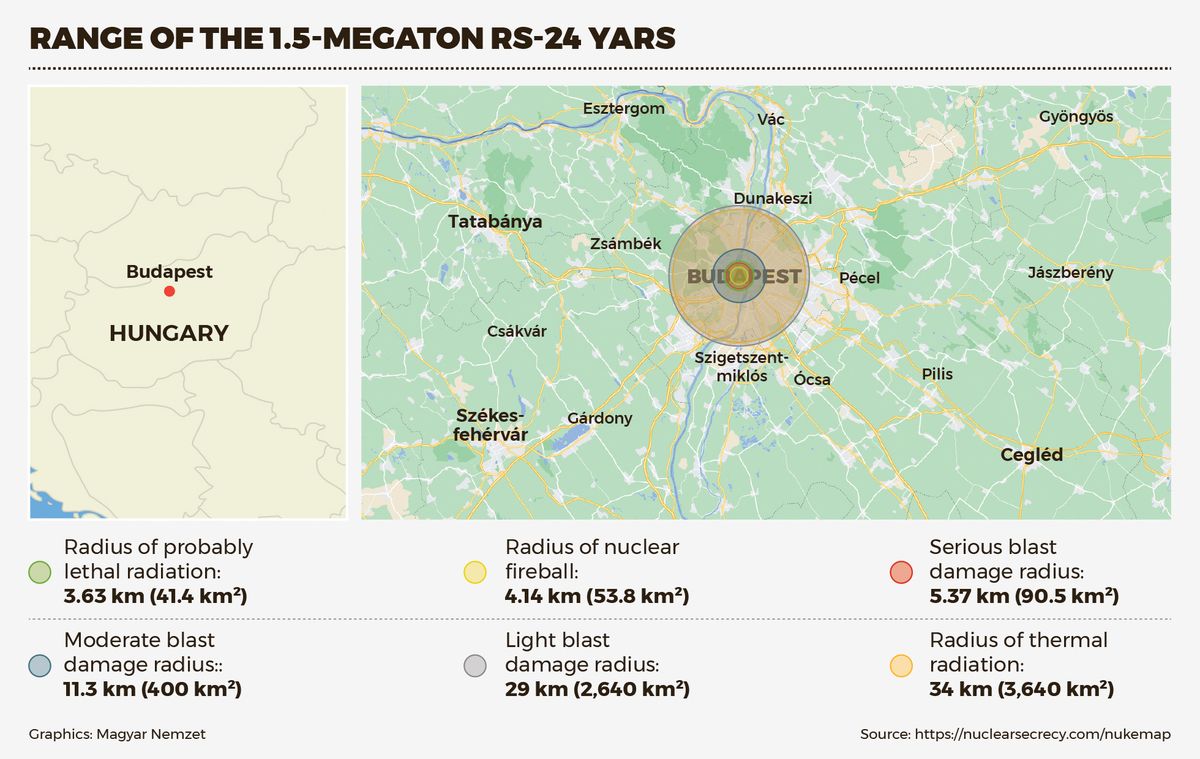
Due to overpressure in this radius, strong concrete buildings would be severely damaged or destroyed, with the death toll reaching nearly 100 percent. In the moderate blast radius, which is 6 kilometers wide, most residential buildings would collapse, damage would be widespread with a high death toll. Damage to commercial and residential buildings has a high risk of fire occurring, and the damaged buildings are likely to spread fire.
In the thermal radiation radius, which is 15 kilometers and 720 square kilometers, third-degree burns extend to all layers of the skin, can cause severe scarring or disability, and may require amputation.
In the event of a Yars hitting the French capital, millions of people would die and many would be injured due to the high population density. The bomb's impact would spread to the suburbs of Paris, and the wind would carry the radioactive radiation easily, causing even greater destruction.
Cover photo: Illustration (Graphics: Magyar Nemzet)
Ne maradjon le a Magyar Nemzet legjobb írásairól, olvassa őket minden nap!
- Iratkozzon fel hírlevelünkre
- Csatlakozzon hozzánk Facebookon és Twitteren
- Kövesse csatornáinkat Instagrammon, Videán, YouTube-on és RSS-en

A legfrissebb hírekért kövess minket az Magyar Nemzet Google News oldalán is!
Címoldalról ajánljuk
Tovább az összes cikkhez