The visit of US Vice President J. D. Vance sends a clear message to Brussels: leave Hungary’s freedom-loving policies alone. This Sunday, Hungarians will choose their future: war or peace, the Brussels path or the Hungarian path.


The visit of US Vice President J. D. Vance sends a clear message to Brussels: leave Hungary’s freedom-loving policies alone. This Sunday, Hungarians will choose their future: war or peace, the Brussels path or the Hungarian path.

The timing of Vice President J. D. Vance’s visit clearly demonstrates the support of the US administration. It also reflects the strong, loyalty-based personal friendship between the US president and the Hungarian prime minister—between Donald Trump and Viktor Orban. This close personal bond has laid the foundation for a new golden age in US–Hungarian relations, which began about a year and a half ago, when Donald Trump was elected president of the United States for the second time, Peter Szijjarto said.
Last year was a record-breaking year for the economy. Trade reached an all-time high of 10 billion dollars. Never before has Hungary received as much investment in a single year, around 200 billion forints. And the momentum continues this year: trade has increased by nearly 50 percent, and in March alone, six US investments worth approximately 100 billion forints were announced. All of this shows that this golden age is real, the foreign minister added.
There are no political sanctions, the expansion of the Paks nuclear plant can continue to ensure energy security, Hungarians do not need visas to travel to the United States, and the option to purchase cheap Russian energy remains available, as President Donald Trump has agreed to this, he added.
Donald Trump also joined Tuesday’s mass rally by phone. In this regard, Peter Szijjarto said that the vice president’s team had indicated that the president wanted to contribute to the event and send a message to the Hungarian people. This is only surprising to those who are not seriously engaged with these matters, he said. He emphasized that the international situation is extremely tense. The world is facing crises unlike anything seen before. The challenges requiring answers are testing many leaders and countries, and many are unable to provide adequate responses.
In such a situation, the security and success of a country with Hungary’s capacities fundamentally depend on whether the major power centers influencing this region are interested in its success or its failure. And over the past fifteen years, through our governance and foreign policy strategy, we have achieved that the major global power centers influencing our lives are interested in Hungary’s success,
the minister stated.

“The Americans, the Russians, the Chinese, and the Turks as well. And there is only one person who has been able to achieve this—our prime minister. In Europe, there is only one political leader who can maintain normal, effective, and successful relations with all four major power centers. This situation shows that experience, predictability, and security are crucial,” Peter Szijjarto stressed.
In times like these, zero-experience adventurers are quickly swept aside. To protect and maintain the results we have achieved, we need a leader who has experience and can build and maintain the right relationships. And the fact that the US president calls into a rally in Budapest sends a very clear message to everyone,
he said.
During his visit to Budapest, J. D. Vance emphasized that faceless bureaucrats in Brussels want to interfere in the Hungarian elections and dictate how Hungarians should live. Ukraine is also seeking to interfere. The United States has experience with this as well, as Ukraine attempted to influence its presidential election.
There is very serious external intelligence interference taking place in Hungary’s parliamentary election process. Perhaps there has never been such open, crude and serious interference in a Hungarian parliamentary election. A Brussels–Berlin–Kyiv axis has emerged. It is clear that Brussels bureaucrats cannot tolerate that Hungary is putting the brakes on their unrestrained war, migration, and gender policies. In Berlin, it is difficult to accept that a Central European country says no to the leading European power,
the minister pointed out.
“In Kyiv, they want Europe to go to war, to receive European taxpayers’ money, and to gain entry into the European Union.”
Hungary represents the opposite position in all of this, so it is clearly a matter of vital importance for Brussels, Berlin, and Kyiv what the outcome of the Hungarian parliamentary elections will be. Just as it is for us, but with completely opposite expectations and interests,
Peter Szijjarto stated.
The minister emphasized that Hungary has always been able to guarantee the security of its people and the country. This was true after the migration crisis, during the past four years of war, and remains true today, even as energy infrastructure is being attacked in other parts of the world. In Hungary, law enforcement and national security services are carrying out their duties in a way that ensures the security of Hungarian citizens, families, and economic actors. “And of course, J. D. Vance is safe as well,” he added.
It was also raised during the program that a half-sentence from the press conference—already discussed the previous evening on ATV—was being pushed by the left-wing media as proof that the United States had “let go of Viktor Orban’s hand.” The claim was based on the vice president saying that the US would cooperate with whoever wins the election. But as was pointed out, that was not the full statement—there was context before it and continuation after it. This single fragment was taken out of context and turned into a news story, which is, in fact, a complete disregard for the audience it is intended for, since that was clearly not the message of the press conference. The US vice president said that they respect the Hungarian people and will cooperate with whoever they choose. He then added that he is confident Fidesz will win the election.
This came after he had spent several minutes outlining the high level of current US–Hungarian cooperation, emphasizing how strongly they support the prime minister, describing the friendship between them, and noting that the Hungarian prime minister has been one of the greatest contributors to the cause of peace for the United States. He praised Viktor Orban for pursuing a policy of dialogue, talking to everyone, maintaining diplomatic channels rather than cutting them off, and also addressed energy security. So this is clearly a forced and frustrated attempt to portray the visit differently from what it actually was.
It is no coincidence either, Peter Szijjarto noted, that Bloomberg timed the release of the transcript of a phone conversation between Viktor Orban and Vladimir Putin from last October to concur with the vice president's visit.
Regarding this issue, Peter Szijjarto said: this was the period when Donald Trump and Vladimir Putin had agreed by phone to try to organize a peace summit, and if it were to take place, it would be held in Budapest. So it had already been announced that Budapest would host a peace summit. After that, President Trump called the Hungarian prime minister. They discussed the idea and the technical details, and then the prime minister spoke with the other participant—potential participant—Vladimir Putin, since Donald Trump had agreed with Putin about meeting in Budapest. After speaking with Donald Trump, the prime minister also spoke with Vladimir Putin.
“This is completely natural. If two leaders want to come to Budapest, you have to coordinate with both of them,” the minister said. Hungary, the Hungarian government, and the Hungarian prime minister stand on the side of peace and have always done everything possible for peace. Therefore, the prime minister made it clear to both Donald Trump and Vladimir Putin that Hungary stands ready to assist in every way to ensure that the peace summit can take place and that peace can finally be achieved.
As for the fact that transcripts or recordings of conversations between leaders are obtained through intelligence methods and then passed to journalists, who publish them—I cannot precisely judge the legal category of this, but it clearly violates every written and unwritten rule. And if anyone had any doubts before that there is unusually open and aggressive foreign intelligence interference in Hungary’s election campaign, then after such an action, it should now be obvious,
the minister said.
Peter Szijjarto added that this fundamentally changes how communication between world leaders can function. If it turns out that intelligence services are wiretapping the leaders of sovereign countries and then using those recordings for political purposes, it raises serious questions about how leaders can communicate at all if foreign intelligence agencies are effectively part of their conversations.
As for my own conversations or phone calls, I can tell you and the viewers that I say exactly the same thing at a press conference, at a council meeting in Brussels, publicly, and to any foreign minister whether Russian, American, Turkish, Indian, or anyone else. So in that sense, there would be no major revelations from my phone calls. But again, the fact that conversations between two national leaders can be intercepted with intelligence methods and used for political purposes—that is a new reality. There is no doubt about it,
the minister explained.
Speaking about the energy crisis knocking on Europe’s door, Peter Szijjarto said: “Yesterday there were airports in Italy where planes could not be fully refueled. We have long said that the Iran war will cause oil and gas shortages in Europe, and it already is.”
You do not need to be a Nobel Prize-winning scientist to understand that if 20 percent of the world’s oil consumption is blocked, and 20 percent of global liquefied natural gas supply is also blocked, then that shortage will show up somewhere,
he said.
Right now, that shortage is being felt in Europe. Europe’s two key sources in the Eurasian region are Arab and Russian oil.
Arab oil is not arriving, or it is highly uncertain, and Russian oil has been banned from Europe by Brussels itself. There is an oil shortage, and a gas shortage is looming. This will cause supply disruptions, flights will not operate, and at the same time, there will be dramatic price increases. That is why it is critically important to increase the volume of energy sources available in Europe. Brussels has control over only one thing: whether it reverses its own decisions. It has no influence over the situation in the Arab world and, in fact, has little influence globally—only over its own policies. If Brussels does not allow cheap Russian oil and cheap gas back into the European market, there will be oil shortages and gas shortages,
he said. He added that this would mean lines at gas stations, utility costs tripling, and fuel prices reaching at least 1,000 forints per liter. Meanwhile, the European Commission’s response, he said, is limited to suggesting carpooling, reducing speed limits by 10 km/h, and encouraging people to work from home.
This is why it is crucial to prevent the Tisza Party from coming to power, Peter Szijjarto pointed out, as it would implement Brussels’ energy policy through its energy transition program.
They want to push Russian oil and gas out of Hungary, abolish utility price reductions, and eliminate protected fuel prices. If the Tisza Party implements Brussels’ energy policy, Hungary will face oil shortages, fuel shortages, and gas shortages and it will be impossible to supply the country properly,
the minister stressed.
Peter Szijjarto said that the risk of attacks on Europe’s energy infrastructure has been present and increasing in recent months. In his view, Ukraine has a clear interest in preventing Russian oil and gas from reaching Europe. “They are seeking to achieve this politically through Brussels, and unfortunately Brussels is willing to partner with them, thereby creating oil and gas shortages in Europe. At the same time, Ukraine is acting aggressively, sometimes even using tools of state terrorism, to push Russian energy out of the European market,” he said.
They blew up the Nord Stream pipeline. This was one of the main gas supply routes between Russia and Europe. They simply blew it up,
the minister emphasized.
He added that the Polish prime minister even praised those responsible and called them heroes. This was followed by the shutdown of the major gas pipeline through Ukraine, then an oil blockade on the Druzhba pipeline, and later Ukrainian drone attacks against the TurkStream pipeline on Russian territory. Most recently, there was an attempted terrorist attack with explosives in Serbia.
All of this fits into a pattern. The goal in each case is to cut off Russian oil and gas, not because it is Russian, but because it is cheap. In other words, they want to cut Europe off from affordable energy,
the minister said.
Peter Szijjarto added that over the past 16 years, the world, including Europe and Hungary, has been shaken by five major crises, any one of which would have been enough to turn the world upside down: the financial crisis, the migration crisis, Covid, the war in Ukraine, and now the Iran war. Hungary has lived next to a war for more than four years.
Despite this, Hungary has achieved significant results over the past 16 years, he said, listing several examples:
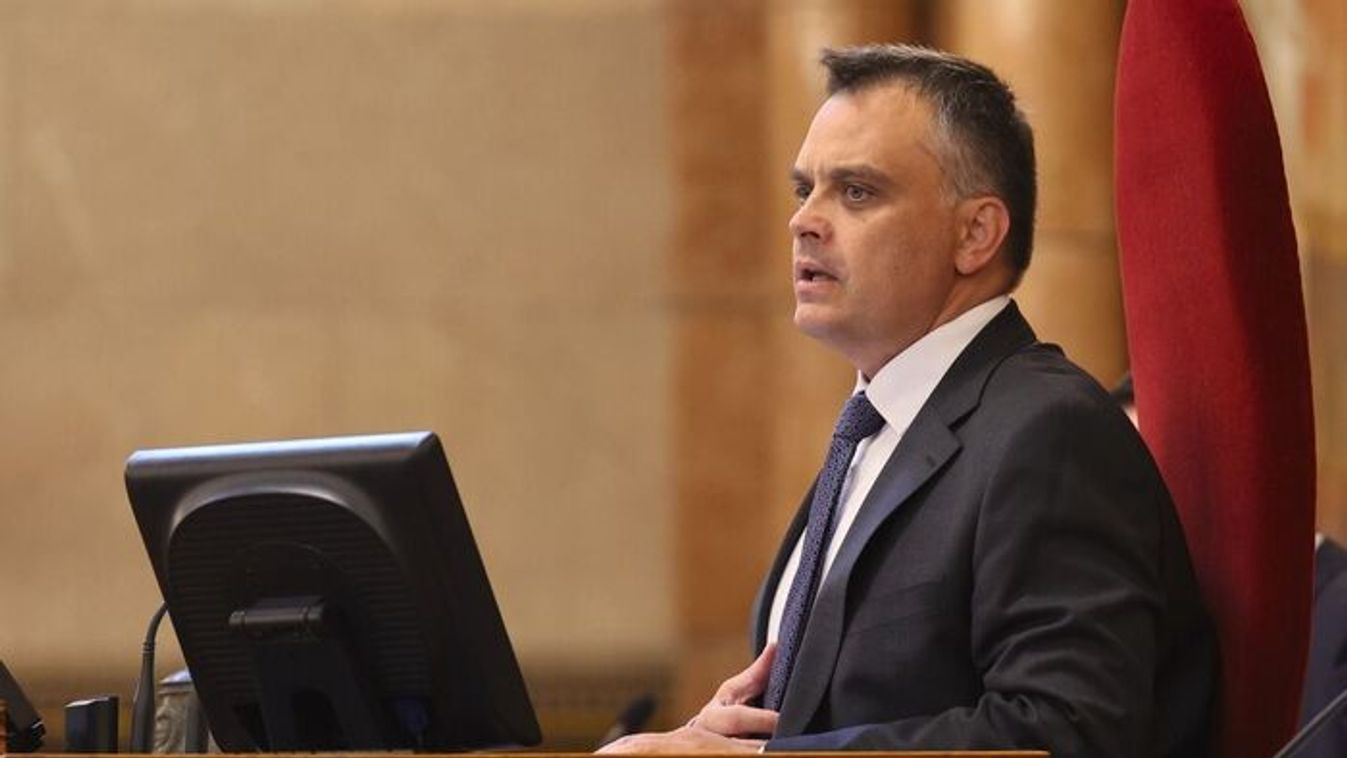
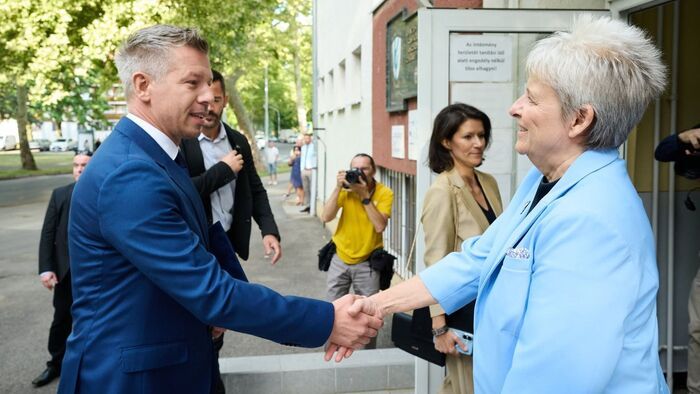
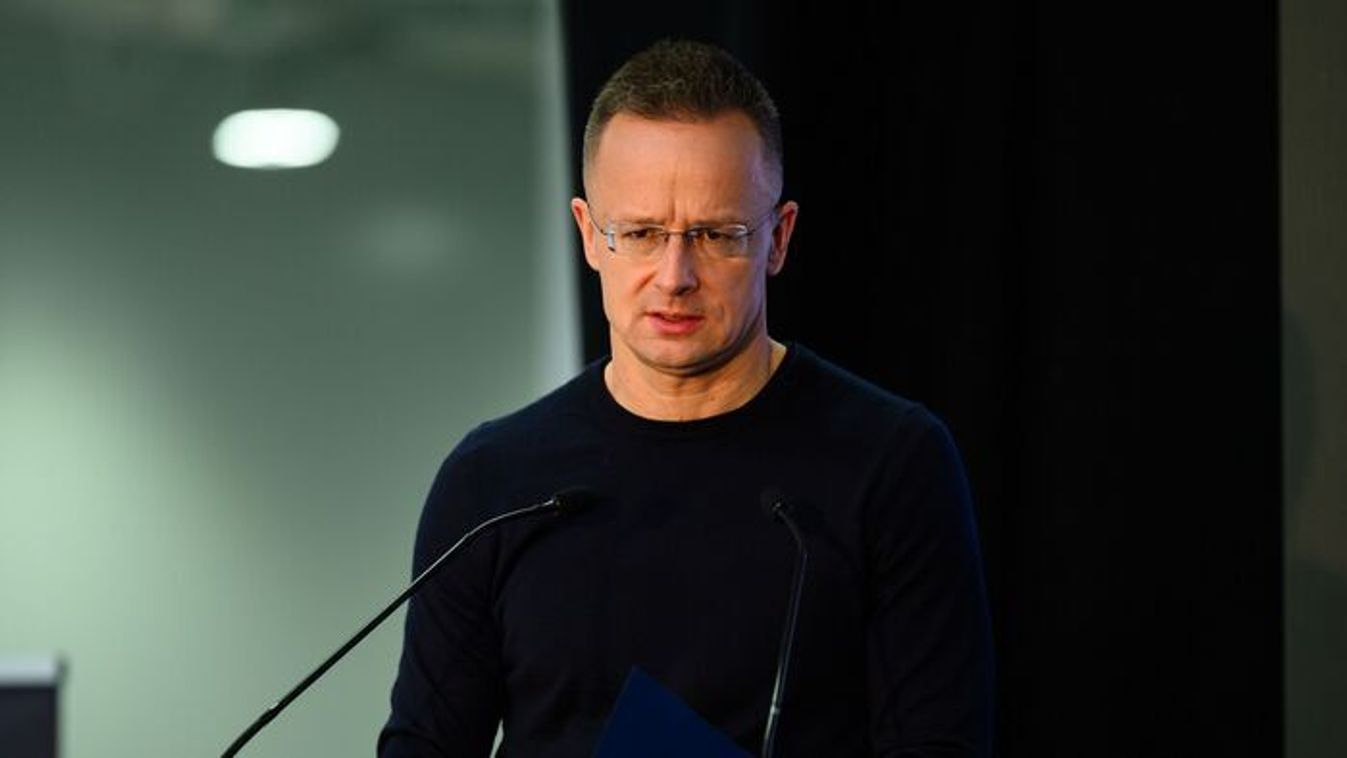
Cover photo: Peter Szijjarto, Hungary's Minister of Foreign Affairs and Trade (Photo: MTI)
Összesen 0 komment
A kommentek nem szerkesztett tartalmak, tartalmuk a szerzőjük álláspontját tükrözi. Mielőtt hozzászólna, kérjük, olvassa el a kommentszabályzatot.
Portfóliónk minőségi tartalmat jelent minden olvasó számára. Egyedülálló elérést, országos lefedettséget és változatos megjelenési lehetőséget biztosít. Folyamatosan keressük az új irányokat és fejlődési lehetőségeket. Ez jövőnk záloga.
Szóljon hozzá!
Jelenleg csak a hozzászólások egy kis részét látja. Hozzászóláshoz és a további kommentek megtekintéséhez lépjen be, vagy regisztráljon!