The Secrets of the Easter Table: Why It Matters What We Eat

If there is a holiday with a taste and a smell, it is Easter. Ham, eggs, braided sweet bread, and horseradish appear on the table in the same way every year. This is no coincidence: Easter foods preserve centuries-old symbols and beliefs that go far beyond the abundance of the feast. For centuries, it was not simply a matter of eating these foods—how and what you ate also mattered.

2026. 04. 05. 15:29
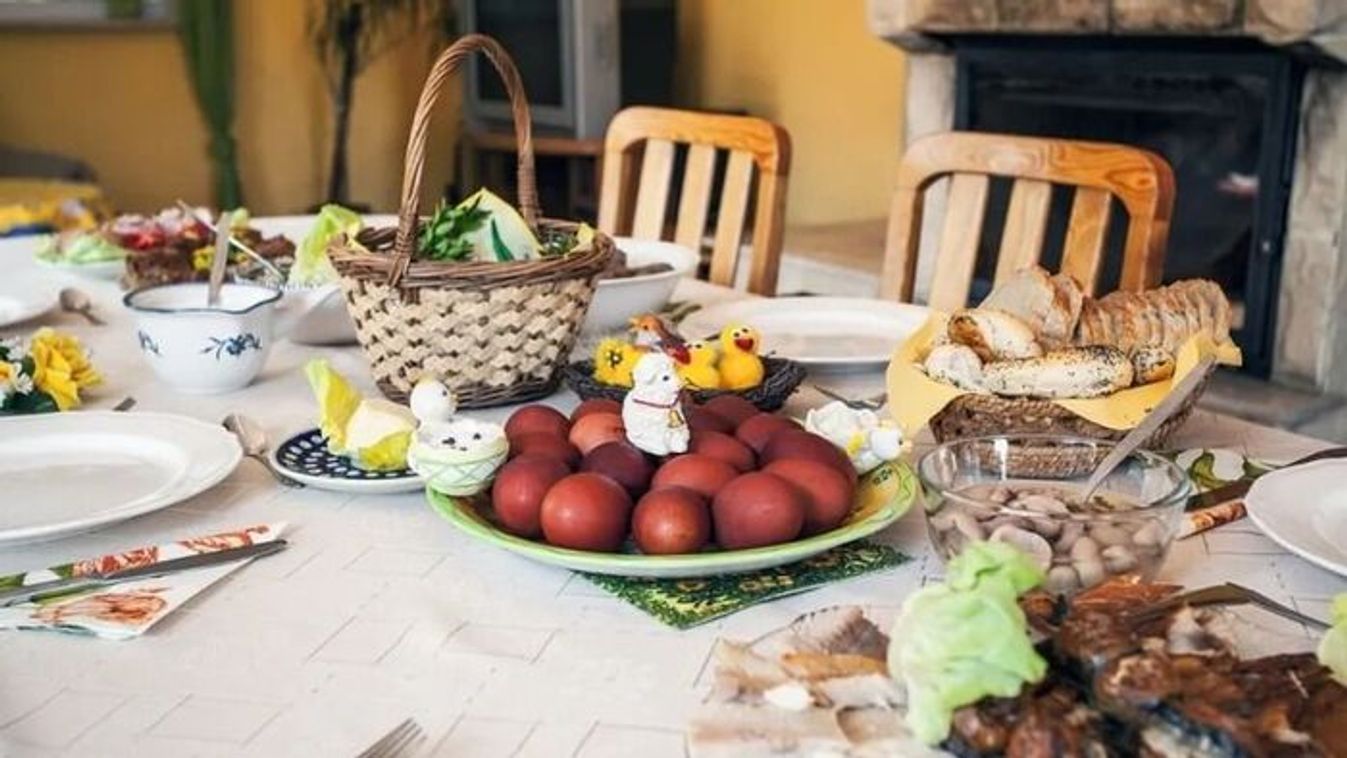
Fstive table at Easter (Photo: Mindmegette)
VéleményhírlevélJobban mondva - heti véleményhírlevél - ahol a hét kiemelt témáihoz fűzött személyes gondolatok összeérnek, részletek itt.

Why did people place the ham bone under the eaves? Did the split egg really show the way home? Did a bite of horseradish truly drive away trouble, or was it only a matter of faith? Behind Easter foods lies a world where food was not only nourishment but also a tool—sometimes for protection, sometimes a sign, sometimes a lifeline.

húsvéti ételek, ételszentelés, húsvét
Easter foods awaiting blessing (photo: fortepan/Bencze Laszlo)

The Symbolism of Easter Foods: What Do Eggs, Braided Bread, and Wine Mean?

The meaning of the most well-known Easter foods can still be deciphered today if we look closely. The braids of the sweet bread symbolized Christ’s crown of thorns, the wine represented his blood, and the eggs signified his resurrection. The sharp taste of pickled horseradish evoked Christ’s suffering (see John 19.29). The Easter table thus functioned as a system of signs, a tradition told through flavors—something everyone understood. These foods were stable points in an uncertain world. Moreover, they were believed to have special powers.

Blessing the Food at Easter: When Food Gains Special Power

The tradition of blessing food was a central element of Hungarian Easter customs for centuries. Baskets brought to church contained ham, eggs, braided bread, horseradish, and sometimes wine. After the blessing, these foods were no longer considered ordinary. It was believed that those who ate them were under special protection: they would not get lost in the forest and would avoid misfortune.

Easter Ham: Protection Around the House

According to the 1863 book Duties of the Hungarian Housewife in Public Life, at Home, and in the Kitchen (Magyar Gazdasszony teendői közéletben, házban és konyhában), ham should be sliced as follows:

Place the ham on its flat side, hold the bone with your left hand, and make a curved cut with your right, slicing thinly from there to the right, including the thick upper meat with its skin. With large hams, only serve the upper part.

The Easter ham was not only the centerpiece of the holiday table but also one of the strongest protective objects. The bone was not broken (symbolizing Jesus’ crucifixion: “But when they came to Jesus, they saw that he was already dead. So they did not break his legs” John 19:33) and was believed to hold great power. In many regions, the bone was placed under the eaves to protect the house from lightning and fire, or near the chimney or attic to ward off fire, disease, hail, or even thieves and witches. Some believed that placing the ham bone near unproductive trees would bring abundant harvests. Easter foods thus extended beyond the table into the life of the household and farm.

The Meaning of Easter Eggs: Guidance and Protection 

In Christian interpretation, the egg symbolizes the resurrection at the Easter table: just as the chick breaks through the shell, Christ rises from the tomb. The red egg symbolizes his shed blood. For this reason, godparents gave red eggs to their godchildren on Easter—sometimes in church or on the way home—to remind them of Christ and the joy of salvation. Over time, this tradition has become a secular gift-giving custom.

In folk belief, eggs also had practical significance. A piece of blessed Easter egg was given to the youngest child to help them speak and praise God. Blessed eggs were often shared, as it was believed that if someone got lost, thinking of the person with whom they had shared the egg would guide them home. The egg symbolized the risen Christ, who is the way, the truth, and the life.

Since blessed foods were never thrown away, leftover eggs were buried, burned, or stored to protect the family. In some areas, they were placed in water so that the joy of Easter would reach distant places.

The Secret of Easter Braided Bread

Traditionally, Easter breads included braided sweet bread, egg and cottage cheese pastries, and yellow cottage cheese tarts. The bread was so important that even crumbs were carefully collected and thrown into flames to contain a fire. It was also believed that crumbs falling to the ground would affect the next year’s harvest.

Horseradish, Onion, Salt

Horseradish, fresh onions, and salt were believed to ward off evil. The strong taste and smell of horseradish drove away evil spirits—it was thought that eating it prevented them from entering the body. Blessed salt was added to bread or given to animals to keep them healthy. Horseradish was eaten grated with vinegar, or as an apple-horseradish sauce served with ham.

Lamb

In some regions, lamb was part of the Easter menu. It symbolized innocence, gentleness, and the submissive, blameless sacrifice of Jesus. Lamb dishes appear in Hungarian cookbooks from the 16th century onward. In a 1680 translation for the Transylvanian princess Anna Bornemisza, recipes for fully roasted lamb—served hot or cold, especially at Easter—were included. Traditional recipes featured smoked lamb with cabbage, spring vegetables (sorrel, asparagus), citrus (lemon, orange), or later, cooked with tarragon and sour cream.

Easter Customs and Superstitions: Racing Against Time

Food blessings were accompanied by special behavioral rules. In many places, people raced home from church with the blessed food. The first to arrive was believed to be the most successful in work that year, while the last could face misfortune. Blessed foods were often shared with beggars or even friends of other faiths, reinforcing the communal spirit of the holiday.

Bourgeois Easter Menus

By the 19th and 20th centuries, Easter tables increasingly featured richer, multi-course meals alongside traditional foods. The table became both symbolic and representational, reflecting wealth, taste, and contemporary culinary trends. The 1909 cookbook called Fasion Magazine(Divat Újság) recommended the following Easter lunch:

  • Broth with fine noodles and mushroom dumplings
  • Blessed ham with eggs and horseradish
  • Stuffed cabbage; lamb rack with green salad
  • Caramel soufflé
     
  • Broth with pea garnish
  • Blessed ham, eggs, horseradish, and braided bread
  • Cauliflower with butter; lamb rack with lettuce
  • Cold rice; orange; cheese; black coffee
     
  • Broth with lung dumplings
  • Blessed ham with horseradish and eggs
  • Kolozsvár cabbage; roasted turkey with mixed compote
  • Fried dough; fruit

What Remains of Easter Food Symbolism Today?

Today, most Easter foods are still on the table, but their meaning has largely faded. We rarely remember that these foods once reminded us of our faith, promised protection, or offered guidance in uncertain times. Behind these customs lies a world where food was more than nourishment—and perhaps it still is, if only we paid closer attention.

What Easter Foods Symbolize

  • Egg: resurrection
  • Red egg: Christ’s blood
  • Braided bread: crown of thorns, sacrifice
  • Wine: Christ’s blood, covenant
  • Ham: abundance, protection
  • Pickled horseradish: suffering, warding off evil
  • Salt: purity, protection
  • Lamb: sacrifice, innocence


Komment

Összesen 0 komment

A kommentek nem szerkesztett tartalmak, tartalmuk a szerzőjük álláspontját tükrözi. Mielőtt hozzászólna, kérjük, olvassa el a kommentszabályzatot.


Jelenleg nincsenek kommentek.

Szóljon hozzá!

Jelenleg csak a hozzászólások egy kis részét látja. Hozzászóláshoz és a további kommentek megtekintéséhez lépjen be, vagy regisztráljon!

A téma legfrissebb hírei

Tovább az összes cikkhez chevron-right

Ne maradjon le a Magyar Nemzet legjobb írásairól, olvassa őket minden nap!

Google News
A legfrissebb hírekért kövess minket az Magyar Nemzet Google News oldalán is!

Címoldalról ajánljuk

Tovább az összes cikkhez chevron-right

Portfóliónk minőségi tartalmat jelent minden olvasó számára. Egyedülálló elérést, országos lefedettséget és változatos megjelenési lehetőséget biztosít. Folyamatosan keressük az új irányokat és fejlődési lehetőségeket. Ez jövőnk záloga.