Likely Distribution of the 199 Parliamentary Seats After April 12 Elections

It can be stated with high probability that the Fidesz–KDNP alliance will once again secure an absolute majority in Hungary's next national assembly, likely winning 109 out of 199 seats. This would ensure that Viktor Orban remains Hungary’s prime minister after the 2026 election. According to the mandate projection of the Nezopont Institute, the Tisza Party, together with Akos Hadhazy, could obtain 81 seats, while Our Homeland could secure eight. The 199th seat is expected to go to the Roma minority list.

2026. 04. 03. 17:19
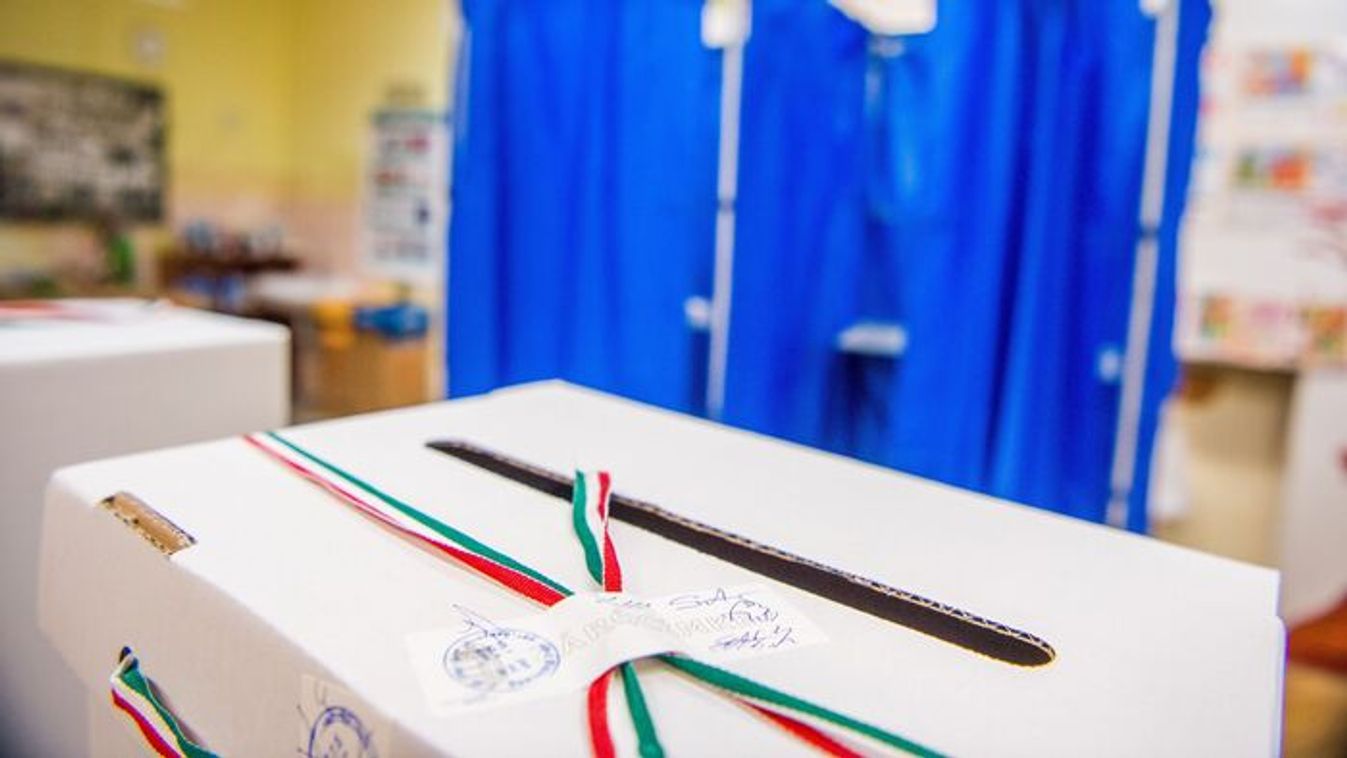
Photo: MTI/Zoltan Balogh
VéleményhírlevélJobban mondva - heti véleményhírlevél - ahol a hét kiemelt témáihoz fűzött személyes gondolatok összeérnek, részletek itt.

According to the Nezopont Institute, Fidesz will remain in the majority in the next parliament. Their analysis, supported by a detailed mandate estimate, attempts not only to identify the most likely winners in all 106 individual constituencies, but also to estimate the distribution of the 93 list seats. Earlier this week, the institute already published its projections for the constituencies: Fidesz is expected to win 66 districts, the Tisza Party 39, and in one district a Tisza-aligned independent candidate is likely to prevail.

Fidesz will remain in the majority in the next parliament - Mandate estimate for the outcome of the 2026 parliamentary election (Source: Nezopont Institute)

“The Hungarian electoral system seeks to balance governability with proportional representation of political camps. The price of this is the complexity of the seat allocation system. Estimating the distribution of list mandates essentially requires solving an equation with at least eight unknowns. However, these variables can be approximated based on previous election data and current polling, as shown below” the report says.

  • Turnout estimate: the projection assumes a historically high turnout of 75 percent, corresponding to approximately 5.72 million valid domestic votes. While survey respondents often indicate even higher willingness to vote, based on political engagement and past behavior, turnout is not expected to reach 80 percent.
  • Minority mandates: Voters belonging to minority groups could register until April 2. Based on available data, it is almost certain that the Roma minority will gain representation in the new parliament, while the German minority is unlikely to do so. To obtain a preferential minority seat, a list must reach a threshold estimated between 24,000 and 25,000 votes. As of April 2, the number of registered German minority voters remained below this threshold, while the Roma registrations approached 47,000. Based on typical turnout patterns, only the Roma minority is expected to secure a seat.
  • Number of party list seats: If only one minority list qualifies, 92 seats will be distributed based on votes cast directly or indirectly for party lists.
  • Number of party lists exceeding the five percent threshold: it is assumed that only three parties will enter the next parliament, because only three party lists will reach the five percent share of valid and direct list votes, both domestic votes and votes from outside Hungary.
  • Domestic party list votes directly cast: Using its latest national poll conducted on March 23–24 and the turnout data indicated in point one, the institute estimates the following domestic list results: Fidesz at 46 percent (2.63 million votes), Tisza Party at 40 percent (2.29 million votes), and Our Homeland (Mi Hazank) at 8 percent (457,000 votes).
  • Votes from Hungarians abroad directly cast for party lists: A record 497,000 Hungarians abroad have registered for the 2026 election. Assuming a turnout similar to 2022 (59 percent), approximately 293,000 valid votes will be cast. The vast majority of these are expected to go to the three parties (the other two lists will presumably receive a negligible number of votes).
  • Distribution of votes from Hungarians abroad directly cast for party lists: voter preferences abroad are difficult to measure, although nearly four-fifths of them live in Transylvania or Southern Slovakia. Therefore, when estimating the number of votes, past election results and the Tisza Party's campaign activity abroad were also taken into account. When estimating the mandates, the projection assumed Fidesz will receive 86 percent of these votes, Tisza 12 percent and Our Homeland 2 percent, corresponding to roughly 252 thousand, 35 thousand, and six thousand votes, respectively.
  • Number and distribution of domestic votes indirectly cast for party lists: when allocating list mandates, not only domestic and and votes from abroad cast directly for the party list must be taken into account, but also "indirectly cast",so-called fragment votes from individual constituencies. The source of  fragment votes is either the number of votes above the relative majority of the winning candidate in the individual constituency, or the number of votes cast for the losing candidates, if their nominating party has reached the five percent threshold on the list branch.

Since the Nezopont Institute's mandate estimate was based on  determining constituency winners according to their estimated results, it was possible to assign vote numbers to the candidates of each party. In doing so, the usual pattern of deviation of local willingness to participate from national turnout was considered as a basis. The number of fragment votes can be accurately calculated from the absolute value of the number of votes. Accordingly, the following fragment votes were calculated: the Fidesz list could receive 1,349,013 fragment votes after the 66 winning (and forty losing) constituencies, the Tisza Party list could receive 1,694,844 after the 39 winning (and 67 losing) constituencies, and Our Homeland list could receive 418,200 fragment votes. However, it should be noted that the estimate of the number of fragment votes is necessarily inaccurate, because they depend on the number of final candidates in the 106 constituencies and the success of mobilization.

The projection also took into account candidate withdrawals announced up to April 2.

How many seats are we talking about?

Based on the above estimates, the distribution of the 92 mandates that can be obtained from party-list votes can also be projected. The electoral system applies the d’Hondt method, selecting the 92 highest values from the quotients of all direct and indirect list votes calculated with whole numbers. Based on the estimation procedures outlined above, a total of 4,230,189 direct and indirect votes were taken into account for the Fidesz list, 4,016,368 for the Tisza list, and 881,333 for the list of Our Homeland. Accordingly, the Fidesz–KDNP list could secure 43 mandates, the Tisza Party  list 41, and the list of Our Homeland eight out of the total 92.

If we add the number of list mandates to the number of individually won constituencies, we arrive at the total number of mandates. 

Thus, Fidesz–KDNP could hold 109 seats, the Tisza Party eighty, Our Homeland eight, and the Roma minority one seat in the next parliament, while an additional mandate is expected to be won by independent Akos Hadhazy aligned with the Tisza Party.

With such majority situation, Viktor Orban's re-election as prime minister can be considered certain, the Nezopont Institute concludes.

Komment

Összesen 0 komment

A kommentek nem szerkesztett tartalmak, tartalmuk a szerzőjük álláspontját tükrözi. Mielőtt hozzászólna, kérjük, olvassa el a kommentszabályzatot.


Jelenleg nincsenek kommentek.

Szóljon hozzá!

Jelenleg csak a hozzászólások egy kis részét látja. Hozzászóláshoz és a további kommentek megtekintéséhez lépjen be, vagy regisztráljon!

A téma legfrissebb hírei

Tovább az összes cikkhez chevron-right

Ne maradjon le a Magyar Nemzet legjobb írásairól, olvassa őket minden nap!

Google News
A legfrissebb hírekért kövess minket az Magyar Nemzet Google News oldalán is!

Címoldalról ajánljuk

Tovább az összes cikkhez chevron-right

Portfóliónk minőségi tartalmat jelent minden olvasó számára. Egyedülálló elérést, országos lefedettséget és változatos megjelenési lehetőséget biztosít. Folyamatosan keressük az új irányokat és fejlődési lehetőségeket. Ez jövőnk záloga.