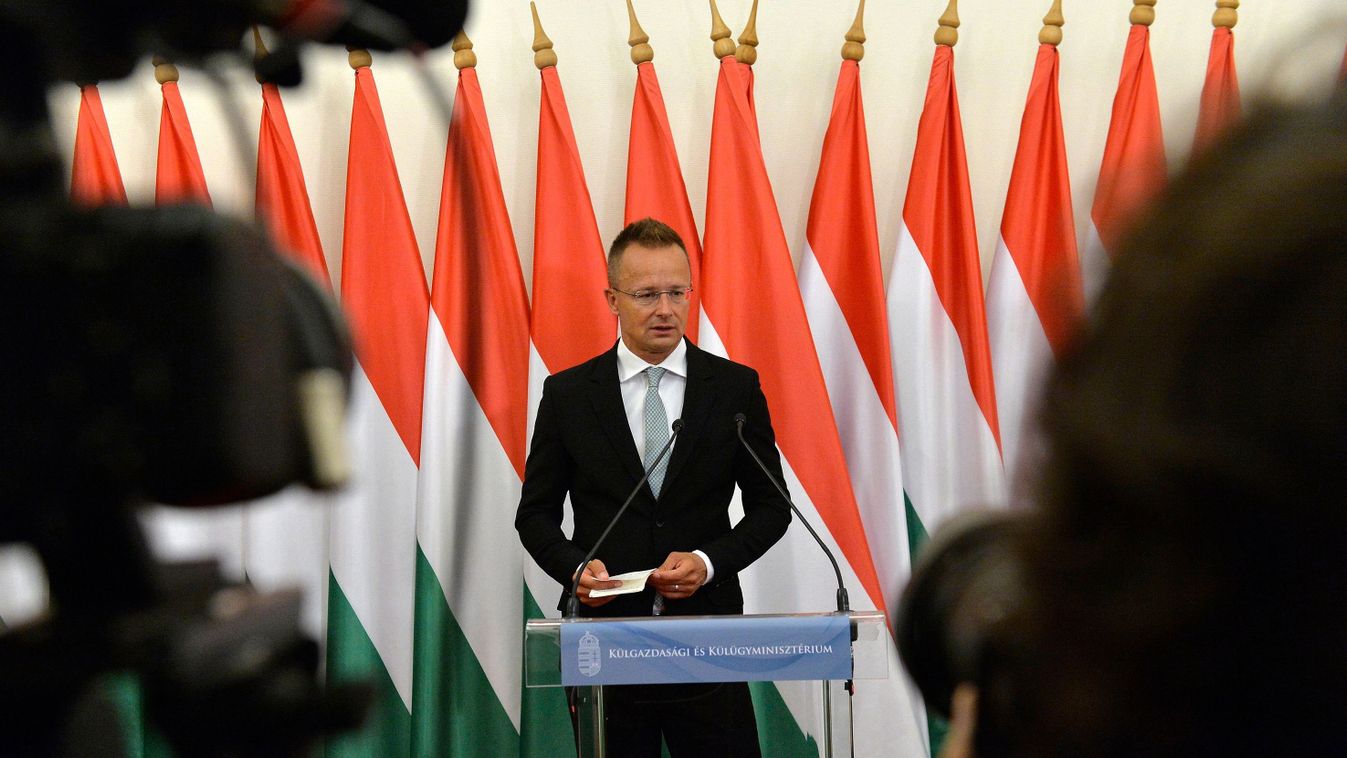
Speaking about Hungary's ban on grain imports from Ukraine, Peter Szijjarto noted that it was regrettable that Russia had backed out of the Black Sea grain export deal earlier this month, despite efforts by Turkiye and personally President Erdogan to keep the deal afloat. Hungary has always kept solidarity corridors open, contributing to Ukrainian grain being delivered to African and Middle Eastern countries, he said. Some of the grain, however, remained in Hungary rather than being transported to the countries in need.
Hungary's government will continue to keep transit routes for Ukrainian grain exports. However, the large quantities of cheap Ukrainian grain arriving in Hungary - intended for poor African countries at risk of starvation - threatened to ruin Hungarian markets and farmers, as the cost of grain production is much higher in Hungary than in Ukraine due to strict EU regulations.
Regarding Hungary’s energy security, FM Szijjarto highlighted the importance of the Trans-Anatolian (TANAP) gas pipeline project, noting that Hungary has helped to build the TurkStream pipeline — alongside Russia, Turkiye, Bulgaria and Serbia — which is now capable of delivering 8.5 billion cubic meters of gas to Hungary,
Hungary started diversifying its energy resources long before the outbreak of the war in Ukraine, he emphasized. Besides Russia, the most important players to provide Hungary’s energy mix will be Turkiye, Azerbaijan and Qatar, he said. Under the latest agreement with the Turkish oil and gas company BOTAS, Hungary will receive nearly 300 million cubic meters of gas next year, he said, pointing out that this will be the first time that Turkiye will not only be a transit, but also a source country.