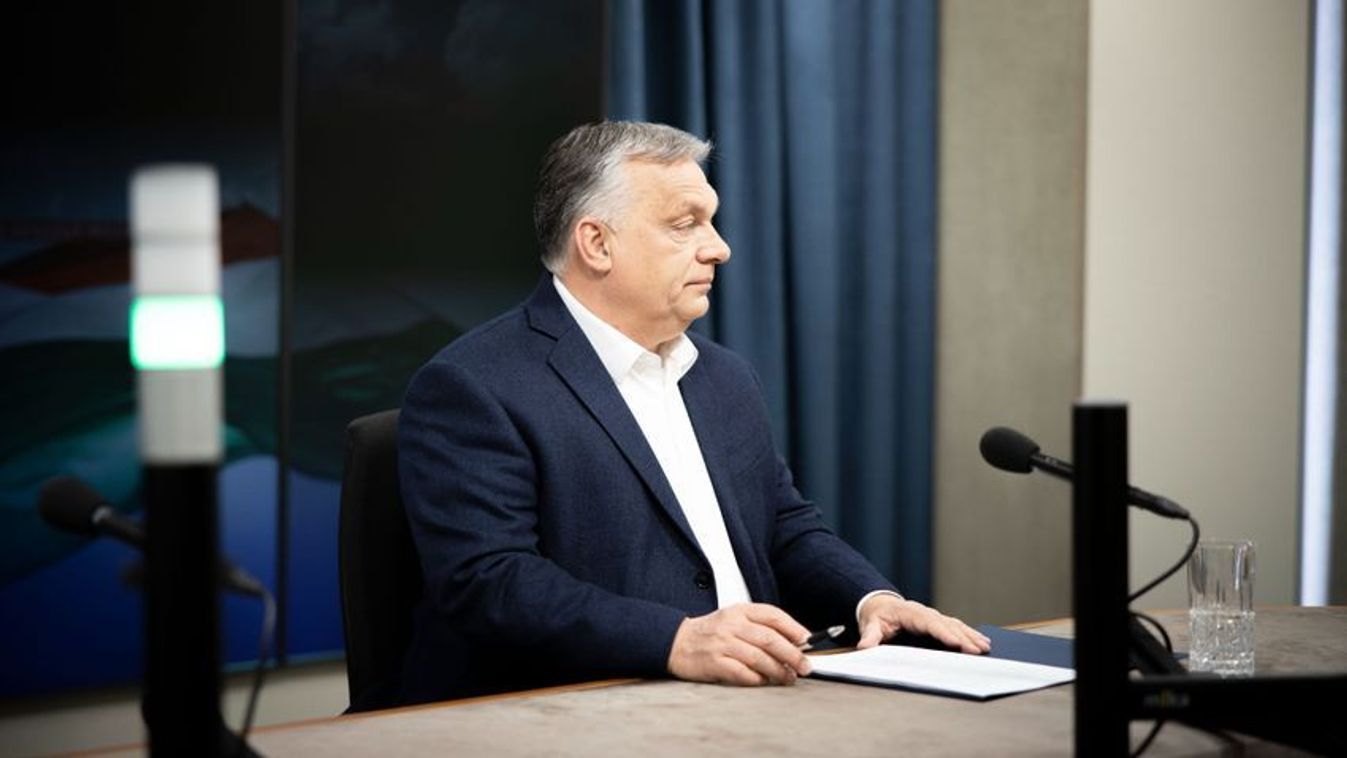
"Everything must be done to ensure that Hungary is not dragged into the war. They want to spend a hundred billion dollars on this mission, and it will ruin us. In addition to the loss of human lives, the economy is also suffering in this situation, and the war is destroying the work of generations," Mr Orban said. "Instead of pushing for solutions on the battlefield, it is necessary to return to the negotiating table," he said. Viktor Orban also noted that the NATO secretary general will visit Hungary before the elections.
He recalled that Istvan Tisza (prime minister of Hungary 1913-1917) wanted to stay out of the First World War because he knew the risks were huge. Viktor Orban noted that he has recently looked up some history books and that the antecedents of both world wars are instructive in the current situation.
He pointed out that Miklos Horthy (regent of Hungary from 1920-1944) also wanted to stay out of the war, but then the Germans pushed him into it.
Our predecessors did not succeed. I set myself the goal of making sure that we succeed,
he stressed.
If in the upcoming elections, the Hungarians lend the governing parties sufficient support on the international stage, this will strengthen our position, the Hungarian prime minister said, addig that
Hungarians should demonstrate unity on the issue, but this is difficult because of the pro-war stance of the Left supported from abroad.
"It's important for leaders not to get discouraged. The foreign minister is doing well, and I'm also holding out. Robert Fico has dropped out, but we are looking for new allies," he said, noting that the Hungarian government has room for maneuver in diplomacy regarding this matter.
Cooperation with China offers a huge opportunity
Twenty years have passed between the Chinese president's recent visit and the last visit to Hungary by China's then president, PM Orban said. During those twenty years China's economic power doubled, while the EU lost twenty percent of its economic strength. At the time, China accounted for nine percent of the world's total economic output, and now it is about twenty percent. "We accounted for 19 percent then, now we are around 14.5," he said, referring to Europe. Not only the quantities have changed, but also the quality, in his view. In many technologies, it is not the West but the East that is leading the way.