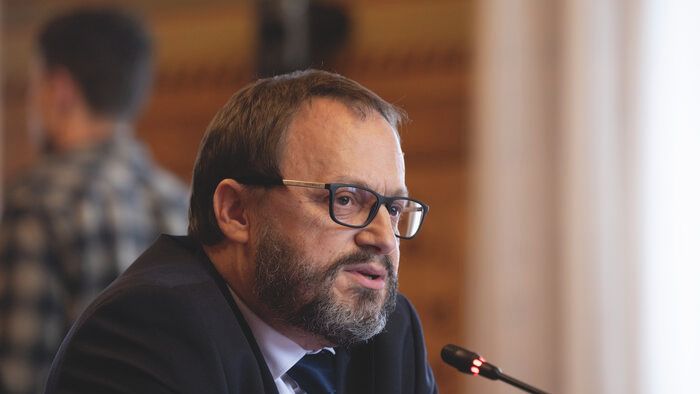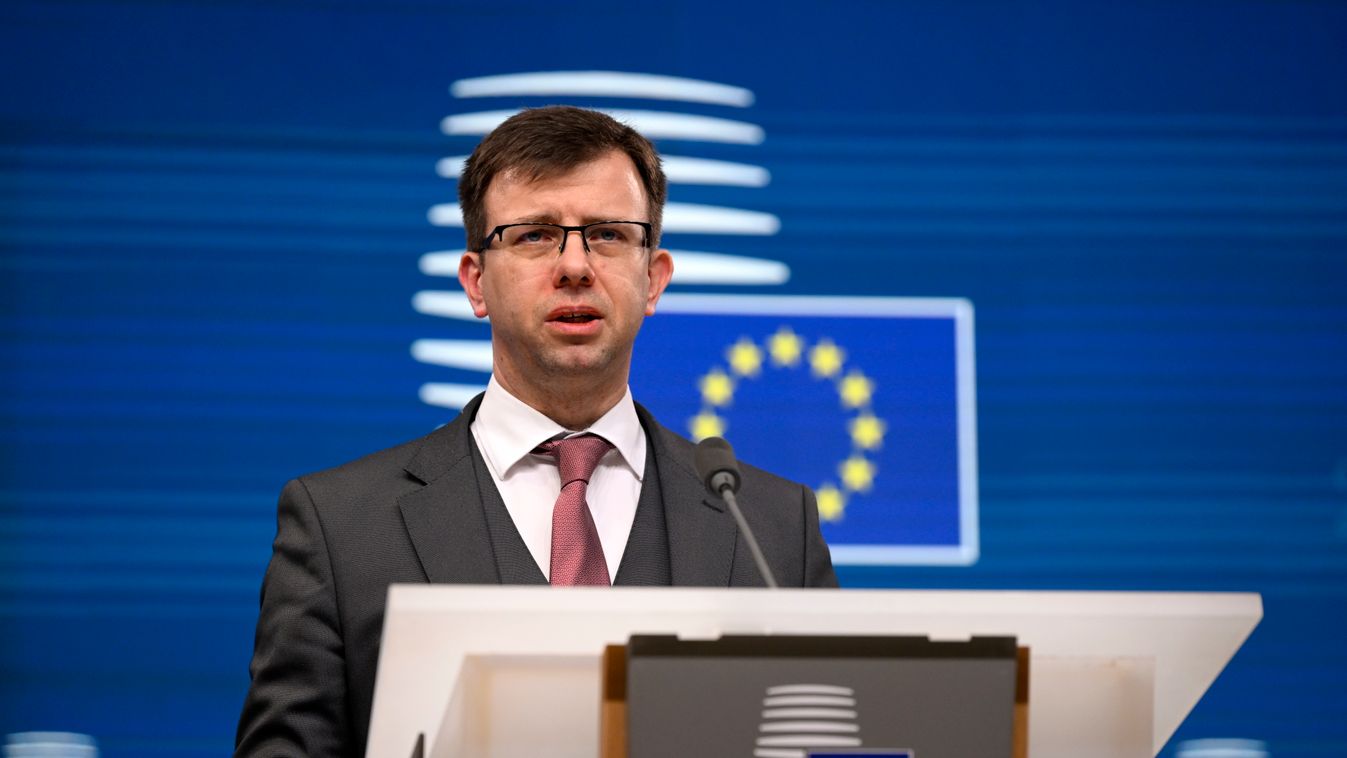
According to Mr. Boka, the EU’s declining competitiveness is largely due to flawed political decisions by the EU and its institutions. Progress is impossible without reviewing these mistakes.
Among these, he listed several issues, including trade and customs policies based on separation, isolation, and the formation of blocs, which significantly reduced the EU’s economic potential. He also pointed out that the green transition was implemented in conflict with Europe's industrial players and at odds with European agriculture.
Mr. Boka questioned whether the EU institutions and leaders who contributed to the current situation would be capable of guiding the EU out of the current crisis. For change to occur, EU member states and citizens must exert constant pressure on European institutions, he said, noting that the Budapest Declaration was a step in this direction.
He also addressed the need for member states to demand that the European Commission also adhere to the same rule-of-law standards and basic tenets of legality that it often holds some its member states accountable for, such as objectivity, impartiality, and equality among member states.
Some initial steps have been taken in this area, but they have encountered the "rigid resistance" of European institutions, Mr. Boka recalled.
Hungary's EU Affairs minister stated that over the past decade, the European Commission has clearly operated as a political body, pushing its own agenda even in opposition to the will of member states. He added that the Commission has done this through a "highly flexible interpretation" of EU treaties, which can only meet the test of legality by "stretching the bounds of interpretation," - he added.
He emphasized that for the EU to function effectively, it must return to "the letter and spirit of the treaties" and ensure that European institutions stick to their competencies, executing tasks jointly defined with member states rather than acting against them. Mr. Boka described the Erasmus controversy as both disheartening and deeply troubling, arguing that it exposes all the dysfunctions of EU operations. He identified the starting point as a so-called rule-of-law procedure aimed at restricting Hungary’s access to EU funds and programs to pressure the Hungarian government into adopting certain political positions.
The sole purpose of this is political coercion; it has nothing to do with protecting EU funds or European core values,
– he declared. He noted that Hungarian students, researchers, and institutions have become hostages to this political struggle, which he described as the result of "an obviously unlawful and blatantly discriminatory decision" by the Commission and the Council.
The Hungarian government has used every political and legal tool at its disposal to eliminate this discriminatory situation and will continue to do so to ensure that Hungarian students and researchers receive access to the resources and programs that they're entitled to,
– Mr. Boka concluded.