Brussels Made a Strategic Mistake
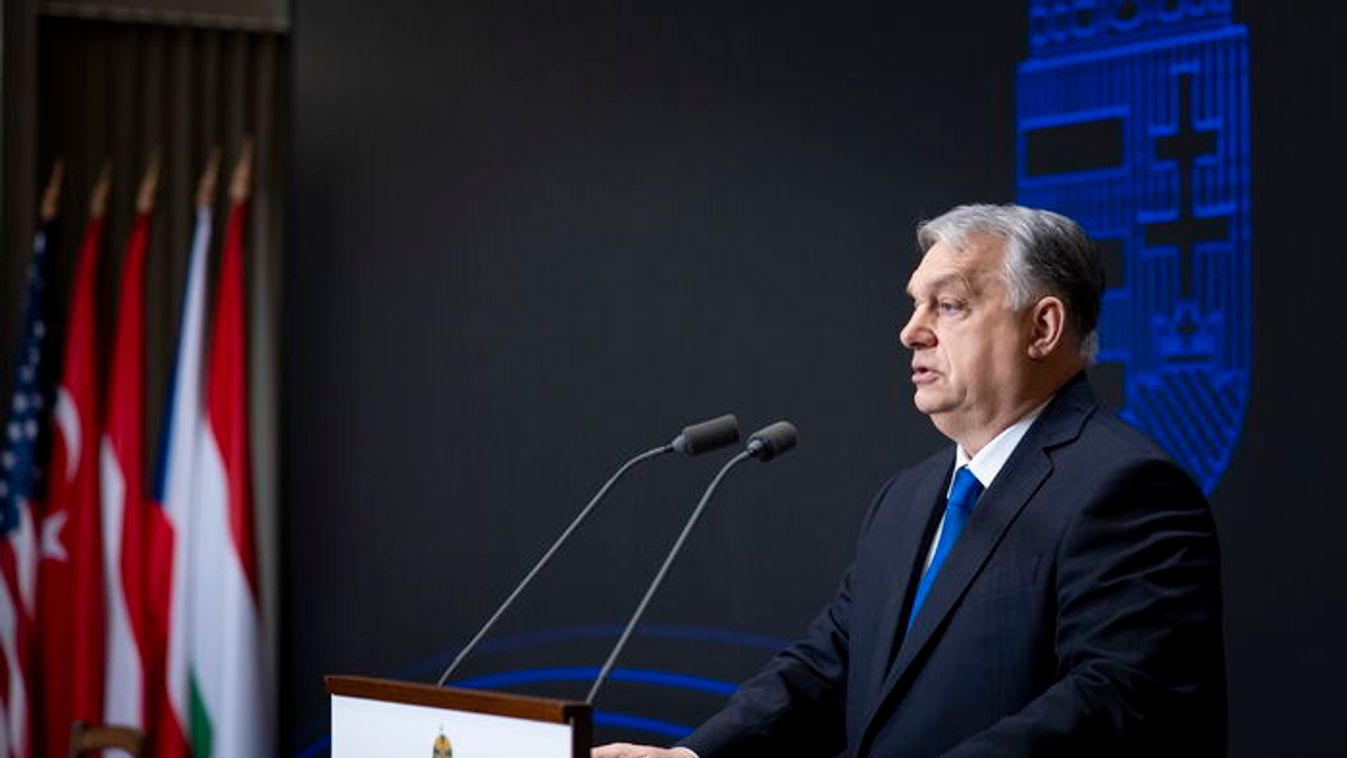
Viktor Orban argued that recent developments clearly demonstrate that Europe’s decision to cut itself off from the Russian energy system was a major strategic mistake. "In a period like this, diversification is necessary, not separation. Diversification means expanding options, being able to obtain energy from as many sources as possible. Cutting off a supply source, however, does the opposite: it narrows the range of available options."
I would like to note that migration pressure has not disappeared and could return with renewed intensity due to the war in the Middle East and although we do not yet see tangible signs of it, it is intellectually worth preparing for this possibility,
he warned.
Currently, approximately 280 million migrants are recorded worldwide. According to projections by research institutions, that number could exceed 400 million by 2050. Migration therefore will not disappear from global politics; it will remain and grow significantly.
The Prime Minister highlighted that Iran alone has a population of about 90 million, while neighboring countries — some of which Iran is trying to draw into the conflict zone — are home to roughly 450 million people.
I would like to remind everyone that the massive migration wave of 2015–2016 was triggered by the collapse of order in Syria and the outbreak of civil war there, just like in Iran now. So it is good to be sensible. From Iran it is possible to travel quickly to Turkey, and from Turkey migrants can reach Hungary through the Western Balkans. We are preparing for this. We are prepared for that scenario,
the Prime Minister explained, adding that given this situation, cooperation within the Hungarian national community will remain essential regardless of the outcome of the upcoming elections. "So while the election campaign is all about the intensifying competition, if we look beyond the 30-day horizon and consider the future of the Hungarian community, it remains a matter of great importance—indeed, a matter of survival—that we maintain the strongest, most complete, and most comprehensive national unity possible on strategic issues.
"This underscores the importance of institutions such as the Forum of Hungarian Lawmakers from the Carpathian Basin. After the elections it will not only be necessary to reunify the country within Hungary. We must also maintain unity between the Hungarian communities beyond the borders and the mother country."
Even though political battles and campaigns are currently underway, Viktor Orban stressed that broad national unity will be essential afterward if Hungary is to secure favorable positions in a complex and rapidly changing world.
Hungary Supports Hungarians Beyond the Borders
Since 2010, Hungary has increased its support for ethnic Hungarian communities outside Hungary tenfold. About 1.2 million ethnic Hungarians living outside the country have officially obtained Hungarian, Viktor Orban said.
The government has also pursued cultural and spiritual reunification, along with economic integration. Since 2016, Hungary has provided 246 billion forints in business development support in regions populated by ethnic Hungarians beyond the borders. These programs generated additional investments totaling about 480 billion forints, stimulating economic activity in those areas. The subsidy system provided by Hungary was the core and starting point of tese investments.
Support for children participating in Hungarian-language education in their home regions has been increased to 100,000 forints per student, and during the previous school year 230,000 Hungarian students received this support. It would be better if there were more students studying in their mother tongue, but 230,000 is still a very significant number given the size of Hungary. Under a kindergarten development program, Hungary has created 158 kindergartens and daycare facilities. Overall, government programs have reached 1,300 Hungarian communities outside Hungary and supported more than 6,000 Hungarian institutions and organizations,
Hungary's Prime Minister pointed out.
He briefly mentioned Hungary’s ongoing disputes with Ukraine but did not elaborate due to time constraints. Instead, he turned to the broader question of how countries are responding to the transformation of the global order.
For Hungary, he said, the challenge is intellectual as well as political: finding the position and strategy that best serves the interests of the Hungarian nation in a rapidly changing world. Two distinct approaches to these changes have emerged. I believe this the key to understanding the current situation. Some countries, particularly major powers, are working to ensure that the transition from the current global system to a new world order occurs in an organized and structured manner. Within such a transition they seek to define their own place. They include the United States, China, and India. Russia may also belong to this group, although its current involvement in war makes its position less clear,
he explained. “What is perhaps most important for us politically and intellectually is how the United States relates to this change in the world order,” Viktor Orban said. For the first time in his career, he added, he sees an American administration openly acknowledging that the existing global order runs contrary to its interests and therefore needs to be changed. "In the past I only saw administrations that said the world had an order that basically favored the United States, and that this order simply had to be protected through ensuring the good functioning of the rule of law, diplomacy, and international institutions," the Prime Minister emphasized.
"That era is now over," he said. "For the first time we are facing an American administration that believes the current course of events is not favorable for the United States, and that if things continue this way, America will lose important positions globally, existential positions in their perspective."
"Therefore, this order must be changed. They have a plan for what they want to change it into. They know whose interests this will harm, and they have an idea of how, through managing those interests—sometimes through conflict—they can move from point A to point B. And they are working on that," Viktor Orban pointed out.
The Hungarian Prime Minister recalled a personal experience from the spring of 2022, when European leaders were discussing the issue of Russian energy.
I clearly remember sitting next to Olaf Scholz, Chancellor of Germany, who at the time stated that Germany would never allow its economy to be cut off from Russian energy supplies. And that he also said it would never be conceivable for Germany to send weapons capable of killing people anywhere. Helmets perhaps, but not rifles,
Viktor Orban said.
At the time, the German media strongly criticized the Chancellor for those statements. "Then two weeks later he announced that of course it was very important to send weapons to Ukraine, and that Germany would be at the forefront of the effort to break away from Russian energy. The same media outlets that had criticized him soon afterward praised Scholz as an exceptionally thoughtful and strategic leader," he added.
Viktor Orban pointed out that this example demonstrates that appearances can be misleading. "We should not trust our eyes too easily or fall victim to illusions," he added. Many things can be said about the President of the United States and his policies, Viktor Orban noted, but the reality is that the United States is following a carefully designed strategy. "They are implementing their plan step by step, down to the level of concrete actions, in order to reshape the world in a way that turns a situation currently unfavorable to them into one that is advantageous."
"Studying the internal economic indicators of the American economy helps explain this strategy. What I wanted to say is that a group of major countries now recognizes that the transition from the current global order to a new one is inevitable and must be managed. Even though there may be differences between them regarding the final outcome and their respective interests, they aim to reach agreements that will ultimately lead to a new state of affairs."
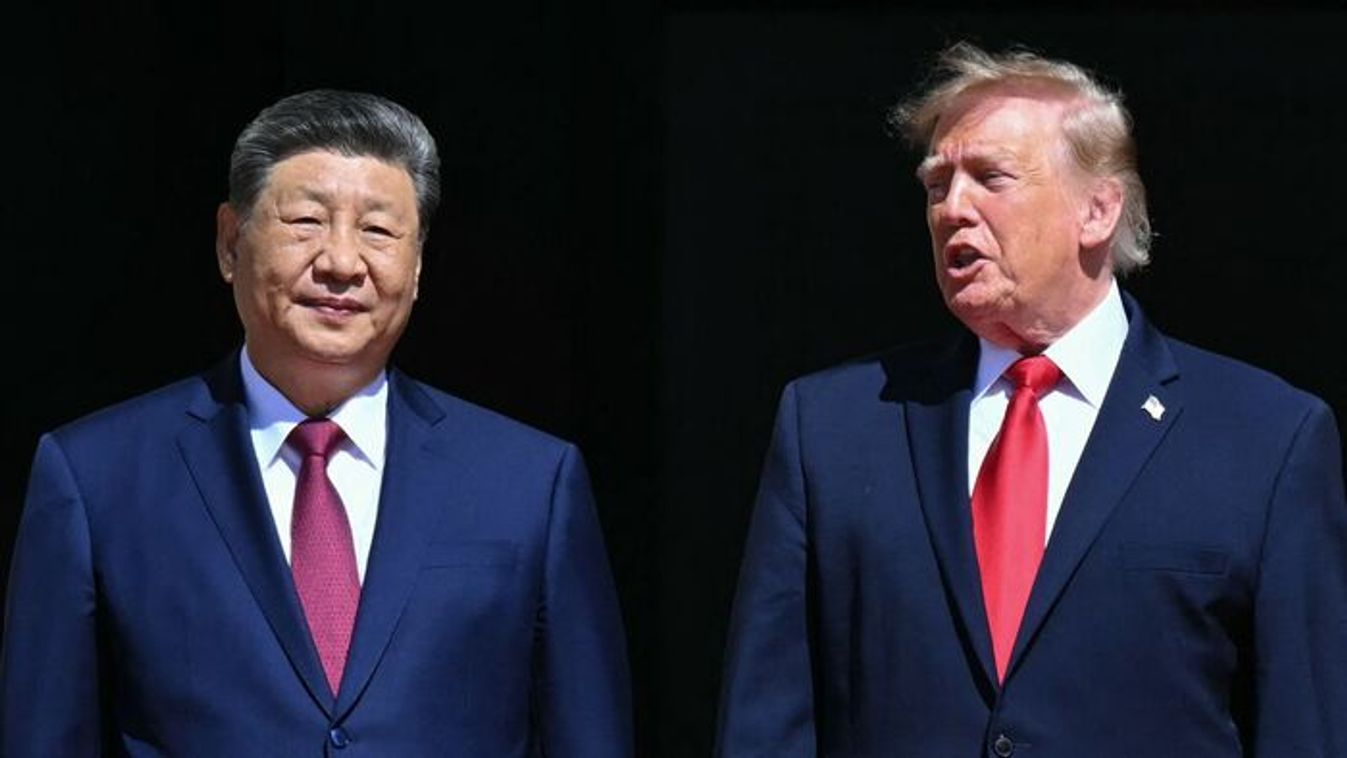
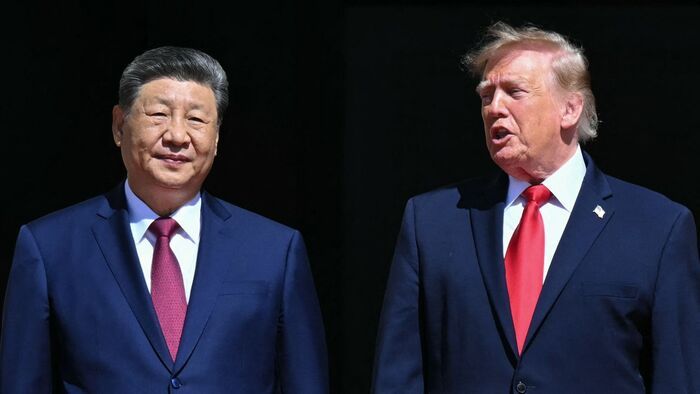
Viktor Orban suggested that everyone should pay attention to a visit at the end of the month. "For the first time, the American President will visit China without stopping in the region’s allied countries such as Japan or South Korea. He will go only to China," he said.
This, he argued, demonstrates that negotiations about a new global order are taking place behind the scenes regardless of what the public sees on the surface.
And there is another group of countries interpreting these global changes very differently. These countries do not consider the changes inevitable or desirable. They do not see them as an opportunity but as a threat,
he pointed out.
"This group includes Western European countries. This is the European perspective on the situation. There is no plan in Europe for what Europe’s new position should be in a changing world. What characterizes the situation is the defense of the remnants of the old order. So they are fighting a rearguard action, banking on the political outlook that the Republicans will be weakened in the US House of Representatives mid-term elections due toward the end of the year, lose the next presidential election, the Democrats will return, and will then re-establish with the Europeans the unity that they were able to maintain until 2015–2016."
"However, this expectation is unrealistic. Even if the Democrats return to power, they have also understood America’s position. They also see that maintaining the status quo is not in the United States’ interest. Therefore, Europe should not expect an American government whose strategic interests fully coincide with Europe’s."
Unless Europe adjusts its own strategy, the United States will not adapt itself to European expectations, he added. "This is why Brussels views the global transformation primarily as a threat rather than as an opportunity. Hungary sees the situation differently and believes opportunities exist within the changing order. They see nothing but a threat, which is why they have committed themselves to supporting Ukraine and continuing the war. Moreover, Brussels, as a bureaucratic entity above nation-states, has its own instinctive world and reflex system: no matter what crisis erupts in the world, the answer is 'more Europe', that is, if problems arise at the European level, then the nation-states should transfer powers to the central bureaucracy."
No matter what crisis arises, the response is always the same: give more power to Brussels. And the war between Ukraine and Russia provides the perfect backdrop for this argument. Citing this war, the most serious centralization efforts are on the table, including detailed economic issues, since one of the key points of Brussels’ response is that Europe must switch to a war economy, and a war economy is a centrally planned system,
Viktor Orban pointed out.
He said there is currently no clear European strategy for how the continent should adapt to the changing global situation. According to him, the only actor within European politics that clearly knows what it wants is the central EU bureaucracy, which seeks to collect more powers from the sovereign nation-states. Ukraine, meanwhile, is interested in continuing the war and is willing to cooperate with any partners who support that objective.
It is not our role to judge—especially not on moral grounds—whether it is right or wrong for Ukraine to continue the war. Although one could argue here that, given the presence of nuclear weapons on the other side, the consequences of continuing the war extend far beyond Ukraine’s borders. Because it could also lead to the use of a new type of weapon whose negative consequences would not be felt by Ukraine alone. But I would set this argument aside and would not dispute the right of any nation or nation-state to decide for itself whether it wishes to fight or make peace,
Viktor Orban stated.
He went on to point out that if Ukraine decides to continue fighting, that is its sovereign right. However, Ukraine cannot impose obligations on Hungary based on that decision. "They made this decision without consulting us, without considering our interests. Therefore their decision does not create any moral, political, or economic obligation for Hungary," he explained.
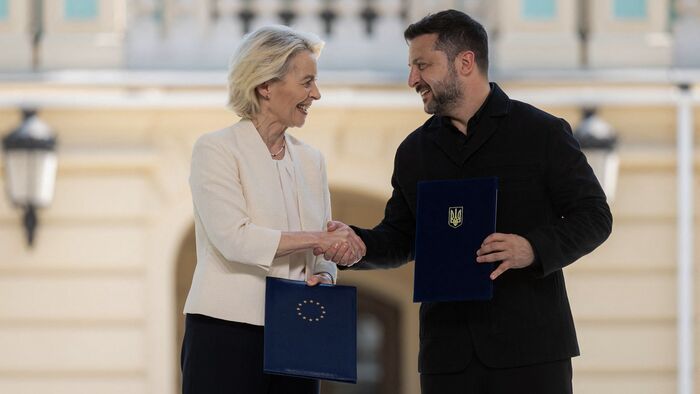
However, it is undoubtedly true that the Ukrainians have successfully achieved that their four most important demands are supported by everyone, except Hungary, and perhaps the Slovaks and the Czechs, and perhaps more countries will join. The first of these four key demands is that Europe should recognize the war as its own war fought for Europe's security. The second is that Europe should give money to finance the war. The third is that Europe should sever all economic ties with Russia, particularly in the field of energy. The fourth is that Europe should support Ukraine’s membership in the European Union. These four demands are currently on the table for European states,
Viktor Orban emphasized.
The Prime Minister said that Hungary cannot support any of these four demands. Hungary does not want to recognize the war as its own and does not want to assume obligations connected to it. And it does not want to finance the war or give up access to cheap Russian energy carriers. "In Hungary, the average annual household utility bill is about 250,000 forints. In Poland, the same amount of energy costs around 850,000 forints, while in the Czech Republic it reaches approximately 1 million forints. If we were to disconnect from cheaper Russian energy, Hungarian households would lose roughly the equivalent of a month’s income. This is not an ideological issue but a very concrete, practical one," he said.
Lastly, Hungary cannot support Ukraine’s membership in the European Union, primarily because the country is currently at war and admission would bring the war into the European Union.
Ukraine is a very large country and Hungary sees no reason to grant equal membership rights to a state that currently maintains a hostile relationship toward Hungary,
the Prime Minister Stated.
"As long as we do not receive answers to the difficult questions of why it would be in our interest, we will not yield to these demands or act accordingly," he stressed. Hungary is the only country in Europe that does not provide financial support to Ukraine. At the same time, he said, Hungary is also the only country in Europe that has not introduced austerity measures. "In every European country there are economic austerity packages. This is not only about unemployment, which I mentioned earlier, but also about declining real wages. By contrast, Hungary has achieved a 1 percent economic growth rate alongside an 11 percent increase in the minimum wage," he highlighted.
"There is no far-left government anywhere in the world that could show a comparable performance. Trade unions around the world would be delighted to see such macroeconomic results," he added.
The crux of the matter, in my view, is that there are austerity measures in Western Europe because they are giving away money to the Ukrainians on the scale I just mentioned, leaving no funds for the development of their own economies, their own families, or their own households.While many European countries are implementing austerity policies, Hungary has doubled family tax allowance after children starting in January. Mothers with two children are exempt from paying income tax for life. We have introduced a 14th-month pension and young people have access to a 3 percent home creation loan program,
Viktor Orban underlined.
"And we cannot find any other explanation for this. Because let us remove the possibility that we are simply smarter—knowledge is available to everyone. I do not believe we are more capable than they are. I do not think we could defend such a claim either. It is simply that the available resources are allocated differently. They send the money to Ukraine, and therefore less remains for them. It is that simple, and increasingly this is what it will look like. And wen they do not have enough money left—indeed, they already do not have enough—financing Ukraine necessarily takes place through loans."
"So European leaders go to the bankers in London and Frankfurt, take out large loans, and these loans are guaranteed by the member states—at least by those who participate, because I am fighting to keep us out of this, and most recently we succeeded. The member states guarantee these loans, they pass them on to Ukraine as loans, and the loan contracts say that Ukraine will have to repay them only after they have won the war and the Russians have paid reparations."
I would not base family budgets on the assumption that this will happen. But what follows from this is obvious: the money that the European Union gives to Ukraine will never come back, yet since the money was borrowed, it must be repaid. And that means they will be indebting the future of their children and grandchildren
he stressed.
"In the Union there is a seven-year budget. In the next proposal—which we are currently debating—it already states that roughly 20–25 percent of the entire budget will be given to Ukraine. And one must also take into account that servicing the loans already taken will consume another 10 percent of the entire EU budget."
What I want to say to you is that when I speak about the fact that Europe has not intellectually found the answer to where its place is in such a transforming system, what its plan is—then the consequence of this lack of a plan is that something else happens: disorder, chaos, God knows what, but certainly not the implementation of a long-term strategic plan. In contrast to the rest of the world, where it is clearly visible that political leaders are working according to long-term strategic plans. That is roughly what we look like,
the Prime Minister underlined.
Ukraine's Oil Blockade Against Hungary
The current one is the second energy blockade by the Ukrainians against Hungary. The first energy blockade was a gas blockade in the middle of 2022, when the Ukrainians shut down the gas pipeline that carried Russian gas through Ukraine to Hungary. But we were able to fend that off, because in 2015–2016 the government made a strategic decision. Not because we were especially wise or far-sighted, but because it was so obvious from the war over Crimea that this could happen again sooner or later. Therefore alternative pipeline systems had to be built."
"And we solved this, building the pipeline from Russia to Turkey, and from Turkey up to Hungary. Therefore, although there was a gas blockade from the Ukrainians against Hungary, it did not cause supply disruptions because by then we had built an alternative route.”
"That route, by the way, the Ukrainians are constantly shelling. At this very moment they are attacking pipeline systems and relay stations—compressor stations—located on Russian territory, trying to paralyze that pipeline as well, through which gas comes to Hungary. Therefore we must maintain very intensive relations with the Balkan countries through which this pipeline runs, so that in our interest—and in theirs as well—it operates at the highest possible level of security, so that the Ukrainians cannot do anything there," he said.
"The Ukrainians have such capabilities. And the Ukrainian nation is a brave nation, a heroic nation. Therefore it does not hesitate when its interests require it to act. A nation that is willing and capable of blowing up the Germans’ gas pipeline system outside the territory of Ukraine—in international waters, or in areas considered German or Danish territory—such a nation, fighting for its survival in this way, will probably not be gentle with us either if it believes it must paralyze Hungary’s gas supply. Therefore we must pay close attention even beyond our own borders."
Now we are under a second blockade. This is an oil blockade, and we are working to fend it off. The Ukrainians speak very clearly: there will be oil if we accept their demands—the four demands I spoke about earlier. But we refuse to negotiate within such a framework, because the European Union has an agreement with the Ukrainians that obliges Ukraine to allow oil shipments destined for Central European countries to pass through its territory,
Viktor Orban stated. "Ukraine has no right to pursue a policy that would endanger the supply security of Central European countries that are members of the European Union. Therefore we stand on the ground of legality and our acquired rights, and we refuse to negotiate about such rights."
"If we are blackmailed by having previously granted rights denied to us, then we will never negotiate with anyone on such a basis," he said. "That is why the situation is now tense," he added.
This struggle can also be described as a question of who runs out first: we of oil, or they of money. Both sides have plans. We are not at war with Ukraine, but we do have common sense. We always have plans, we have action plans, and the position of the Hungarian government is that our plan is a better plan than that of the Ukrainians. We will break this oil blockade. As a result, you will experience various kinds of conflicts in the coming period. Fortunately not on the Ukraine-Hungary border—God grant that it never happens there—but in Brussels, where we have tools and where we can block decisions that are important to the Ukrainians. And until we receive what is due to us and the pipeline is reopened, we will use these tools intelligently, without shaking our fists, but consistently. And we will win this battle,
the Prime Minister stated.
"And I ask the Hungarians living in Transcarpathia for understanding and patience. We stand with you, we are paying attention to you, we support you, we will give you everything we can to help you. But we must win this battle against the Ukrainians, because if we do not win it, we will find ourselves facing nothing but similar demands in the coming years, which would be completely contrary to Hungary’s national interest," Viktor Orban said in conclusion.