Strongest Decade and a Half since Trianon, Policy Could be Dismantled in a Matter of Months

The stakes of this election are enormous also from the perspective of nation policy. The system built over the past sixteen years could be dismantled very quickly, within two or three months, Lorinc Nacsa emphasized in an interview with Magyar Nemzet. Under a potential Tisza government, the entire national policy framework would be dismantled, and ethnic Hungarians would once again be pushed into a neglected position and then forgotten, the state secretary for notion policy pointed out. He also spoke about the achievements reached over more than a decade and a half of national policy, the Russia-Ukraine war, and the current challenges facing ethnic Hungarian communities.

2026. 04. 07. 15:21
VéleményhírlevélJobban mondva - heti véleményhírlevél - ahol a hét kiemelt témáihoz fűzött személyes gondolatok összeérnek, részletek itt.

How do you evaluate the national policy of the past 16 years? Which programs would you highlight?

The past decade and a half has been the strongest period since the tragedy of Trianon in terms of national cohesion. During this time, the community of national belonging has strengthened the most at every level. I consider this the greatest achievement. While all programs are important because each has reached Hungarian communities, I would highlight the Hatartalanul! (Without borders) program first. Through this initiative, 

more than six hundred thousand students from Hungary have been able to take class trips to Hungarian-inhabited areas beyond Hungary's borders, places they otherwise might never have visited.

Similarly successful is the Szulofoldon magyarul (Hungarian as mother tongue in your homeland) program, which is currently open for applications. Within this framework, we provide educational and student support to ethnic Hungarian children and young people who attend Hungarian-language kindergartens, schools, colleges, or universities in their homeland. One of the most important foundations for thriving in one’s homeland is education in one’s mother tongue. This is why we also launched the Carpathian Basin kindergarten development program, thanks to which nearly nine hundred kindergartens have been built or renovated across the region. In light of all this, it can be stated: we have been working for the next generation so that Hungarians remain strong not only in the present, but also in the future.

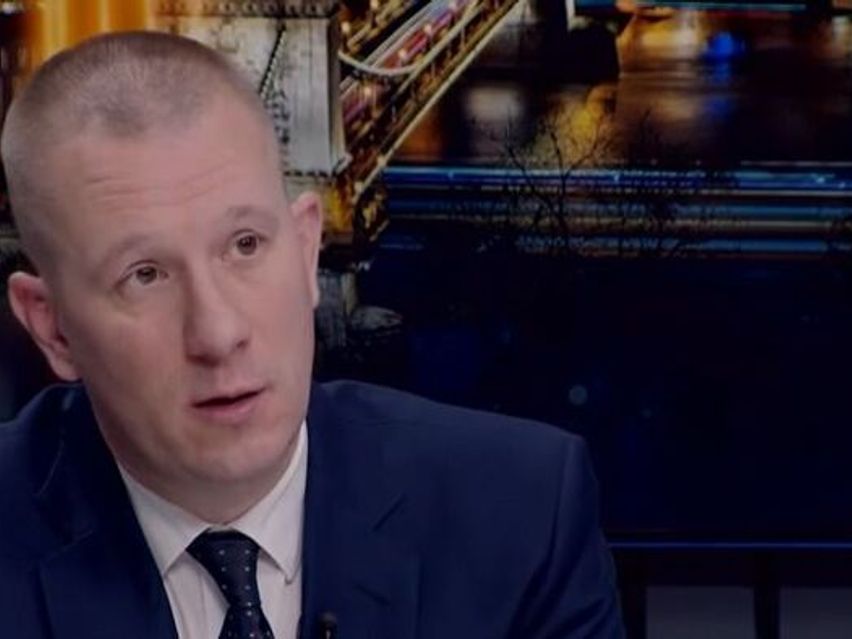
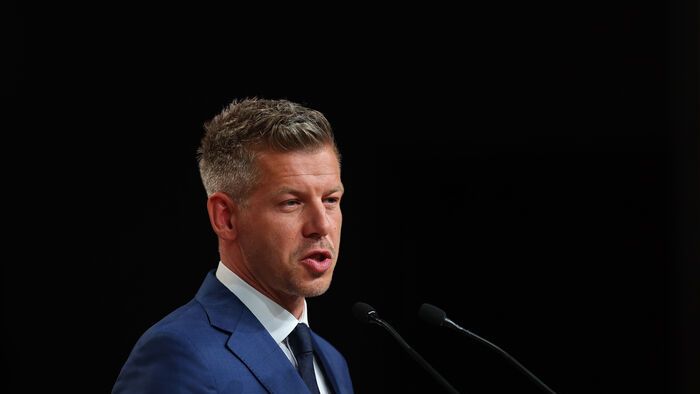
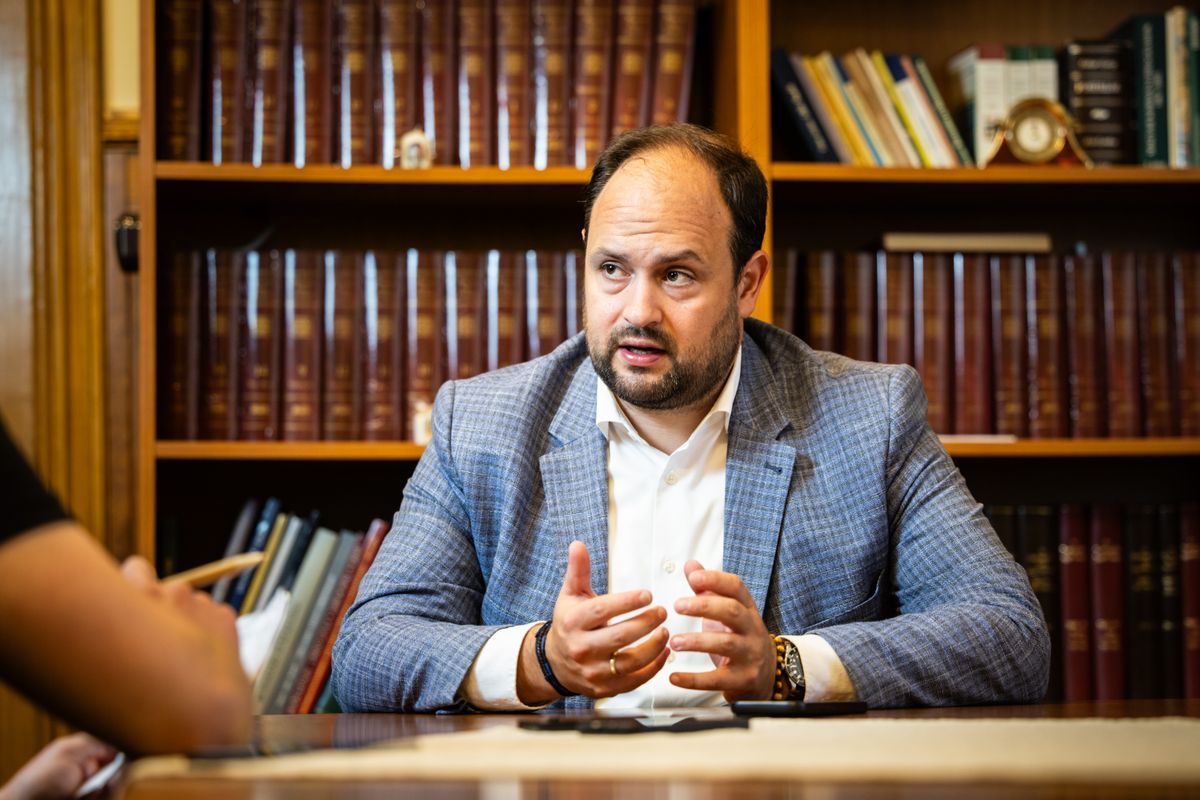
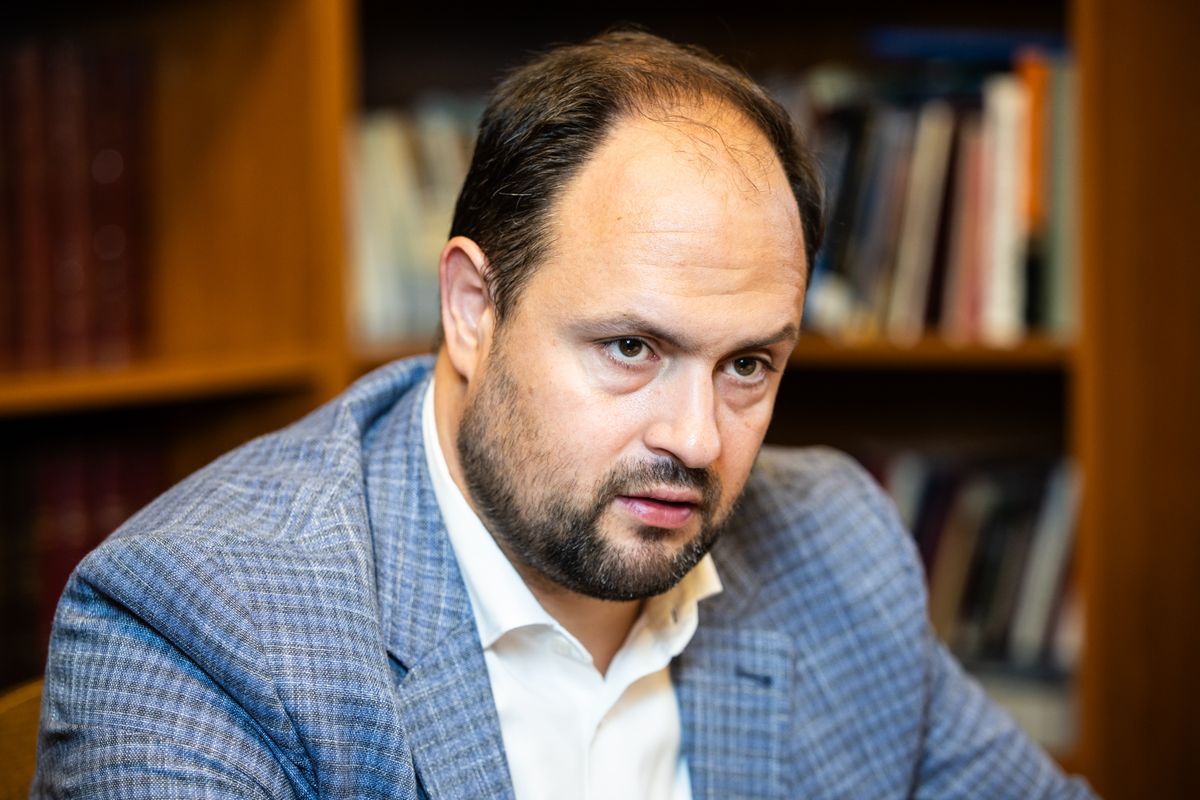
Lorinc Nacsa, State Secretary for Nation Policy (Photo: Balazs Ladoczki)

Is there any area where the desired results have not yet been achieved?

More can always be done in every area, because every ethnic Hungarian community could be even stronger. Nation policy is never a completed task, but a dynamic process, as political conditions in neighboring countries change and new challenges emerge. For example, in 2010 no one would have thought that the Hungarian community in Transcarpathia would have to live for years in the shadow of war and face the challenges arising from it.

The opposition Democratic Coalition and Peter Jakab interpret national policy differently: a key element of their campaign is to strip Hungarians abroad of their voting rights. They argue it is unfair that people who do not live in Hungary can vote. What would you say to a voter in Hungary who feels others are deciding about their life?

There are no first- and second-class Hungarians. There was a time when people were categorized based on race, class, wealth, or origin. Thankfully, we Hungarians overcame those times together. There is one form of Hungarian citizenship, and it entitles everyone to jointly decide on the future of the nation. Today, we see commentators and politicians on the side of the Democratic Coalition and the Tisza Party cynically inciting against Hungarians living beyond the country's borders and trying to discourage them from participating in the election. However, maintaining the unity of the nation is our moral duty.

Nearly half a million Hungarians abroad have registered for postal voting. What is your message to them, why is it important for them to participate in the April election?

We see that the other side regularly attacks the citizenship, voting rights, and support granted to Hungarians living in neighboring countries. We, however, think in terms of the nation as a whole. Nation-building is a shared effort, and therefore our decisions must also be made together. I encourage Hungarians outside our borders to exercise this right and take part in the election. In major national matters such as this election, we must decide together.

The Tisza Party has openly begun campaigning among ethnic Hungarians. How successful has Peter Magyar been in winning their support?

His entry was flawed from the start, so he has not achieved major success. There may be a few media figures or journalists in neighboring countries who support him, but the overwhelming majority do not. People see through the facade: they know that the leader of the Tisza Party does not mean what he says, that he lies and serves foreign interests. By insulting representatives of ethnic Hungarian communities, calling Transylvania Romanian land, and supporting Brussels policies instead of the rights of indigenous national minorities, he has completely cut himself off from these communities.
The situation of Hungarians in Transcarpathia is becoming increasingly difficult due to the war. Viktor Orban has stated that if Ukrainian President Volodymyr Zelensky continues to block the Druzhba oil pipeline, Hungary could halt electricity exports to Ukraine. Is there a plan to support Hungarians in Transcrpathia there if such a step becomes necessary?

Lorinc Nacsa, State Secretary for Nation Policy (Photo: Balazs Ladoczki)

The situation of Hungarians in Transcarpathia is becoming increasingly difficult due to the war. Viktor Orban has stated that if Ukrainian President Volodymyr Zelensky continues to block the Friendship oil pipeline, Hungary could halt electricity exports to Ukraine. Is there a plan to support Hungarians there if such a step becomes necessary?
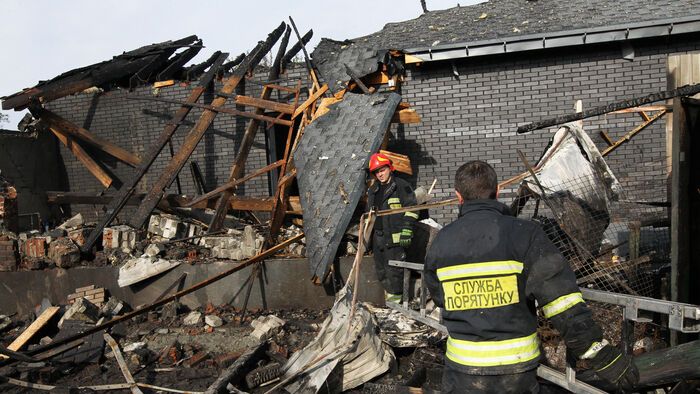
Assistance to Hungarians in Transcarpathia did not begin now. In recent months, they have faced power outages lasting 8–12 hours. Therefore, we have supported hundreds of projects through which large families, social and church institutions were able to acquire inverters, generators, solar panels, batteries, and diesel generators. Naturally, we hope that after the election, following a national majority victory, President Zelensky will realze that this oil blockade must come to an end—it depends solely on him whether or not oil flows. Hungarians in Transcarpathia are well aware that the Ukrainian president is anti-Hungarian and would prefer a pro-Ukraine government in Budapest. He has not restored their minority rights; on the contrary, they are continuously harassed. We want Hungarians in Transcarpathia to be left in peace so that this part of the nation can live in safety. For this,  we will provide all possible support.

In December, the Slovak government passed a law that could punish questioning the Benes decrees with imprisonment, seriously infringing on the rights of Hungarians living in Slovakia. Why did the government take a moderate tone on this issue?

We have been and continue to be in constant negotiations with the Slovaks. Slovak-Hungarian relations have improved significantly over the past 15 years. We aim to maintain good relations with neighboring states, which is both a Central European and a Hungarian interest. In this spirit, we have opened border crossing points and deepened economic and political cooperation. We have worked on this with every Slovak government over the past 15 years, and with the current one we agree on key issues: the war, the rejection of migration, and certain Brussels directives such as gender policy. At the same time,

the Hungarian government’s position on the amendment related to the Benes decrees is that it is wrong. 

The matter is still under review by the Constitutional Court, so the process is not yet closed. Peter Magyar quickly tried to make political gains from the issue, but when he saw that Hungarians in Slovakia rejected his agitation, he dropped the matter overnight. We, however, have continued working on it. The government has also launched legal assistance to help Hungarians in Slovakia affected by the Benes decrees, whether in police cases or even confiscation of land.

Why did Peter Szijjarto not summon the Slovak ambassador?

Simply because he sat down with the ambassador’s superior, the Slovak foreign minister, not just once but several times. I have also held talks with Slovak officials and have repeatedly spoken out against the principle of collective guilt. This is unacceptable in the 21st century and must be resolved. However, Hungarians in Slovakia must also help ensure that the single Hungarian party enters the Slovak parliament. Then they would have a voice at the highest level, and this law in its current form would certainly not have been adopted.

Lorinc Nacsa, State Secretary for Nation Policy (Photo: Balazs Ladoczki)

Peter Magyar also said that if he had the power to do so, he would not only summon the Slovak ambassador but also expel him. What impact would such a move by the government have on the situation of Hungarians in neighboring Slovakia?

This response clearly reflects Peter Magyar’s personality: impulsive, aggressive, and dishonest, acting out of sudden emotion. This is extremely dangerous for the future of a country, especially in a time marked by war, migration pressures, and an energy crisis. 

What Peter Magyar proposed may be suitable for political agitation, but not for resolving the issue.

Such matters must be settled through negotiation, which requires a partner willing to engage. We see the lack of this even in the Russia-Ukraine war, where the European Union has not even attempted dialogue with Russia but instead chose the path of war. Peter Magyar would pursue the same Brussels-style politics in Hungary: he is not interested in dialogue or solutions, only in political agitation and incitement.

The government emphasizes that the stakes of this election have never been higher. Why is this vote more significant than previous ones?

Politicians often say this, but when we truly assess what is at stake, it becomes clear. Looking back at past decades, it can be stated that the stakes have never been this high. This time, we are not deciding only about the next four years, but about whether we will be dragged into a war.

This is a decision that can only be made wrong once. If we get it wrong, there is no way back.

At the same time, the question is whether we can say no to the fleecing of Hungarians. Countries that support the war in Ukraine are introducing austerity measures because they are sending part of their resources there. The Tisza Party’s energy plan points in exactly this direction, potentially increasing the monthly costs of Hungarian families by as much as 100,000 forints.

What does this mean from the perspective of nation policy?

The stakes are enormous here as well. Since 2010, we have been building a national unity that benefits every Hungarian, both within and beyond the borders, including those who do not vote for us. The system built over 16 years could be dismantled very quickly, within two or three months. The Tisza Party aims to become a Brussels-aligned government. Anita Orban herself said she wants to be a spoke in the wheel in Brussels, not a stick in the spokes, meaning she wants the Brussels machinery to turn even faster and more efficiently.

However, EU leaders do not take into account indigenous national minorities, they are not interested in national policy, and they do not care about ethnic Hungarian communities. 

They have never stood up for the Hungarian community in Transcarpathia, Brussels bureaucrats have always sided with Ukraine. Under a potential Tisza government, the entire national policy framework would be dismantled, and ethnic Hungarians would once again be pushed into a neglected position and then forgotten.

On April 12, we must say no to this and vote for the party alliance that represents the interests of all Hungarians, and that is he Fidesz-KDNP.


Cover photo: Lorinc Nacsa, State Secretary for Nation Policy (Photo: Balazs Ladoczki)

Komment

Összesen 0 komment

A kommentek nem szerkesztett tartalmak, tartalmuk a szerzőjük álláspontját tükrözi. Mielőtt hozzászólna, kérjük, olvassa el a kommentszabályzatot.


Jelenleg nincsenek kommentek.

Szóljon hozzá!

Jelenleg csak a hozzászólások egy kis részét látja. Hozzászóláshoz és a további kommentek megtekintéséhez lépjen be, vagy regisztráljon!

A téma legfrissebb hírei

Tovább az összes cikkhez chevron-right

Ne maradjon le a Magyar Nemzet legjobb írásairól, olvassa őket minden nap!

Google News
A legfrissebb hírekért kövess minket az Magyar Nemzet Google News oldalán is!
Országgyűlési választás2026. április 12. Minden hír a választásról

Címoldalról ajánljuk

Tovább az összes cikkhez chevron-right

Portfóliónk minőségi tartalmat jelent minden olvasó számára. Egyedülálló elérést, országos lefedettséget és változatos megjelenési lehetőséget biztosít. Folyamatosan keressük az új irányokat és fejlődési lehetőségeket. Ez jövőnk záloga.