Codename: Projekt Kolibri – The Threads of a Multi-Hundred-Million-Euro Asset-Stripping Case May Lead All the Way to Ursula von der Leyen

Just over a month ago, the management of Magyar Nemzet received an enormous bundle of documents by post. As the papers were processed, the details of an asset-stripping operation of an outstanding scale even by international standards began to emerge. Donatus Albrecht, the brother of Ursula von der Leyen, played a key role in carrying out the financial transactions; he is one of the three principal owners of the German private equity fund Aurelius. The sums involved are staggering: roughly 160 billion forints’ worth of euros. By way of comparison, that amount would have been more than enough to finance the Hungarian section of the Budapest–Belgrade railway line. A prominent European financial daily had previously received the revealing documents, but chose not to deal with the corruption-suspected case. Magyar Nemzet is doing so now.

2026. 03. 17. 9:12
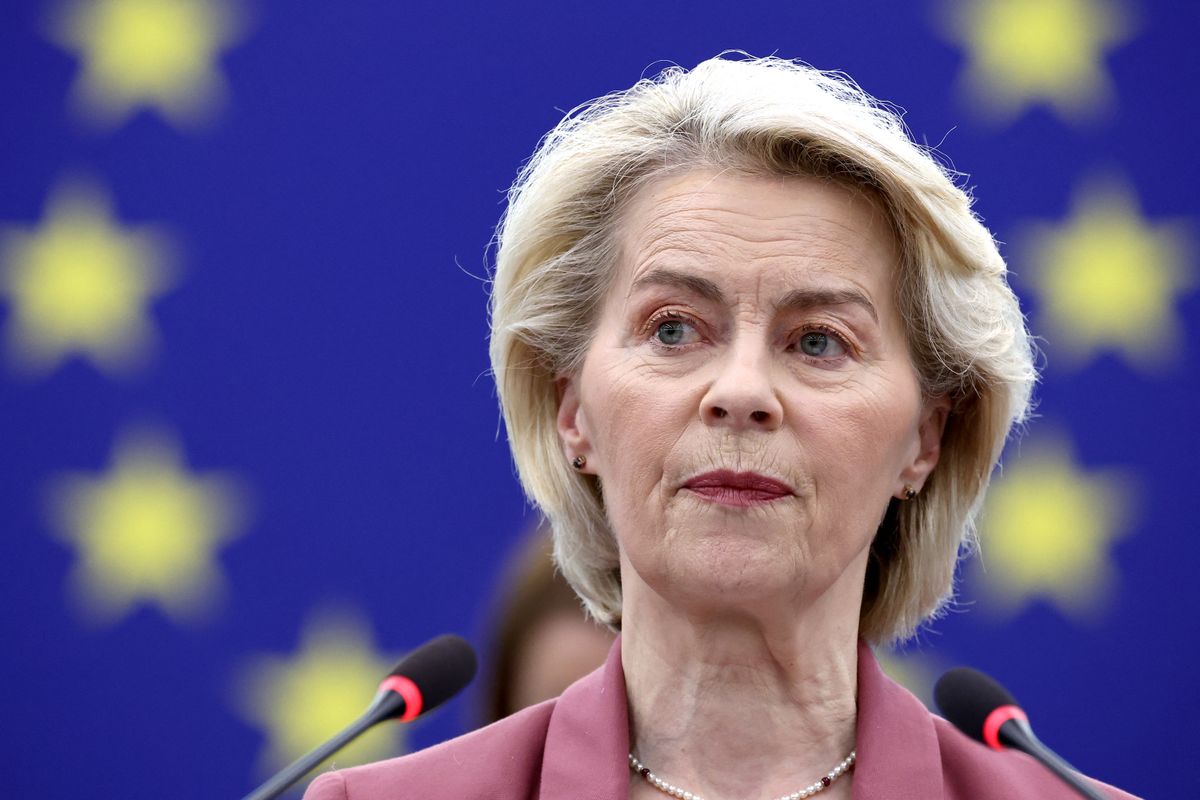
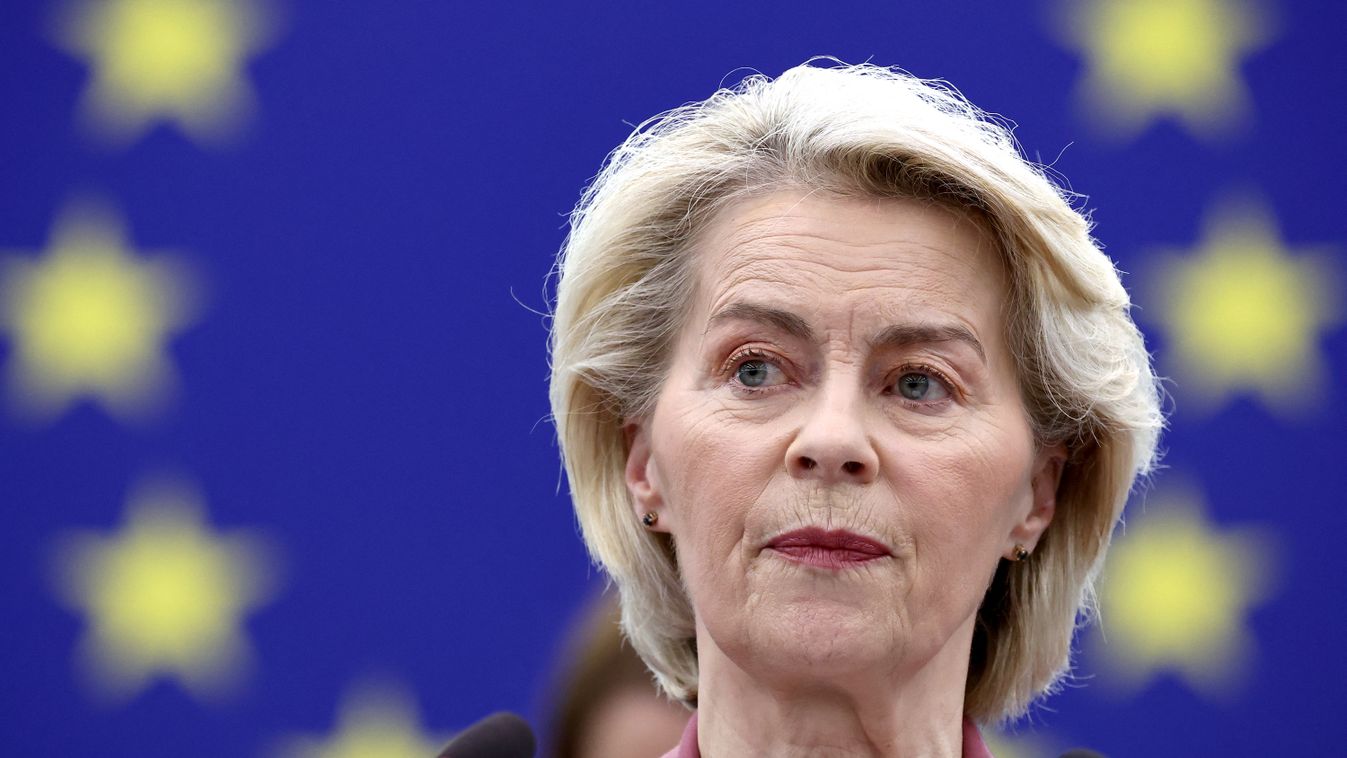
Fotó: FREDERICK FLORIN Forrás: AFP
VéleményhírlevélJobban mondva - heti véleményhírlevél - ahol a hét kiemelt témáihoz fűzött személyes gondolatok összeérnek, részletek itt.

For a long time, many people saw Ursula von der Leyen — a minister in the government of former German Chancellor Angela Merkel and the current President of the European Commission — as a conservative, Christian mother of seven whose integrity was beyond question. That image was shattered by the Pfizer scandal associated with the politician’s name. According to the suspicion, the EU’s top official fixed the procurement of nearly 1.8 billion vaccine doses in sms messages during the Covid pandemic.

There are signs that this is only one of the storm clouds gathering around the President of the Commission. Several weeks ago, Magyar Nemzet received an extensive body of documents by post, and a review of them revealed an unprecedented asset-stripping operation.

During the secret series of transactions, dubbed Projekt Kolibri by those involved, approximately 424 million euros were siphoned out of the Obotritia group of companies, which had previously included Obotritia bank as well. The number of people who suffered financial losses is not yet known. However, those affected by the asset-sripping operation have already hired lawyers, and they do not believe the perpetrators will escape what happened without consequences. But let us look at who operated this cunningly designed system.

Fotó: MARTIN BERTRAND / Hans Lucas

The network

The threads lead to a private equity fund, Aurelius, in which Donatus Albrecht — Ursula von der Leyen’s brother — has an interest. Albrecht sits on the board together with his two partners, Dirk Markus and Gert Purkert. Over recent decades, the Germany-registered fund financed from the background two extremely high-risk real estate investors. One of them is a British national, Jonathan Chenevix-Trench, the former chairman of Morgan Stanley Europe, whose private address and several telephone numbers appear in Jeffrey Epstein’s notebook. As is well known, Epstein operated an extensive prostitution network in which children were also exploited. Chenevix-Trench’s international network of contacts extended as far as the family of the late Zimbabwean dictator Robert Mugabe.

The other businessman is the rather controversial German national Rolf Elgeti. One possible explanation for why Aurelius financed the business ventures of these two men is that both were also Donatus Albrecht’s business partners in several other companies. It is worth taking a closer look at the two key players. For many years, Elgeti and Albrecht shared massive financial interests in at least two major German companies: Obotritia Capital, KGaA, Deutsche Konsum REIT-AG. Both businessmen — Elgeti and Albrecht — also took part in the management of these companies.

Through Obotritia Capital KGaA, Elgeti and Chenevix-Trench — presumably together with Albrecht — had previously also owned a German bank: Bankhaus Obotritia GmbH. The financial institution was shut down by the German financial supervisory authority, BaFin, in early 2024 after numerous violations were uncovered.

A group of lawyers had already drawn attention to the abuses years earlier. One striking development was that Obotritia suffered enormous losses in recent years. In 2021, it lost 206 million euros, and in 2022 a further 261 million euros. As a result, by December 31, 2022, Obotritia’s equity had completely vanished and had in fact fallen to minus 223,733,900 euros — meaning the company had effectively gone bankrupt.

In those years, Obotritia’s operations were increasingly marked by desperate and questionable steps. One such example was the taking out of an unsecured loan of 62.5 million euros from Deutsche Konsum REIT (DKR). The loan was not repaid by the September 2023 deadline, yet Obotritia was granted a multi-year extension on even more favorable terms. At the time, Elgeti simultaneously held the CEO positions at both Obotritia and DKR, even though both companies were financed largely by outside investors. An important circumstance is that in German financial circles DKR was referred to as Elgeti’s personal piggy bank.

Ultimately, on October 30, 2024, both Elgeti and Albrecht had to leave DKR’s management. Among the new executives, however, is Jan Rehbock, a close associate of Albrecht’s — indeed, he works under Albrecht at Aurelius.

The collapse and the Projekt Kolibri

Since the forced closure of Bankhaus Obotritia GmbH, Chenevix-Trench has disappeared from public view, while Elgeti’s business empire has fallen apart. Based on the hundreds of pages of documents in our possession, it appears that after Obotritia’s equity turned negative, Albrecht and his Aurelius partners removed the remaining valuable assets from the dying company as well — by disregarding the law if necessary. The secret operation carried out on November 24, 2024, was given a James Bond-style name by the participants: Projekt Koibri.
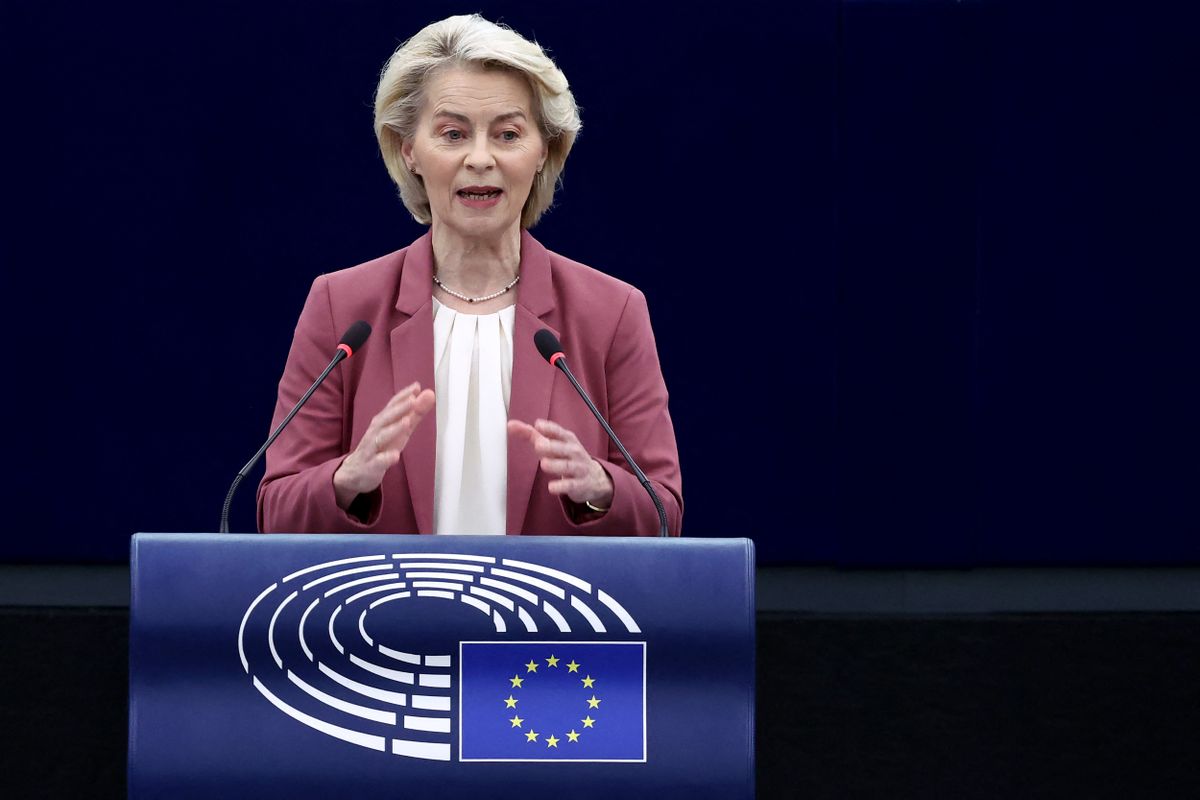
Fotó: FREDERICK FLORIN / AFP

As part of the operation, the remaining valuable assets of Obotritia Capital KGaA were secretly transferred into an extremely complex, ten-level holding structure running from Malta through Luxembourg to the Seychelles.

Among the ultimate beneficiaries of the structure — which we will refrain from describing in detail here for the sake of readers — are not only Albrecht and his two Aurelius partners, but also their children and other family members. The nature of the operation is clearly illustrated by the fact that all assets transferred by Obotritia Capital KGaA — loans, shares and ownership stakes — were moved into a newly created Maltese company, Parrot Limited. Albrecht and his partners set up this company with a share capital of only 5,000 euros shortly before the transaction.

Obotritia’s last valuable assets — loans, shares and ownership interests — thus ended up with Parrot Limited. The value of the extracted assets can be estimated at approximately 424 million euros, that is, about 160 billion forints. Among the assets siphoned off were, for example, 4 million shares in the German company Francotyp-Postalia Holding AG, which were sold shortly afterwards for many million euros.

Donatus Albrecht and his Aurelius partners — who are also the owners of Parrot — did not, however, pay a single euro to Obotritia Capital KGaA for these assets. The removal of the final valuable assets without consideration could in itself qualify as unlawful, but the transaction may also have violated German insolvency and restructuring laws, since Obotritia Capital KGaA’s equity had already been negative even before the assets were siphoned off. Under German law, in such a situation it is mandatory to carry out an audit under the supervision of independent external auditors, and it is also necessary to prepare a restructuring plan before any transaction is executed. According to the official records, however, none of this took place.

It appears that Albrecht and his partners also violated German criminal law by - as insiders - extracting Obotritia’s final valuable assets for their own benefit.

Fotó: WOLFGANG WEIHS / DPA

Investors left with losses

As a result of Projekt Kolibri, Obotritia Capital KGaA has been virtually emptied out, and today only worthless subsidiaries remain in its ownership. Several of these have already gone bankrupt. As a consequence, investors who previously purchased bonds issued by Obotritia Capital KGaA — with a total value of approximately 833.6 million euros — will almost certainly lose their entire investment.

Among the injured parties are numerous small investors as well, who invested a total of more than 226.6 million euros and have already lost more than 96 percent of their money. The value of the securities continues to plunge, while there are hardly any buyers — no one wants to board a sinking ship.

It is important to note: had Albrecht and his two Aurelius partners not removed approximately 424 million euros — about 160 billion forints — from Obotritia, small investors could have recovered their money in full.

How the case came to light

However, the massive asset-stripping operation came to light when a document was filed with the Frankfurt commercial register, clearly detailing Projekt Kolibri. The documents in the commercial register are public, so anyone can view this record and see for themselves the method used by Albrecht and his two Aurelius partners. Lawyers from several countries have since begun cooperating and established a Dutch public-interest foundation under the name Stichting Obotritia Belanghebbenden. The foundation’s purpose is to represent all bondholders and investors whom, they say, were harmed by Obotritia and Aurelius. The foundation’s chairman, Patrick Körver, filed an official report with the German Financial Intelligence Unit (FIU) in Cologne on August 12 last year, together with detailed documentation and substantial evidence. The FIU is the authority in Germany responsible for investigating cases of this kind.

The purpose of the complaint was to draw the attention of the German financial authorities to Projekt Kolibri, namely that Obotritia’s final valuable assets may have been unlawfully removed by Donatus Albrecht and his Aurelius partners. The filing also sought to have the authorities freeze the assets before they disappeared for good. The lawyers and the foundation were, however, stunned to find that neither the FIU nor any other German investigative authority — such as BaFin — responded or launched proceedings. One of the lawyers involved in the cooperation was informally told by a source close to the FIU that the case was considered politically too sensitive to investigate because of the family connection between Ursula von der Leyen and Donatus Albrecht.

Fotó: FREDERICK FLORIN / AFP

It thus appears that the German authorities are turning a blind eye to the fact that 424 million euros were removed and disappeared from Obotritia Capital KGaA, thereby causing harm to hundreds of bondholders and investors. The latest developments in the story suggest that Obotritia’s insolvency may become a reality in the very near future. It can be inferred from the recently published official German records that show: Obotritia has still not published its annual reports for 2023 and 2024. For that matter, it constitutes a further violation of German law. In addition, in an official statement last month the company indicated that it is unable to pay interest on its bonds.

Questions to von der Leyen and her brother

Magyar Nemzet sent questions to Donatus Albrecht regarding the asset-stripping operation involving approximately 160 billion forints. Among other things, we wanted to know whether he was, or still is, an owner of the Maltese company Parrot and, if so, what business activities they conducted through it. We also asked whether he still has a business relationship with Rolf Elgeti, and what he believes the purpose of Projekt Kolibri was. We are also awaiting an answer as to whether, at the time of the transfer of the assets, they were aware that Obotritia’s balance sheet had already been severely negative for years, and why control over the removed assets was immediately placed with a Seychelles company.

Finally, we also asked whether they intend voluntarily to return the assets to Obotritia’s creditors, or whether they will wait for a court ruling. We enquired about these matters at Dirk Markus and Gert Purkert. We also sent questions to Ursula von der Leyen, since suspicion may arise that her brother, Donatus Albrecht, may hope to avoid consequences by relying on high-level connections.

Among other things, we asked whether she, her husband or their children have any interest in Aurelius or in Donatus Albrecht’s other businesses. We were also interested in whether she knew about her brother’s business relationship with Rolf Elgeti, whether she ever had a business relationship with the German financial actor, and whether she was aware of the details of Projekt Kolibri or of her brother’s ownership stake in the Maltese company Parrot.

Von der Leyen’s office gave an evasive answer. In response to our inquiry, they wrote only that they do not deal with hearsay.

The international press remains silent

Finally, it is worth briefly presenting the obstacles faced by those who turn to the press in the hope that European citizens may learn of the shocking dealings taking place behind the scenes. The documentation of the asset-stripping operation was also sent to an extremely prestigious international financial newspaper. The editors and journalists at the paper reviewed the documents, but ultimately did not consider their contents important enough to share with their readers. After all, „only” approximately 160 billion forints’ worth of assets disappeared. Magyar Nemzet also sent questions to the editorial office of the paper in question: whether their decision was based solely on professional editorial considerations, or whether political pressure also played a role in their decision not to publish the details of what appears to be a huge and unlawful asset-stripping case.

Komment

Összesen 0 komment

A kommentek nem szerkesztett tartalmak, tartalmuk a szerzőjük álláspontját tükrözi. Mielőtt hozzászólna, kérjük, olvassa el a kommentszabályzatot.


Jelenleg nincsenek kommentek.

Szóljon hozzá!

Jelenleg csak a hozzászólások egy kis részét látja. Hozzászóláshoz és a további kommentek megtekintéséhez lépjen be, vagy regisztráljon!

A téma legfrissebb hírei

Tovább az összes cikkhez chevron-right

Ne maradjon le a Magyar Nemzet legjobb írásairól, olvassa őket minden nap!

Google News
A legfrissebb hírekért kövess minket az Magyar Nemzet Google News oldalán is!

Címoldalról ajánljuk

Tovább az összes cikkhez chevron-right

Portfóliónk minőségi tartalmat jelent minden olvasó számára. Egyedülálló elérést, országos lefedettséget és változatos megjelenési lehetőséget biztosít. Folyamatosan keressük az új irányokat és fejlődési lehetőségeket. Ez jövőnk záloga.