PM Orban: Everyone Should Bring Everyone!

A pre-election interview with Prime Minister Viktor Orban.

2026. 04. 11. 16:41
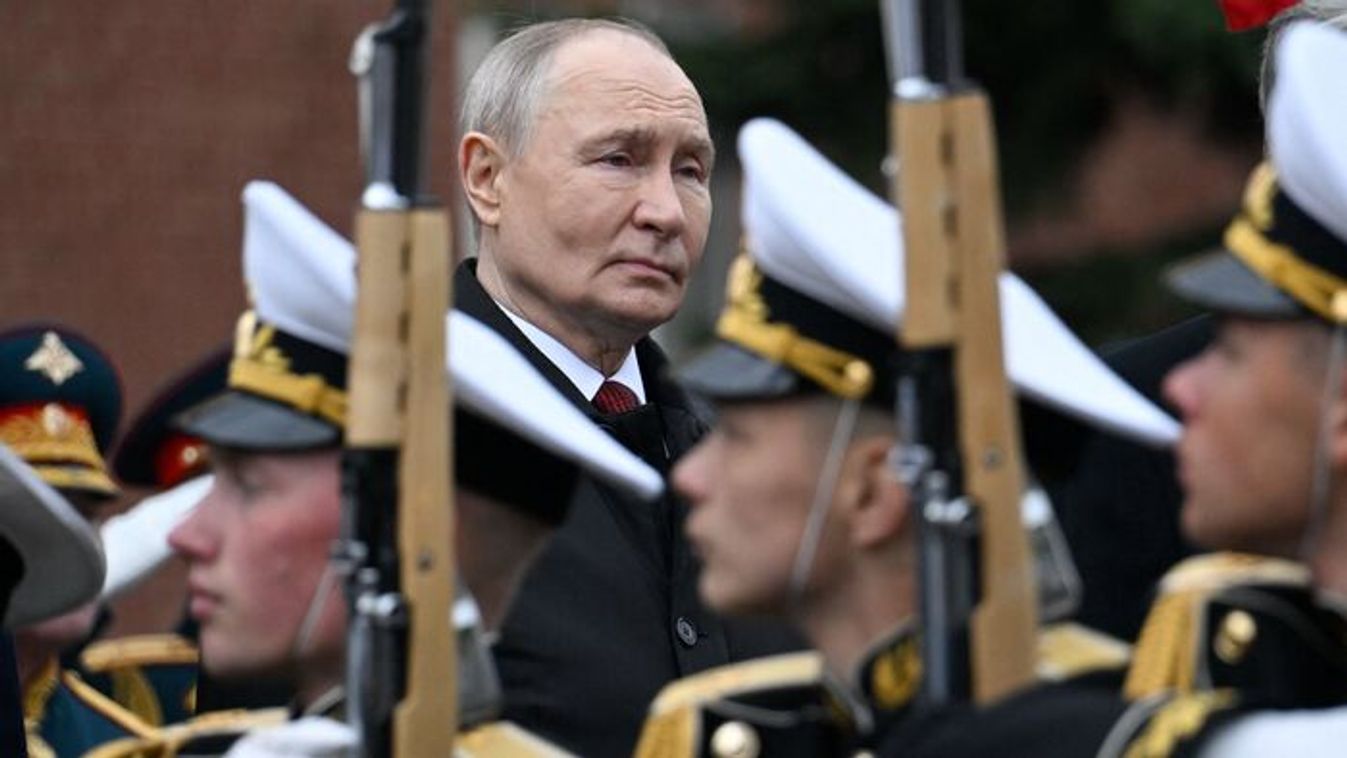
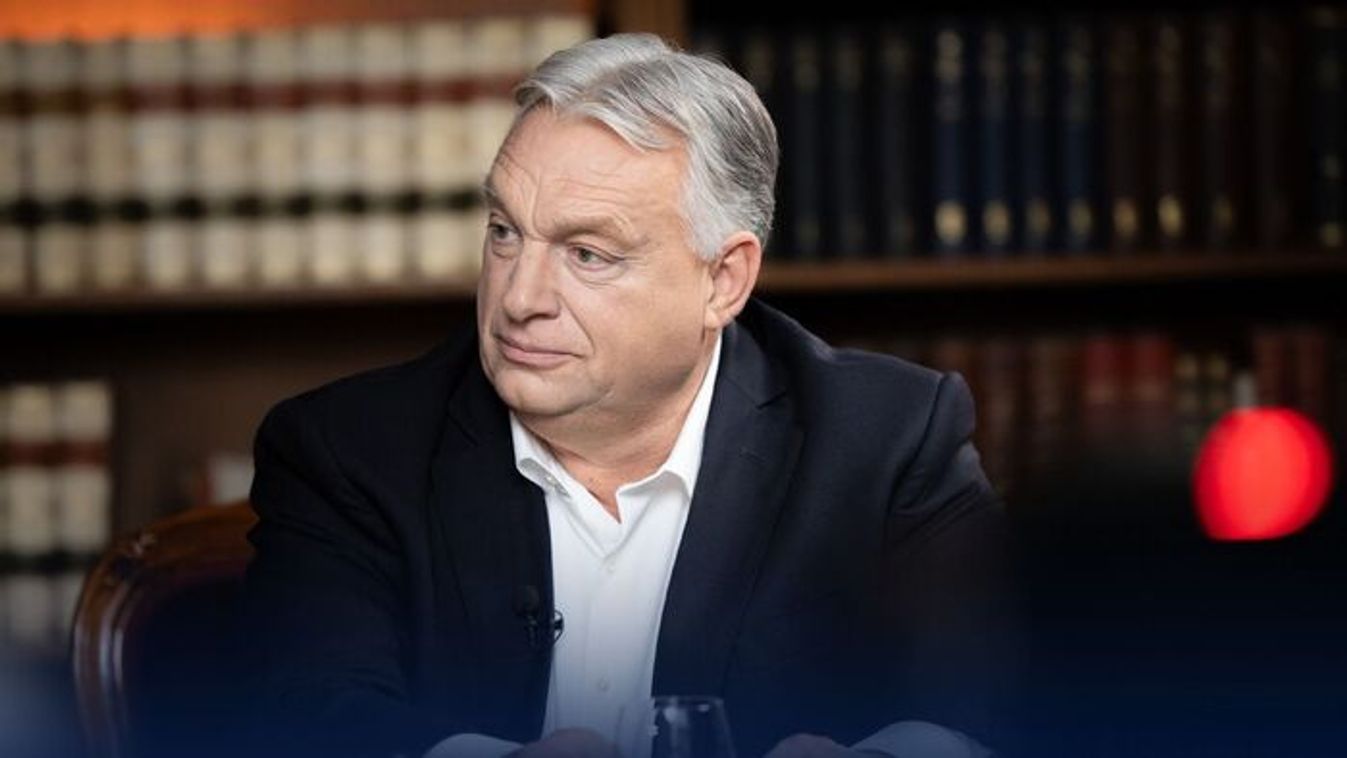
Prime Minister Viktor Orban (Photo: Prime Minister’s Communications Department)
VéleményhírlevélJobban mondva - heti véleményhírlevél - ahol a hét kiemelt témáihoz fűzött személyes gondolatok összeérnek, részletek itt.

– Prime Minister, you have given a flurry of interviews over the past days, weeks, and months. You have said everything there is to say about what is at stake for Hungary in tomorrow’s election. But what is at stake for you personally?
– No one likes it when something they have worked on for sixteen years is torn apart. Our opponents make no secret of the fact that they would dismantle the civic, national economy and the family-friendly, Christian society we have built. For me personally, what is at stake is whether everything I have worked for will endure, and whether what I believe is the best path for the country will continue. But this is not about me. What is at stake for Hungary is far greater than it is for me personally.

– After the last election, the entire country learned about the type of foreign money flowing into the coffers of political forces opposing you. These were the so-called “rolling dollars.” Since then, the situation has become even more complex. Now countries, organizations that call themselves civil society groups, and intelligence services are passing the baton to one another. In your view, who are your opponents?
– One key opponent has dropped out: the American Democrats. In 2022, they were the most important financiers and political supporters of the Hungarian opposition. At first glance, one might think this has made the situation easier. But in the meantime, the struggle for power has become more brutal. After their defeat in the United States, the globalist elite retreated to Brussels. There, more money, more tools, and greater influence are concentrated than before, and they are using them far more openly. Just look around. In France, patriotic forces are being obstructed through legal means. In Germany, the only real opposition is kept under pressure by intelligence services. And in the United States, they not only tried to remove Donald Trump from the political field, but in the end even attempted to shoot him. Western politics is becoming more and more brutal, and Hungary is no exception. Our opponents are the forces that want to preserve the old distribution order of money, business, and political power. Our friends are those who believe we must return to the era of sovereign nations.

– According to some public polls, your opponent is far ahead; others say only slightly ahead or not ahead at all. But surely it can be said that this upcoming election will be very tight and extremely difficult for you.
– Every election is difficult. Even the ones we end up winning by a landslide. From the outside, a campaign may look easy; from the inside, none of them are. Each is different, and each is tough. The current one is special because the opposition parties were not simply herded into one camp—they were pushed aside and replaced with something new. This is not a Hungarian peculiarity but an international pattern. It is a difficult situation, but not an unprecedented one. What matters is that the outcome is the same as always: we win.

– This tight race, now in its final hours, may also have to do with the fact that the Hungarian economy has been stumbling for years, and Hungarian voters are not comforted by the fact that things are also bad elsewhere.
– We Hungarians live with a dual awareness. On the one hand, we clearly see that the war, the inflation, the energy prices, and the weak growth are largely due to external factors beyond our control. We also know that with all this work, in more peaceful times we would be much further ahead. On the other hand, there is another experience. We have restored the 13th-month pension; the economy is generating the 14th-month pension as well; with just 1 percent growth we implemented an 11 percent minimum wage increase; mothers with two children are now exempt from income tax; we doubled the tax credit for children; we doubled national wealth; and we increased gold reserves thirty-threefold. In other words, we are progressing more slowly than we would like, but even so we have achieved things that are almost unprecedented in Europe. These two feelings coexist simultaneously in people.
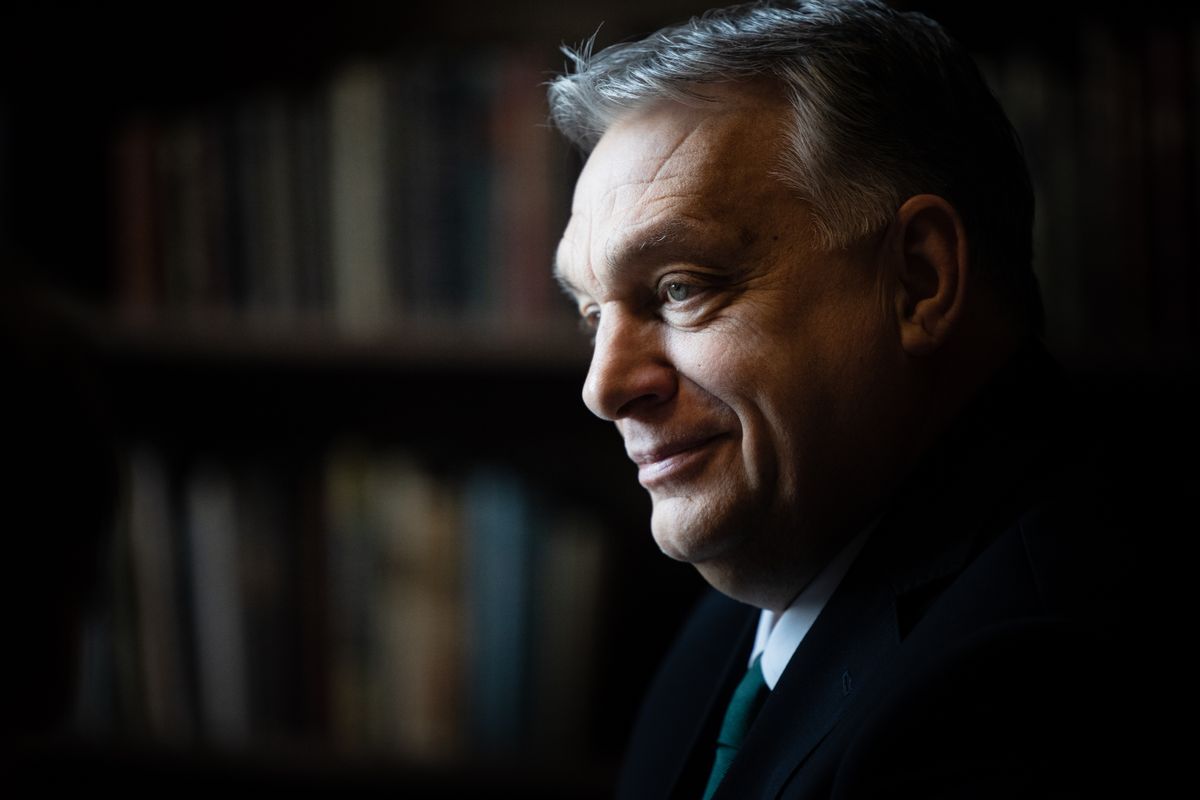

PM Viktor Orban (Photo: PM's Communications Department) 

– Do you think that, given the international situation — where there is essentially no good news to report — these achievements can be preserved?
– This is what I'm fighting for. Good news is indeed not coming from outside. But I have never relied on the outside world—I rely on the performance capacity of the Hungarian people. Hungary is not an island. We are part of the world economy and the European economy. Anyone who claims that what happens out there does not affect us either does not understand the world or is not telling the truth. But every national economic policy has room to maneuver. We know how to choose the tools that allow us to weather a crisis with the smallest possible losses. What we have built can be defended, and it can be further developed.

– The Tisza Party does not speak clearly on this issue, but experts close to them essentially want to abolish everything you have introduced.
– That's because they've never agreed with the foundation on which we've been building Hungary since 2010. They have not accepted the logic of our family support policies, nor the idea that society should be organized not only on a social basis, but also from a family and demographic perspective. They would build everything on a needs-based logic. There is truth in that, but it is not enough on its own. That is why they attack our tax breaks after children, mock lifetime tax exemptions, and why our utility cost reductions and all tools that protect families are a red flag for them. Their problem is not with individual measures, but with the entire mindset. I am not surprised that the same old leftist-liberal economists are reappearing around Tisza who were already recommending the same recipes before 2010. The country has tried those once already — and it did not end well.

– Don’t you find it ironic that even a Tisza voter who most strongly dislikes you would be better off if you remain prime minister?
– I would not call it ironic, but rather very human. I have never met a Tisza voter who said: “I consider the 14th-month pension unfair, so I will not take it.” Nor one who argues against regulated prices but then asks at the gas station to pay more. That does not exist. The truth is that they too benefit from these measures, while at the same time wanting to replace those who created them. The human soul does not always operate according to logic.

– A few years ago, I think even you would not have tought that there will be a greater source of conflict between Hungary and Western Europe than migration. And yet there is: Ukraine.
– I truly would not have thought that.

– Don’t you find the situation that's evolved between President Zelensky and yourself unfortunate? Zelensky, the president of a country at war, understandably clings to every straw for the survival of his people and state. Can he, from his perspective, not ask that if Hungary once agreed to support them with a loan, then why is it now obstructing it?
– Everyone sees the world through their own eyes. Ukrainians through Ukrainian eyes, Hungarians through Hungarian eyes. The Ukrainians want us to enter their war. We do not want to send our sons there. The Ukrainians want us to give them our money. We say that money has its place at home as well. The Ukrainians want us not to buy Russian energy. We say we need it. These are not misunderstandings, but real and difficult-to-resolve conflicts of interest. We can live alongside them, but we cannot meet Ukrainian demands. Moreover, we did try to provide serious assistance. In Kyiv in the summer of 2024, I told President Zelensky openly that time is not on their side. A U.S. election is coming, American policy will change, the Russians will hold out longer, and Ukraine will come out of this very badly. I also offered to try to mediate a ceasefire or peace initiative if requested. They rejected it. I have a clear conscience in this matter. I did what a Hungarian leader could do. Therefore, we have every right to view this conflict from a Hungarian perspective.

– Can the deterioration in relations with Ukraine be attributed solely to the election campaign — up to and including threats against you, talk of occupying Hungary, and the possibility of blocking the Druzhba oil pipeline?
– The Ukrainians are in the endgame. It's become clear that they were mistaken to believe that while America works toward ending the war, they could reject that effort and still come out well with European money and political support. That was a grave strategic mistake. Now they are trying everything. That explains their unrealistic demands, financial requests, and diplomatic behavior. But this phase will pass. Europeans are running out of money, the American president will not turn back toward them, and Russian energy cannot be removed from the global economy. We see this not as a conspiracy, but as a foreseeable development. We warned them in advance. We also tried to help. They didn't accept it.

– If President Zelensky blocked the Druzhba oil pipeline to cause you political problems, why would he reopen it after an election that you might win?
– Because the purpose of the oil blockade was clear: they want a pro-Ukraine government in Hungary. That's why they sent the “gold convoy,” and why their intelligence services are working intensively inside Hungary to support Tisza, as a future pro-Ukraine governing party. From a Ukrainian perspective, Hungary is one vote in Brussels, one source of money, one source of weapons — an asset they need to continue the war. The blockade was based on the calculation that economic disruption in Hungary would weaken the government before the election. We countered that. In fact, we showed that we have tools as well. If Ukraine wants to come out of this unscathed, it will have to restore oil deliveries after the election. And I'm ready to negotiate that.

– Meanwhile, the main enemy for Brussels is not energy prices, not loss of competitiveness, not migration — but you. You're called a Russian agent, your foreign minister is wiretapped, and you're attacked every day. In the Ukraine–Hungary dispute, they side with a non-EU country against a member state. Can this completely deranged situation be managed after the election?
– It can. Every conflict can be managed. Brussels has strength, and so do we. And it is always possible to reach the point where agreement is better than further escalation. But the real problem is not that we have disputes with Brussels—others do as well. The real issue is that Hungary has become a symbol. We show that sovereign policy can survive, can succeed, can confront Brussels if national interest requires it. That is why they want to remove us. I, however, believe that what is Hungarian politics today will be European politics tomorrow. But that requires winning decisive battles from time to time. Right now, it's the upcoming election.

– This week, the U.S. Vice President paid a visit to Hungary. You've received a level of support from the President and Vice President of the United States that may be unprecedented in Hungarian history.
– It is, indeed. And it's hard to find the right word for it, but I'd call it a “brotherhood in arms.” America now sees us not simply as an ally, but as a partner in the struggle for the soul of the West. The question is whether the foundations that the West is built on — Christianity, common sense, economic freedom, and national pride — can be preserved. The progressives want to push these out of Western politics. America has now entered that fight with full force. In this dimension, Hungary is currently the closest country to the United States. Of course, there is business, arms purchases, energy cooperation, and innovation collaboration. But beneath all that lies a deeper connection. It is not that we are important to them. It is that they consider us essential in this intellectual and political struggle. This is a historic situation. Especially because for us, it's important to have a strong anchor tying us to the Western world. Hungary is a Western Christian country. That is where we belong. Today, that anchor is being provided by America, instead of Europe.

– What do you promise the Hungarian people, in case you win?
– That we will protect everything we have built together over the past sixteen years. We will protect the security of the elderly, the chances of young people to succeed, our family support system, and we will guide the country through the energy and financial crisis approaching Europe with the smallest possible losses.

– Throughout this campaign, you entered the fight with the same momentum and intensity as in the second round of the 2002 election, which you ultimately lost.
– We won the second round — we only lost the first.

– Will you repeat your famous line from that time, that “Everyone should bring one more person”?
– Now I'll say something even better. People believe their neighbors more than politicians. So you do not need to bring one more person — you need to knock on every neighbor’s door, every coworker’s door, every family member’s door. Not just one more person — everyone. So the message now is: everyone should bring everyone!

Cover photo: Hungarian PM Viktor Orban (Photo: PM's Communications Department)
 

Komment

Összesen 0 komment

A kommentek nem szerkesztett tartalmak, tartalmuk a szerzőjük álláspontját tükrözi. Mielőtt hozzászólna, kérjük, olvassa el a kommentszabályzatot.


Jelenleg nincsenek kommentek.

Szóljon hozzá!

Jelenleg csak a hozzászólások egy kis részét látja. Hozzászóláshoz és a további kommentek megtekintéséhez lépjen be, vagy regisztráljon!

A téma legfrissebb hírei

Tovább az összes cikkhez chevron-right

Ne maradjon le a Magyar Nemzet legjobb írásairól, olvassa őket minden nap!

Google News
A legfrissebb hírekért kövess minket az Magyar Nemzet Google News oldalán is!
Országgyűlési választás2026. április 12. Minden hír a választásról

Címoldalról ajánljuk

Tovább az összes cikkhez chevron-right

Portfóliónk minőségi tartalmat jelent minden olvasó számára. Egyedülálló elérést, országos lefedettséget és változatos megjelenési lehetőséget biztosít. Folyamatosan keressük az új irányokat és fejlődési lehetőségeket. Ez jövőnk záloga.