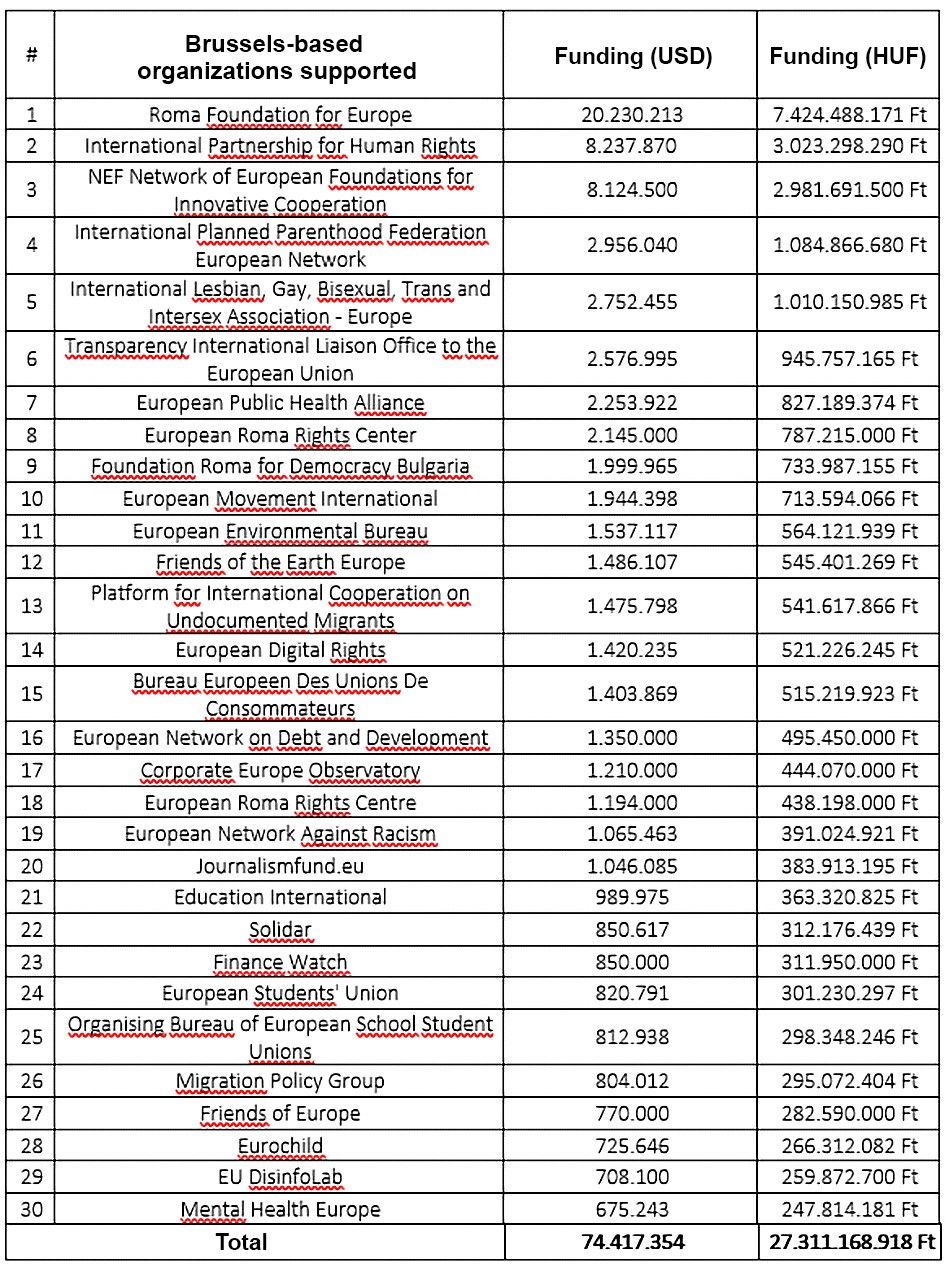
It is also telling who the main beneficiaries in Brussels were. Looking at the list of the top 30 organizations supported, it becomes clear that the funding was ideologically and politically driven. Among the beneficiaries, there are numerous human rights fundamentalists, pro-abortion, LGBTQ, and pro-migration organizations, "fact-checkers," and groups targeting young people. The second-largest beneficiary, the International Partnership for Human Rights, was founded by activists who had split from the International Helsinki Committee. In its 2018 report, this organization claimed that Hungary had introduced "undemocratic restrictions against non-governmental organizations”—an assertion likely sourced from Marta Pardavi, who, besides serving as a board member there, is also the co-chair of the Hungarian Helsinki Committee.
Recipients also included several umbrella organizations, such as the Network of European Foundations for Innovative Cooperation (no. 3), which comprises 13 organizations, or the International Planned Parenthood Federation European Network (no. 4), which includes dozens of members. The latter NGO claims to be active in 40 countries across Europe and Central Asia (and, together with its global parent organization, practically worldwide), primarily working to promote abortion. According to their statements, their goal is to ensure that the EU and its member states "amplify progressive voices" on theme of abortion. This organization also played a role in the international campaign against Hungary’s heartbeat law. Its Hungarian member is the Hatter Society, which primarily represents LGBTQ lobbying interests and is also funded by George Soros.