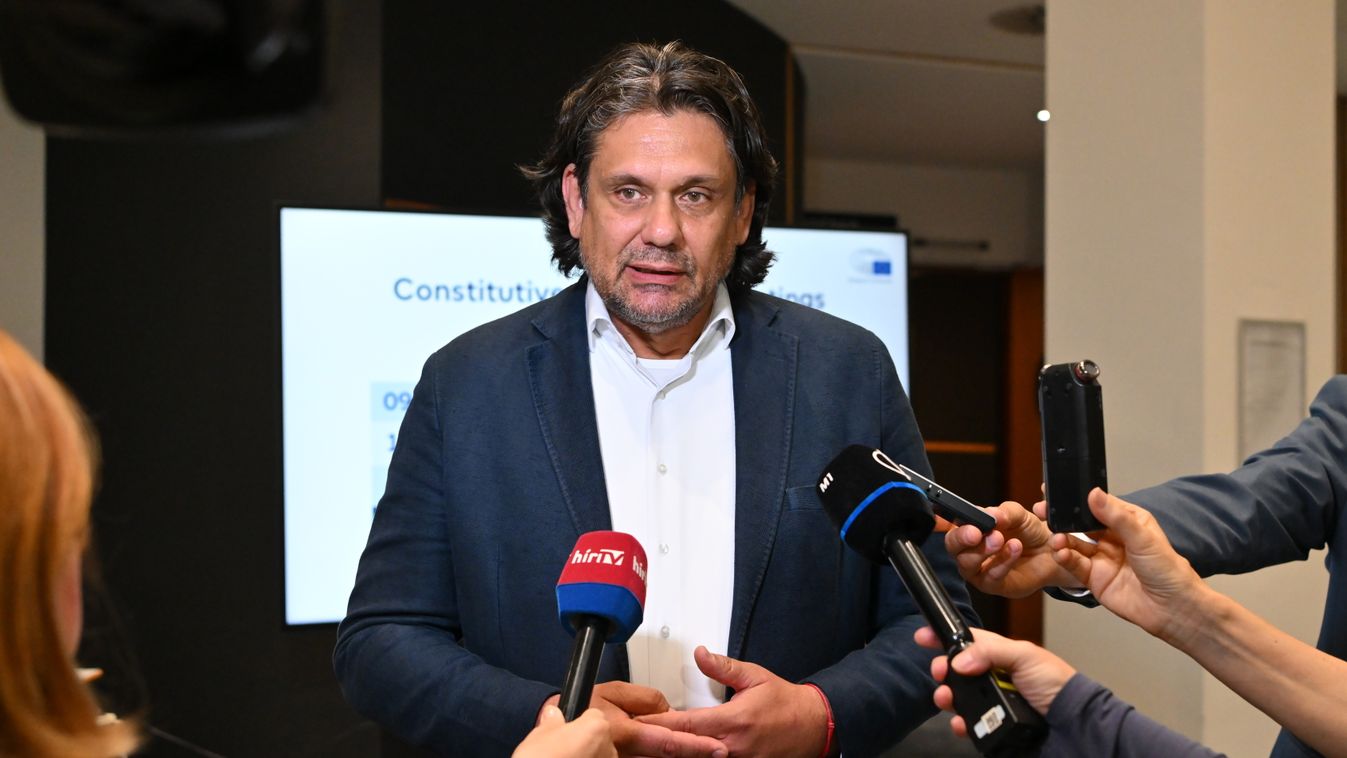
The EP has earned the right, after many decades of struggle, for the prime minister holding the rotating presidency to present his ideas to MEPs directly elected by the citizens of Europe, and the EP is where this European agenda can be debated, he said. As the politician put it, "they are not setting the stage for Viktor Orban", Hungary's prime minister will perform a duty, "which is a sweet burden for any holder of the EU presidency", but "we have come to the point where, driven by political antipathy, a number of pro-war EP groups and MEPs would have given up this acquired right to keep Viktor Orban away from this debate".
Democracy is a political system for meaningful debate, for the confrontation of differing opinions, but it seems that the progressive forces, the liberals, the EPP, the Greens, the communists and the socialists want to run a European democracy where they do not want to have a debate with those who disagree with them. These forces want to take away the possibility of debate and deny their opponents participation in the European dialogue, simply because they have the courage to take a position that differs from the European mainstream,
he explained.
Tamas Deutsch took the view that the MEPs of the Hungarian opposition will exploit this opportunity again. However, there is no doubt that "they will not use this opportunity to give their opinion on Hungary's program for the EU presidency or lend support to the goals, but to discredit their own country regurgitating their divergent opinions, misrepresentations, lies and slanders they draw on in Hungarian domestic politics. In short, they want to attack their own country in the back once again."
Tamas Deutsch said that he expects the debate in the European Parliament to be characterized by a duality: with the Hungarian opposition at the forefront, there will be all kinds of attacks, slanders and accusations about the Hungarian government's activities in Hungary. However, "the debate next week will not be about that", but about the ideas for Europe formulated by the Hungarian government, which is holding the presidency of the Council, an important EU institution of 27 EU member states. Those who have looked at these ideas through this lens so far have all expressed a supportive view," he said.