Rule of Law in Peter Magyar’s Style: Incoming Prime Minister May Undermine Legal Certainty While Seeking Personal Revenge

Peter Magyar’s statements could set a dangerous precedent, constitutional lawyer Zoltan Lomnici Jr. says, as as a prospective prime minister must not interfere in specific criminal cases, and the executive branch must remain independent from the work of the prosecution. If Magyar attempts to intervene in concrete criminal cases or exert pressure on the police, the prosecution, or the tax authority, he could use state power to settle personal scores and even destroy his political opponents, political analyst Attila Tibor Nagy warns.

2026. 04. 27. 17:07
Photo: AFP/Attila Kisbenedek
VéleményhírlevélJobban mondva - heti véleményhírlevél - ahol a hét kiemelt témáihoz fűzött személyes gondolatok összeérnek, részletek itt.

"In a true rule-of-law system—as understood by Hungary’s Fundamental Law and the broader Western constitutional tradition—politicians define general policy directions, such as strengthening anti-corruption institutions, joining the European Public Prosecutor’s Office, or increasing prosecutorial capacity. However, they must not intervene in individual criminal cases," he explained.

According to Zoltan Lomnici, this principle applies internationally as well: in the United States, Germany, or France, it would be unacceptable for an incoming president or prime minister-elect to publicly demand the reassignment of a specific investigation, the execution of a particular search, or the prosecution of a given individual. "Peter Magyar’s statements are therefore indicative of the intentions behind his future governance and could set a dangerous precedent. They risk deepening internal divisions, weakening Hungary’s sovereignty, and opening the door to disproportionately broad external intervention—such as from the European Public Prosecutor’s Office—into domestic affairs," the expert concluded.

What kind of rule of law is this?

"What kind of rule of law, what kind of system of checks and balances is it where a leading politician—publicly—sets expectations for authorities about what investigative actions they should carry out?" asked political analyst Attila Tibor Nagy in response to the case. In his view, Peter Magyar is wielding a dangerous weapon when he attempts to interfere in specific criminal cases.

"If a prime minister wants to intervene in concrete criminal cases, to exert pressure on the police, the prosecution, or the tax authority, then he can use state power to satisfy personal revenge or to destroy his opponents. You go to prison, you don’t, provided that in return you do this or that for me. This is not how it should work," he wrote.


According to the analyst, in a genuine rule-of-law system, authorities operate free from political influence, in fair procedures, based on professional standards—not according to the expectations of one politician or another. "I find it hard to believe that Peter Magyar, who has a legal background, is unaware of this. That makes it all the worse that he is saying such things," he added, expressing hope that this was merely a communication tactic on the part of the incoming prime minister.

Sharp rise in suspended transactions over three years

Based on Peter Magyar’s post, inquiries were sent to the National Tax and Customs Administration (NAV) to determine whether "high-value transactions" had indeed been frozen, as the Tisza Party leader claimed.

Requests for comment were also sent to the Hungarian Civil Liberties Union (TASZ) and the Hungarian Helsinki Committee, organizations that frequently raise concerns about the rule of law, but no response had been received from either at the time of publication.

NAV did respond to stating that due to strict confidentiality rules, the tax authority cannot comment on specific cases or share details, as it is bound by disclosure restrictions and must ensure that both the fact of a report and its contents remain confidential. In general terms, they explained that service providers such as banks are required to report to the NAV’s Anti-Money Laundering and Counter-Terrorism Financing Office (NAV PEI) if "any data, facts, or circumstances arise suggesting money laundering, terrorism financing, or that assets may originate from criminal activity."

At the same time as filing such a report, service providers are required to suspend the transaction—for example, halting the transfer of funds abroad from a bank account. NAV noted that such suspensions can last for a maximum of seven working days.

The NAV PEI conducts an operational analysis within four working days of receiving the notification, examining the data and circumstances of the transaction. This review may be extended by an additional three working days if necessary for information-sharing purposes. The process is also subject to strict confidentiality: the results of the analysis can only be forwarded to the relevant authorities, and solely for the purposes of combating money laundering, countering terrorism financing, and assisting in the detection of criminal offenses. Overall, the aim of the PEI’s review is to help secure assets derived from criminal activity within the framework of criminal proceedings.

According to statistics compiled by NAV, both the number of reports on suspicious transactions and the number of suspended transactions have increased significantly in recent years. In 2022, 1,063 suspensions were ordered, while by last year that figure had tripled, reaching 3,185 such cases in 2025.

The tax authority did not provide data on measures taken this year, including in the period following the elections.

Lounge Event Kft. is not up for sale

In a Facebook video on Saturday evening, Peter Magyar, the leader of the Tisza Party and incoming prime minister, also spoke about the possible sale of TV2 and Lounge Event Kft. The claims that were immediately denied by those involved. "TV2 has no knowledge that the statement in question has any basis in reality," the broadcaster’s press department told Media1 on Saturday evening. "Contrary to claims published in the press, Lounge Event Kft., a company group recognized both domestically and internationally, is not up for sale, and there is currently no such process underway within the group. The published information is false," stated the Lounge Group, led by Gyula Balasy, in response to Peter Magyar’s claim that the company has been put up for sale below market value.

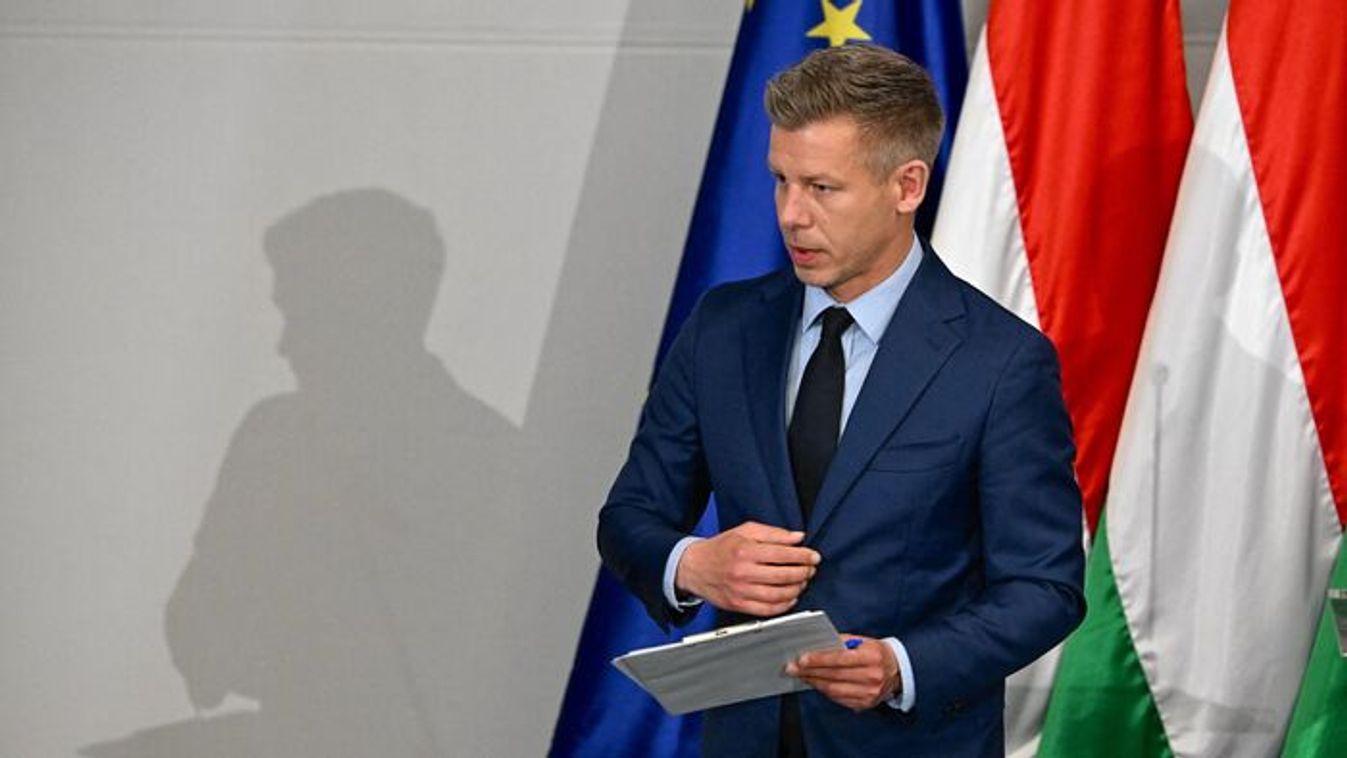
Cover photo: Peter Magyar (Photo: AFP)

Komment

Összesen 0 komment

A kommentek nem szerkesztett tartalmak, tartalmuk a szerzőjük álláspontját tükrözi. Mielőtt hozzászólna, kérjük, olvassa el a kommentszabályzatot.


Jelenleg nincsenek kommentek.

Szóljon hozzá!

Jelenleg csak a hozzászólások egy kis részét látja. Hozzászóláshoz és a további kommentek megtekintéséhez lépjen be, vagy regisztráljon!

A téma legfrissebb hírei

Tovább az összes cikkhez chevron-right

Ne maradjon le a Magyar Nemzet legjobb írásairól, olvassa őket minden nap!

Google News
A legfrissebb hírekért kövess minket az Magyar Nemzet Google News oldalán is!

Címoldalról ajánljuk

Tovább az összes cikkhez chevron-right

Portfóliónk minőségi tartalmat jelent minden olvasó számára. Egyedülálló elérést, országos lefedettséget és változatos megjelenési lehetőséget biztosít. Folyamatosan keressük az új irányokat és fejlődési lehetőségeket. Ez jövőnk záloga.