“The Greatest Danger Is Getting Used to Injustice”

For Father Rudolf Anzelm Fejes, the dispute over the Premonstratensian monastery in Oradea is no longer merely a legal battle over property. It is a test of whether the autonomy of an order of pontifical right — and its more than 900-year presence at Váradhegyfok — can survive. In a Pentecost interview with Magyar Nemzet, the abbot spoke about what he considers unlawful eviction attempts, the prayerful resistance of the faithful, the significance of a newly surfaced archival document, and why he believes indifference may be more dangerous than violence.

2026. 05. 25. 8:00
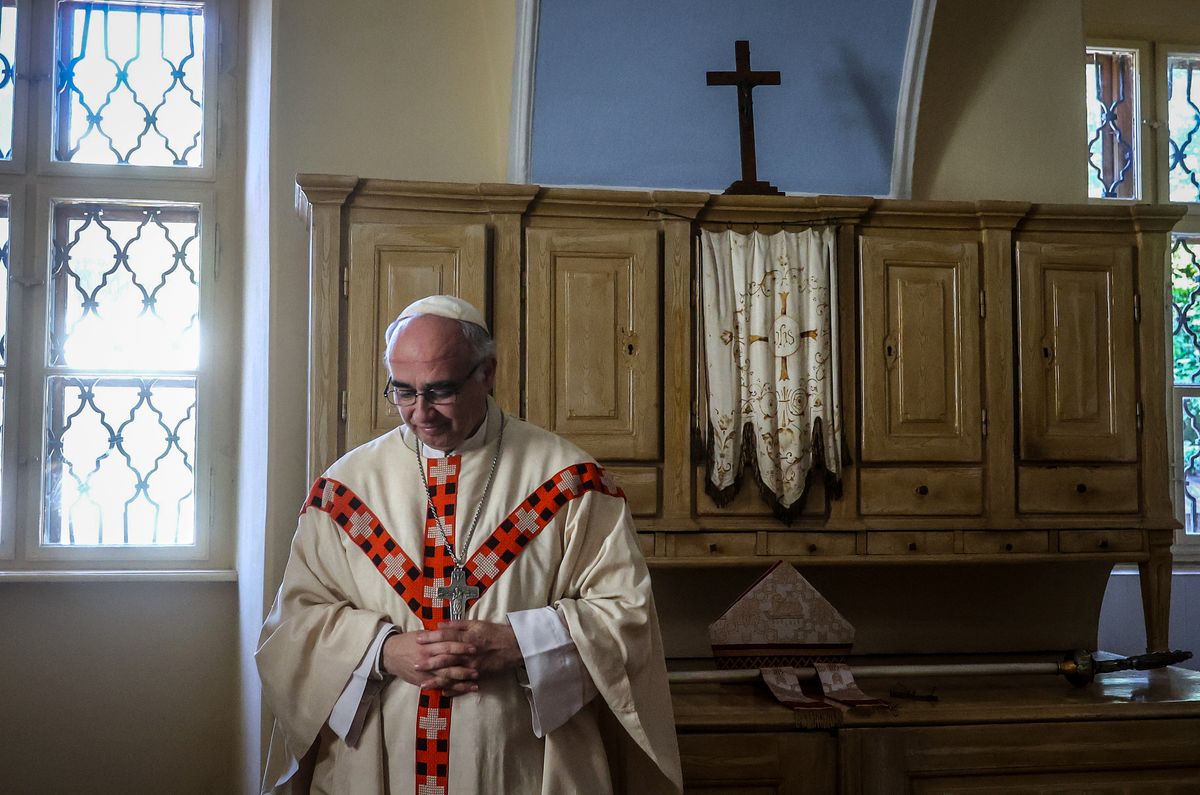
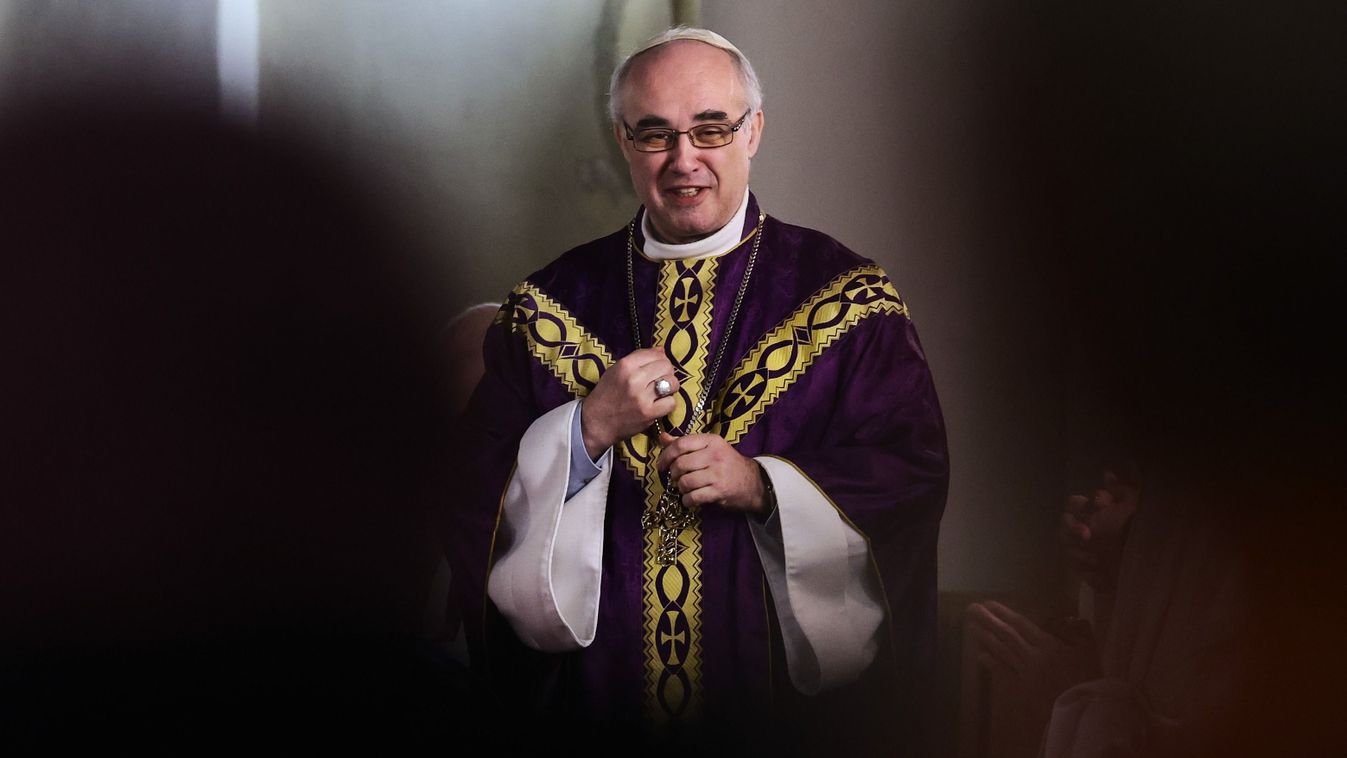
Fejes Rudolf Anzelm premontrei apát szerint a nagyváradi rendház körüli jogvita már régen nem egy ingatlanról szól, hanem arról, hogy megőrizhető-e a pápai jogú rend egyházi autonómiája és több mint kilencszáz éves váradhegyfoki jelenléte Fotó: Havran Zoltán
VéleményhírlevélJobban mondva - heti véleményhírlevél - ahol a hét kiemelt témáihoz fűzött személyes gondolatok összeérnek, részletek itt.
20260223 Románia, Nagyvárad
Fejes Rudolf Anzelm O.Praem apát, váradhegyfoki prépost-prelátus, a Nagyváradhegyfoki Premontrei Prépostság elöljárója kilakoltatási felszólítást kapott a nagyváradi polgármesteri hivataltól. 
fotó: Havran Zoltán (HZ)
MW
Father Rudolf Anzelm Fejes, Premonstratensian abbot of Oradea (Nagyvárad). Photo: Zoltán Havran

– What is really at stake in this case? And when have similar situations occurred in Church history?
– What is at stake is not a building. What is at stake is that the organs of a democratic state are reaching back to a set of tools perfected by the party-state: violence hidden behind the appearance of legality. On paper, everything is in order. Everything is regular. Every procedure meets the formal requirements. Meanwhile, step by step, they are pushing us out of what is legally ours — what we have used without interruption since 1808, and whose canonical seat the Holy See fixed in 1947. This is not a new method. Church history knows it well. St. Athanasius the Great was exiled five times because he refused to sign what the imperial court expected of him: acceptance of the Arian heresy, which denied the divinity of Christ. Each exile took place through legal procedures. Each time there was a proper charge. Each time there was a court decision. And yet everyone knew what it was really about: whoever refuses to bow before power must be removed. St. Gregory of Nazianzus wrote of him: 

“To those who struck him, he was like a diamond.” That means the more they struck him, the harder he proved to be. He did not break. He did not bend. He did not wear away. That is exactly what my solemn vows require of me as well. 

Nor should we forget St. Thomas Becket, the Archbishop of Canterbury. He was not killed overnight. King Henry II of England tried for years to break him by legal means: lawsuits, exile, confiscation of property. The reason was simple: the archbishop refused to subordinate the Church to royal power. When every legal instrument failed, four knights entered the cathedral and killed him before the altar. These are not abstract examples from the past. They show that the method is always the same. If something cannot be taken openly because the law protects it, then power works around it: municipal and state harassment, financial strangulation, isolation, false narratives — until the person grows exhausted and leaves voluntarily. But I will not leave. I will not give up the Premonstratensian heritage of Váradhegyfok, which I was elected by my elderly confreres to preserve and recover, and in defense of which I took my oath as provost at the altar of the church, written in my own hand.
– Can the Holy See be expected to act in this matter? 
– I cannot promise that, and it would not be proper to speculate publicly about when or how the Holy See may act. What is certain is this: they know what happened. The matter has reached the place it needed to reach. The rest does not depend on me.
 

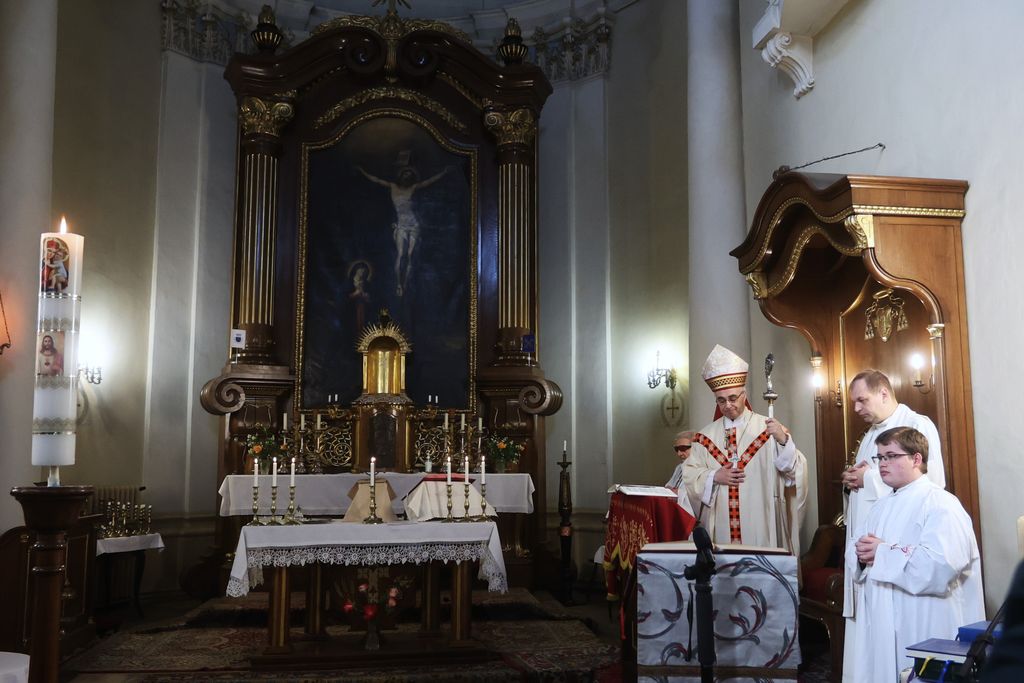
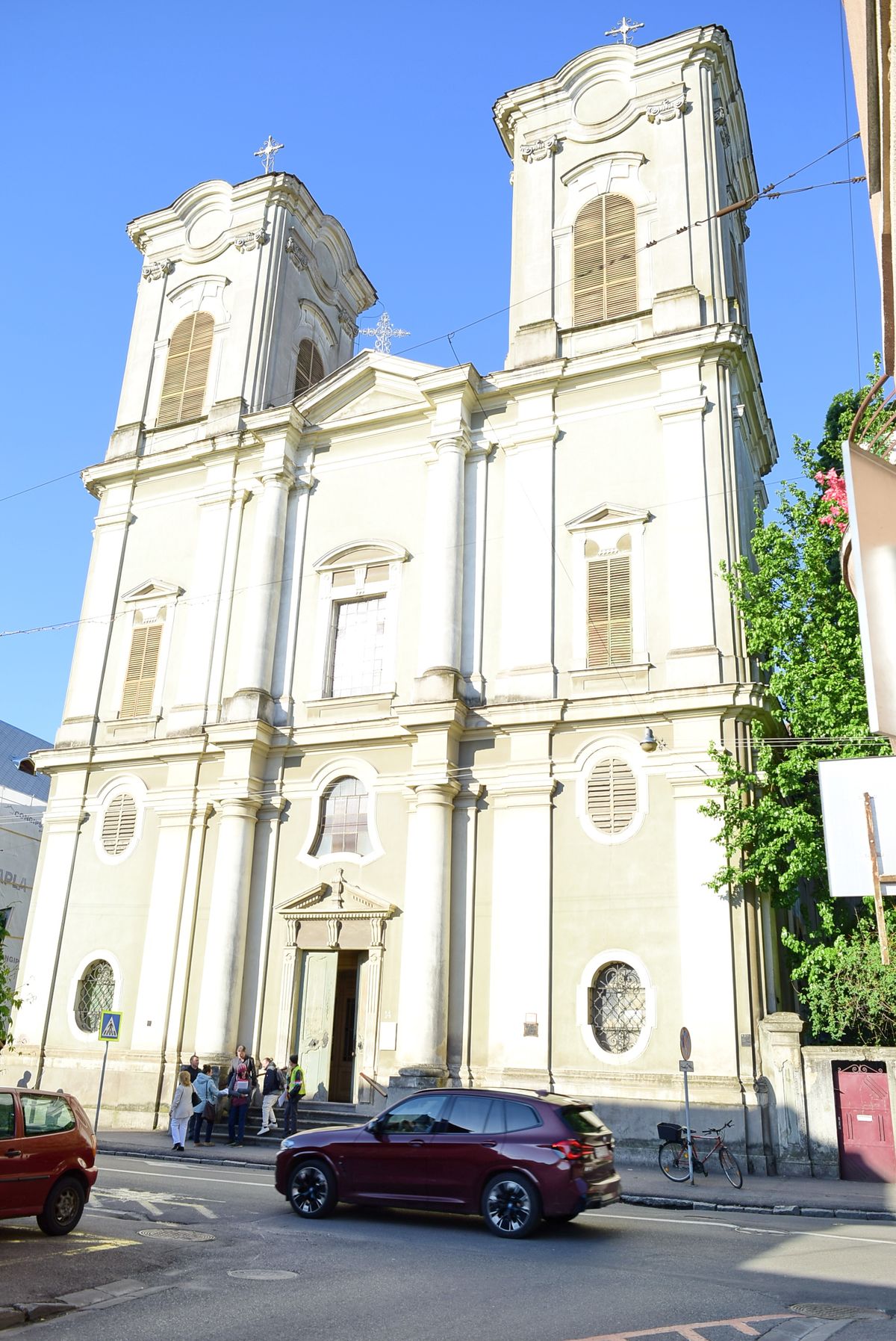
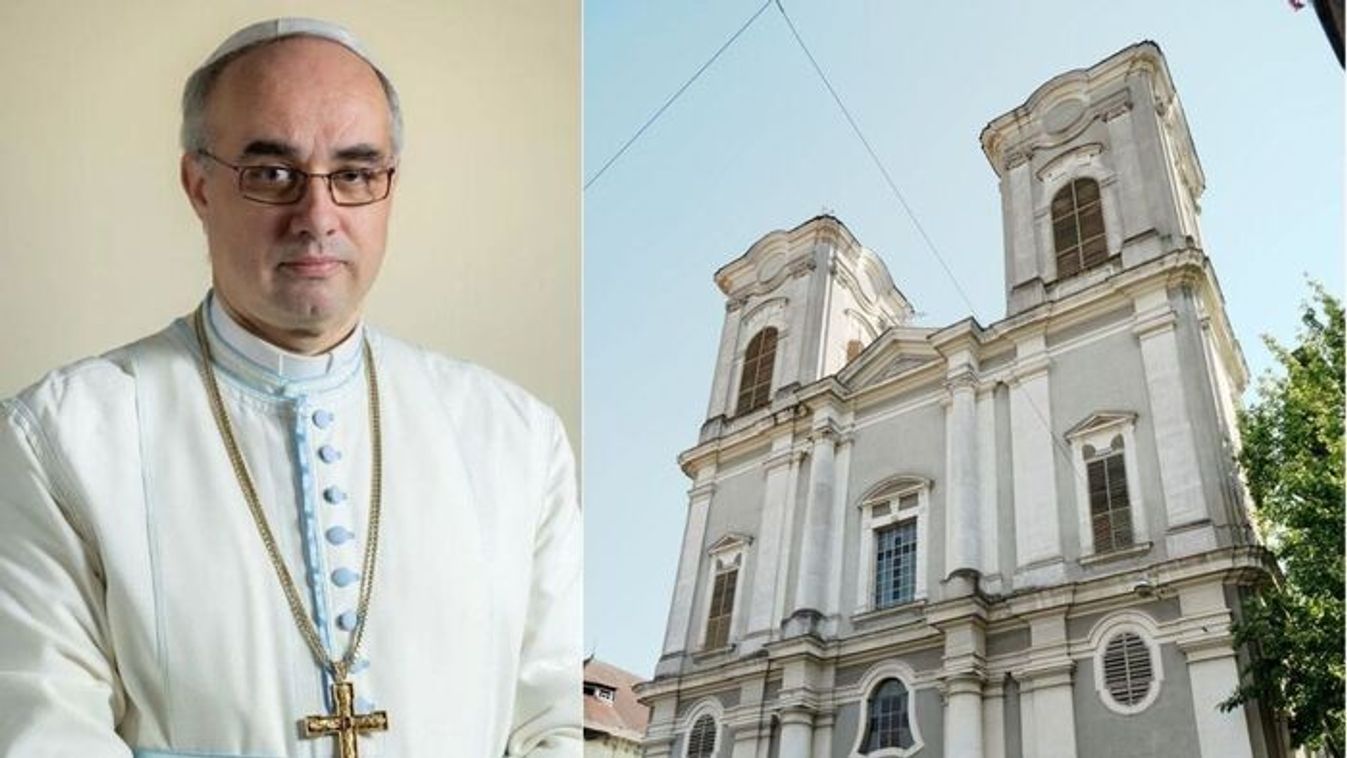
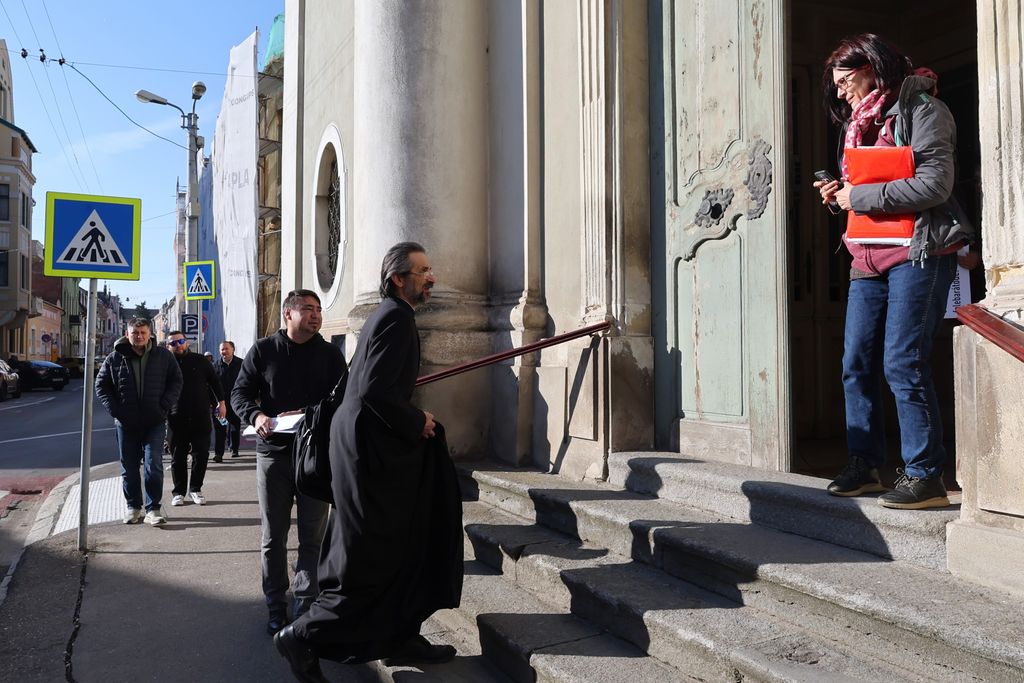
The Premonstratensian/Norbertine Church of Oradea (Nagyvarad)
Photo: Facebook/Istoria Ordinului Premonstratens din Oradea 

– What does Oradea lose if it makes the continued existence of its own historic religious order impossible?
– By pushing us out, Oradea loses a presence that has been here since 1130 — a presence that brought the Christian West here from the Premonstratensian mother abbey, in what is now France. We carried out authenticating-place activity, which in modern terms meant notarial and judicial functions. We provided pastoral care. We heard confessions. We founded schools. And what we built here in the Carpathian Basin later served as a source for our sister houses in the West. This is a presence that does not merely preserve memory. It still lives, prays and serves. If it disappears, the city does not simply lose an institution. It loses one of its own layers — the layer beneath which its roots lie. That cannot be replaced by a museum, a memorial plaque or a street name. Oradea is special precisely because cathedrals and monastery churches, buildings of different cultures and denominations, stand side by side here. Behind them are living communities that made this city what it is. If one of them disappears, the city loses a part of its own past. 

We have been pushed out several times before: by the Tatars, by the Turks, by Josephinism. But we always returned. According to the Monasticon Praemonstratense, we died out twice and came back to life twice.

So if someone now thinks the Premonstratensian presence at Váradhegyfok can be ended by evicting me, I can only say what Gamaliel said to the council: if this matter is from God, it cannot be destroyed by human hands.

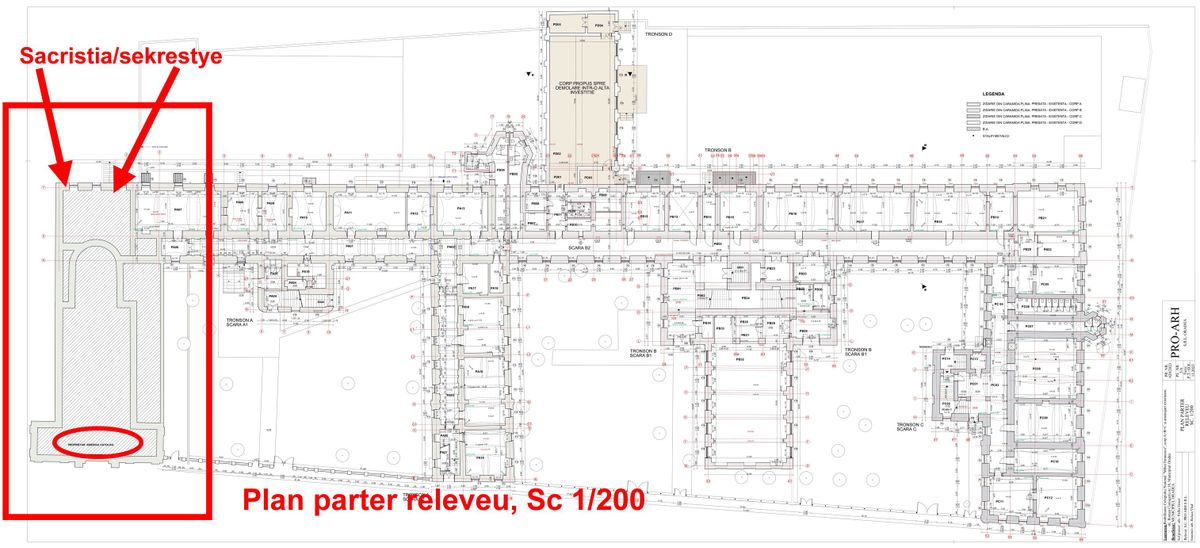
Romanian authorities claim that the sacristy does not belong to the church. Reality, blueprints and common sense state otherwise.
(Forrás: Facebook/Istoria Ordinului Premonstratens din Oradea)


– At Pentecost, the apostles spoke in different languages, yet through the Holy Spirit they understood one another. In Transylvania, where Hungarians, Romanians and different denominations live side by side, carrying many historical wounds, how can understanding be achieved?
– Pentecost is the birthday of the Church. Fifty days after Easter, when the Holy Spirit descended upon the apostles, what happened was not merely an inner spiritual experience. The Church of Christ stepped out into the world. Until then, the apostles had been sitting behind closed doors, afraid and uncertain. The Holy Spirit made them courageous. The same Spirit enabled Parthians, Medes, Elamites, Arabs and Romans to understand what they heard. They did not understand because they had become the same. They understood because the Holy Spirit made the apostles brave enough to speak, and made the listeners receptive enough to hear. That is the mystery of the Holy Spirit: he does not erase differences. He carries the message across them. 

In Transylvania, where Hungarians, Romanians and different denominations live together while carrying centuries-old wounds, this is exactly what is needed. Not for anyone to give up who they are, but for each to hear what the other is saying. That requires courage. And this courage is not something we give ourselves. We must ask it of the Holy Spirit — the same Spirit who made the apostles brave.

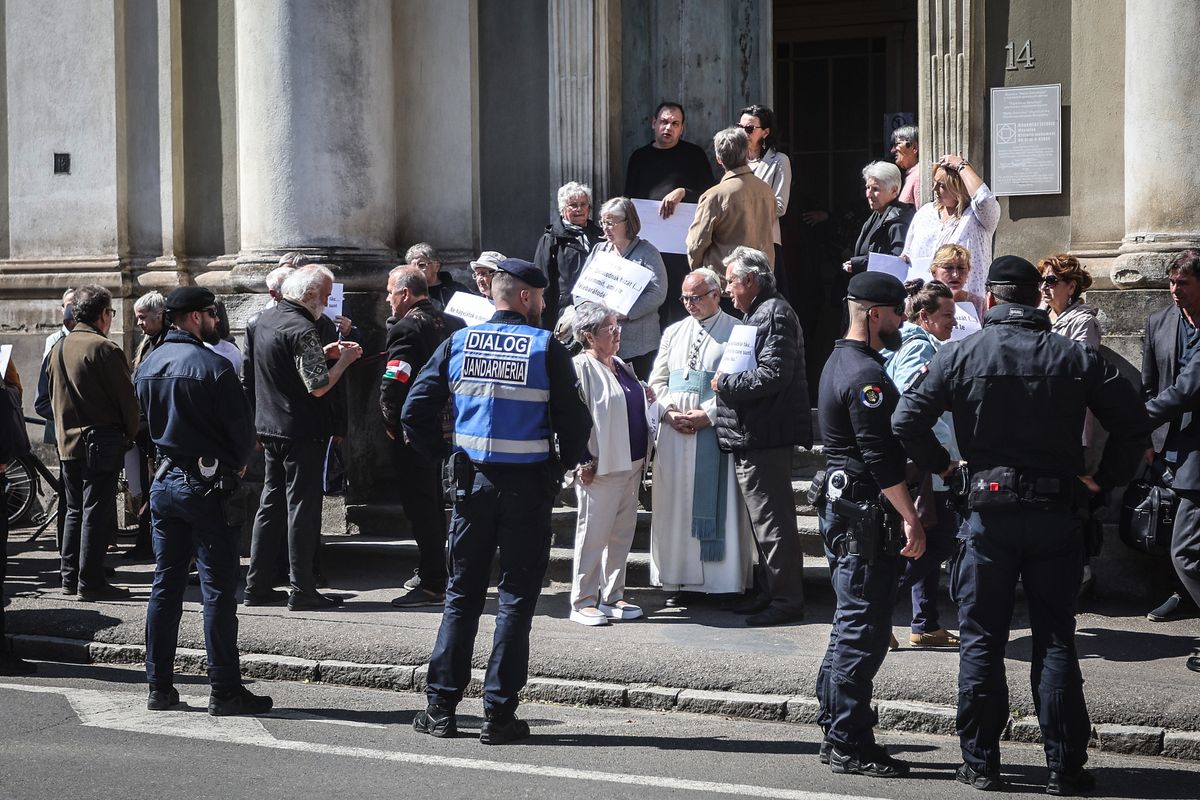
20260514 romania nagyvarad fejes rudolf anzelm premontrei prepost prelatus atyat a roman rendorseg kilakoltatassal fenyegeti havran zoltan magyar nemzet
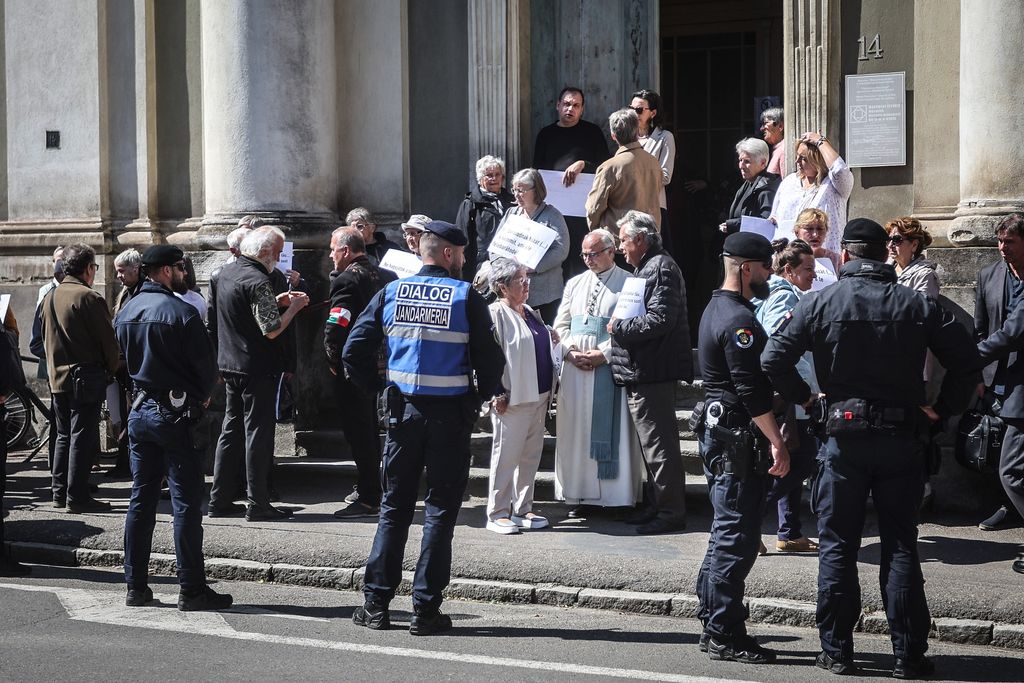
On May 14, protesting members prevented the eviction of the Premontre abbot of Oradea for the third time. 
Photo: Zoltán Havran 

– In recent months, you must have experienced with particular intensity what it means to defend your community of believers, your order and its church, and to bear witness to your faith even in the face of persecution. That was the mission the apostles received at Pentecost. How does the work of the Holy Spirit appear in the present situation?
– The Holy Spirit, the third Person of the Holy Trinity, the personal bond of love between the Father and the Son, transforms man from within. Scholastic theology puts it this way: through grace, the Holy Spirit does not merely assist the human will. He raises it up by his own love, making it capable of what would be impossible by natural strength. On that morning, when the faithful did not run away — when armed gendarmes broke into our church and the faithful stayed, praying for me and also for those who had ordered all of this — the Holy Spirit was at work. Prayer for one’s enemies is the deepest form of agape, something the created will cannot achieve on its own. Only through the Holy Spirit can man become capable of being permeated and guided by caritas. They stayed with me for eight hours — strangers, hungry and thirsty — simply so that the municipal will could not take away our sacristy and our church spaces. That was not merely human solidarity. It was the work of the Holy Spirit. Not in spectacular signs, but in quiet, enduring presence, in what theology calls the fruits of the Spirit: love, peace, patience, goodness. Pentecost is not over. It remains present wherever man does what he would no longer be capable of doing on his own.

“They divided my garments among them, and for my clothing they cast lots” — we sang the psalm this year as well during the stripping of the altar on Maundy Thursday. Barely two weeks later, almost the same scene unfolded in the Premonstratensian church in Oradea. The Romanian enforcement officer, accompanied by gendarmes, burst into Holy Mass, and shortly afterward began taking inventory of the priestly vestments, surpassing even the dark spirit of the party-state era. Do you also pray for those who initiated or support this procedure?
– Yes. Not easily, and not with the same strength every day. But yes. The breviary does not discriminate. After Compline, I pray for every person I encountered that day. Because if I do not do this, then I myself become the rock from which water runs off, rather than the spring from which others, too, may receive life.

20260514 Nagyvárad
Fejes Rudolf Anzelm
Photo: Zoltán Havran 

– What does it mean today, within the more than 900-year historical chain of your order, to be a Premonstratensian in Oradea?
– It means that I know 900 years stand before me. How many stand after me, I do not know. It is not my task to know. 

But I believe and hope that what is from God does not pass away, because it is eternal. St. Norbert founded an institution, but he founded it for eternity. Not for himself, not for the order, but for the Good Lord. And what has been founded for Him has its fate decided by Him — not by a municipal resolution.

– A document recently came to light indicating that, even before the 1936 land-registry name correction, it had been signaled that the procedure might be unlawful. Do you see a chance that this document could change the city hall’s position?
– I hope so, but I am deliberately not basing our next steps on hope. From a legal standpoint, this document is extremely important. It does not come from outside. It does not come from our camp. It was written in 1936 by the ministry’s own lawyer, confidentially, to the minister. It states that what Professor Ghibu proposed was legally impermissible. The Premonstratensian Order was the registered owner in the land registry, and that could not be changed administratively, without court proceedings. They knew this. They wrote it down. And still they signed the authorization, arguing that Ghibu had already achieved results this way with other properties, so they should try it here as well. So it was not a mistake. It was a conscious and deliberate violation of the law, and there is written evidence of it, in their own hand. If the entire current municipal construction rests on that 1936 land-registry name correction — about which the ministry’s own lawyer wrote that it was legally impermissible — then it is not we who say the foundation is unlawful. They said it. In 1936.

20260514 Románia Nagyvárad
Fejes Rudolf Anzelm premontrei apát, váradhegyfoki prépost-prelátus atyát a román rendőrség kilakoltatással fenyegeti
Harmadik alkalommal is eredményes volt a nagyváradi hívek kiállása Fejes Anzelm premontrei apát mellett, ismét sikerült megakadályozniuk a szerzetes jogellenes kilakoltatását. A váradhegyfoki premontrei templomnál összegyűlt tiltakozók élőlánccal, imával és személyes jelenlétükkel álltak ki az apát, valamint a premontrei rend mellett.

Fotó: Havran Zoltán HZ
MW

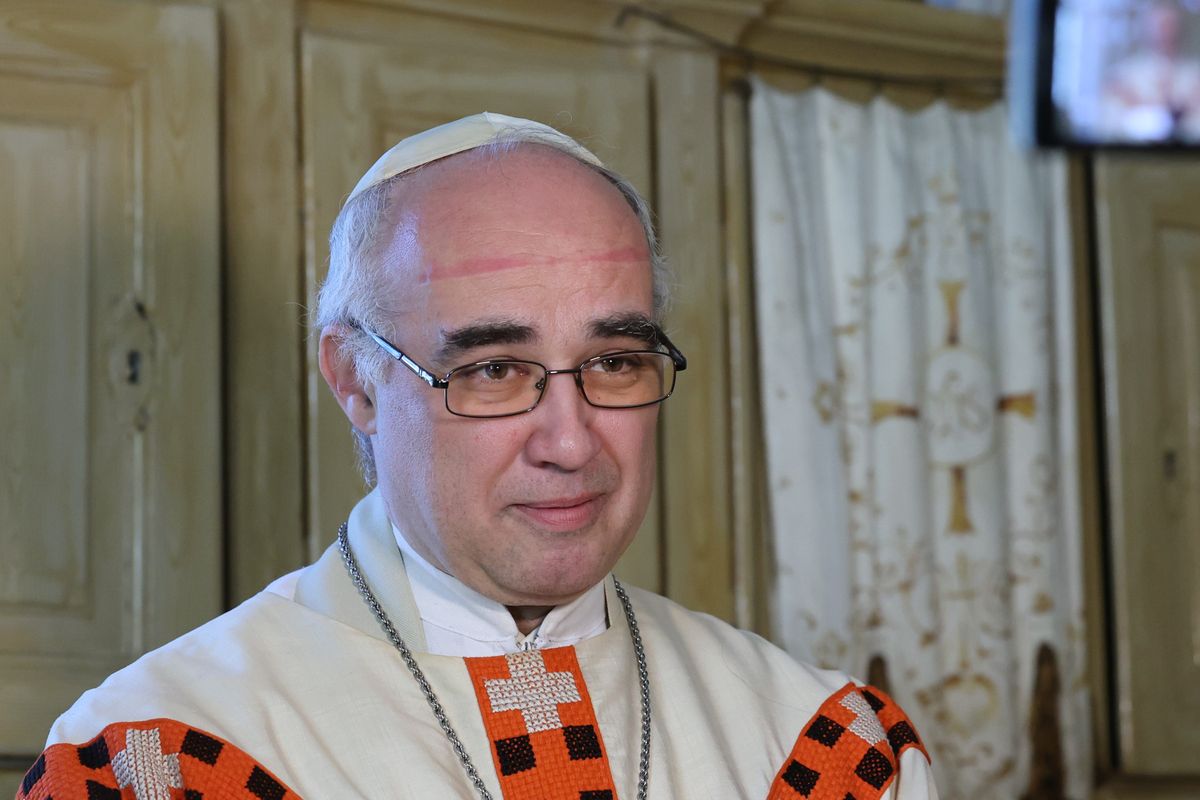
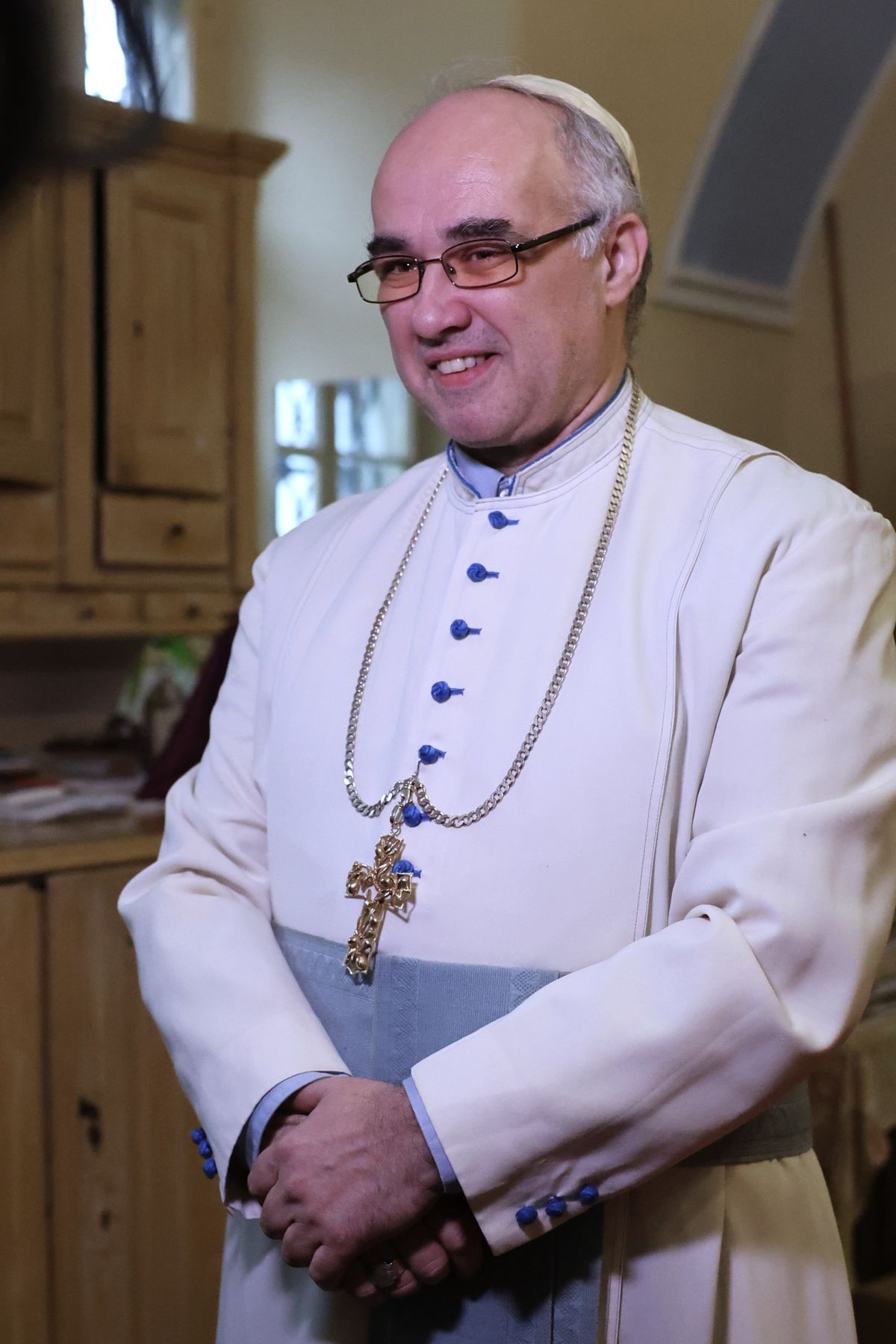
A képen: Fejes Rudolf Anzelm premontrei apát
Father Rudolf Anzelm Fejes, Premonstratensian abbot of Oradea states he will not back down. 
Photo: Zoltán Havran

– What would you ask of the entire Hungarian community at Pentecost?
– At Pentecost, I ask the Hungarian community to ask the Holy Spirit for the courage to see what is there — not what others want them to see, but what is truly happening. Because the greatest danger is not that a building is taken away. 

The greatest danger is that people get used to it. That what is unlawful slowly becomes normal. That what is unjust gradually becomes acceptable. That what once caused outrage settles, over time, into indifference. Indifference works against the Holy Spirit. That is why I ask them to ask the Holy Spirit for what only he can give: clear sight and a free heart, so that they may see the truth and not grow weary of standing up for it.


Komment

Összesen 0 komment

A kommentek nem szerkesztett tartalmak, tartalmuk a szerzőjük álláspontját tükrözi. Mielőtt hozzászólna, kérjük, olvassa el a kommentszabályzatot.


Jelenleg nincsenek kommentek.

Szóljon hozzá!

Jelenleg csak a hozzászólások egy kis részét látja. Hozzászóláshoz és a további kommentek megtekintéséhez lépjen be, vagy regisztráljon!

A téma legfrissebb hírei

Tovább az összes cikkhez chevron-right

Ne maradjon le a Magyar Nemzet legjobb írásairól, olvassa őket minden nap!

Google News
A legfrissebb hírekért kövess minket az Magyar Nemzet Google News oldalán is!

Címoldalról ajánljuk

Tovább az összes cikkhez chevron-right

Portfóliónk minőségi tartalmat jelent minden olvasó számára. Egyedülálló elérést, országos lefedettséget és változatos megjelenési lehetőséget biztosít. Folyamatosan keressük az új irányokat és fejlődési lehetőségeket. Ez jövőnk záloga.