Brussels–Poland conflicts: point of no return crossed on 19 October

The European institutions, supported by some EU-27 governments, claim the right to extend their competences in their confrontation with Poland.

Forrás: VisegradPost2021. 10. 22. 18:43
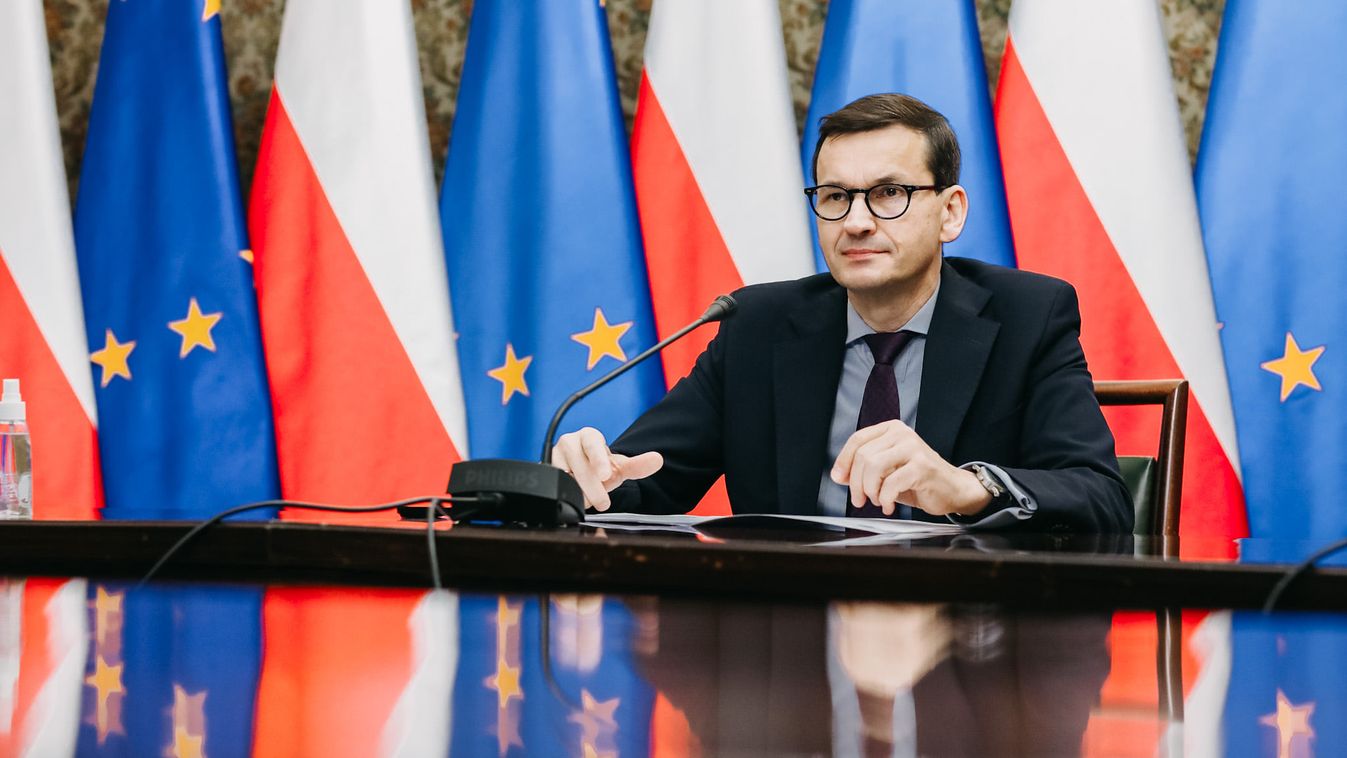
Brussels–Poland conflicts: point of no return crossed on 19 October Fotó: KRYSTIAN MAJ +48669574000
VéleményhírlevélJobban mondva - heti véleményhírlevél - ahol a hét kiemelt témáihoz fűzött személyes gondolatok összeérnek, részletek itt.

Poland/European Union – After the reactions to the Polish prime minister’s speech in the European Parliament on Tuesday, 19 October, one would be tempted to paraphrase Winston Churchill when alluding to the double retreat made last year by PM Mateusz Morawiecki: at the July 2020 European Council, when he finally accepted the principle of the mechanism making the payment of EU funds conditional on the European Commission’s assessment of compliance with the “rule of law” and “European values”, and then at the December 2020 European Council, when this mechanism was set to become a reality with the 2021–2027 EU budget and with the Next Generation EU recovery plan, and when the Polish prime minister, followed by his Hungarian counterpart, quickly agreed to waive his veto. And he did so in exchange for an interpretative declaration of no legal value signed by the heads of states and governments of the EU-27 on the new conditionality mechanism. Morawiecki was given the choice between war and dishonour. He chose dishonour, and now he has war. “Not everyone is General de Gaulle or Margaret Thatcher”, quipped a French journalist the day after the Polish–Hungarian retreat in December.

--

For more details about the new conditionality mechanism, see: “Towards a federal and uniform Europe with the ‘rule of law’ mechanism”

--

Mateusz Morawiecki and PiS leader Jarosław Kaczyński then explained their backtracking by referring to the importance of EU funds to continue Poland’s economic catch-up and to make up for time lost with lockdown policies during the Covid-19 pandemic. However, Tuesday’s session in the European Parliament confirmed what was already known: the European Commission only intends to release these funds once Poland has undone its justice reforms and revoked the 7 October ruling of its Constitutional Tribunal. Ursula von der Leyen, the President of the European Commission, made this blackmail fully official just before the Polish Prime Minister’s speech, and representatives of all parliamentary groups except the European Conservatives and Reformists (ECR) and Identity & Democracy (I&D) groups demanded that the Commission simply reject the Polish recovery plan. In the background, there are also Brussels’ demands on societal issues, especially on abortion and the demands of the LGBT lobby.


Limits of EU competences respected by minority in European Parliament

Only the latter two groups have challenged the right of the ECJ to extend its jurisdiction to areas that have not been the subject of a transfer of sovereignty under the European treaties, such as the organisation of the judicial system, in which the EU Court has been interfering heavily in the case of Poland and at the request of the European Commission. As the Polish prime minister pointed out, if Poland were to implement the ECJ rulings empowering Polish judges, in violation of the Polish constitution, not to recognise judicial appointments made after the 2017 reform of the Judicial Council (KRS), this would cause legal anarchy, as “millions” of judicial decisions could then be challenged. In Strasbourg, Morawiecki again explained that the Polish constitutional ruling does not call into question the primacy of EU law or the articles of the treaties signed and ratified by Warsaw, but only their interpretation by the ECJ when that interpretation goes beyond the competences conferred to the EU by the treaties. As in other EU countries – a fact that was emphasised by the Polish prime minister – the national constitution is the supreme law, and the primacy of EU law can only be exercised within the framework of competences delegated in accordance with the Constitution.

If you want to create a European superstate, without nations, first get the agreement of the peoples of Europe”, concluded Morawiecki, who had begun his speech by calling on the European Commission to take on the tasks that fall under its area of responsibility in order to solve the real problems of Europeans, such as the current record energy prices.

Speaking on behalf of the ECR Group, PiS MEP Ryszard Legutko said that Poland was not afraid of European law but of European lawlessness, of the way in which the rules of democracy and the rule of law are being trampled on by the EU institutions and in particular in the European Parliament, where a dictatorship of the majority is being exercised against the ECR and I&D groups. He was apparently not listened to. According to the Polish MEP, to claim that there would be primacy of EU law in areas where the EU has no competence would be as absurd as claiming the primacy of EU law over the law of Texas. Legutko was probably referring to the recent European Parliament resolution calling for the repeal of the Texan abortion law.

It was also in vain that the French MEP Nicolas Bay (RN) pointed out “that the powers of the European Union are only those delegated by the nations to Brussels” and that “the treaties clearly delimit these attributions”. The Frenchman said that Europeans should welcome the Polish court’s ruling and called on the Polish government to stand firm in the face of Brussels’ attacks. It is true to say that the French elections next spring could change the situation, if we are to believe the numerous criticisms of the ECJ’s militant excesses (the Polish prime minister himself spoke of the ECJ’s “judicial activism” during his speech) made, before and after the Polish ruling, by declared or potential candidates in the French presidential election.

Komment

Összesen 0 komment

A kommentek nem szerkesztett tartalmak, tartalmuk a szerzőjük álláspontját tükrözi. Mielőtt hozzászólna, kérjük, olvassa el a kommentszabályzatot.


Jelenleg nincsenek kommentek.

Szóljon hozzá!

Jelenleg csak a hozzászólások egy kis részét látja. Hozzászóláshoz és a további kommentek megtekintéséhez lépjen be, vagy regisztráljon!

Ne maradjon le a Magyar Nemzet legjobb írásairól, olvassa őket minden nap!

Google News
A legfrissebb hírekért kövess minket az Magyar Nemzet Google News oldalán is!

Portfóliónk minőségi tartalmat jelent minden olvasó számára. Egyedülálló elérést, országos lefedettséget és változatos megjelenési lehetőséget biztosít. Folyamatosan keressük az új irányokat és fejlődési lehetőségeket. Ez jövőnk záloga.