Brussels' tool
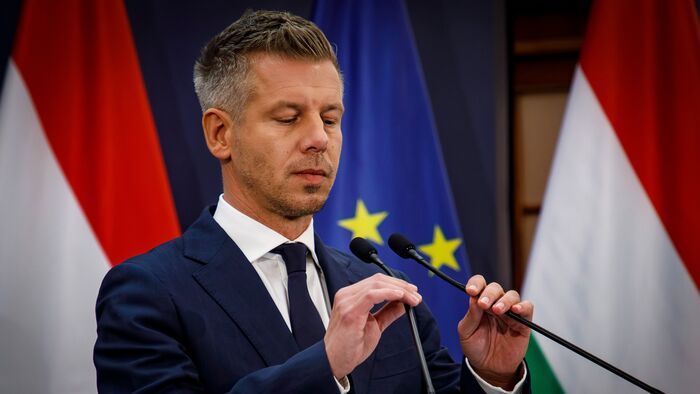
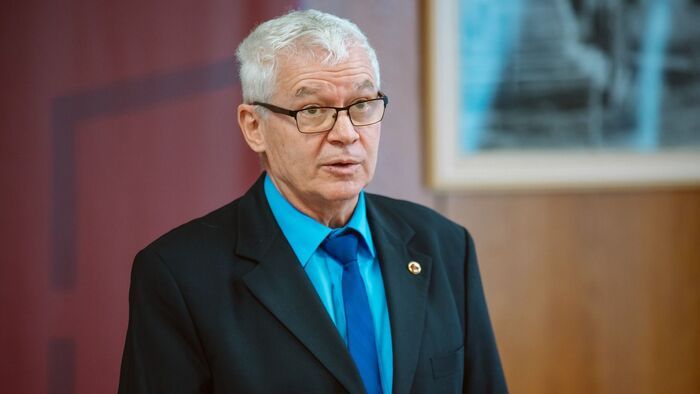
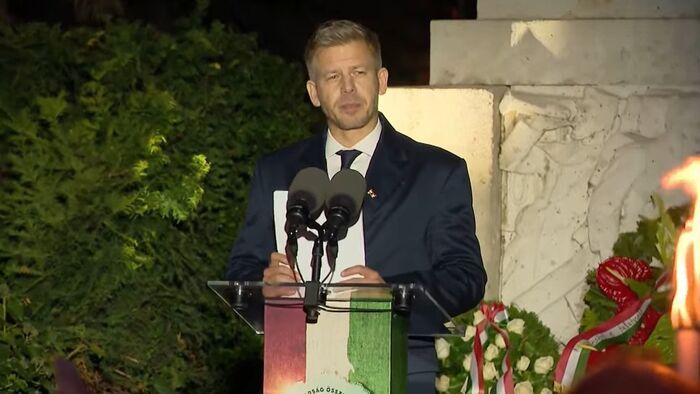
Mr. Nagy argued that Brussels will go to any lengths, copletely disregarding democratic principles. "Democracy itself is no longer taken seriously there. Just look at how the Patriots are sidelined: they have been excluded from the various committees, with democratic norms being trampled. And we can't expect anything different here, at home, either. Peter Magyar's constant efforts to undermine trust in public institutions aim to foster in people a sense of instability, even though no such instability exists."
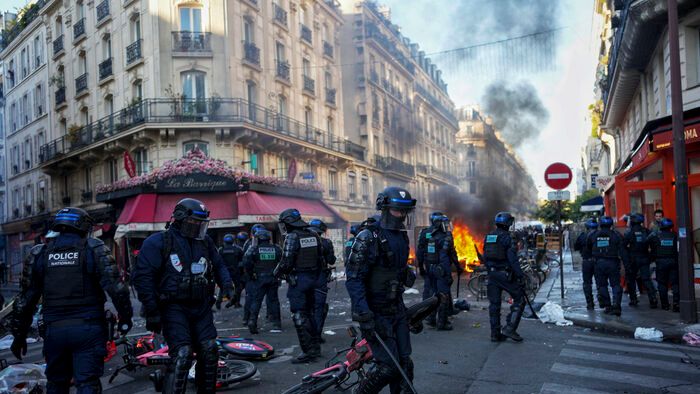
There is no reason for early elections. The economy is not in crisis, the government's social support base remains intact, and there are no mass protests in the streets like in Germany or France,
– Mr. Nagy argued, adding that Peter Magyar does an effective job in convincing his own supporters, making him a valuable tool for Brussels.
DK–Tisza grand coalition
According to the analyst, despite the public back-and-forth between the Tisza party and DK, they are preparing for a grand coalition, driven not solely by electoral arithmetic, but also by the shifting dynamics of the international political landscape.
They aim to replicate the same grand coalition that was formed in the EU: Peter Magyar sits in the People's Party, DK represents the Socialists, while Momentum would integrate into the Renew Europe group.
The policies of the three parties are clearly not as far apart as they try to portray. In fact, they share much in common: they voted for the migration pact, the continued application of the rule of law mechanism, and its future use as a political weapon against Hungary. They also voted on budget amendments, including provisions that reallocate funds for sensitivity training—essentially aligning on gender-related issues. But, perhaps most significantly, representatives from both parties back the financing of Ukraine within the pro-war agenda. If Momentum were still in the European Parliament, they would have undoubtedly supported these proposals, argued Ervin Nagy, who pointed to Poland's example, where this is how things worked. Returning to the DK–Tisza coalition, the analyst predicts that if these two parties remain dominant by 2026,
a coalition akin to the old Socialist (MSZP)–Social Democrat (SZDSZ) partnership could emerge. In this scenario, Peter Magyar would occupy the role once held by the liberal SZDSZ party, but in a stronger form, while DK would represent the left wing.
– However, for all this to happen, Mr.Magyar must overcome his "you can't topple the government with Gyurcsany" principle, the enalyst stated.