Gyorgy Nogradi: Ukraine’s Accession Would Tear the EU Apart

Ukraine’s demographic indicators were already the worst on the continent before the war, and they have further deteriorated due to emigration and the loss of lives on the battlefield. In addition, the country’s economy lies in ruins, and the government in Kyiv remains dependent on continuous aid. According to security policy expert Gyorgy Nogradi, Ukraine’s accession to the European Union would be a grave mistake, as it would devastate the bloc’s economy.

2025. 03. 17. 13:04
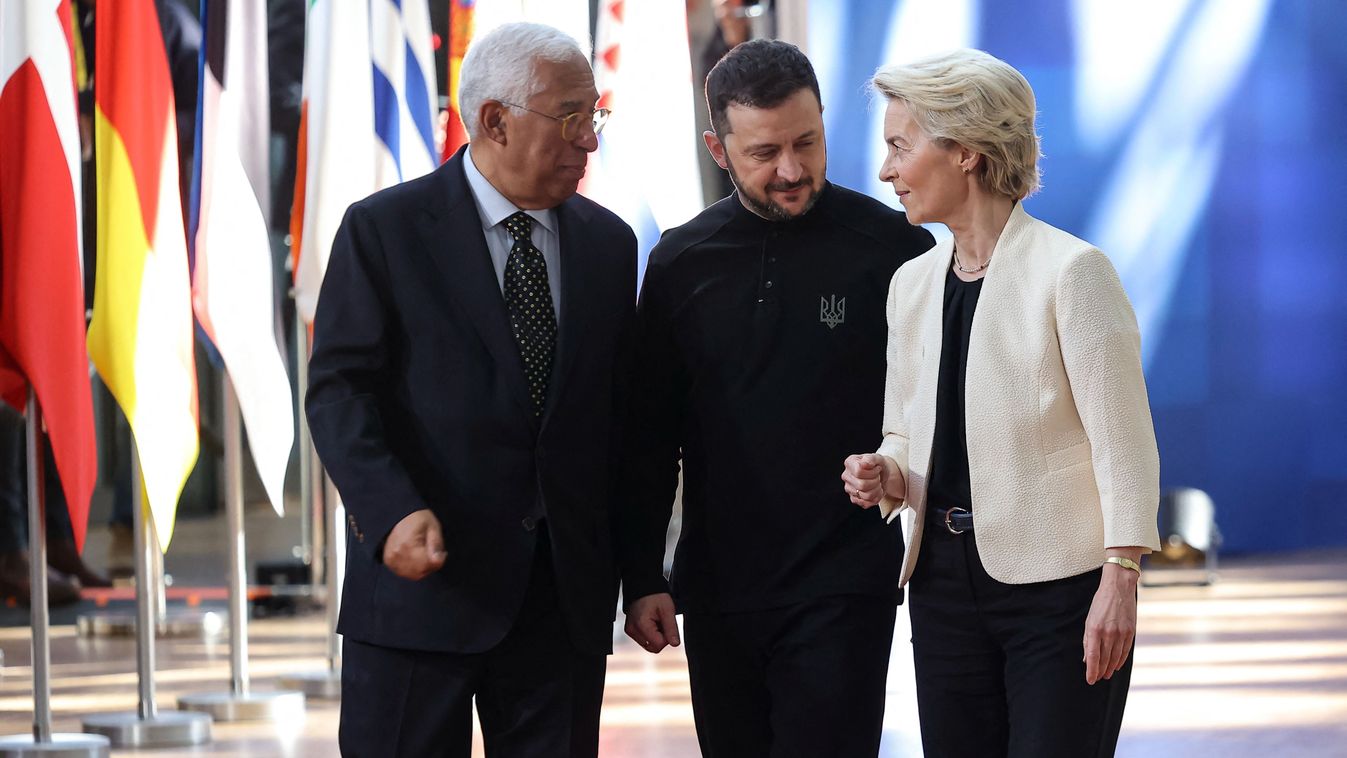
Ukrainian President Volodymyr Zelensky, European Commission President Ursula von der Leyen, and European Council President Antonio Costa in Brussels on March 6, 2025 (Photo: AFP)
VéleményhírlevélJobban mondva - heti véleményhírlevél - ahol a hét kiemelt témáihoz fűzött személyes gondolatok összeérnek, részletek itt.

Zelensky’s Popularity Has Plummeted

Ukrainian President Volodymyr Zelensky is doing everything he can to secure more weapons and financial aid for his country, but this policy is increasingly unpopular among Ukrainians.

Ukraine is one of the most corrupt countries in the world, and its demographics is almost hopeless. According to U.S. polls, Zelensky’s approval rating stands at just 4 percent, while Ukrainian surveys place it at 17 percent. Zelensky previously stated that he would call for elections once peace is achieved. However, Western countries are already looking for alternatives to succeed him—someone who can satisfy both American and Russian interests,

− Mr. Nogradi stated, stressing that Zelensky’s successor is already being sought, and - unlike the current Ukrainian president - he must be acceptable to all parties involved.

Ukraine’s EU Accession Would Be a Mistake

Both Ukraine and the European Union are pushing for the country’s accelerated membership.

According to Moscow, Ukraine cannot join NATO or possess nuclear weapons, but in principle, it could become an EU member. However, Russia believes that Ukraine’s EU accession would immediately destabilize the bloc—and they are right. Ukraine currently does not meet any of the EU’s admission criteria, yet Western Europe insists it will be granted full membership by 2030. This timeline, which was also mentioned by Ursula von der Leyen, would place Ukraine ahead of the Western Balkan states in the accession process, triggering major outrage in the Balkans,

− Mr. Nogradi explained. 

If Ukraine was granted the EU’s four fundamental freedoms—the free movement of people, goods, capital, and services—it would be disastrous for the country, as even more people would leave. At the same time, Ukraine’s actual accession to the EU remains unlikely for now. However, if it did occur, the country would gain access to financial resources that would severely damage European agriculture—especially in Hungary, the Visegrad states, and France,

− the expert noted, pointing out that Ukraine has some of the largest agricultural areas in Europe, meaning it would absorb a significant share of EU agricultural subsidies.

Europe Pays, While Russia and the U.S. Negotiate

According to UN estimates, the cost of rebuilding Ukraine will exceed $500 billion—an amount the country’s devastated economy is simply unable to generate.

It is evident that the EU's primary goal - if it decides to participate in Ukraine’s reconstruction - is to secure strategic assets. However, the truly valuable Ukrainian territories and resources will likely be divided between Russia and the United States. Washington has already signaled its interest in acquiring stakes in certain Russian mines, to which Putin responded that it is a possibility. Given the current situation, Europe's economy has suffered greatly from its forced decoupling from Russia. European industry has been severely disadvantaged, as it now pays six to seven times more for oil and gas than China or the United States. Russian gas remains technically accessible, as the Nord Stream 1 and 2 pipelines could be restored after repairs,

− the security policy expert said, adding that the United States is thinking long-term.

A New U.S. Strategy Is in Effect

The United States has changed its strategy to drive a wedge between the two other global superpowers, China and Russia.

The U.S. is now employing some type of a ‘reverse Kissinger strategy,’ aiming to separate Russia and China. One element of this strategy is a settlement to end the Russia-Ukraine war, while another involves cooperating with Russia on every strategic issue where U.S. interests are at stake—including Iran and the Middle East. This new geopolitical approach may reduce Ukraine’s significance,

− Gyorgy Nogradi concluded.

Cover photo: Ukrainian President Volodymyr Zelensky, European Commission President Ursula von der Leyen, and European Council President Antonio Costa in Brussels on March 6, 2025 (Photo: AFP)

Komment

Összesen 0 komment

A kommentek nem szerkesztett tartalmak, tartalmuk a szerzőjük álláspontját tükrözi. Mielőtt hozzászólna, kérjük, olvassa el a kommentszabályzatot.


Jelenleg nincsenek kommentek.

Szóljon hozzá!

Jelenleg csak a hozzászólások egy kis részét látja. Hozzászóláshoz és a további kommentek megtekintéséhez lépjen be, vagy regisztráljon!

A téma legfrissebb hírei

Tovább az összes cikkhez chevron-right

Ne maradjon le a Magyar Nemzet legjobb írásairól, olvassa őket minden nap!

Google News
A legfrissebb hírekért kövess minket az Magyar Nemzet Google News oldalán is!

Címoldalról ajánljuk

Tovább az összes cikkhez chevron-right

Portfóliónk minőségi tartalmat jelent minden olvasó számára. Egyedülálló elérést, országos lefedettséget és változatos megjelenési lehetőséget biztosít. Folyamatosan keressük az új irányokat és fejlődési lehetőségeket. Ez jövőnk záloga.