PM Orban in Miskolc: Let Hungarians Be Great, Prosperous, and Strong Again! + Video

“They want to take our young people to Ukraine as soldiers,” Prime Minister Viktor Orban declared in Miskolc. According to the prime minister, Western Europe is not planning to send peacekeepers to Ukraine, but war-keepers. The most important priority, he stressed, is for Hungary to stay out of the war—and to keep Hungarian money out of Ukraine as well. Among Fidesz’s plans for the next cycle are raising the average wage to one million forints and the minimum wage to four hundred thousand forints. “Hungarians must be great, prosperous, and strong again—this is the grand plan,” PM Orban said. “We can succeed in staying out of the war. This cannot be entrusted to young adventurers; experience is needed, we must choose certainty—Fidesz is the sure choice,” the prime minister emphasized.

2026. 01. 17. 17:42
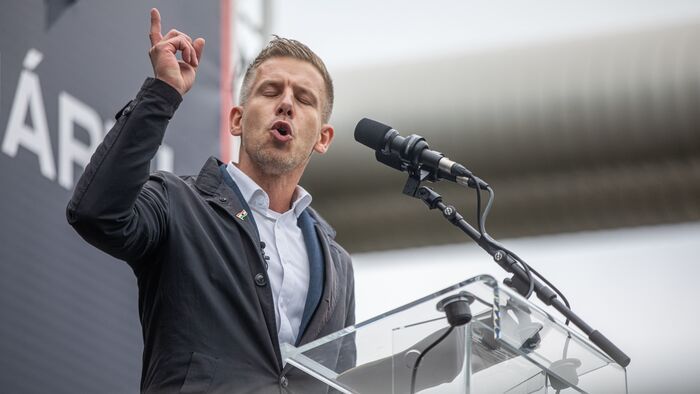
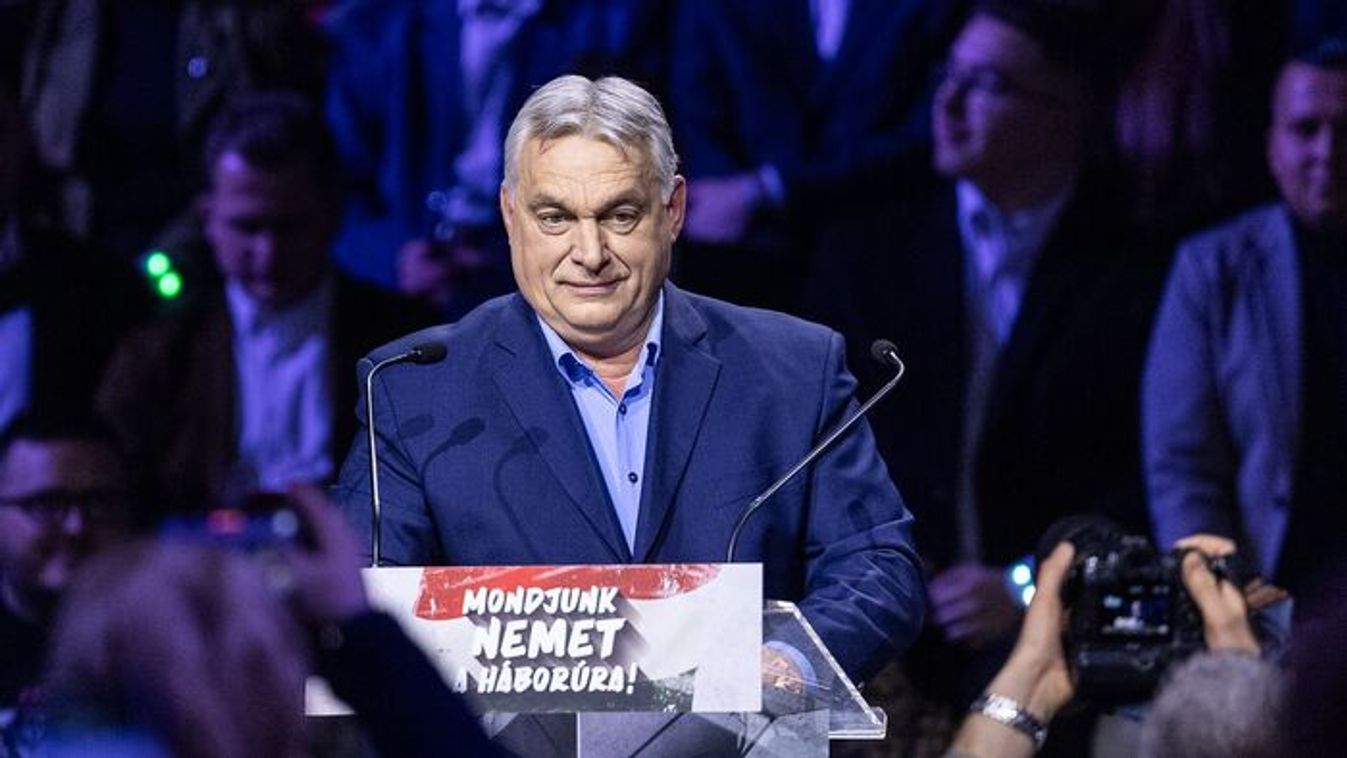
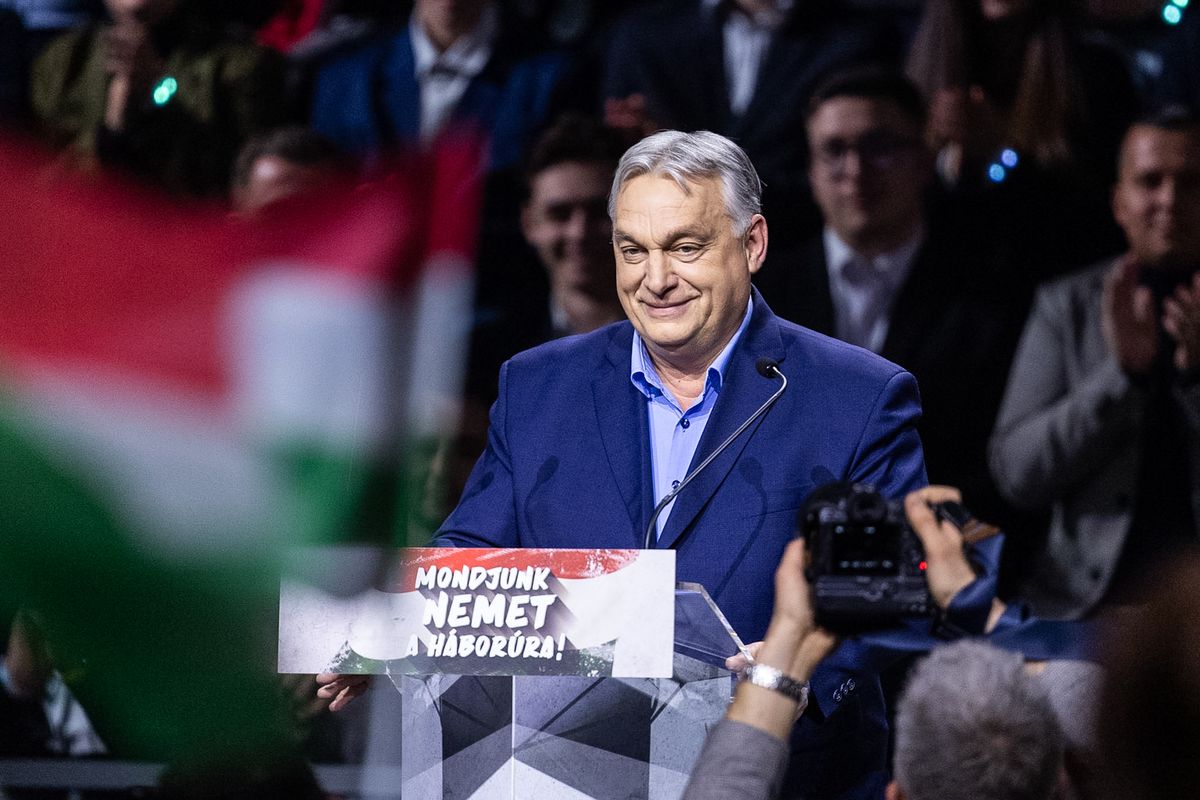
Hungary's Prime Minister Viktor Orban at the DPK Anti-War Rally in Miskolc (Photo: Attila Polyak)
VéleményhírlevélJobban mondva - heti véleményhírlevél - ahol a hét kiemelt témáihoz fűzött személyes gondolatok összeérnek, részletek itt.

Prime Minister Viktor Orban took the stage at the anti-war rally in Miskolc, opening his remarks by recalling that he first visited the city when Hungary was still ruled by communists—and that he has returned to ensure it never happens again. “Communists out! Soviet troops out! Let there finally be a free, independent Hungary!” Mr. Orban had declared at the time.

“Thirty-seven years ago, I held my first public forum in Miskolc, and since then we have been allies,” the prime minister said. He recalled that at one point Miskolc even provided a vice president of Fidesz. He praised the city’s former mayors and public officials and wished success to the current mayor, Jozsef Toth-Szantai. Speaking of the late Akos Kriza, PM Orban noted that even while gravely ill, he continued working for the city, sacrificing himself—a devotion that moved the prime minister deeply at the time of his passing.

According to Viktor Orban, the 37-year “love story” with Miskolc is far from over.

The first audience question for the prime minister came from a young father from Miskolc, who raised concerns about the city’s declining population and the steady outmigration of young people.

Why should young people stay in Miskolc? What support can the government provide?

In his response, PM Orban emphasized that parents bear primary responsibility for young people—politically as well. He urged everyone to talk to their children about politics, too.

He added that sports must remain a strategic sector, as it plays a crucial role in raising children. Sports, he said, have a profoundly positive impact on personal development. “Those who support sports support young people,” he noted.

Mr. Orban also reminded the audience that Miskolc, once a socialist industrial city, was among the losers of the post-communist transition. Its prestige declined for years, but today it has become a modern industrial center. Citing government achievements, he noted that since 2010 unemployment has been cut in half, wages have tripled, and the state assumed 36 billion forints of the city’s debt.

“The pace is good, the direction is right—but there is still a great deal of work to be done,” he said.

So why should a young person stay? From an outsider’s perspective, Orbán said, Miskolc is developing and has significant growth ahead. Young people can now own their own homes if they choose to stay, helped by programs such as three-percent mortgage loans and family housing support. Public safety is strong, and vocational training is solid. “The future belongs to skilled workers,” Orban declared.

He also warned that young Hungarians must not be sent to Ukraine as soldiers. “We will send neither soldiers nor money—and then Miskolc can continue to develop,” he said.
DPK Miskolc
Fidesz kampány
Orbán Viktor
Viktor Orban always enjoys visiting Miskolc (Photo: Attila Polyak)

Responding to a question about when a high-tech mega-investment might arrive in Miskolc, PM Orban noted that more than 100 billion forints in investments have already flowed into the city in recent years. He cautioned that vehicle manufacturing is undergoing a major transition, pointing to challenges even in Gyor, where layoffs are occurring, which they are attempting to overcome with a giant Raba investment. The future, he said, clearly belongs to electric vehicles, and only such investments would make sense for Miskolc.

On education and teachers, PM Orban stressed the need for continuous dialogue between policymakers and educators—along with cooperation. 

While cooperation has sometimes faltered, the issue is not only about money, though by the end of the year average teacher salaries will reach roughly 900,000 forints per month.

PM Orban: America and China Are Our Friends

On international alliances, the prime minister said Hungary counts Americans, the Chinese, and the Turkic world as friends, while maintaining balanced and pragmatic relations with Russia. 

Among European allies, Hungary can rely on the Czech Republic, Italy, and Slovakia.

Orban reiterated that the Benes Decrees are unacceptable, and that Slovakia’s recent legislation on the issue strains relations with neighbors.

"This Benes issue must be resolved, because cooperation with and protection of Hungarian communities in Central Europe is an integral part of our policy. “No Hungarian government can accept the Benes Decrees,” he said, adding that  

the Hungarian state will fully cover legal costs for Hungarians affected by Benes Decree legislation-related cases.

Regarding cooperation between Miskolc and Kosice, PM Orban said it is up to the people of Miskolc to decide what kind of relationship they want with their northern neighbor. If there is interest, he said, a high-speed rail line—or even a tram-train similar to the Hodmezovasarhely–Szeged route—could be built.

Fidesz has always had big plans which they completed to fruition. When asked whether Fidesz can still pursue ambitious goals under the shadow of war, Orban offered a biblical analogy: a house cannot be built on sand.

“Every great plan needs a solid rock foundation,” he said.

That foundation, according to Orban, requires four conditions:

  • Hungary must stay out of the war;
  • Hungarian money must not be given to Ukraine;
  • Full employment and a work-based economy must be maintained;
  • Society must remain family-centered.

Fidesz’s Major Plans

The prime minister and party leader then outlined Fidesz–KDNP’s goals for the next cycle:

  • Raising the minimum wage to four hundred thousand forints/month;
  • Phasing in a 14th-month pension (this year the first week's worth will be disbursed, with the further weeks disbursed over the next few years);
  • Building a new agricultural economy;
  • Achieving full energy independence;
  • Making practical use of artificial intelligence.

“I didn’t enter politics to become prime minister—that just happened. I entered because I wanted to be part of something big,” Viktor Orban said. Rejecting the old mindset of “daring to be small,” he declared:

Hungarians must be great, must be prosperous, and must be strong again.

Addressing a question on integration from a Roma teacher, Mr. Orban said the hardest challenge is helping those at the bottom enter the middle class. Cooperation with Hungary’s Roma community is one of the most important issues of the future. Job creation is key for adults, education for the young.

PM Orban emphasized that job creation is key for adults and education is key for young people for the integration of the Roma community into society and the middle class. 

“The integration of the Roma community into Hungarian society has begun—and over the past 35 years, we have been the only ones working on it,” he said. In relation to the rise in living standards, the prime minister highlighted that in 2010, poor people bought an average of 39 kilograms of meat per year, while in 2020, they bought more than 64 kilograms. "One could argue that I wound up with some of that–but to say I got all of it, is a bit much," Mr. Orban quipped. 

Prime Minister Viktor Orban said it remains a serious problem that some 80,000 households in Hungary still do not have access to running water. “We are going to address this,” he said. “First, we must open up opportunities for the middle class to own their own homes, so that the middle class does not turn against the Roma community,” the prime minister explained. He added that over the next four years the government will place particular emphasis on addressing housing issues affecting the Roma population.

The next question from the audience focused on whether the measures introduced so far are indeed being financed through borrowing. Orban reminded listeners that Hungary has long been unable to finance every policy entirely on its own, as the country inherited an enormous debt at the time of the post-communist transition. The goal, he said, is to keep new spending and revenues in balance. What Hungary produces will also be used to pay down past debts—a process he described as long-term.

“In the end, we must reach a point where, after we have worked off this debt, we are able to lend to others ourselves,” the PM said. “That would be a fine outcome.”

Turning to the issue of public debt, Prime Minister Viktor Orbán said that Hungary’s total debt currently stands at roughly 73–74 percent of the country’s annual economic output. The interest on this debt must be paid every year, he noted, and it is a burden that must ultimately be cast off. According to PM Orban, Hungary is indeed in a difficult financial position—but has been so since the Treaty of Trianon, ending WWI. “This is not a new situation,” he said, adding that citing this fact as an argument against the government’s current measures is “nonsense.” These measures, he stressed, are well within the income that Hungarians are expected to generate in the coming years. He also pointed out that in every election year, the Fidesz–KDNP alliance has reduced the budget deficit.

“As prime minister, I am capable of ensuring that Hungary continues to develop without consuming its future,” Viktor Orban declared. “We are capable of that.”

The prime minister went on to say that 

Hungary is still grappling with the consequences of past wars.

At the same time, he warned, Western European countries are once again preparing for war.


War Is Knocking at our Door

In Orban’s words, recent meetings of European leaders have resembled war councils, with genuine military preparations underway. “War is close, and it is knocking at our door,” he said. Europe, he argued, is in decline, running out of money, and therefore borrowing from bankers—then channeling those loans to Ukraine, loans that will never be repaid. This, the PM warned, will ruin the European economy, prompting efforts to force Russia to pay reparations. “Until now, it was the arms industry pushing us toward war; now the bankers and politicians are doing the same,” he said. “We are spending money so that 400,000 people a year die or are left permanently disabled.”

PM Orban noted that Europeans have already contributed more than €200 billion, while Ukraine has now submitted a bill exceeding €800 billion. He called it absurd to believe that Ukraine will ever repay the loans it has received.

According to the prime minister, Hungary has so far managed to stay out of the war. However, he warned that if a puppet government were to come to power, the country would slide into armed conflict. 

“This is not something that can be entrusted to young adventurers,” Viktor Orban said. “Every bit of experience will be needed to keep Hungary out of the war.”

Last fall saw the launch of a nationwide tour by the Digital Civic Circles (DPK), which continued on Monday in Miskolc. Large crowds have attended all five of the movement’s anti-war rallies to date, demonstrating broad public support for peace. According to the organizers, the success of the first national gathering of the Digital Civic Circles in September prompted the founders of the original group to take the initiative nationwide. The goal of the anti-war rallies is to take a united stand against war.

Prior to the event in Szeged, four anti-war rallies were held:

  • November 15 in Gyor
  • November 29 in Nyiregyhaza
  • December 6 in Kecskemet
  • December 13 in Mohacs

All five events on the tour were sold out, underscoring the depth of support behind the pro-peace position. Given the overwhelming turnout, it comes as no surprise that the anti-war tour will continue, with additional stops expected in the coming weeks.

Cover photo: Hungary's Prime Minister Viktor Orban at the DPK Anti-War Rally in Miskolc (Photo: Attila Polyak)

Komment

Összesen 0 komment

A kommentek nem szerkesztett tartalmak, tartalmuk a szerzőjük álláspontját tükrözi. Mielőtt hozzászólna, kérjük, olvassa el a kommentszabályzatot.


Jelenleg nincsenek kommentek.

Szóljon hozzá!

Jelenleg csak a hozzászólások egy kis részét látja. Hozzászóláshoz és a további kommentek megtekintéséhez lépjen be, vagy regisztráljon!

A téma legfrissebb hírei

Tovább az összes cikkhez chevron-right

Ne maradjon le a Magyar Nemzet legjobb írásairól, olvassa őket minden nap!

Google News
A legfrissebb hírekért kövess minket az Magyar Nemzet Google News oldalán is!

Címoldalról ajánljuk

Tovább az összes cikkhez chevron-right

Portfóliónk minőségi tartalmat jelent minden olvasó számára. Egyedülálló elérést, országos lefedettséget és változatos megjelenési lehetőséget biztosít. Folyamatosan keressük az új irányokat és fejlődési lehetőségeket. Ez jövőnk záloga.