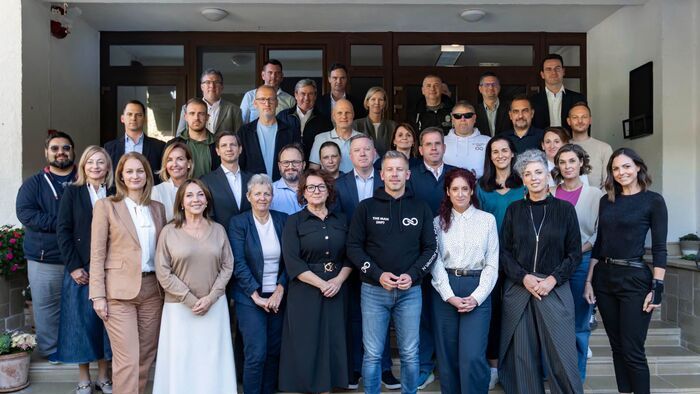
Peter Magyar Presented His Candidates
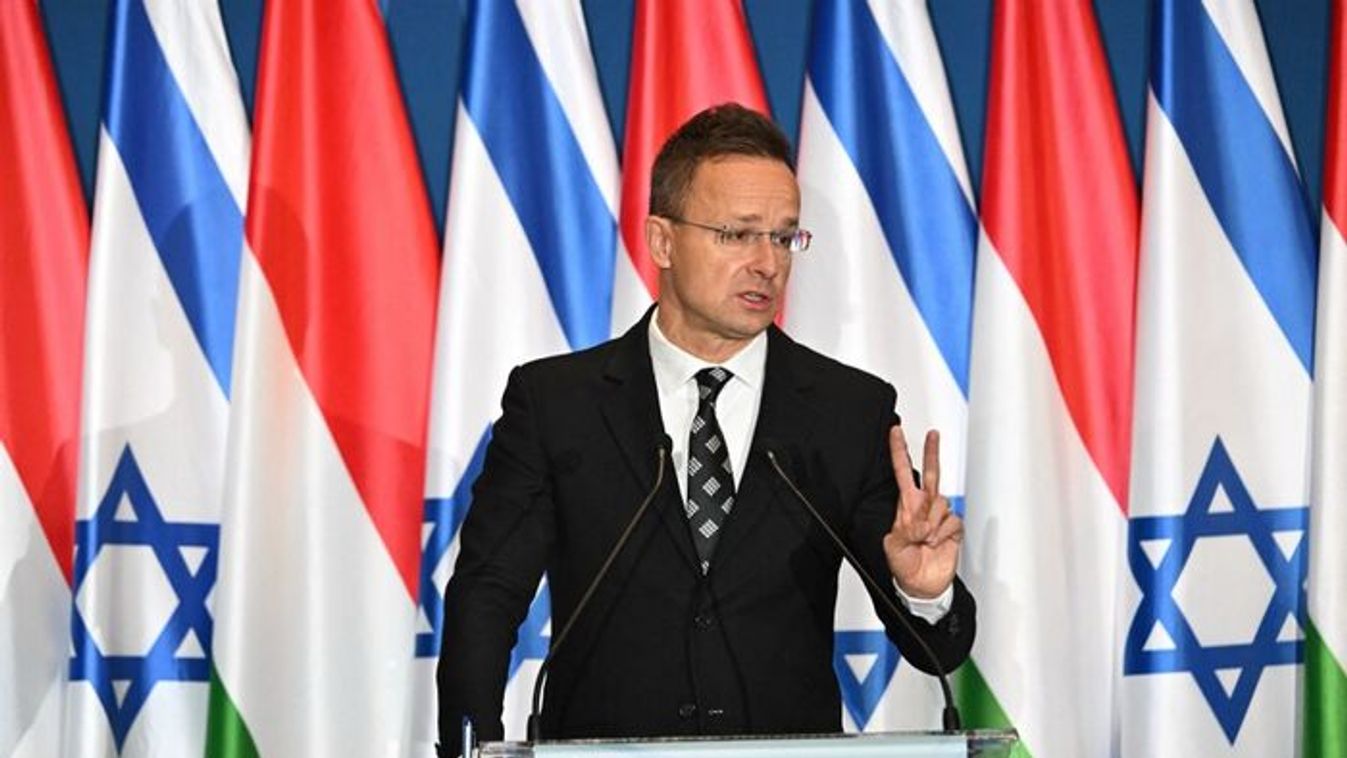
The Tisza Party’s candidates for the elections have now been announced. Peter Szijjarto disclosed that he does not personally know Peter Magyar.
But what is strange to me is that whenever I saw him in person, whenever we were in the same space, it was always at Fidesz events. And each time I saw him, he seemed extremely enthusiastic, clapping, happy to be there, moving about among leading Fidesz politicians.
"And now he says that we are all sorts of unbelievable things—dictators, oligarchs, whatever. Well, for heaven’s sake, then why did he spend ten years moving comfortably among us? And why did he enjoy the benefits? And now he says that all this is outrageous. I really do not understand how someone can do this morally or personally."
Last week, of course, the focus was on the Moscow trip, but the most exciting and most important news of the week was that the hundreds-of-pages-long economic program of the Tisza Party leaked, containing brutal austerity measures. Left-wing experts stand behind this left-wing formation.
This entire candidate selection, the austerity package, the tax increases, the leaked program—each and every element shows that there is nothing new under the sun. What was once Ferenc Gyurcsany, then Gordon Bajnai, then almost Peter Jakab, then Peter Marki-Zay, is now Peter Magyar. There is nothing new under the sun. It is the same left-wing crowd, the same left-wing world, which once tried its luck with 'wise voting,' then with a joint list, then with joint candidates, and now with a new party. It is the same team. The same team that once drove Hungary into bankruptcy so deeply that it was barely possible to climb out. The same team that wanted to drag Hungary into war,
the minister said.
"This is the team that wanted and still wants to allow migrants into the country. This is the team that wants to force gender or LGBT ideology onto society. This is the team that wants to raise taxes. So again, there is nothing new under the sun, Peter Szijjarto continued."
"It is clear what they want, because our opponents have always wanted exactly the same thing. Until 2010, they did it; after 2010, they have wanted to do it again. They raised taxes, implemented a progressive tax system, took away family support, took away tax allowances, took away the 13th-month pension, and this time they want to take away home creation support as well."
We must protect the country so that Laszlo Lengyel does not get to decide what economic policies we should follow here,
he said.
Commenting on the fact that even the left wing now admits that the Tisza Party’s rise has stalled, he said "after the election on April 3, 2022, I thought that the next morning, the opinion polling companies in Hungary would say: 'Thank you very much, it seems our industry can from now on be replaced by a glass marble.'"
I do not spend energy looking at any polls, because, as I said, I often think this whole business resembles gazing into a crystal ball. Never once has there been a moment after an election when they sat down publicly and said: 'Well, these were the results, this is what we predicted, and here is why we were right or wrong.' That has never happened. If such a thing ever happens, then we can again take opinion polls seriously,
the minister underscored.
Far Left in Action in Germany
The AfD wanted to establish a new youth organization in central Germany, in a medium-sized town, and far-left groups organized a counter-protest. The German police were not capable of ensuring that representatives of the strongest German party, the AfD, could gather and set up their youth organization. Many people were injured in the far-left attack, the event was delayed, it had to be moved, and they were forced to choose a different program.
My entire foreign policy strategy is based on the principle that we do not interfere in the internal affairs of other countries, and we expect others not to interfere in ours either
said Peter Szijjarto.
If we look at this a bit more broadly, just imagine what would happen if, in Hungary, a political party were unable to hold its event because venues refused to provide them a location. Or what would happen if a political organization could not hold its event because the leaders of another political organization blocked it. Obviously, Brussels would immediately send in the blue helmets to Hungary to defend democracy and the rule of law. And of course, the European Parliament would hold an extraordinary session the very next day, declaring that a meteorite-like, elemental danger threatens European democracy because of what is happening in Hungary
Peter Szijjarto said. "In Germany, the situation is simple," he continued. "There is a party that finished second in the last parliamentary election. This is what we know. According to opinion polls, it is supposedly the largest party. But what we know for sure is that it is definitely one of the most supported parties. It finished second in the last election, and based on the opinions coming from Germany, trust in the governing coalition is not exactly at its peak. From this, one can conclude that the AfD is likely still the most popular party in Germany."
If in Europe's strongest country, they are essentially trying to make the functioning of the most supported party completely impossible, then I do not know how this is supposed to contribute to the development of European democracy,
the minister added.
This double standard is tremendously harmful to Europe. Whenever I talk to politicians outside Europe, many of them laugh at Europe. They simply laugh at Europe. Unfortunately, Brussels is reaching the maximum level of its harmfulness, and and I see that there is always room for going worse in this regard, the minister emphasized.