Hungary FM: War Fanaticism Rules in Brussels

Hungary’s minister of foreign affairs and trade was the guest of Tuesday’s broadcast of Igazsag Oraja. Host Balazs Nemeth and Peter Szijjarto discussed several major foreign policy issues. While what he described as a war-driven psychosis continues in Brussels, Western Europe is also facing a growing Islamist terror threat targeting Christmas markets. Hungary, Szijjarto stressed, is unwilling to spend a single cent of Hungarian taxpayers’ money on Ukraine—whether that be to run the Ukrainian state, to arm its military, or to finance the war.

2025. 12. 16. 16:17
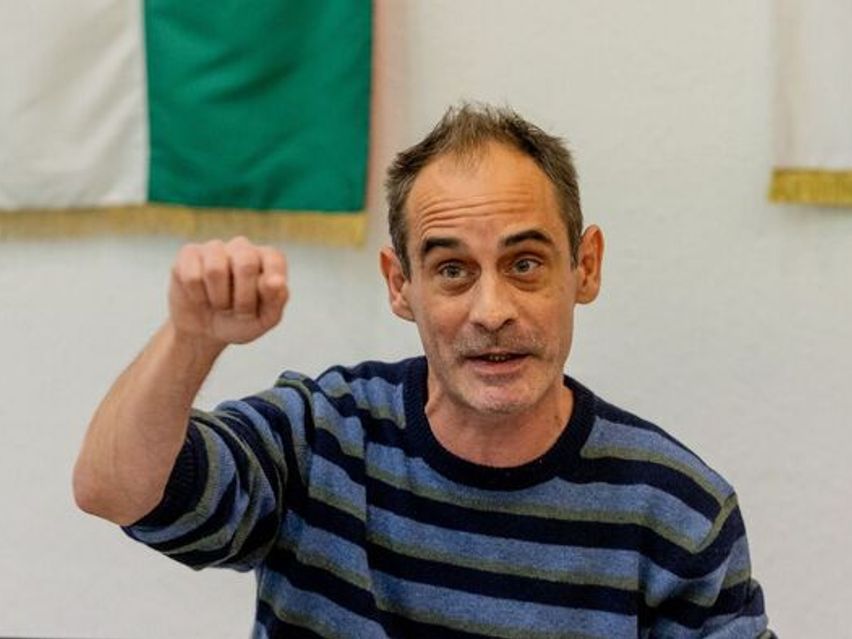
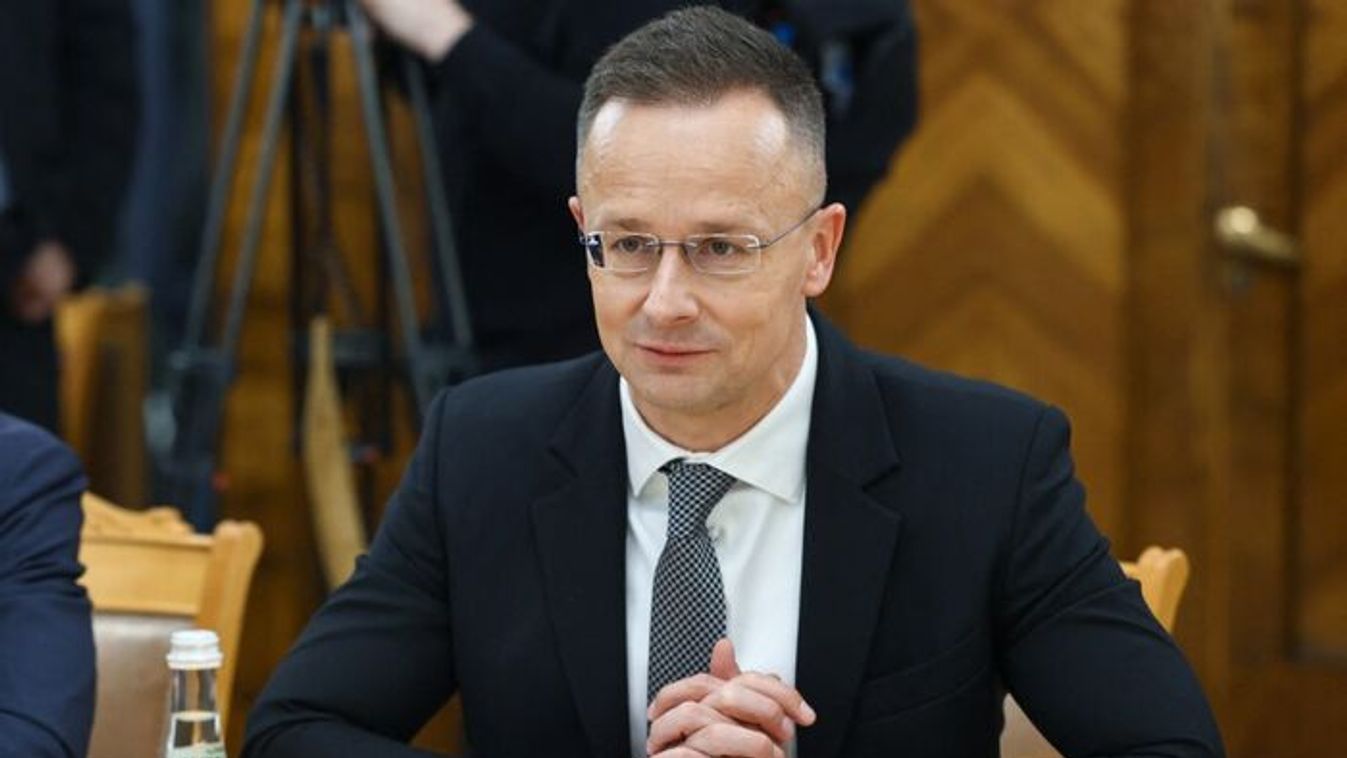
Peter Szijjarto, Hungarian Minister of Foreign Affairs and Trade (Photo: AFP).
VéleményhírlevélJobban mondva - heti véleményhírlevél - ahol a hét kiemelt témáihoz fűzött személyes gondolatok összeérnek, részletek itt.

In response to the show host's questions, FM Szijjarto touched on a number of key foreign policy issues. On Monday he had put out a post saying that Brussels is determined, after Istanbul and Alaska, to once again kill the peace process.

Szijjártó Péter magyar külgazdasági és külügyminiszter (Fotó: AFP)
Peter Szijjarto, Hungarian Minister of Foreign Affairs and Trade (Photo: AFP)

He warned that

Brussels wants to send another 80,000 billion forints to Ukraine, including 46,000 billion forints for arming Ukraine. This amounts to an open provocation of war and poses an extraordinary danger to the continent. A Europe–Russia war would not be survivable.

In the Igazsag Oraja (hour of truth) program, Peter Szijjarto emphasized:

what now prevails in Brussels is not merely a war psychosis, but outright war fanaticism among Europe’s predominantly liberal political leadership. 

He pointed to last week’s NATO foreign ministers’ meeting, where Western European, Nordic, and Baltic representatives spoke openly about the need to prepare for a long-term hostile relationship with Russia even if peace were achieved. He said discussions focused on continuing to finance Ukraine, its army, and its state apparatus—even in peacetime—using European taxpayers’ money.

“The European political elite is clearly not interested in peace,” Szijjarto said. He noted that 

in April 2022, when Russia and Ukraine had reached an agreement in Istanbul, the British prime minister traveled to Kyiv to insist that the war continue. More recently, when the U.S. and Russian presidents met and a cautiously hopeful atmosphere emerged, European leaders accompanied President Volodymyr Zelensky to Washington, 'holding his hand'," as Szijjarto put it, "to make sure peace would not break out,

he said.

He added that it has become clear in Brussels that EU politicians are willing to trample their own rules to drag all of Europe into war. Szijjarto expressed hope that the strength of U.S.–Russian negotiations would outweigh European attempts to undermine them.

He also warned against proposals to use frozen Russian assets to finance Ukraine, calling the idea fanatical and dangerous.

Brussels," he said, "wants to send another 80,000 billion forints to Ukraine.

46,000 billion of it for military purposes, despite rampant corruption, instability, and the fact that Ukraine is not a NATO member. 

This is entirely contrary to Hungary’s interests and national security,” he said, reiterating that "Hungary will not send a single cent of Hungarian money to Ukraine - not for the war, not for running the state, not for maintaining the military.

Szijj arto underscored that Hungary has carried out the largest humanitarian operation in its history by helping refugees from Ukraine and plays a key role in Ukraine’s energy supply. He noted that 58 percent of Ukraine’s natural gas imports and 44 percent of its electricity imports come from Hungary.

FM Szijjarto: A Europe–Russia War Is Not Survivable

He rejected what he called one of the biggest lies in European political history: that Ukraine is fighting for Europe. 

Ukraine isn't fighting for Europe, it is fighting for itself - and is doing so heroically against a country with a much bigger military” he said, adding that "Russia has not attacked a single EU or NATO member. 

He dismissed claims that Europe would be next if Ukraine fell, arguing that a Russian attack on a NATO country would trigger Article 5 and lead to a conflict Russia could not win.

If Europe and Russia clash, that inevitably means a NATO–Russia clash, and everyone knows that would be nuclear war—and a nuclear war cannot be survived anywhere,

 he warned.

Brussels' Plans to Use Russian Assets

On Brussels’ plans to confiscate Russian state assets held in Belgium, Szijjarto said such a move would destroy global trust in European investment and financial markets.

Loss of trust could easily lead to the collapse of the European economy,

he stressed.

When PM Viktor Orban specifically asked President Putin about this, the Russia president made clear it would respond in kind by targeting European assets in Russia.  

Naturally, President Putin's answer was that, of course, if the European Union took such a hostile step as to seize, consume, or use up Russian assets located within the European Union, then a similar reaction could obviously be expected in relation to the funds and assets of European capital and asset owners in Russia.

The Russians were also asked whether their response would be across-the-board, meaning that everyone would be affected, or whether it would be tailored to the positions taken by the EU member states on this issue. Their response will be in accordance with the position taken by the individual member states on this issue. 

FM Szijjarto said

We strongly oppose the European Union taking such a step, which carries the risk of serious escalation. This is because the seizure of Russian state assets carries with it one of the most serious risks of escalation in the last four years. This move by the European Union is a decision that carries with it a very serious risk of the war becoming more serious. So while peace talks seem to be bringing a diplomatic solution closer, the European Union is, by seizing Russian assets completely unnecessarily, effectively creating the risk of prolonging and expanding the war.


Brussels Routinely Upends Its Own Rules

In Brussels, ignores the rule of unanimity by invoking emergency provisions—in the event of emergencies, or crisis in the economy, the European Commission may assume certain powers, and then unanimity is no longer required for a decision, but a qualified majority is sufficient.

The "emergency", he said, is self-inflicted: Brussels created it by banning Russian oil and gas for ideological reasons.

So it is not the case that the Russians suddenly shut off the oil and gas pipelines overnight as part of a master plan, causing an energy shortage in Europe. It is that the European Union will exclude Russian energy sources, Russian oil and Russian gas from the European market for political and ideological reasons, and then say, 'Oh dear, we have an energy crisis.' Of course, they brought this on themselves deliberately,

Szijjarto pointed out.

Brussels' repeated violation of the bloc's own rules and treaties , he argued, makes EU claims about democracy increasingly hollow and laughable.

It is unacceptable that Hungarian taxpayers' money is being used to fund arms shipments to Ukraine. At every single council meeting, every single month, there is a foreign affairs council meeting once a month, and yesterday I was under enormous pressure to let this go, to stop messing around, to stop blocking payments. 'What a pro-Russian stance,' they say - that's always their final argument. And how dare Hungary not contribute to arms deliveries to Ukraine? And now we've reached the point where, from here on out, everyone has to decide this out for themselves,

Szijjarto said recalling attacks hurled at him at these meetings.

This issue is also swaying in the direction of voluntarism, so after a year and a half of struggle, we are managing to secure that Hungarians' money will not go to arms deliveries.

Viktor Orban and the Hungarian government has managed to veto it, so Hungarians' money will not be taken to Ukraine. But this is an ongoing battle every single day, every single week, every single month, we have to fight for this. Tomorrow and the day after tomorrow, the Prime Minister in Brussels, me in the Foreign Affairs Council, and so on. We must fight to maintain these positions, to prevent Hungary from being dragged into war, to prevent Hungarian people from being sent to Ukraine, to prevent Hungarian money from being taken to Ukraine.

This is a daily struggle that has to be fought every single day. We are fighting it because we are a sovereign national government. But this runs completely counter to Brussels’ interests. And if Brussels manages to install its puppet government in Budapest, that puppet government will not protect Hungary from the war, will not keep Hungary out of the war, and will not keep Hungarian taxpayers’ money at home. Instead, it will allow that money to be sent to Ukraine, it will not stand for peace, and it will allow all of Europe—including Hungary—to be dragged into the war. That is precisely why Brussels created them, why it keeps them on a tight leash, and why it wants them in power, he added.

Meanwhile, a former Hungarian chief of staff is openly arguing that conscription is needed. Recently, a senior French military leader and the British chief of the general staff also made explicitly pro-war statements.

That is why I say that war fanaticism now dominates Western Europe, and this war fanaticism has its maintained representatives in Central Europe as well, including in Hungary,” Szijjártó said. “It is no coincidence that Romulusz Ruszin-Szendi, the Tisza Party’s military expert, is talking about the need for conscription. No—we do not need conscription. What we need are peace efforts. We need to make peace, not war. And that is precisely the difference between a sovereign national government and a government installed from Brussels. A Brussels-installed government gives free rein to Brussels’ push for war, while a sovereign national government puts a stop to it. That is the essence,

he stressed.
Host Balazs Nemeth noted that a shocking statement had appeared a few days earlier, when Peter Akos Bod said that, along the “Zoltan Tarr line,” there was no need to tell the Hungarian people in advance what measures or austerity steps were being planned—those would be made clear only after the election. Responding to this, Szijjarto said:

I find this inexcusable. Clearly, someone like that has no place in public life. It is a disgrace and a shame to speak this way—likening people to pigs and comparing pre-election lies to a pig slaughter. This shows very clearly what the Tisza Party and its surrounding circle really think of the Hungarian people.

Turning to the massacre in Sydney, Szijjarto said that many people believe security is something that was taken care of once and for all, and that everything is now in order—but that is not the case. “Security, too, requires daily effort,” he said. “We can see where it leads when illegal migrants or masses of migrants arrive in a country. In Western Europe, it is clear what kind of terror threat parallel societies pose.”

He recalled that Israel’s national soccer team does not play the Belgium–Israel match in Belgium, but in Hungary, and reminded viewers of the scenes that unfolded in the streets after Israel played in the Netherlands.

Modern antisemitism is spreading at an alarming rate,

 he added. “Governments in countries belonging to the Western civilization are unwilling to confront it, because their voter bases have changed so much that taking a firm stand against modern antisemitism is often seen as politically risky—which is shocking.”

Referring to Australia, he noted that innocent people had been killed there, including two individuals of Hungarian descent—one of them a woman originally from Komarom—who fell victim to the terrorist attack.

During the program, Nemeth also pointed out that the outlet 444.hu had published an article about the anti-war rally in Mohacs, with the author expressing shock over the fact that there was a joint prayer and that opera singer Erika Miklosa appeared wearing a large cross around her neck.

What kind of world are we living in?” Szijjarto responded. “Should someone really have to explain themselves because they are a believer—because they are Catholic, Christian, or of Jewish origin—just for openly professing their faith? This is exactly what I mean by aggressive, extreme liberal opinion terror.

Szijjártó went on to say that a major patriotic global movement is underway, one that began in Budapest with Hungary’s right-wing, Christian, sovereign, national, patriotic governance since 2010—consistently supported by a strong social majority. 

That is why liberals are wailing about the presence of crosses, crucifixes, and prayer,” he said, adding that "it has become so visible because the leader of the world’s number one superpower has placed himself at the head of this patriotic global movement.

He stressed that so far, Hungary has been the only country where a patriotic force has won elections with an unequivocal, decisive victory.

Addressing the hiring of Evelin Gaspar, Szijjarto said it once again exposed the staggering hypocrisy of what he called the extreme, malicious liberal media camp. He pointed out that 

She is a young woman in her early thirties who studied in Hungary and Luxembourg, holds advanced language certificates in two languages, and has already worked in the European Parliament. Yet simply because some people have opinions about her father’s television career, they consider her unfit to work on her own merits, as an adult, for example at the Ministry of Foreign Affairs,

he said.

Szijjarto also added that Evelin is a member of the Roma community and that the same liberals who insist that children are not responsible for the sins of their parents—arguing that the children of communist dictators should have the same chances in life as those whose families were destroyed by communism—are now doing the opposite. “I agree that children are not responsible for their parents’ actions,” he said. 

If Evelin had applied for a press job with the Tisza Party, this same media world would be celebrating her as a global star,

Szijjarto concluded, adding that she simply works as part of the communications team and does her job like everyone else.
Cover photo: Peter Szijjarto, Hungarian Minister of Foreign Affairs and Trade (Photo: AFP).

A téma legfrissebb hírei

Tovább az összes cikkhez chevron-right

Ne maradjon le a Magyar Nemzet legjobb írásairól, olvassa őket minden nap!

Google News
A legfrissebb hírekért kövess minket az Magyar Nemzet Google News oldalán is!

Komment

Összesen 0 komment

A kommentek nem szerkesztett tartalmak, tartalmuk a szerzőjük álláspontját tükrözi. Mielőtt hozzászólna, kérjük, olvassa el a kommentszabályzatot.


Jelenleg nincsenek kommentek.

Szóljon hozzá!

Jelenleg csak a hozzászólások egy kis részét látja. Hozzászóláshoz és a további kommentek megtekintéséhez lépjen be, vagy regisztráljon!

Címoldalról ajánljuk

Tovább az összes cikkhez chevron-right

Portfóliónk minőségi tartalmat jelent minden olvasó számára. Egyedülálló elérést, országos lefedettséget és változatos megjelenési lehetőséget biztosít. Folyamatosan keressük az új irányokat és fejlődési lehetőségeket. Ez jövőnk záloga.