Blatant Double Standard: Why Is Only Hungary’s Child Protection Law Under Fire From EU Bureaucrats?

Barely a week and a half after Hungary's general election, the Court of Justice of the European Union issued a ruling condemning Hungary’s child protection legislation. According to the Luxembourg-based body, the contested law violates EU law on several counts. Magyar Nemzet asked constitutional lawyer Zoltan Lomnici Jr. how the ruling can be interpreted from a legal standpoint and to what extent it can be seen as precedent-setting. According to the expert, the court’s decision raises not only legal but also political questions. While strict rules also protect minors in Germany and France, Brussels applies its toughest sanctions only against Hungary.

2026. 04. 24. 16:48
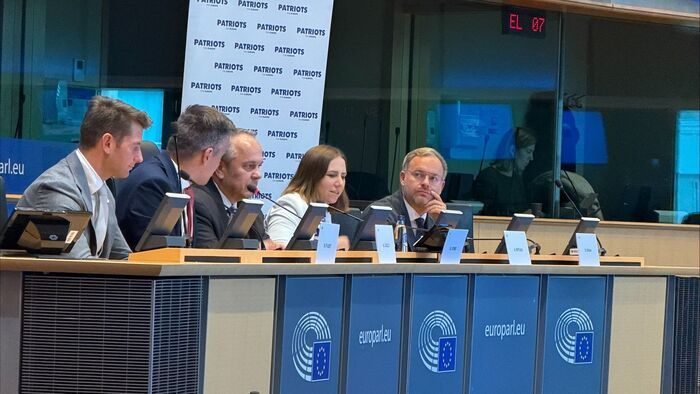
Illustration (Photo: AFP)
VéleményhírlevélJobban mondva - heti véleményhírlevél - ahol a hét kiemelt témáihoz fűzött személyes gondolatok összeérnek, részletek itt.


A Precedent-Setting Decision?

We asked the expert how the ruling of the Court of Justice of the European Union should be interpreted from a legal standpoint, and whether it can be considered precedent-setting. Zoltan Lomnici Jr. explained that

from a legal perspective, the court’s decision primarily means that the Luxembourg forum did not question child protection itself as a legitimate state objective, but examined whether the tools chosen by Hungarian regulation meet the necessity and proportionality tests required by EU law.

He emphasized that Article 24 of the Charter of Fundamental Rights recognizes the protection of children as an independent fundamental value, while the court found that certain provisions of the Hungarian law imposed overly broad, general, and prior restrictions. As he put it, this disproportionately affected the freedom to provide services under Article 56 of the Treaty on the Functioning of the European Union, the freedom of expression under Article 11 of the Charter, and the prohibition of discrimination under Article 21.

The precedent-setting nature of the decision is reinforced by the fact that the court treated the fundamental values enshrined in Article 2 of the Treaty on European Union as independently and directly applicable benchmarks in an infringement procedure under the TFEU, which can be considered a particularly significant step in the development of EU law,

– he pointed out.


Member State Competence And The Primacy Of EU Law

Asked where the boundary lies between member state competence and the primacy of EU law in such sensitive social matters, Zoltan Lomnici Jr. said the line is particularly difficult to draw. He noted that family law, education, morality, and child protection traditionally fall within the competence of member states, a principle also partly safeguarded by respect for national identity under Article 4(2) of the Treaty on European Union. At the same time, he stressed that

if a member state adopts regulation in these areas that affects the freedoms of the single market or EU fundamental rights, EU oversight automatically comes into play.

In this context, he also pointed to the case law of the European Court of Human Rights in Handyside v. United Kingdom as an important counterpoint. As he explained, Strasbourg explicitly held that in matters of public morals, member states enjoy a wide margin of appreciation because there is no uniform European moral standard. He added that the current ruling, by contrast, allows for a narrower margin of maneuver for member states, which is why many interpret it as a centralizing approach that restricts national autonomy.

France, Montaigu-Vendee, 2026-01-03. A teenager absorbed in her smartphone screen watches a video on social media. Illustration of overexposure and screen addiction among children and teens. Photograph by Mathieu Thomasset / Hans Lucas.
France, Montaigu-Vendee, 2026-01-03. Une adolescente absorbee par l’ecran d’un smartphone regarde une video sur les reseaux sociaux. Illustration surexposition et addiction aux ecrans des enfants et ados. Photographie de Mathieu Thomasset / Hans Lucas. (Photo by Mathieu Thomasset / Hans Lucas via AFP)
Article 24 of the Charter of Fundamental Rights recognizes the protection of children as an independent fundamental value. Photo: AFP

Is Our Sovereignty At Risk?

We also asked the constitutional lawyer whether the ruling can be seen as a limitation on Hungary’s legislative sovereignty. In response, Zoltan Lomnici Jr. said that, for these reasons, the ruling can indeed be interpreted as such a limitation, even if formally it concerns the enforcement of obligations arising from EU membership. He explained that under Article 260(1) of the TFEU, a member state is obliged to terminate the infringement, meaning that amending or repealing the contested provisions is a legal requirement.

At the same time, he stressed that this does not constitute automatic authorization to dismantle the entire child protection system,

since Article XVI(1) of Hungary’s Fundamental Law continues to prescribe the protection of children as a constitutional obligation. He also pointed out that under Article S(2) of the Fundamental Law, even this level of constitutional protection can be amended with a two-thirds parliamentary majority, meaning that a new political majority could potentially rewrite it.

This is the point where legal implementation and political intent diverge, and where the most serious constitutional concerns arise,

– he said. Zoltan Lomnici Jr. also noted that Act LXXXVIII of 2023 on the protection of national sovereignty reinforces this approach, as Hungary’s legal system treats the protection of national sovereignty and constitutional identity as an independent state task. He explained that, based on the law’s preamble and Section 1, the Sovereignty Protection Office was established specifically to safeguard Hungary’s constitutional identity and sovereignty. He added that 

accordingly, in the Hungarian constitutional view, any external intervention that substantially influences internal democratic decision-making or the content of legislation can be interpreted not merely as a political dispute, but as an infringement of sovereignty.


The Timing

The expert was also asked to what extent the ruling can be seen as politically timed, particularly in light of the Hungarian elections. Zoltan Lomnici Jr. said that the timing cannot be ignored politically. He noted that although infringement proceedings under Articles 258–260 of the TFEU follow formally structured stages, neither the treaties nor the rules of procedure of the Court of Justice set a strict deadline for the delivery of a judgment. He pointed out that Article 88 of the court’s rules merely requires that judgments be delivered in open court, while the specific timing is determined by the court’s procedural autonomy. He added that

for this reason, the issuance of the ruling shortly after the election period can be interpreted politically, even if a deliberate political intent cannot be formally proven.

As he put it, in such cases legal decisions and political consequences are practically inseparable. He added that this is reinforced by the Sovereignty Protection Office's report published in February 2026 , which found that international actors often coordinate legal and political pressure to influence internal democratic processes and to question the legitimacy of elections. In his view,

in this context, the timing of the ruling cannot be regarded as entirely free of political considerations.

Kifejtette, hogy lesznek kérdések, amelyekben az EU vezetése igazodást vár el tőlük
The issuance of the ruling shortly after the election period can be interpreted politically, even if it cannot be formally proven. Photo: MTI

Can Social Divisions Deepen?

The expert was also asked whether the case could intensify or reduce social divisions. Zoltan Lomnici Jr. said divisions are more likely to deepen, precisely because child protection enjoys extremely strong social support in Hungary, and the national consensus on the issue clashes with the EU court’s ruling.

He cited a 2023 public opinion survey by the Center for Fundamental Rights as clear evidence of this support.

According to him, 95 percent of Hungarian adults consider it unacceptable for a teacher to engage in a sexual relationship with a minor student, 70 percent oppose school programs presenting different sexual orientations without parental consent, and 58 percent would further tighten child protection regulations, while only 9 percent would ease them.

All this shows that in the matter of child protection, it is not the objective but the method of implementation that has become contested. The overwhelming majority of Hungarian society supports strict measures, and therefore an EU ruling that forces a revision of already adopted legislation may easily appear in public opinion as an override of national will. This does not reduce, but rather further deepens social and political divisions,

– he explained.

Kettős mérce gyanúja: más tagállamoknál nem lépett így az EU
The suspicion of double standards: the EU has not acted this way toward other member states. Photo: AFP

Suspicion Of Double Standards: EU Hasn't Acted This Way Against Other Member States

We also asked Zoltan Lomnici Jr. whether there are other member states that have introduced similar regulations, and whether comparable action has been taken against them. He stated that

it is difficult to find European countries that take child protection more seriously than Hungary, at the same time emphasizing that strict content regulation aimed at protecting minors is not a uniquely Hungarian phenomenon, but a well-established legislative practice in several EU member states.

He recalled that in Germany, the Jugendschutzgesetz explicitly provides protection against media content that may harm or endanger the development of children and young people:

  • • under Sections 10a–10b, online platforms are required to implement child protection safeguards,
    • Section 14 mandates age ratings for films and games, while
    • Sections 12 and 15 prohibit making content labeled “Keine Jugendfreigabe” or otherwise improperly classified accessible to minors.

He also noted that in France, in January 2026 the National Assembly adopted a law baning children under the age of 15 from using social media, while further tightening rules on mobile phone use in schools. 

Emmanuel Macron justified this explicitly with the protection of children’s mental and psychological development. In Denmark, the government has also promoted introducing a 15-year age limit for social media.

– He then explained that Lithuania is a particularly important comparison point. He recalled that in 2009 the Lithuanian parliament adopted a law on the protection of minors that also included restrictions on content “promoting” homosexuality. He said that in response, the European Parliament adopted a resolution in September 2009 criticizing the Lithuanian law from a human rights and anti-discrimination perspective, and even raising the possibility of proceedings under Article 7 of the Treaty on European Union. He added, however, that at EU level this ultimately remained a political resolution and did not develop into an infringement procedure comparable to the Hungarian case.

He pointed out that in the Lithuanian case, the actual, substantive international legal proceedings were ultimately not conducted by the European Union, but by the European Court of Human Rights.

He explained that in its Grand Chamber judgment in Macate v. Lithuania on January 23, 2023, the court ruled that the measure labeling a children’s book depicting same-sex relationships as harmful for those under 14 violated Article 10 of the Convention. The ECtHR emphasized that restricting access to information about same-sex relationships solely on the basis of sexual orientation cannot be regarded as a legitimate aim, and is incompatible with the democratic requirements of equality, pluralism, and tolerance. He also noted that

no infringement procedure under Articles 258–260 TFEU has been launched against Germany, France, or Denmark solely on the basis of strict child protection rules.

Zoltan Lomnici Jr. stressed that in Lithuania, EU-level action was limited to political pressure and a parliamentary resolution, whereas in the Hungarian case an infringement procedure and a Court of Justice ruling have already been issued. He added that this continues to support the criticism that the European Commission does not apply the same level of strictness or the same enforcement standard toward all member states.


Cover photo: Illustration (Photo: AFP)

Komment

Összesen 0 komment

A kommentek nem szerkesztett tartalmak, tartalmuk a szerzőjük álláspontját tükrözi. Mielőtt hozzászólna, kérjük, olvassa el a kommentszabályzatot.


Jelenleg nincsenek kommentek.

Szóljon hozzá!

Jelenleg csak a hozzászólások egy kis részét látja. Hozzászóláshoz és a további kommentek megtekintéséhez lépjen be, vagy regisztráljon!

A téma legfrissebb hírei

Tovább az összes cikkhez chevron-right

Ne maradjon le a Magyar Nemzet legjobb írásairól, olvassa őket minden nap!

Google News
A legfrissebb hírekért kövess minket az Magyar Nemzet Google News oldalán is!

Címoldalról ajánljuk

Tovább az összes cikkhez chevron-right

Portfóliónk minőségi tartalmat jelent minden olvasó számára. Egyedülálló elérést, országos lefedettséget és változatos megjelenési lehetőséget biztosít. Folyamatosan keressük az új irányokat és fejlődési lehetőségeket. Ez jövőnk záloga.