By the end of 2025, support for the Tisza Party has hit a ceiling at 38 percent, while Fidesz–KDNP has continued to grow steadily, reaching 51 percent. As a result, the governing parties enter the new year from a position of confidence. Based on the latest polling by Hungarian Society Research (Magyar Tarsadalomkutato (MT)) , only three parties would clear the parliamentary threshold in a snap election: Fidesz–KDNP, the Tisza Party, and the Our Homeland Movement (Mi Hazank Mozgalom), which stands at 5 percent.

According to the telephone survey conducted between December 18 and 19, Fidesz–KDNP further increased its lead over the Tisza Party. The gap, measured at 10 percentage points in November, widened to 13 points by December. Analysts attribute the governing parties’ rising support to a combination of factors, including:
- a strengthened presence in the digital space,
- Prime Minister Viktor Orban’s heightened international political activity,
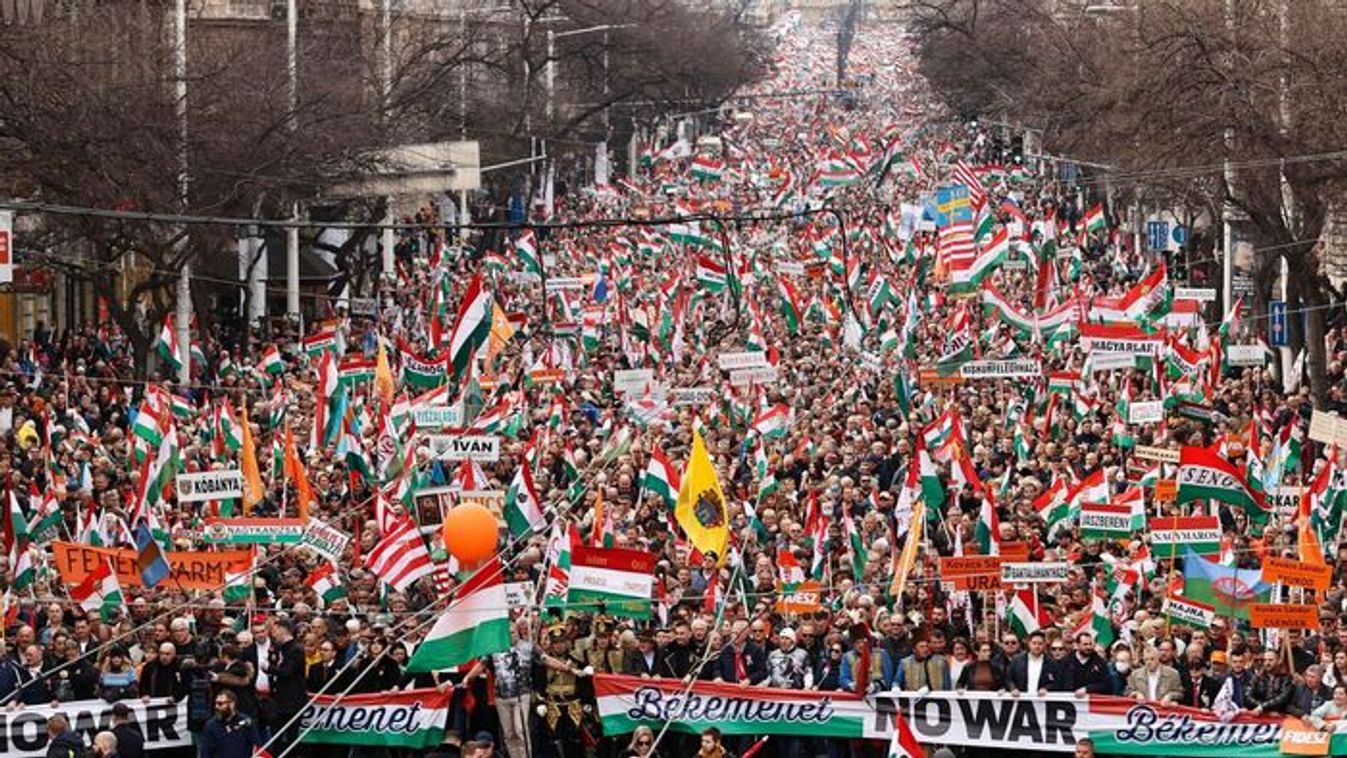
- the nationwide anti-war tour,
- strong engagement and reach on social media, and
- government welfare measures gradually introduced in the second half of 2025.
Data from the final three months of 2025 make it clear that this period was politically won by Fidesz–KDNP. While the governing parties’ lead stood at 8 percentage points in October, it had grown to 13 points by December.
Why Tisza Is Losing Momentum
The Tisza Party’s support stood at 38 percent in December. According to the MT Institute, several factors have made it difficult for the party to regain political momentum in recent months. These include:
- negative public reception of its leaked tax package proposal, as well as
- an internal primary process that failed to dispel the perception of the party as a “one-man show.”
Researchers note that Tisza’s earlier gains were largely driven by siphoning off voters from the traditional left-wing parties. However, it remains unclear which new social groups the party could mobilize once those reserves are exhausted—particularly in a political landscape increasingly defined by two dominant blocs. Polling data also indicate that the politicization of the Szolo Street case did little to help Tisza regain momentum.


Szóljon hozzá!
Jelenleg csak a hozzászólások egy kis részét látja. Hozzászóláshoz és a további kommentek megtekintéséhez lépjen be, vagy regisztráljon!