Budapest’s Iconic Cultural Spaces Revitalized With State Funding Over 15 Years

In recent years, Budapest has seen a string of major state-funded cultural projects, not only giving iconic institutions a fresh look but also addressing decades-long technical and infrastructural deficiencies. Beyond the Liget Budapest Project, key cultural sites have been renovated or given new homes: the National Dance Theatre, the Museum Garden, the Academy of Music, the Opera House, the Erkel Theater, as well as the Buda and Pest Vigados — all backed by government funding within a long-term cultural development plan.

2025. 12. 31. 16:33
The iconic Vigado building (Photo: MTI)
VéleményhírlevélJobban mondva - heti véleményhírlevél - ahol a hét kiemelt témáihoz fűzött személyes gondolatok összeérnek, részletek itt.

Over the past year, numerous major Budapest cultural institutions have been built, expanded, or renovated with government support, beyond the Liget Budapest Project investments. The National Dance Theatre, for example, opened a completely new home in February 2019 . The nearly 7,000-square-meter facility was converted from the former GANZ factory in Millenaris Park, a historic industrial building. Equipped with state-of-the-art theater technology and unique architectural solutions, the building houses two theaters — one seating 368 and the other 120 — as well as two rehearsal rooms and a chamber hall, complete with supporting facilities and dressing rooms. Construction began in 2014, with a total cost of 4.6 billion forints.

Museum Garden Renovated in Record Time

The Museum Garden underwent a full renovation costing over 900 million forints. Reconstruction began in early 2018 and was completed by the end of summer. The project aimed to restore the garden on the grounds of the Hungarian National Museum to its historical authenticity while creating a modern, multifunctional green space. Utilities were upgraded, including nearly 3 kilometers of new water and sewer lines, and pedestrian walkways were installed to match the main building’s architectural style. By partially removing and redesigning unused pathways, 8,000 square meters of completely renewed planting were created, equipped with a garden irrigation system. Sculptures were restored, including the statue of Janos Arany along with its pedestal.

The Academy of Music also reopened with a gala concert on October 22, 2013, following its renovation. The project created a dual unit combining the 106-year-old Academy Concert Center with the Liszt Ferenc Academy of Music. Functional practice spaces were established in the courtyards, while the basement now houses orchestra dressing rooms and practice halls.

New Image, New Brand

Renovations didn’t stop at physical upgrades. In the second half of 2014, a studio equipped with ten professional HD cameras and the latest audio-visual technology began operations. The Academy also refreshed its branding: the new logo features a golden laurel wreath, based on the ceiling design of the Great Hall, with a lyre at its center. Mid-2008, the institution received nearly 10.6 billion forints in EU funding for reconstruction, followed by an additional 2 billion forints from the Fidesz government in 2012.

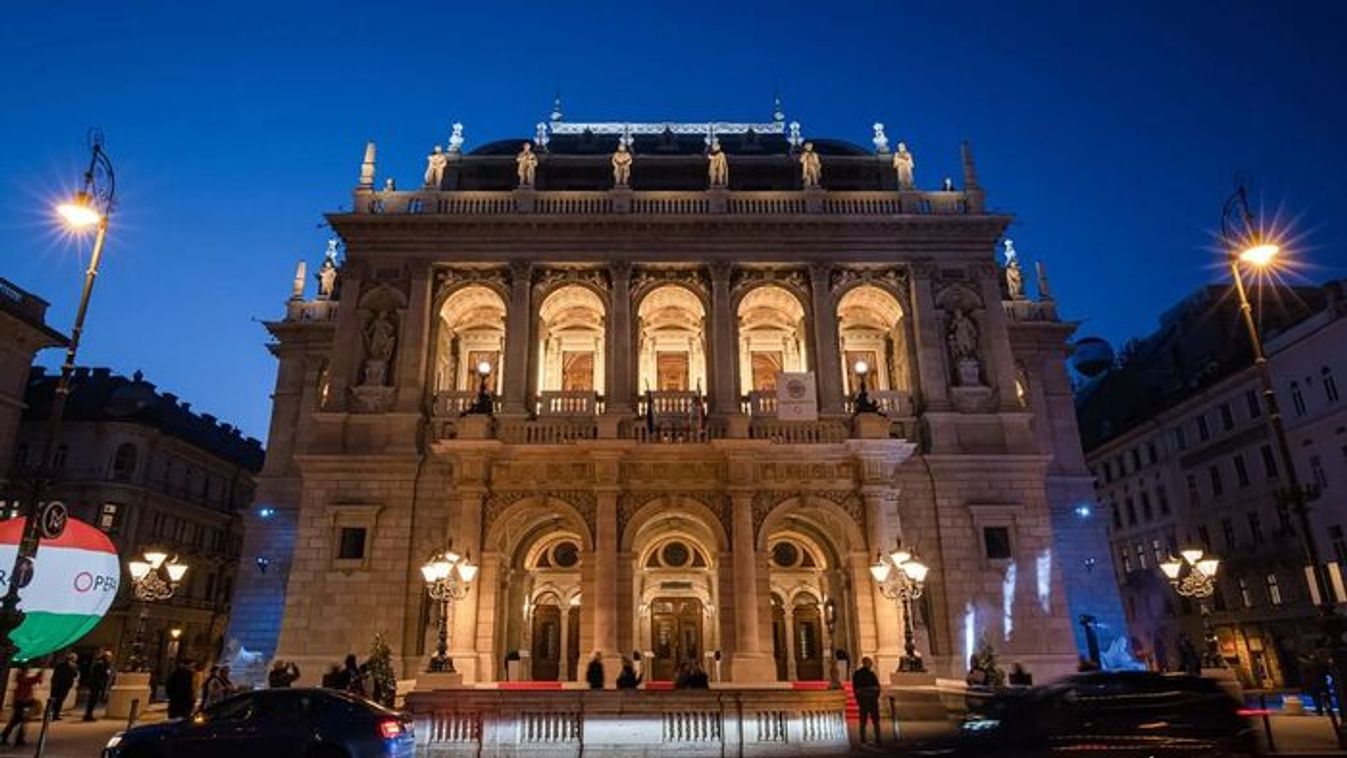
The Hungarian State Opera House also underwent a major major facelift, reopening in March 2022 after nearly five years of reconstruction. The multi-billion-forint government-funded project addressed urgent issues: noisy stage technology and outdated systems had been problematic since the 1990s.

Overdue Tasks Finally Wrapped Up

The Opera House faced several challenges: there were no proper orchestra dressing rooms or fire alarm systems, and its electrical network was inadequate. The building lacked air conditioning, and the basement was prone to flooding. Renovations included façade restoration, stage and acoustic modernization, improved audience comfort, reconfigured orchestra pit, restoration of historic areas, and replacement of electrical, mechanical, and utility systems. Interior lighting was upgraded, and accessibility improvements added audio narration for visually impaired visitors and induction loops for hearing-impaired audience members in one row of the stalls. Audience elevators were installed in the Dalszinhaz and Hajos Street balcony stairwells, and the balcony floors were leveled and integrated with the stalls and upper box seating.

A key part of the refurbishment was the consolidation of the Opera House’s costume and stage-prop workshops, along with much of its costume storage, into a single centralized support facility. The Eiffel Workshop House on Andrassy Avenue, completed in 2021 on the site of the former MÁV Northern Vehicle Repair Yard, was designed to relieve the Ybl Palace of operational pressures and also serves as the Opera’s chamber theater. Its repertoire features contemporary operas, modern ballets, Baroque works, and genre-defying fusion performances.

The Erkel Theater, renovated with 1.7 billion forints in state funding, reopened in 2013. The century-old building received new stage technology, while the auditorium and building systems were modernized, and the façade was restored. Approximately 30 percent of the cost went to stage, lighting, and sound technology; 40 percent covered HVAC and heating upgrades. Dressing rooms and the auditorium, which seats 2,000, were also fully refurbished.

'Vigados' Reborn

The Buda Vigado (Concert Hall), reopened in 2018 with roughly 7.1 billion forints in state funding, has received a complete facelift. Originally built in 1899, the later-added galleries were removed to restore the building’s soaring historic interiors. Renovations faithfully reconstructed the grand foyer, the glass-topped ceremonial staircase, and the ornate main hall. The library and theater space were also upgraded — 40,000 volumes were carefully returned to the library, while modern stage machinery was installed in the theater. The historic building now hosts the House of Traditions, offering free daytime craft workshops and children’s programs, and in the evenings transforming into a storytelling pub and dance venue.

While the Buda Vigado’s renovation took just over one year, the Pest Vigado endured a far longer ordeal before it could be fully revitalized. Built in 1864 and repeatedly rebuilt, the deteriorated building ultimately closed in 2004. Its restoration was carried out in multiple phases over a decade. Work accelerated in 2011 when the National Development Ministry took over, providing an additional 2.6 billion forints to complete the total 7.5 billion-forint project. The foyer, ceremonial hall seating, and grand staircase were meticulously restored to their original design based on historical sources. New event spaces were created in the basement and former attic floors, alongside supporting service areas, operational facilities, and dressing room blocks.

Komment

Összesen 0 komment

A kommentek nem szerkesztett tartalmak, tartalmuk a szerzőjük álláspontját tükrözi. Mielőtt hozzászólna, kérjük, olvassa el a kommentszabályzatot.


Jelenleg nincsenek kommentek.

Szóljon hozzá!

Jelenleg csak a hozzászólások egy kis részét látja. Hozzászóláshoz és a további kommentek megtekintéséhez lépjen be, vagy regisztráljon!

A téma legfrissebb hírei

Tovább az összes cikkhez chevron-right

Ne maradjon le a Magyar Nemzet legjobb írásairól, olvassa őket minden nap!

Google News
A legfrissebb hírekért kövess minket az Magyar Nemzet Google News oldalán is!

Címoldalról ajánljuk

Tovább az összes cikkhez chevron-right

Portfóliónk minőségi tartalmat jelent minden olvasó számára. Egyedülálló elérést, országos lefedettséget és változatos megjelenési lehetőséget biztosít. Folyamatosan keressük az új irányokat és fejlődési lehetőségeket. Ez jövőnk záloga.