According to the ministry, Hungary's foreign minister made the remarks at a joint press conference with Serbian Energy Minister Dubravka Dedovic, noting that the first major milestone in negotiations over acquiring majority ownership in NIS could be reached soon. He said an initial key agreement between MOL and Gazprom Neft could be finalized in the coming days.
The Hungarian government supports MOL’s plan to acquire a stake in NIS because it would represent a major advance in the security of Central Europe’s energy supply. The region has never before enjoyed a comparable level of stability,
Szijjarto pointed out.
“The coordinated operation of the oil systems of three landlocked countries that are not rich in oil fields—Slovakia, Hungary, and Serbia—and the integrated functioning of the refineries in Bratislava, Szazhalombatta, and Pancevo will create a situation, both in terms of supply security and energy prices, that Central Europe has never experienced before,” he said.
We will create a position in terms of both prices and supply security that Slovakia, Hungary, and Serbia have never been in,
he added.
Szijjarto also stressed that MOL, as a prospective owner, considers the Pancevo refinery to be of strategic importance, dismissing as false any claims that the Hungarian company merely wants to gain market share and then shut down the facility. Such assertions, he said, are “fake news and part of a deliberate disinformation effort,” noting that even the best initiatives always have vested interests working against them.
He made clear that the Hungarian government is providing continuous diplomatic support to enable MOL to enter the Serbian oil market as the future majority owner of NIS.
Mr. Szijjarto also announced that Hungary and Serbia will conclude an intergovernmental agreement laying the foundations for a favorable environment for strategic cooperation in the oil sector, and affirming the importance of the planned oil pipeline between the two countries.
This is not only about a new crude oil pipeline connecting our countries. A new oil products pipeline will also be built, linking MOL’s refinery in Szazhalombatta with the logistics center in Novi Sad,
He emphasized that MOL’s entry into the Serbian oil market through the acquisition of majority ownership in NIS, together with the construction of the Hungarian–Serbian oil pipeline, would mark a breakthrough in the energy security of Central Europe, Serbia, Hungary, and Slovakia—placing the region in a stronger position than ever before. “That is why the government supports MOL’s acquisition plans and why we are concluding an intergovernmental agreement with the Serbian government,” he said.
The minister underlined that the war in Ukraine and European Union policies have already led to a severe energy crisis in Central Europe, and that Brussels appears intent on further worsening the region’s situation by cutting off previously reliable sources and established supply routes.
At the same time, he noted that the crisis has once again demonstrated the strength of Hungarian–Serbian friendship, without which secure energy supplies in the region could not have been guaranteed.
The past months have proven that there is no energy security in Serbia without Hungary, and no energy security in Hungary without Serbia,
Szijjarto said, recalling that 7.8 billion cubic meters of natural gas reached Hungary last year via Serbia.
Finally, he pointed out that to help manage the difficult situation in Serbia, MOL has increased its oil exports by roughly two and a half times, reaching the upper limit of its capacity.
“All three MOL fuel depots in Serbia are operating at maximum capacity, and MOL service stations have managed to handle more than a 20 percent increase in traffic over the past weeks,” he added.
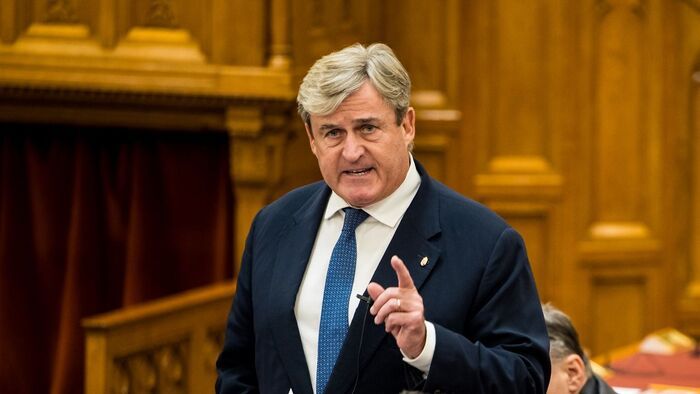
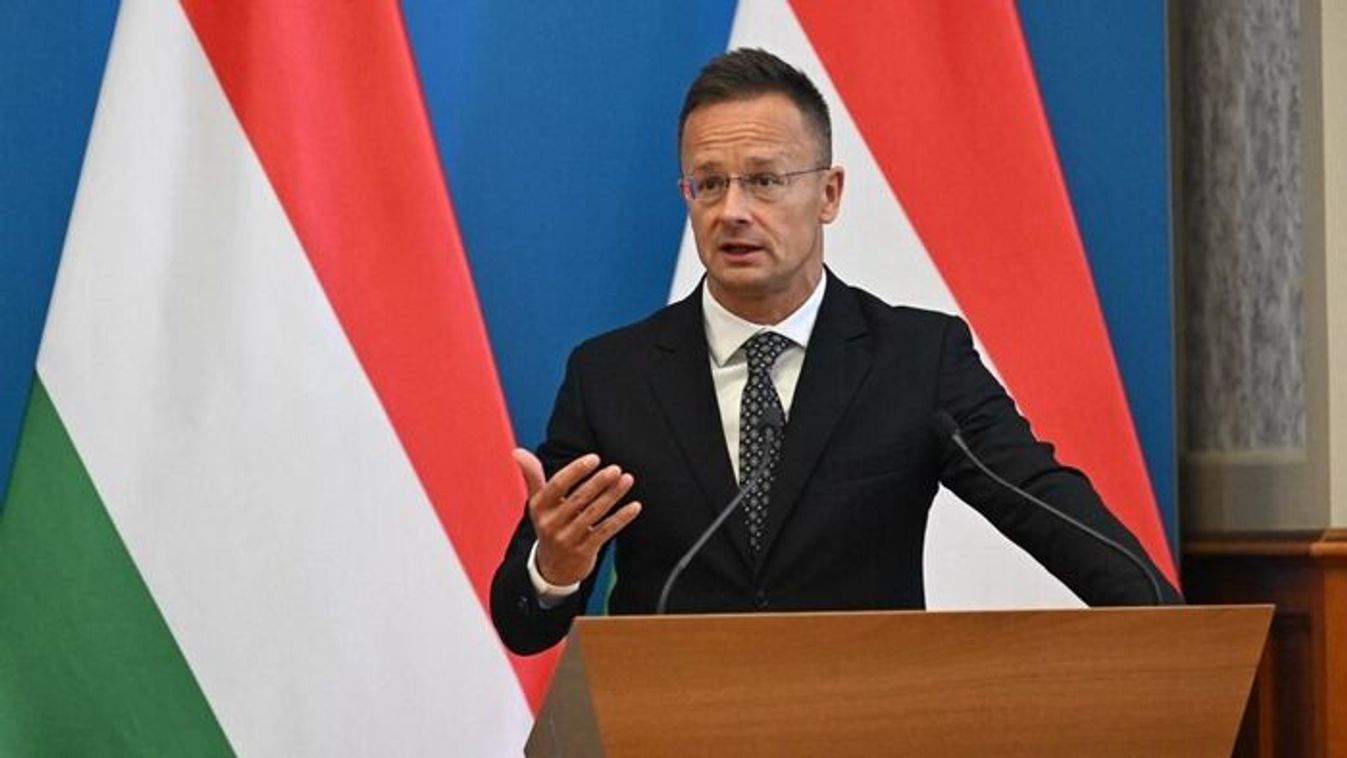
Cover photo: Peter Szijjarto, Hungary's Minister of Foreign Affairs and Trade (Photo: AFP/MTI)