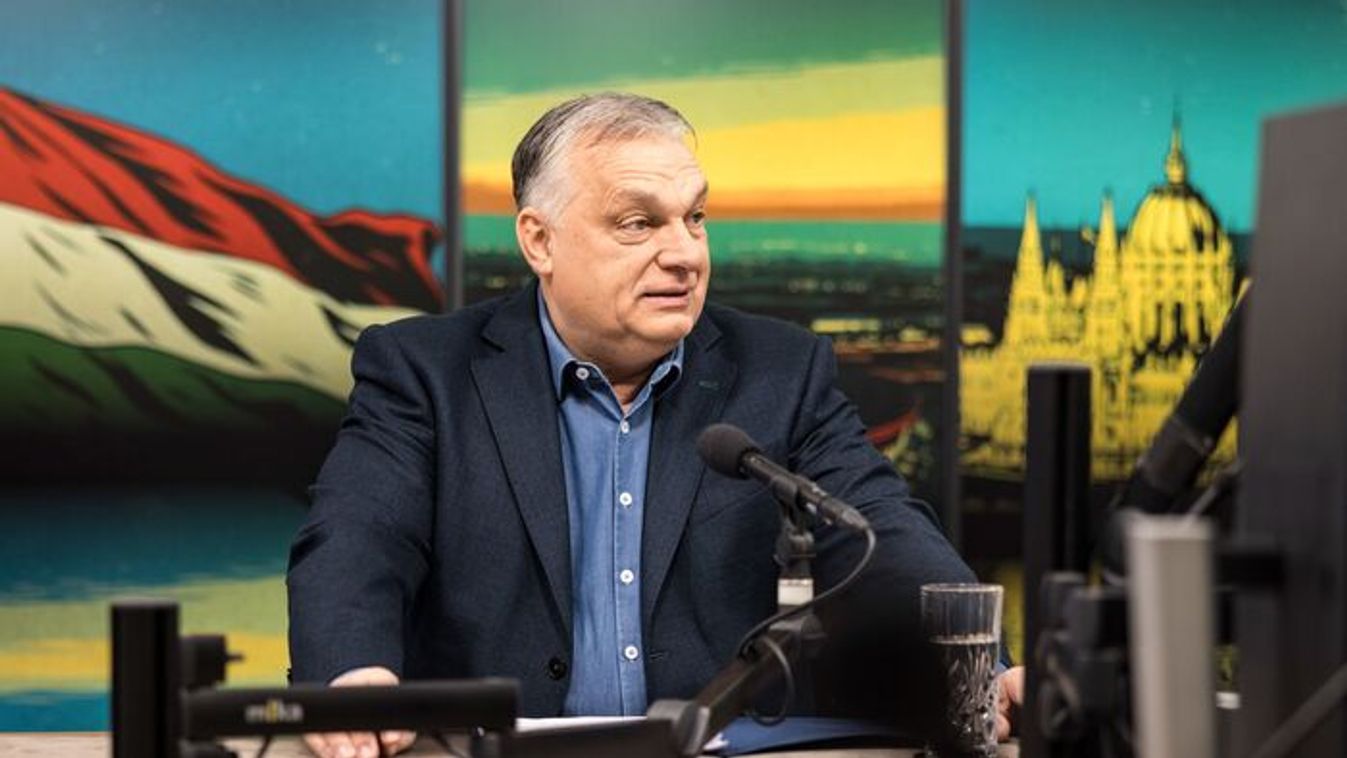
He warned that Brussels plans to fully ban the use of Russian gas starting in 2027. “Anyone who claims the current utility cost reduction system can be maintained without Russian gas is not telling the truth. We do not want to implement the regulation issued in Brussels—we must find a way around it and avoid it,” Orban emphasized.
Brussels and Kyiv Want a Pro-Ukraine Government
The PM also responded to remarks by Ukraine’s foreign minister, who reportedly described the Hungarian prime minister as a danger to the Hungarian people. “There is coordination between Brussels and Ukraine,” Mr. Orban said, noting that the stated justification for the regulation is to help Ukraine.
He argued that the EU has no legal authority to impose such a ban, as energy policy is a national competence. “If Brussels wants to intervene, it must impose sanctions—but that would require unanimity. Instead, they claim this is merely a trade policy issue. But clearly, in substance, it is a sanction,” Viktor Orban said. “The point is to install a government in Hungary that does not resist,” he added.
Mr. Orban said he understands Kyiv’s position: Hungary does not want to send soldiers or weapons to Ukraine, nor does it support sending money there. “The Ukrainians want our money. They even have a name for it—the Ukrainian welfare plan. They are demanding €800 billion, plus another €700 billion,” he said.
According to the PM, the EU would either have to take on joint debt—something Hungary opposes—or extract more money from member states. “That’s why they are not only interested in hacking Hungary’s energy policy, but in a much bigger goal: installing a Ukraine-friendly government in Hungary,” he said.
PM Orban added that Brussels has already circulated a document outlining Ukraine’s accession to the EU in 2027, a move that would shape the next seven-year EU budget framework.