The Financial Times also cited a statement from NABU saying that “the suspect” initiated discussions with lawmakers to establish a regular mechanism that would provide illicit benefits in exchange for loyal voting behavior.
These were not one-off deals, but a structured cooperation mechanism that included advance payments and was designed for the long term,
NABU said.
In a video released by NABU, a person whose voice resembles Tymoshenko’s can be heard offering cash to a lawmaker in exchange for support on certain votes. The recording also mentions that recruited allies would receive regular payments and details how voting instructions would be coordinated via the Signal messaging app.
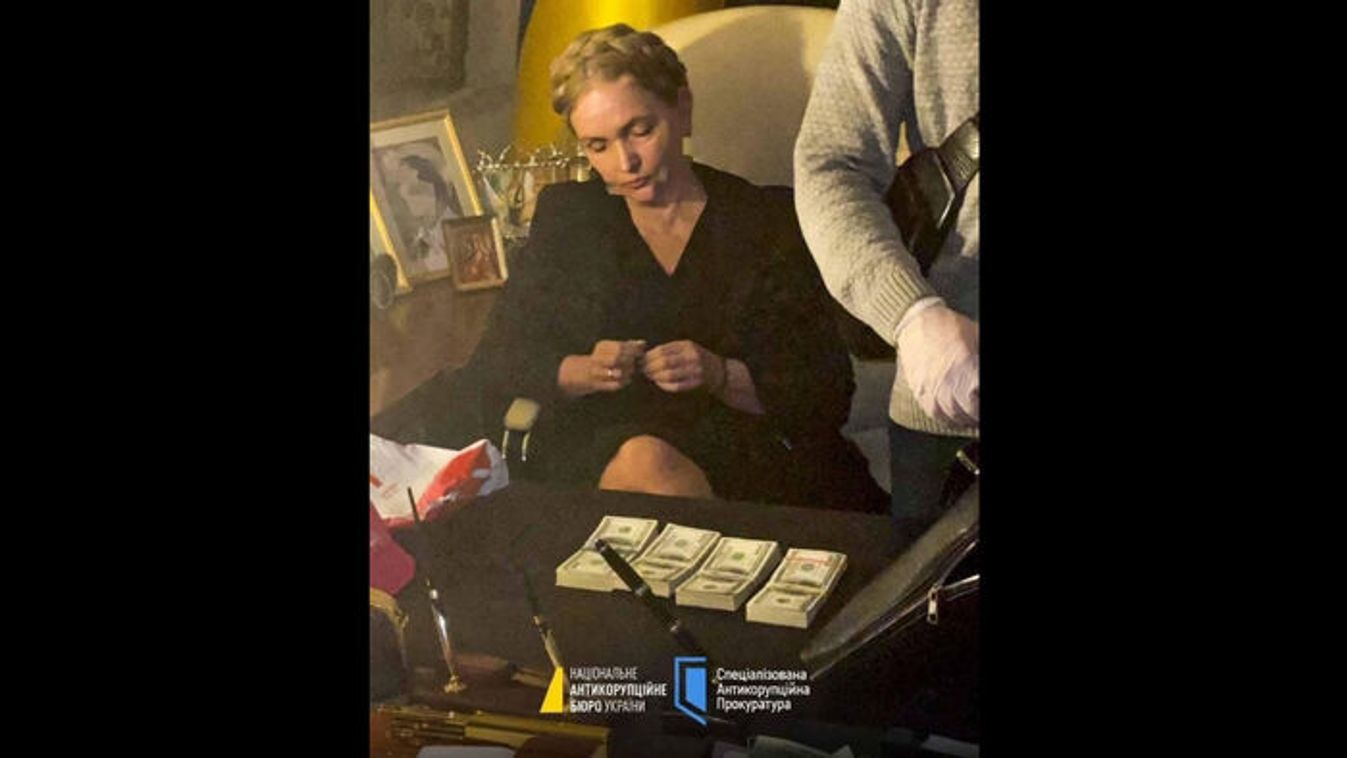
The paper further notes that the agency filmed the raid at Tymoshenko’s party headquarters, where stacks of $100 bills can be seen lying on a table in front of a woman.
Tymoshenko, however, claimed that investigators “found nothing” and therefore “simply confiscated” her work phone, parliamentary documents, and personal savings. She added that all of these assets were “fully disclosed” in her mandatory financial declarations. “This is not the first political order issued against me,” she was quoted as saying by the Financial Times.
The paper recalls that in 2011 a Ukrainian court found Tymoshenko guilty of abuse of power over her role in brokering a natural gas import contract with Russia and sentenced her to seven years in prison. Both in Ukraine and in the West, the case was widely viewed as politically motivated, carried out under then–pro-Russian President Viktor Yanukovych.