Hungary FM Shares Shocking News: Brussels Wants to Send Hungarian and Slovak Troops to Ukraine

Foreign Minister Peter Szijjarto gave a report following the EU foreign ministers’ council meeting in Brussels. He said that the two main agenda items centered on the war in Ukraine. According to the minister, shocking facts emerged during the hours-long debate: EU chief negotiator Kaja Kallas expects Hungarian and Slovak troops to be sent to Ukraine, and suspicions were confirmed that Brussels, in collusion with Ukraine, is blocking oil supplies to Hungary.

2026. 02. 24. 16:57
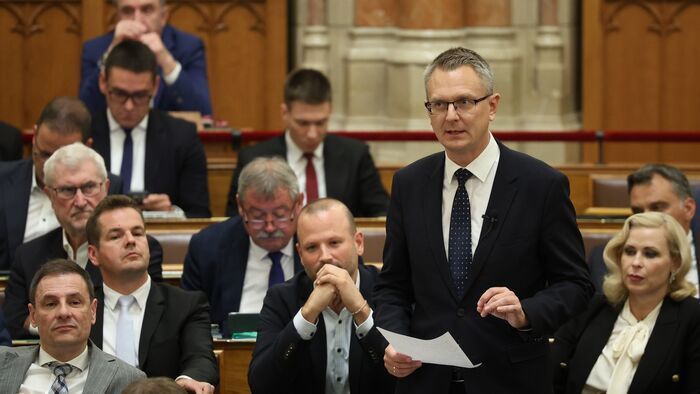
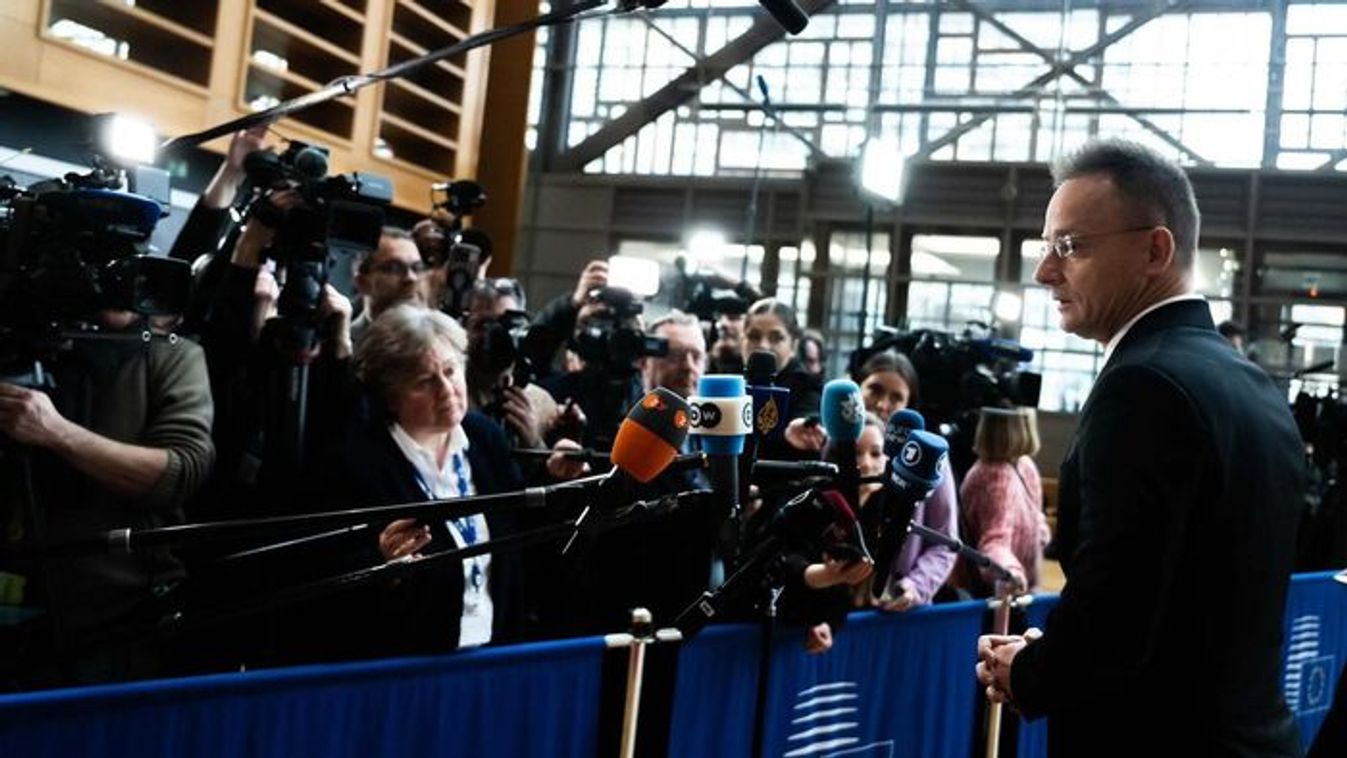
Peter Szijjarto, Minister of Foreign Affairs and Trade Photo: AFP
VéleményhírlevélJobban mondva - heti véleményhírlevél - ahol a hét kiemelt témáihoz fűzött személyes gondolatok összeérnek, részletek itt.

FM Peter Szijjarto spoke live from Brussels at the conclusion of the EU foreign ministers’ council meeting. Hungary's minister of foreign affairs and trade said that shocking developments came to light during the lengthy debate, which clearly showed that Brussels is colluding with Ukraine to block Hungary’s oil supply. He also called it an astonishing development that EU chief negotiator Kaja Kallas would push for Slovak and Hungarian troops to be deployed to Ukraine.

Szijjártó Péter sokkoló hírekkel jelentkezett
FM Szijjarto shares shocking news (Photo: AFP)

Drawing lessons from the negotiations, FM Szijjarto identified four key points. 

First, Europe is preparing for a long war and is adjusting its strategy accordingly.

Second, there is no doubt that troops are intended to be sent to Ukraine, and the plan is to implement this as soon as possible.

“Kaja Kallas wants Hungary and Slovakia to send troops to Ukraine. She wants Hungarian and Slovak soldiers to go to Ukraine,

– the politician warned.

Third, in addition to the already massive financial support that has been provided and planned, even more money is intended to be sent to the war-torn country.

Regarding additional funds, our colleagues made it clear that the previously approved 90 billion euros—currently blocked by Hungary—only covers part of Ukraine’s financial needs, and it is clear that decisions will have to be made in the near future to send even more resources, even more money, to Ukraine

– FM Szijjarto emphasized.

Fourth, EU officials are presenting Ukraine’s EU membership as an unquestionable and unstoppable process.

Both EU officials and the Ukrainian foreign minister clearly stated that Ukraine is fully prepared for EU membership—and the ceiling didn’t collapse, though there was a real risk. They framed it as an economic necessity and an obvious geopolitical interest that Ukraine must join the European Union. Practically, they discussed Ukraine’s EU accession as something decided, inevitable, and unstoppable,

– FM Szijjarto stated.

Peter Szijjarto emphasized that the collusion between Ukraine and Brussels is clearly visible. He recounted that the Ukrainian foreign minister accused Hungary of sabotage. When asked whether Ukraine could accommodate a Hungarian-Slovak expert mission to produce an official report on the state of the oil pipeline, instead of responding affirmatively, the Ukrainians hesitated, stammered, and offered only bureaucratic promises to “look into it.”

The poor Luxembourg colleague, who probably thought they could land another hefty blow on us and the Slovaks, essentially exposed the Ukrainians for lying about the condition of the oil pipeline, claiming it was damaged or physically unfit for transport,

he said somewhat ironically, adding that these technical and physical excuses are being used to block the resumption of deliveries,

But, this is a blatant lie. The situation is that the pipeline is fully capable—technically, mechanically, and physically—of resuming oil deliveries to Hungary and Slovakia, and our information about the pipeline’s condition matches that of the Slovaks. The Slovak foreign minister confirmed all of this during today’s session,

– FM Szijjarto declared.

He added that Ukraine is putting Hungary’s energy security at risk and, by extension, attacking the country’s sovereignty. In light of this, the minister made it clear to everyone at the meeting that Hungary will not support any decision serving Ukrainian interests or important to Kyiv. Accordingly, the Hungarian side has consistently blocked the adoption of the 20th EU sanctions package against Russia and has refused to contribute to Ukraine’s 90-billion-euro war loan.

So neither the war loan, nor the 20th sanctions package will move forward as long as they play games with our energy supply,

– he added.

“I hear the preliminary reports here, and nothing was discussed except Hungary. But they should not pressure us—they should pressure the Ukrainians,” FM Szijjarto said.

Hungary is a member of the European Union, Ukraine is not. Yet Brussels sided with a non-EU member against EU member states — including Slovakia. This proves that what we have in Brussels is not an EU Commission, but a Ukraine Commission,

– the politician stressed.

He called the EU sanctions policy a complete failure and meaningless, saying it harms the European economy far more than Russia.

The sanctions policy is now like a stick figure trying to show off its muscles—obviously laughed at. The 20th sanctions package is equally pointless,

– he said.

He emphasized that the Hungarian government has never supported punitive measures contrary to the country’s core national interests, such as energy supply, and therefore has not implemented any such measures.

In the other cases, we said if Europeans want to harm themselves, that’s their problem. But now the Ukrainians have started to mess with us. Threatening our energy supply is an attack on our sovereignty, and we are obviously not willing to tolerate it quietly. Everyone needs to understand this,

– the foreign minister said.

Responding to journalists’ questions, FM Szijjarto condemned Ukraine’s “anti-Hungarian policy,” the endangerment of Hungary’s energy security, and the deprivation of the rights of the Transcarpathian minority. 

He underlined that Hungary retains the sovereign right to decide where and what type of energy it purchases, and the government is unwilling to import at higher cost or from less reliable sources.

He also noted that Russia’s oil exports to Hungary represent only 0.2 percent of Russia’s GDP, making it unlikely that Moscow funds the war in Ukraine from this source.

Cover photo: Peter Szijjarto, Minister of Foreign Affairs and Trade (Photo: AFP)

Komment

Összesen 0 komment

A kommentek nem szerkesztett tartalmak, tartalmuk a szerzőjük álláspontját tükrözi. Mielőtt hozzászólna, kérjük, olvassa el a kommentszabályzatot.


Jelenleg nincsenek kommentek.

Szóljon hozzá!

Jelenleg csak a hozzászólások egy kis részét látja. Hozzászóláshoz és a további kommentek megtekintéséhez lépjen be, vagy regisztráljon!

A téma legfrissebb hírei

Tovább az összes cikkhez chevron-right

Ne maradjon le a Magyar Nemzet legjobb írásairól, olvassa őket minden nap!

Google News
A legfrissebb hírekért kövess minket az Magyar Nemzet Google News oldalán is!

Címoldalról ajánljuk

Tovább az összes cikkhez chevron-right

Portfóliónk minőségi tartalmat jelent minden olvasó számára. Egyedülálló elérést, országos lefedettséget és változatos megjelenési lehetőséget biztosít. Folyamatosan keressük az új irányokat és fejlődési lehetőségeket. Ez jövőnk záloga.