PM Orban: Ukraine Wants Chaos, but Hungary Cannot Be Blackmailed + Video

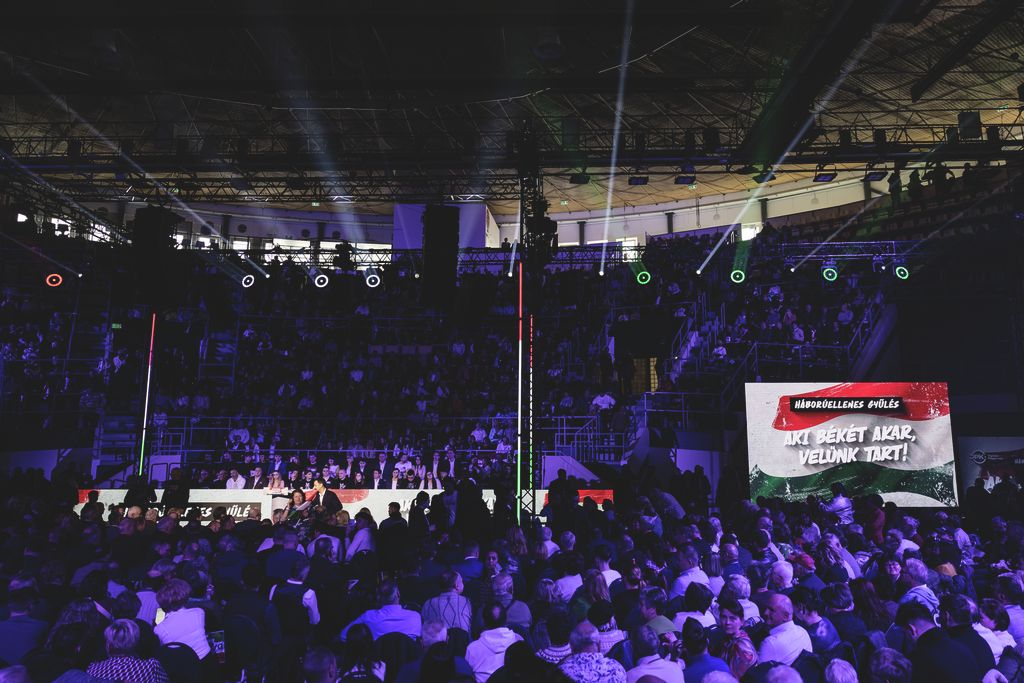
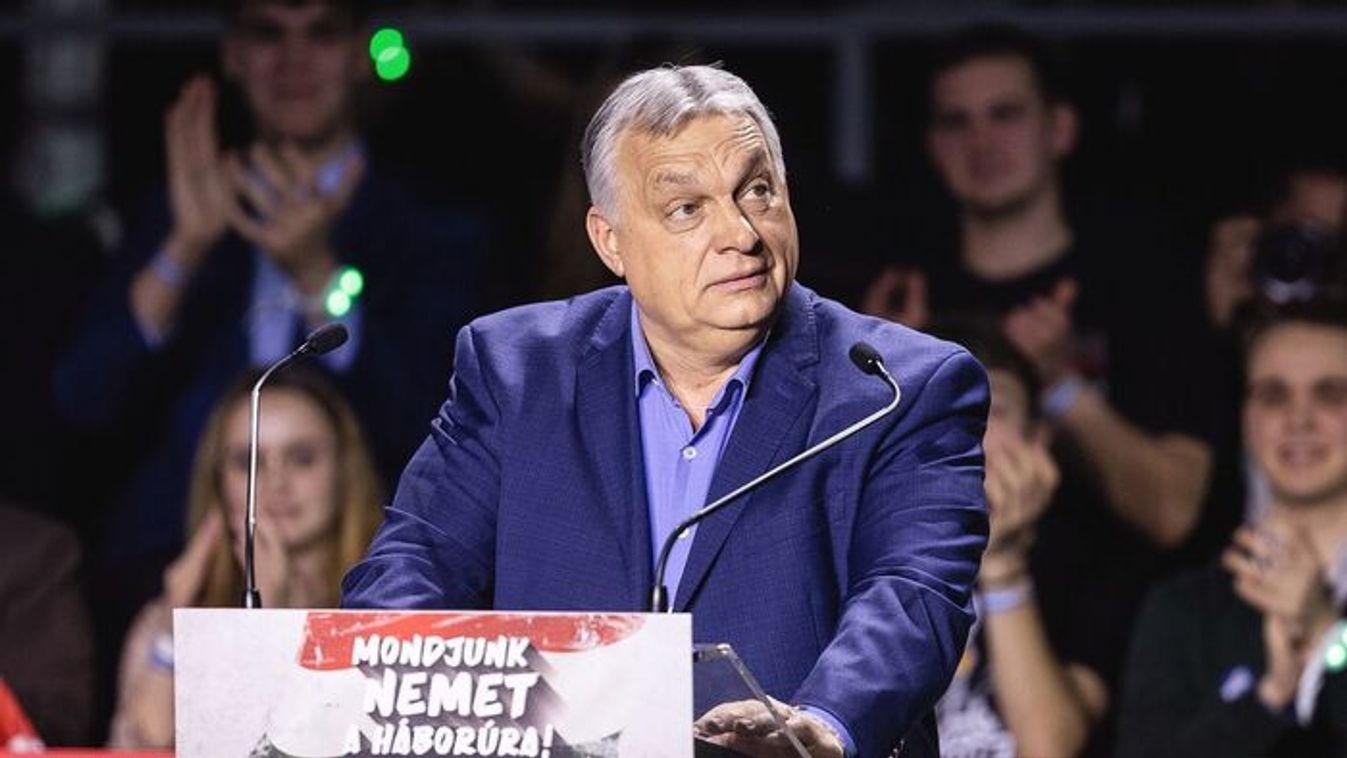
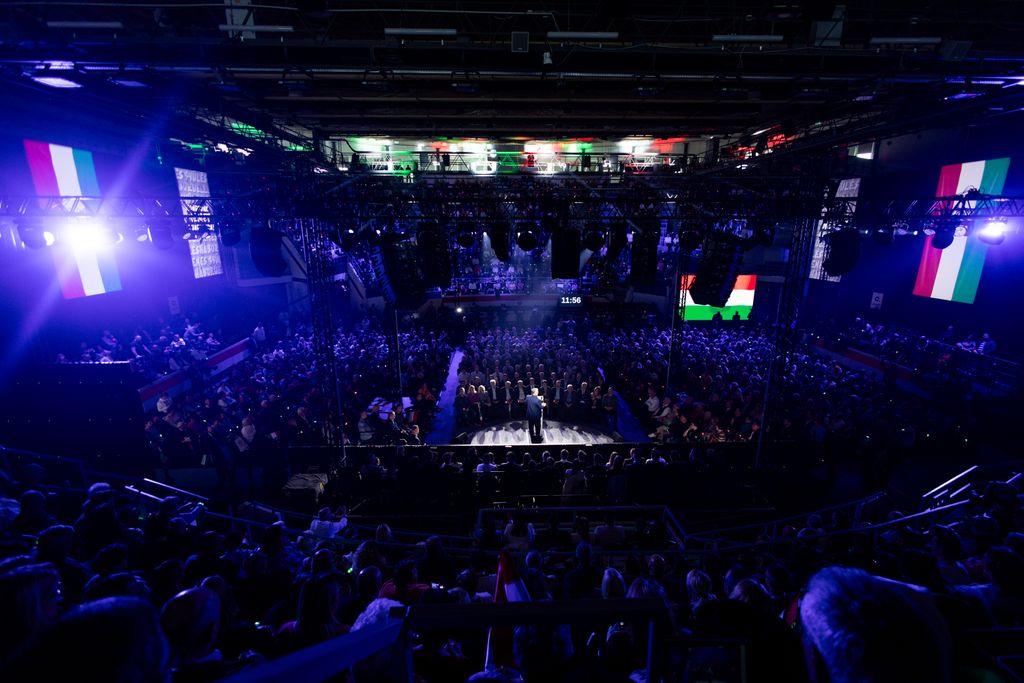
Anyone who wants to break us will have their hands full, Hungary's Prime Minister Viktor Orban declared at an anti-war rally in Bekescsaba.

2026. 02. 21. 17:34
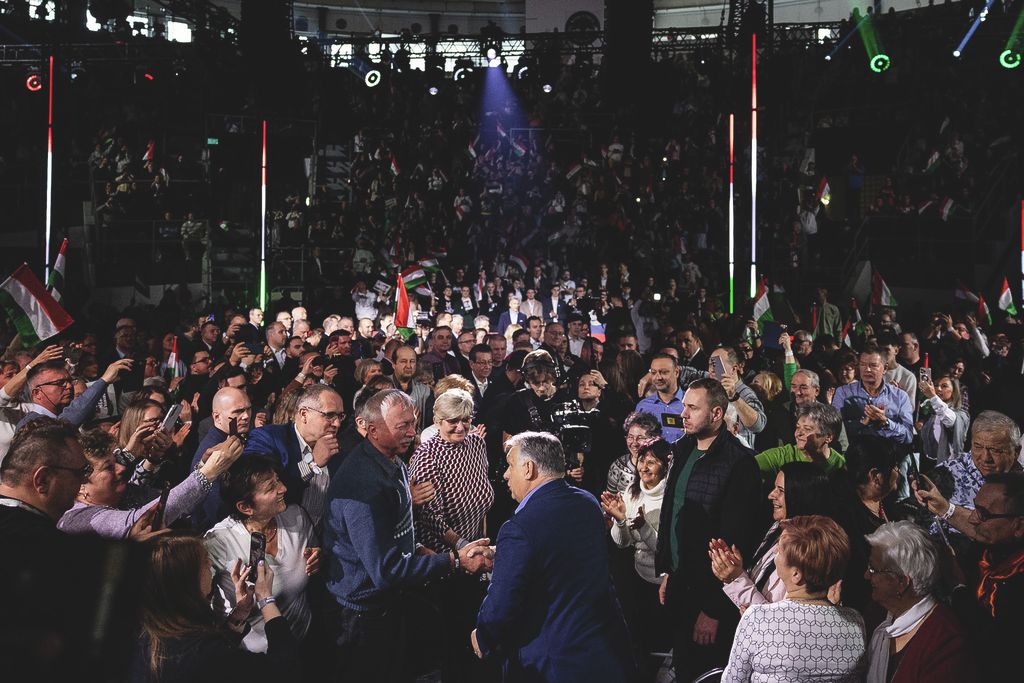
Hungary's Prime Minister Viktor Orban at the anti-war rally in Bekescsaba (Photo: Balazs Ladoczki)
VéleményhírlevélJobban mondva - heti véleményhírlevél - ahol a hét kiemelt témáihoz fűzött személyes gondolatok összeérnek, részletek itt.

Speaking at the Bekescsaba stop of the Digital Civic Circles (DPK) anti-war gathering, PM Orban said the location was symbolic. “This is a difficult place—victory here can only be achieved with full dedication,” he noted on the official opening day of campaigning for the April elections, recalling that he first attended a political event in the city back in 1989, during the campaign for the Four Yes referendum.

DPK gyűlés Békéscsaba Orbán Viktor
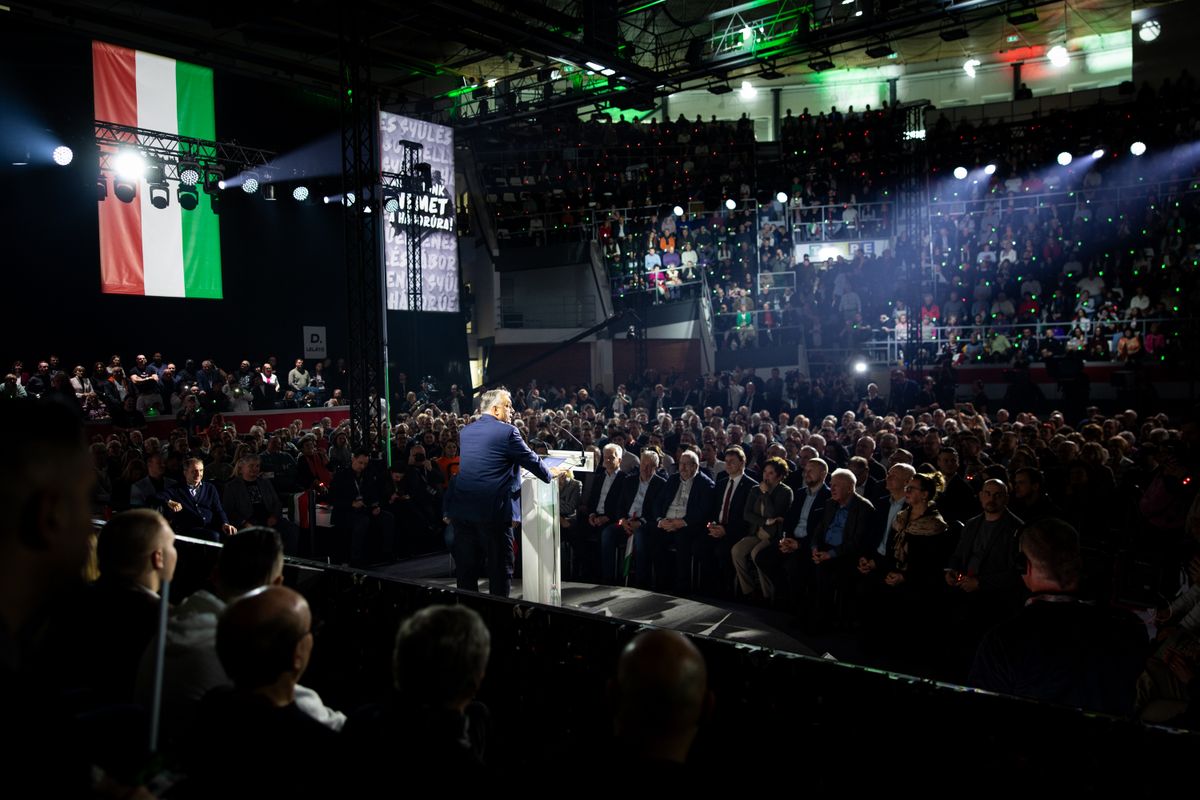
Viktor Orban at the anti-war rally in Bekescsaba (Photo: Prime Minister's Office Communications Department)

At the start of his remarks, the prime minister said he had arrived directly from Washington to Bekescsaba with a stop over in the capital where earlier in the day he had laid the cornerstone for the Budapest Liszt Ferenc International Airport's new terminal - a billion-forint investment after the Hungarian state repurchased the airport under his leadership.

Under the Fidesz–KDNP government, he emphasized, national public assets have doubled.

PM Orban praised the city’s famed sausage festival as one of the best achievements of the post-communist era and, on a more serious note, cited the construction of Route 44 as proof of Fidesz’s reliability and the basis for continued public confidence.

With due modesty,” he said, “this shows that together we are capable of anything.

He pointed to modern factories rising from the Great Plain toward Debrecen and reiterated the government’s goal of having five million Hungarians employed in the country.

Ukraine Wants Chaos, but Hungary Cannot Be Blackmailed

In Bekescsaba, PM Orban said, there is no need to explain the dangers of war. In September 1944, he recalled, 56 bombers dropped 607 bombs on the city, killing 100 people.

War comes faster than we think. You must stay out of it from the very beginning. With a good government and national unity, you can stay out of it,

he stressed.

PM Orban described the debate over the war’s origins: Ukraine says Russia seeks to occupy it, while Russia claims it is fighting because it rejects Ukraine’s NATO membership. 

He drew parallels with the Red Army passing through this area, reminding the audience that Slavic conflicts are ruthless. He cited staggering casualty figures in the ongoing war - nine thousand people die or become disabled every week; that's thirty thousand a month and four hundred thousand a year. Yet the European Union wants to fund the war for two more years, even though peace would be in their interest, as well, he remarked. 

“If Western Europeans supported peace, this war would already be over,” he said. Instead, he argued, European leaders have chosen to continue it. According to Orban, those who stepped into the conflict cannot easily step out. The previous U.S. president drew America in, while the leaders of Germany and France cannot admit they were wrong without destabilizing their governments.

On the EU war loan to Ukraine, the prime minister quipped:

May the Tisza Party win the election in the same way Ukraine will repay the war loan,

he said pointedly, suggesting both are unrealistic. The EU will be repaying this loan. They also say that they will defeat the Russians, who will then repay them with reparations. PM Orban noted that even Napoleon and Hitler failed to defeat Russia.

He believes that the current European idea is a complete misunderstanding. Anyone who joins it will destroy their own country.

Hungary, he insisted, will not follow that path. “We will not go with them, we will not break. The country will continue to develop, not collapse.” PM Orban explained that Ukraine sees the continuation of the war as a matter of life and death—and economic interest—because without war, funding would dry up. He said 

Ukraine seeks at any cost a Hungarian government that would admit it into the EU, provide weapons, and send money.

“Our example is dangerous because it shows you can say no,” he said. Admitting Ukraine to the EU, he argued, would draw Hungary into the war which is why an agreement must be reached with them, but not accession. He added that membership also threatens agriculture in the EU. Previously, he noted, 26 countries supported Ukraine’s accession, and Hungary alone exercised its right to veto.
"Ukraine, Brussels, and Germany are interested in a change of government in Hungary," he said, referencing what he called a “Munich pact” aimed at stripping the right to veto as the precondition for eroding national sovereignty.

Energy as a Weapon

PM Orban described the shutdown of the Druzhba oil pipeline as an “energy weapon” in Ukrainian hands, capable of triggering an energy crisis. He maintained there is no technical obstacle to resuming deliveries and that Ukraine is committing a serious infringement of EU association agreements. Hungary has the right to defend itself.

He outlined three potential countermeasures, two of which have already been taken: halting diezel fuel supplies to Ukraine and blocking a €90 billion EU war loan for Kyiv. A third option—cutting electricity exports to Ukraine—remains under consideration. A significant portion of Ukraine’s electricity supply, he noted, comes from Hungary. Slovakia has already announced it would cut off electricity exports to Ukraine, if necessary.  

The prime minister explained that creating energy chaos before the election is meant to help the opposition Tisza Party. 

But we cannot be blackmailed,

he said. “We will not be frightened by a few loud-mouthed Ukrainian politicians. Empires have disappeared here before. We have our own street-wiseness. Anyone who bites us will break their teeth—so they should look for a dentist.”


The Stakes: Family Budgets and National Sovereignty

In response to audience questions the prime minister also spoke about the government’s 2010 agreement with Hungary’s Roma community, centered on order, work instead of welfare, and education. He said Roma employment has tripled and emphasized the importance of schooling and upward mobility. The government has provided opportunities for Roma integration, but there is still more to be done, he said noting that although university graduates are steadily increasing in the community, 80% still poses only secondary-level education.

DPK gyűlés Békéscsaba Orbán Viktor
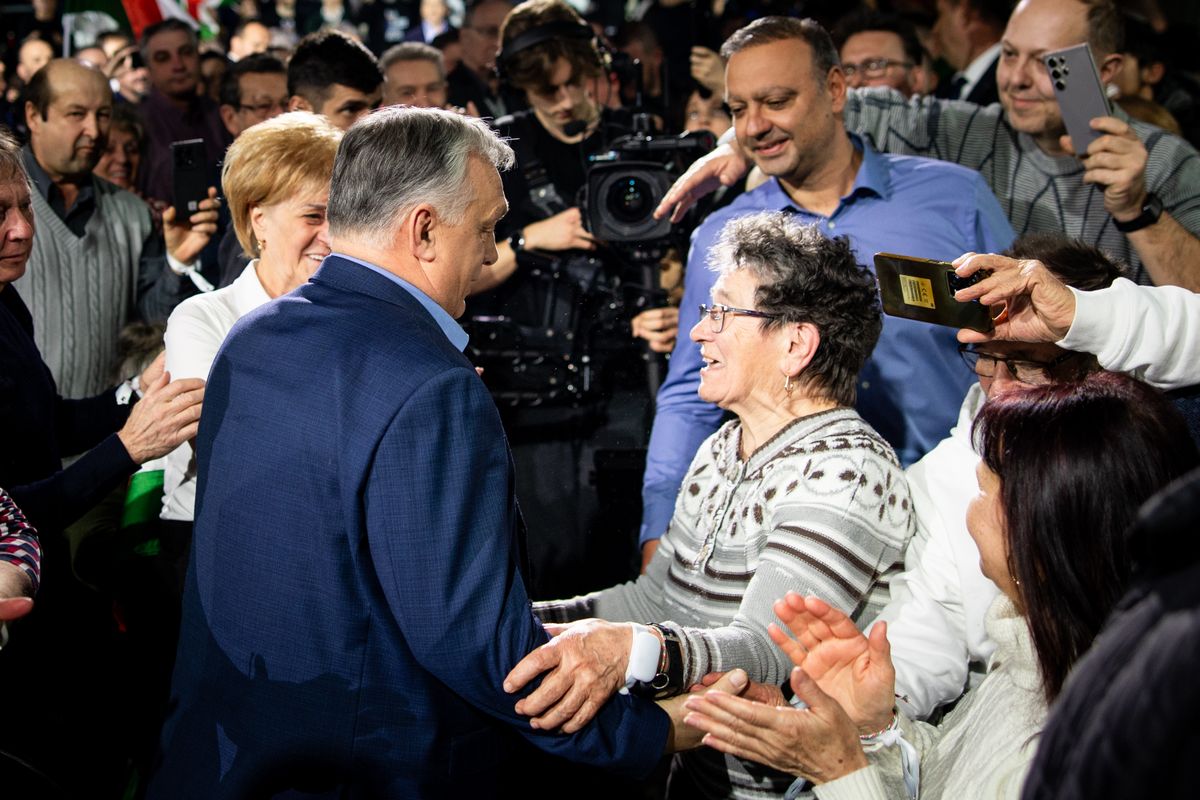
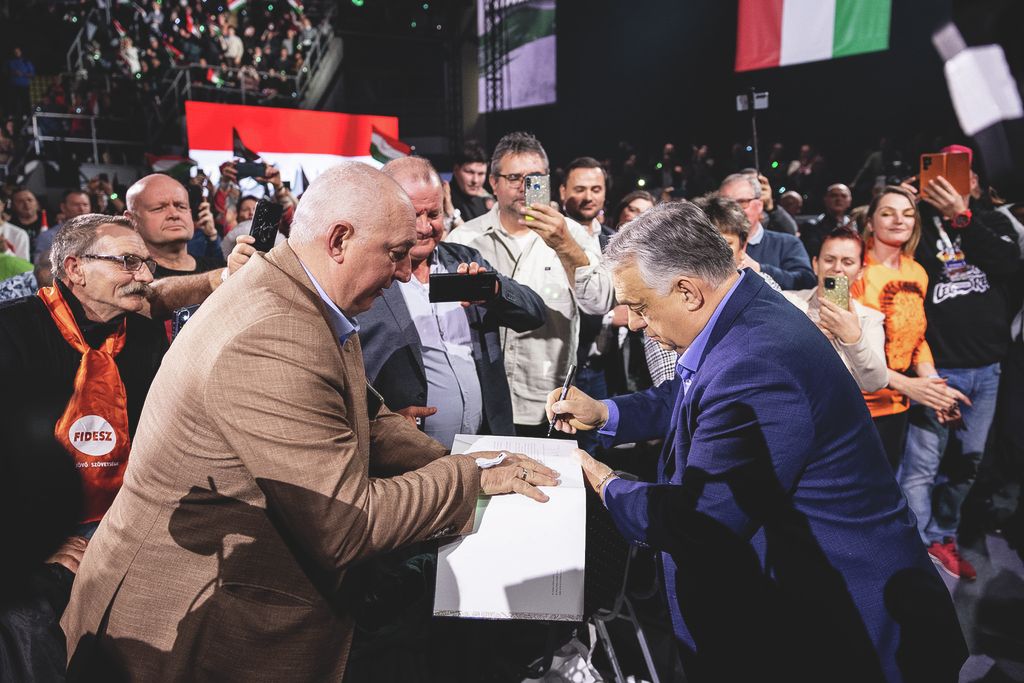
Anti-war rally in Bekescsaba (Photo: Prime Minister's Office, Communications Department)

He warned that without the government’s actions, and measures countering Ukraine's actions,

gasoline would already cost 1,000 forints per liter and household utility bills would be four times higher. 

He rejected opposition claims that Hungary could maintain current energy prices while fully abandoning Russian gas, calling such pressure unlawful and part of a “secret Munich pact.”

PM Orban stressed the importance of rural Hungary, arguing that villages are both economically and spiritually vital to the fabric of the country. 

A patriotic, pro-nation govenment is crucial to the future of villages.

Regarding the migration of young people, the prime minister said that Bekes County had the disadvantage of being cut off from the rest of the country, but that this was also the case elsewhere.

"That is why everyone must be included in the economic cycle and IT developments," emphasized Viktor Orbán. Regarding salaries, he said that the average gross wage in Békés County has increased one and a half times since 2010, but it is still the second lowest in the country. That is why well-paid jobs are needed. The agricultural sector cannot be written off either, because in Hungary, farmers and skilled workers will live well on their own land; that is the future.

"This is why dual vocational training is important, and we will close the gap in this region in terms of wages, so that the average salary in Bekes County will also reach one million forints per month," emphasized the prime minister.

He defended what he called the “Hungarian model,” introduced in 2010, including special taxes on banks, energy providers, and retail chains, which he said brought 15 trillion forints into the Hungarian economy over 16 years. These funds, he argued, made possible measures such as a 14th-month pension, tax exemptions for mothers, and bonuses for uniformed personnel.

If this is organized differently, this money will go back to the banks, the energy sector, and retail chains.

It is no coincidence that these large companies delegate people to the election campaign.

Large corporations, he claimed, are backing opposition figures to dismantle the Hungarian model and replace it with a “Brussels model,” diverting profits to multinational shareholders at the expense of Hungarian families.

“What’s at stake is the family budget,” Orban said. “If there is no pro-nation government, there will be chaos beyond imagination.”

Young people think that the government is like a machine with an autopilot that never goes below a certain level. That's not true. In 2002, the leftists abolished everything in two years, and the country was on the verge of bankruptcy, he recalled. He emphasized:

First, we must protect what we have, and then move forward from there.

Referring to the Board of Peace meeting in Washington, Orban said Americans are growing weary of the Russia–Ukraine war. While the U.S. is seeking peace, he argued, both warring parties believe time is on their side, and Europe remains pro-war. There will be no peace without external mediators. And the moment when the Americans pull out is not far off, he said, adding:

major geopolitical developments could occur by late March, including a U.S.–China summit.

President Donald Trump had signaled a trip to China andthat  significant events may be forthcoming at the end of March.

This could lead to consolidation in some parts of the world. However, he has unease about the Russian-Ukrainian war. Hungary failed to stay out of the First and Second World Wars—but must do so now, he stressed.

“This election will be the last one in Europe before the war,” he said. 

Hungary needs a government of national unity capable of keeping the country out of the conflict. “Hungary’s strategic goal must be to stay out—and we can do it if we stand together.”

DPK gyűlés Békéscsaba Orbán Viktor
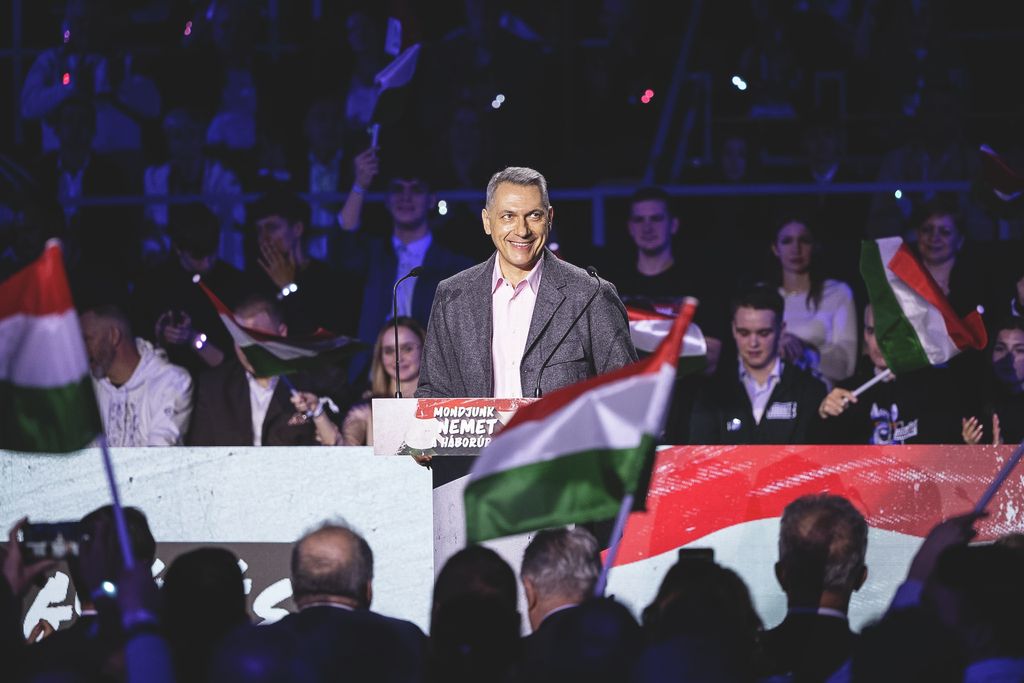
Viktor Orban in Bekesscsaba (Photo: Prime Minister's Office Communications Department)

In response to a question about balancing work and private life, PM Orban replied that he was 35 years old when he first became prime minister—greater trust than that, he recalled, a person can hardly receive from his countrymen.

“I went to German Chancellor Helmut Kohl for advice, and he told me: 'what is good in private life is good in politics, and what is good in politics is good in private life as well,” Viktor Orban recalled.

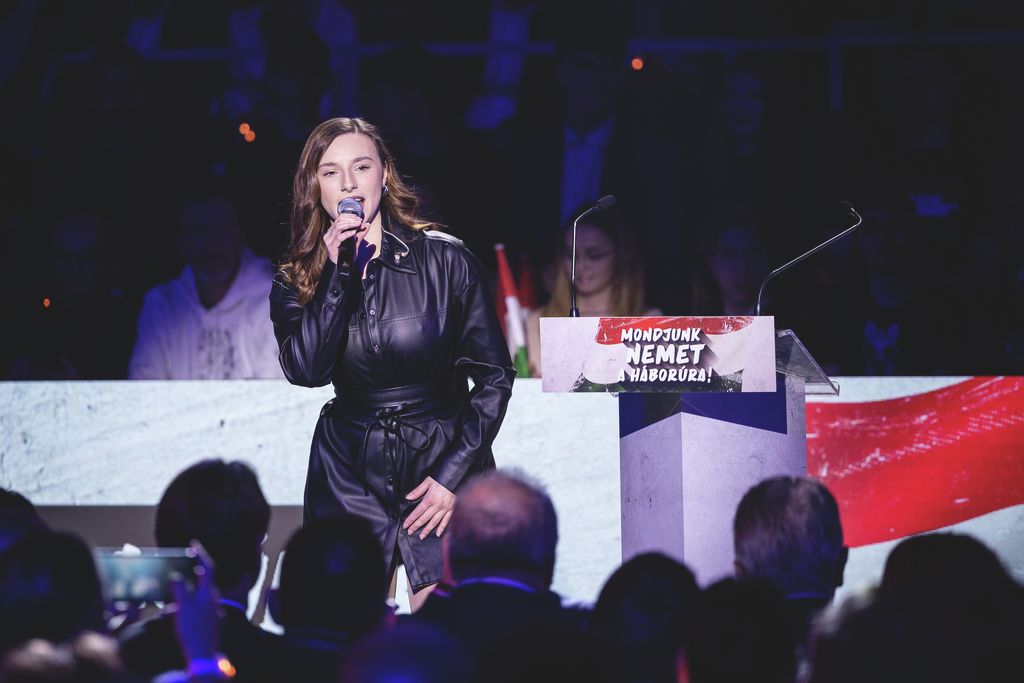
At the conclusion of the Bekescsaba gathering, master of ceremonies Philip Rakay announced that the next anti-war rally will be held next week in Esztergom.

Cover photo: Hungary's Prime Minister Viktor Orban at the anti-war rally in Bekescsaba (Photo: Balazs Ladoczki)

Komment

Összesen 0 komment

A kommentek nem szerkesztett tartalmak, tartalmuk a szerzőjük álláspontját tükrözi. Mielőtt hozzászólna, kérjük, olvassa el a kommentszabályzatot.


Jelenleg nincsenek kommentek.

Szóljon hozzá!

Jelenleg csak a hozzászólások egy kis részét látja. Hozzászóláshoz és a további kommentek megtekintéséhez lépjen be, vagy regisztráljon!

A téma legfrissebb hírei

Tovább az összes cikkhez chevron-right

Ne maradjon le a Magyar Nemzet legjobb írásairól, olvassa őket minden nap!

Google News
A legfrissebb hírekért kövess minket az Magyar Nemzet Google News oldalán is!

Címoldalról ajánljuk

Tovább az összes cikkhez chevron-right

Portfóliónk minőségi tartalmat jelent minden olvasó számára. Egyedülálló elérést, országos lefedettséget és változatos megjelenési lehetőséget biztosít. Folyamatosan keressük az új irányokat és fejlődési lehetőségeket. Ez jövőnk záloga.