Hungary FM: The Berlin–Brussels–Kyiv Axis Wants Oil Supply Crisis and Sky-High Gasoline in Hungary

Hungary’s Foreign Affairs and Trade Minister Peter Szijjarto, appeared Tuesday on the Igazsag oraja (Hour of Truth) program, where he detailed the latest developments surrounding what he described as Ukrainian blackmail over the Druzhba oil pipeline, as well as the far-reaching consequences of the war involving Iran.

2026. 03. 03. 16:58
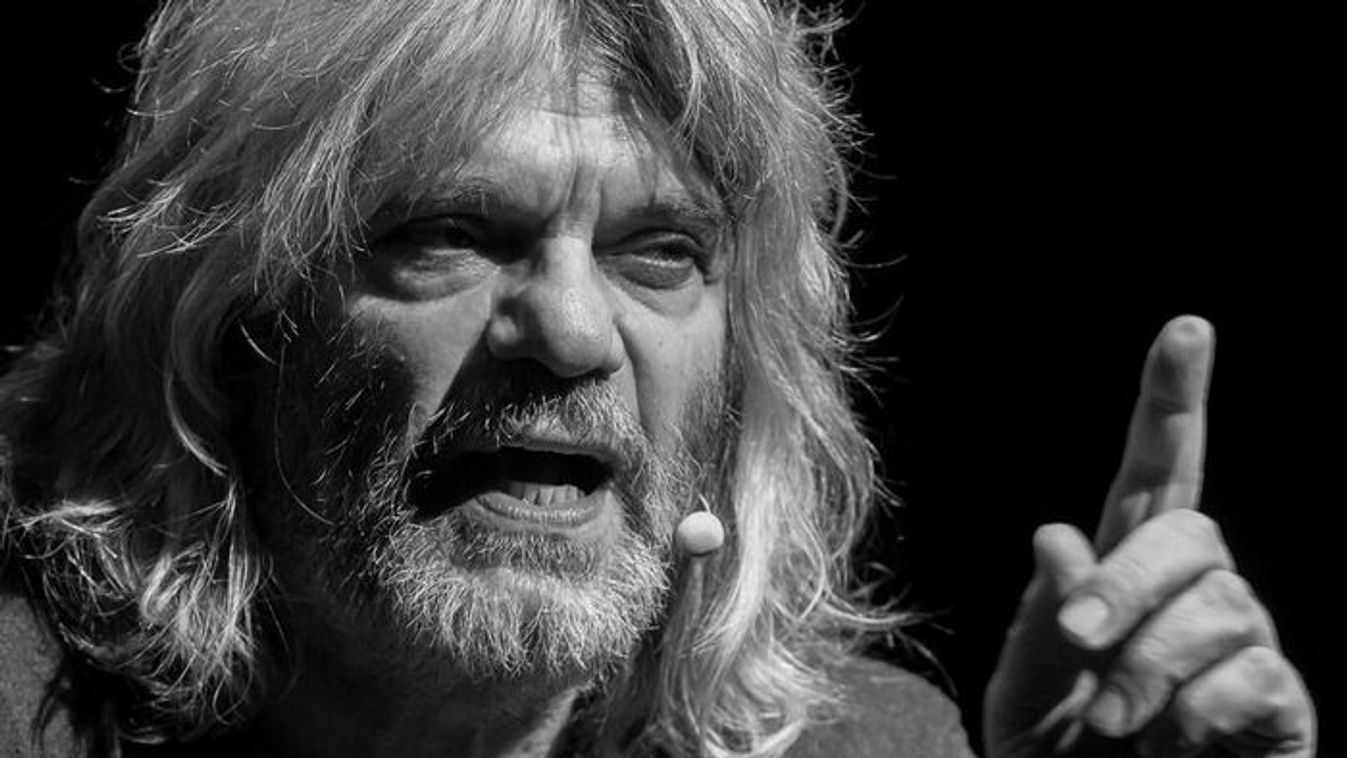
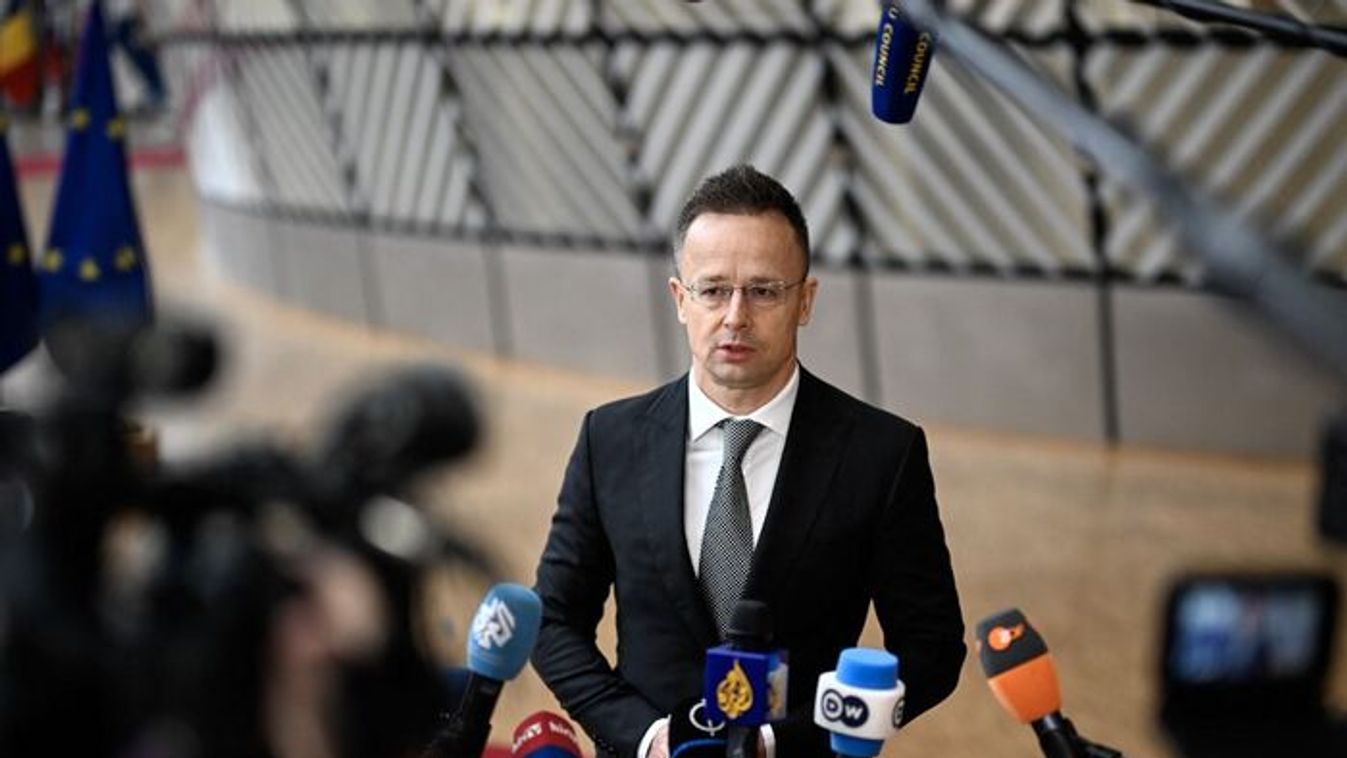
Peter Szijjarto, Hungary's Foreign Affairs and Trade Minister (Photo: AFP) Forrás: AFP
VéleményhírlevélJobban mondva - heti véleményhírlevél - ahol a hét kiemelt témáihoz fűzött személyes gondolatok összeérnek, részletek itt.

Among the key topics Foreign Minister Szijjarto discussed in the Igazsag oraja  were developments in the war situation in the Middle East. 

Szijjártó Péter külgazdasági és külügyminiszter (Fotó: AFP)
Hungary's Foreign Affairs and Trade Minister Peter Szijjarto (Photo: AFP)

There has been a sharp surge in global energy prices triggered by the conflict. Oil prices have spiked, and natural gas prices in Europe have jumped by more than 20 percent.

Regarding the Druzhba (Friendship) pipeline, Szijjarto was unequivocal: “Let’s drop the pretense. Everyone knows the pipeline is being blocked for political reasons. President Volodymyr Zelensky wants to bring a government to power in Hungary that serves Kyiv’s interests.”

Szijjarto: Airspace restrictions, closures remain in place in the Middle East

He stressed that the Middle East is “in flames,” arguing that Iran rapidly escalated the conflict by launching attacks against Arab countries that had not attacked it. According to Szijjarto, 

the entire Gulf region has been destabilized in a matter of moments. I think an important question is how long the patience of these Arab countries, which are now under attack by Iran but have not taken offensive action against Iran, will last. And how long will they continue to defend themselves?

Szijjarto pondered.

He noted that more than 5,000 Hungarian citizens have registered for consular protection amid the crisis and urged all Hungarians traveling abroad to do the same. Airspace closures remain in effect across parts of the United Arab Emirates, as well as in Qatar, Kuwait, and Bahrain, following renewed Iranian airstrikes.

When I spoke to the Foreign Minister of the United Arab Emirates on Sunday afternoon, he said that Iran had fired more missiles at them than at Israel, for example. We helped many Hungarians in the region to return home, given that there were flights from Saudi Arabia and Oman for those who were there or were able to get there, and we helped them to return home,

he said.

Hungary has assisted numerous citizens in returning home via flights departing from Saudi Arabia and Oman. A 1pm  Fly Dubai flight is slated to return passengers to Budapest.  

Departures from Israel remain possible overland toward Egypt or Jordan, he added.

A New Energy Crisis Looms

Szijjarto warned that the world could be facing yet another energy supply crisis. The Strait of Hormuz plays a critical role in global energy security, accounting for roughly one-third of global oil trade and one-fifth of liquefied natural gas shipments.

If such a major transit route accounting for roughly one-third of global oil trade and one-fifth of LNG is disrupted, it creates serious uncertainty and structural challenges in global energy supply,” he said, noting that "oil prices have already begun to climb.

In this environment, he argued, reliable overland pipeline routes become invaluable. Hungary’s long-standing, high-capacity Druzhba pipeline remains capable of fully supplying the country—yet oil is not flowing due to political decisions.

According to Szijjarto, 

the halt on the Druzhba is the result of a coordinated decision by a 'Berlin–Brussels–Kyiv axis,' aligned with Hungary’s opposition Tisza Party. They are in cahoots. This is an attack against Hungary, and President Zelensky’s accomplice in this attack is the Tisza Party,

he declared.

An agreement to this effect was signed in Munich. There are zeo technical or physical barriers to resuming deliveries on the pipeline, only political ones. He claimed the objective is to trigger an oil supply crisis and gasoline prices of 1,000 forints per liter ahead of Hungary’s elections in order to help opposition leader Peter Magyar to power.

Zelensky is attacking Hungarians

Yesterday, Ukrainian President Zelensky made an irritating and, in many ways, cynical statement. He said that Hungarians and Slovaks should be grateful that the Friendship oil pipeline has been functioning so far. He also questioned why Viktor Orbán was looking at satellite images, since satellites cannot see underground, and claimed that he could tell from here in Budapest that there were no technical problems with the pipeline underground. At the same time, the president and CEO of Mol says that there is plenty of practical evidence that they still received crude oil after the Russian attack in January, meaning that the pipeline was still functioning immediately after the attack. Peter Szijjarto put it this way:

There are several reasons why everyone can be sure that there is no technical or physical reason for the blockade. First, the Russians did not hit or even shoot at the pipeline. Instead, they shot at a tank near the pipeline, which has nothing to do with the pipeline's functionality. Secondly, satellite images clearly show that there is no fire or any other reason why transport cannot be resumed. It is no coincidence that there was enormous confusion at the Foreign Affairs Council meeting last Monday when, out of the blue, the Luxembourg Foreign Minister, thinking he was helping the matter, asked why Hungarian and Slovak experts or inspectors were not going to Ukraine to see for themselves what damage the Russian attack had caused to the pipeline. Contrary to expectations, the Ukrainian foreign minister began to mumble and stammer, trying to explain, and it became clear that this was a huge lie, that there was nothing wrong with the pipeline, and that they would not allow the inspectors in.

Ukraine’s own pipeline operator has indicated to Hungary’s MOL Group that deliveries could resume upon instruction. Zelensky refuses to grant the go-ahead for oil deliveries for political reasons.

The foreign minister emphasized: Ukrainians are not fighting for us because they did not attack us. Russia attacked Ukraine, so Ukraine is fighting for itself, but not for us, for itself. We have nothing to do with this. We did not ask them, we did not cause this war, we owe them nothing.

And besides, he is not doing anyone a favor, but rather pocketing huge sums of money from transit fees, one, two, this is his contractual obligation. Third, the European Union-Ukraine Association Agreement clearly states that Ukraine must not jeopardize the security of energy supplies to European Union member states. So let's leave aside the question of what kind of favor this is and how! They have raked in tens and hundreds of millions of euros in transit fees. The Ukrainians agreed to this in a contract, they agreed to it in the Association Agreement; this is not a matter of favors, but of credibility.

He emphasized: In yesterday's interview Zelensky said that he would do what his EU partners asked him to do, so if they asked him to, he might be able to fix it, because he thinks it is damaged.

Szijjarto accused Brussels of playing an active role rather than serving as a neutral observer. This is a coordinated delivery-blocking effort by Brussels, Berlin and the Hungarian opposition. 

This is an attack on Hungary, and Zelensky's accomplice in this attack is the Tisza Party at home, because it is obviously in their interest to create a difficult situation, a challenge, a crisis in Hungary's energy or oil supply before the elections, as this rarely favors the ruling parties,

the minister said.

Brussels wants to take Europe to war

Szijjarto cited remarks by Kaja Kallas suggesting that instead of sending experts to inspect the pipeline, Hungary and Slovakia should send troops—evidence, he argued, of a troubling mindset in European leadership circles. In the mean time Tisza's Romulusz Ruszin-Szendi is saying there is no war and nothing to be afraid of. So much for European elite not wanting to send troops and not wanting to drag Europe to war, the minister said.

He also criticized opposition leader Peter Magyar for failing to assign responsibility to Zelensky in a recent letter to Prime Minister Viktor Orban.

This is a pathetic charade on the part of the president of the Tisza Party, a pathetic charade because he is clearly Zelensky's accomplice in this matter. They cooked it up together.

Hungary’s response, the minister said, is clear: as long as the oil blockade remains in place, Budapest will block Kyiv-favorable decisions in EU forums.

Szijjarto confirmed on the program: The Ukrainians planned to disrupt energy and oil supplies in Hungary with this blockade.

Which they could have succeeded in if we had been born yesterday. Hungary was prepared for such a scenario. Strategic reserves were filled in advance, maritime deliveries were secured, and Serbia has agreed to supply diesel in March. Plans are also underway to build new oil and diesel pipeline connections between Hungary and Serbia, integrating the Slovak–Hungarian–Serbian energy market.

After the elections, Szijjarto predicted, once it becomes clear that Hungary’s current government remains in place and Ukraine faces mounting financial pressure, Kyiv will have no choice but to compromise—and restart deliveries. Szijjarto believes, Ukraine's and many European countries's problem is Hungary enjoys a comparative advantage with cheap Russian energy. By comparison they are paying more to operate their economy, and to pay for utilities.

There are those who are more adept at this, maintaining a foreign policy that allows them to be on good terms with both the United States and Russia at the same time,

the foreign minister pointed out.

The Croatians want to make money easily. That is why they have increased transit fees fivefold since the war broke out, and why they have joined forces with the Ukrainians and Brussels to push this ideology that we should buy exclusively from the Adriatic pipeline. Well, we don't buy exclusively from there because we don't want to end up in the same vulnerable position as the poor Serbs, who are supplied by a single pipeline, and if sanctions are imposed and that one pipeline is shut down, then what? So we want to maintain the secure situation of supplying the country via two pipelines. One on land and one at sea, and we are not prepared to give up one of the two pipelines for the sake of the Croatians or the Ukrainians or anyone else, he said.

Forced conscription in Ukraine

Szijjarto argued that Ukraine cannot win the war on the battlefield against a nuclear superpower and 

prolonging the conflict will only result in further casualties and destruction. And since Ukrainians are running out of people, recuitment officers have ramped up their open manhunts on the streets. They take away everyone they spot.

We see the videos. Interestingly, the European Union, Brussels, Kaja Kallas, Ursula von der Leyen, Manfred Weber, and the Tisza Party have not responded to these videos, but there is open manhunting going on in the streets. And, of course, they took away two Hungarians, one of whom is a Hungarian citizen and the other of Hungarian ethnicity, who had been exempted from service.
And now we are seeing videos about Hungarians who were taken to the front against their will and ended up in Russian captivity. 

We are trying to provide assistance. It is horrible that there is a pointless war where people including Hungarians are being dragged to the front lines against their will and without proper training and then disappear or are killed or end up as Russian prisoners.

“The solution is to end the war,” Szijjarto concluded. “If there is no war, there is no forced conscription, no violence in the streets, no people dragged into vans, and no one sent to the front or into captivity.


Komment

Összesen 0 komment

A kommentek nem szerkesztett tartalmak, tartalmuk a szerzőjük álláspontját tükrözi. Mielőtt hozzászólna, kérjük, olvassa el a kommentszabályzatot.


Jelenleg nincsenek kommentek.

Szóljon hozzá!

Jelenleg csak a hozzászólások egy kis részét látja. Hozzászóláshoz és a további kommentek megtekintéséhez lépjen be, vagy regisztráljon!

A téma legfrissebb hírei

Tovább az összes cikkhez chevron-right

Ne maradjon le a Magyar Nemzet legjobb írásairól, olvassa őket minden nap!

Google News
A legfrissebb hírekért kövess minket az Magyar Nemzet Google News oldalán is!

Címoldalról ajánljuk

Tovább az összes cikkhez chevron-right

Portfóliónk minőségi tartalmat jelent minden olvasó számára. Egyedülálló elérést, országos lefedettséget és változatos megjelenési lehetőséget biztosít. Folyamatosan keressük az új irányokat és fejlődési lehetőségeket. Ez jövőnk záloga.