Celebrating the Spirit of Christmas, Even in Loneliness

Christmas does not promise the end of sorrow, but comfort in every pain — strength in weakness, support in loneliness, and a firm foundation in the most hopeless situations, Lutheran Bishop Peter Kondor told Magyar Nemzet in a Christmas interview. We asked the bishop about how Christmas can become a true source of joy even for those who find the season difficult. He emphasized that the true meaning of Christmas is often understood most deeply by those who experience some form of longing or emptiness.

2025. 12. 26. 15:27
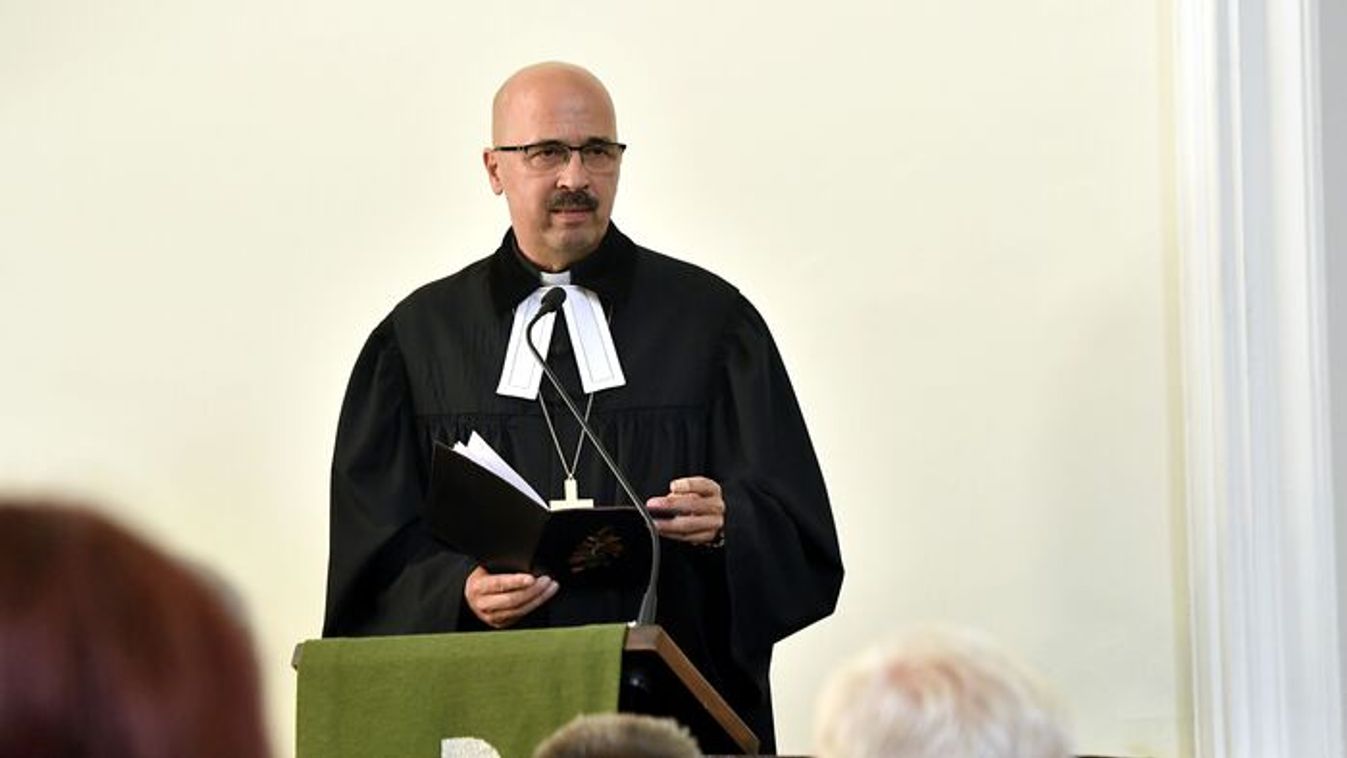
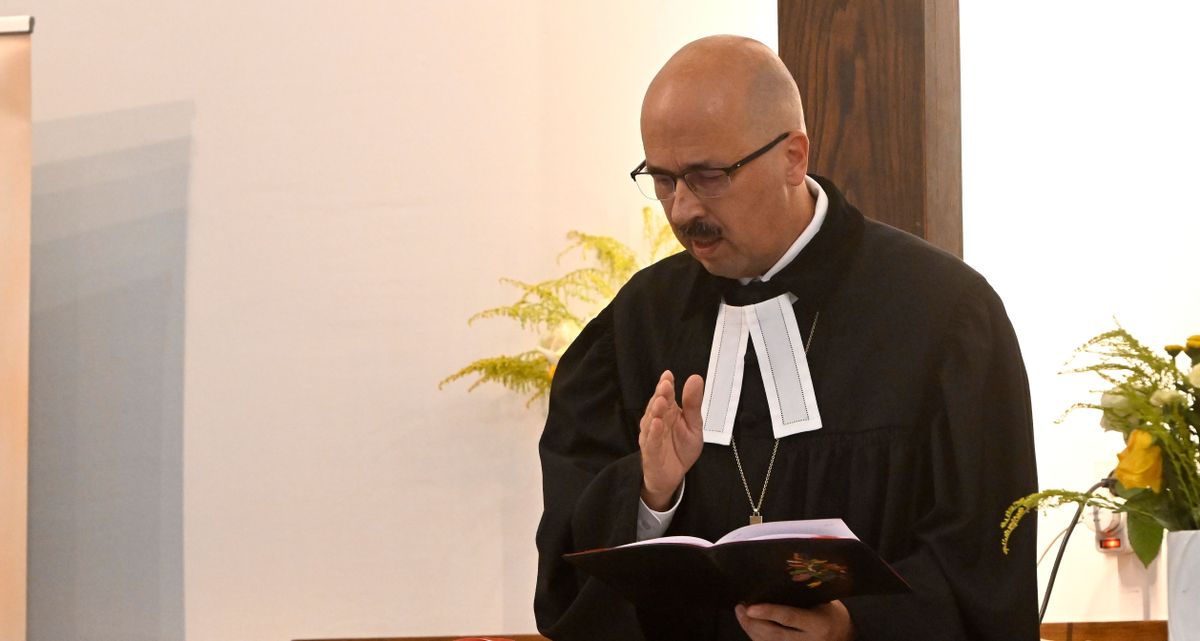
Lutheran Bishop Peter Kondor delivering his sermon at the ecumenical service at the Lutheran Church in Buda Castle Distict held on the eve of the national holiday celebrating the founding of Hungary (Photo: MTI/Lajos Soos)
VéleményhírlevélJobban mondva - heti véleményhírlevél - ahol a hét kiemelt témáihoz fűzött személyes gondolatok összeérnek, részletek itt.

Is there a particular biblical passage or thought that speaks to you especially strongly each Christmas?

— Every year I am struck by the fact that those who first recognized Jesus as the Son of God did so under anything but privileged circumstances. Not in a palace, not amid splendor, but in poverty and simplicity, almost unnoticed. A few shepherds from the fields, wise men from distant lands, and a quiet man and a humble woman—these were the ones who recognized what truly mattered. Very few, from a human point of view almost no one. And yet within this small group lay everything that would later become the fullness of the Church. People who otherwise would never have met stood together, looking in the same direction, focused on the same Child, doing the same thing: glorifying God.

Why do you consider it important that such different people appear in the Christmas story?

— Because their unity does not come from similarity, but from difference. They came from different paths, carried different experiences, thought in different ways—yet they bowed together before Christ. Worship of God unites what human strength alone could never reconcile. This reveals something essential, because our world is deeply fractured, full of conflicts, misunderstandings, and wounds. Yet there is a point where these walls can fall. A center where people no longer stand against one another, but beside one another. That center is Jesus Christ. When we are called together to worship Him, we are invited to lay down what divides us—grievances, prejudices, old hostilities—and to rediscover that in Christ we are brothers and sisters, not because we are the same, but because He unites us.

What message does the Christmas story offer to ordinary people, and how can its meaning be lived out in everyday life?

— We are all ordinary people, and more than that, we are all sinners. Yet God sent His only Son so that whoever believes in Him should not perish but have eternal life. That is the heart of Christmas. And we should not imagine it was easier two thousand years ago to recognize and accept this truth. Nothing in the setting pointed to glory: a poor shelter, simple gifts, ordinary surroundings. Nothing suggested divinity. And yet faith was born—faith that saw beyond what the eyes could perceive.

karácsony, Kondor Péter, magány
(Photo: Noemi Bruzak/MTI)

That faith was not based on proof, but on trust. On the conviction that in this fragile human life, God’s love had drawn near. It was not an abstract idea, but a life-shaping decision. Even today, the essential question is not whether we can explain everything about Jesus, but whether we dare to entrust ourselves to Him—whether we are willing to accept Him as our Savior and allow Him to shape our lives.

Those who do so come to understand through experience that God’s love is not an abstract concept but a living force. 

Forgiveness becomes a source of freedom. Life becomes more than what we can grasp with our limited understanding, because in Christ a new horizon opens. This is why Jesus is not merely a historical figure, but the living Savior—God drawing near to humanity, calling each person to come, see, and believe.

What would you say to someone who wants to draw closer to this message but feels unable to celebrate?

— No one is excluded from this community. One’s life story, social standing, past mistakes, or present uncertainty do not disqualify anyone. The path to the manger is open to all—both to those who feel close to God and to those still searching from a distance. Whoever longs for forgiveness, life, and hope has a place near Jesus.

Christmas is not defined by glittering decorations, the decorated tree or even the figures in the story who have grown to mythological proportions. It is not defined by warm family gatherings. Nor by sentimental images or traditions. 

These can even become obstacles. What matters is believing the good news proclaimed by the angel: “Today a Savior has been born to you.” The shepherds and the wise men did not demand proof or analyze the situation; they believed, and therefore they saw. What they saw then can still be seen today—through the eyes of faith: that in Jesus, God has given Himself to the world in eternal love, purity, and holiness. Only then does Christmas become a true source of joy in the human heart.

Many people struggle during the holidays because they feel alone. What would you say to those who face Christmas in loneliness?

— Christmas joy is not reserved for a select few. It does not require festive décor, gifts, or family gatherings. The Gospel speaks of Christmas as a light shining in the darkness—not because the darkness disappears instantly, but because light appears within it. Anyone who has known despair understands this truth. In broad daylight, a candle may go unnoticed, but in complete darkness, even a single flame can save a life.

How can this light be experienced when one remains alone at Christmas?

— This is the essence of Christmas: hope appearing where there was only despair. It does not promise the end of sorrow, but comfort within it—strength in weakness, support in loneliness, and stability in the most hopeless situations. Those who experience inner emptiness often understand Christmas most deeply. It belongs especially to those who have learned that fleeting joys cannot satisfy the heart. To those who long for light in the darkness of their lives. That is why Christmas is truly for everyone who longs for a joy greater than anything the world can offer.

What is the most common misunderstanding about Christmas that you encounter as a pastor?

— Many people stop at the decorations, the lights, and the atmosphere, without reaching the heart of the celebration. It is easy to become absorbed in traditions or nostalgia while missing the true encounter. Christmas becomes real only when we move beyond appearances and turn directly toward Christ. This journey requires something of us—it calls for an offering.

Not an achievement or fine words, but our hearts—fully and honestly. Our joys and wounds, unspoken fears, hidden thoughts, burdens, and sins. This is what He does not reject. When we come to Him this way, we truly meet Him, and the angels’ message of joy and salvation becomes real. We then understand that Christmas is not about our love for God, but about God’s love for us, revealed in Christ.

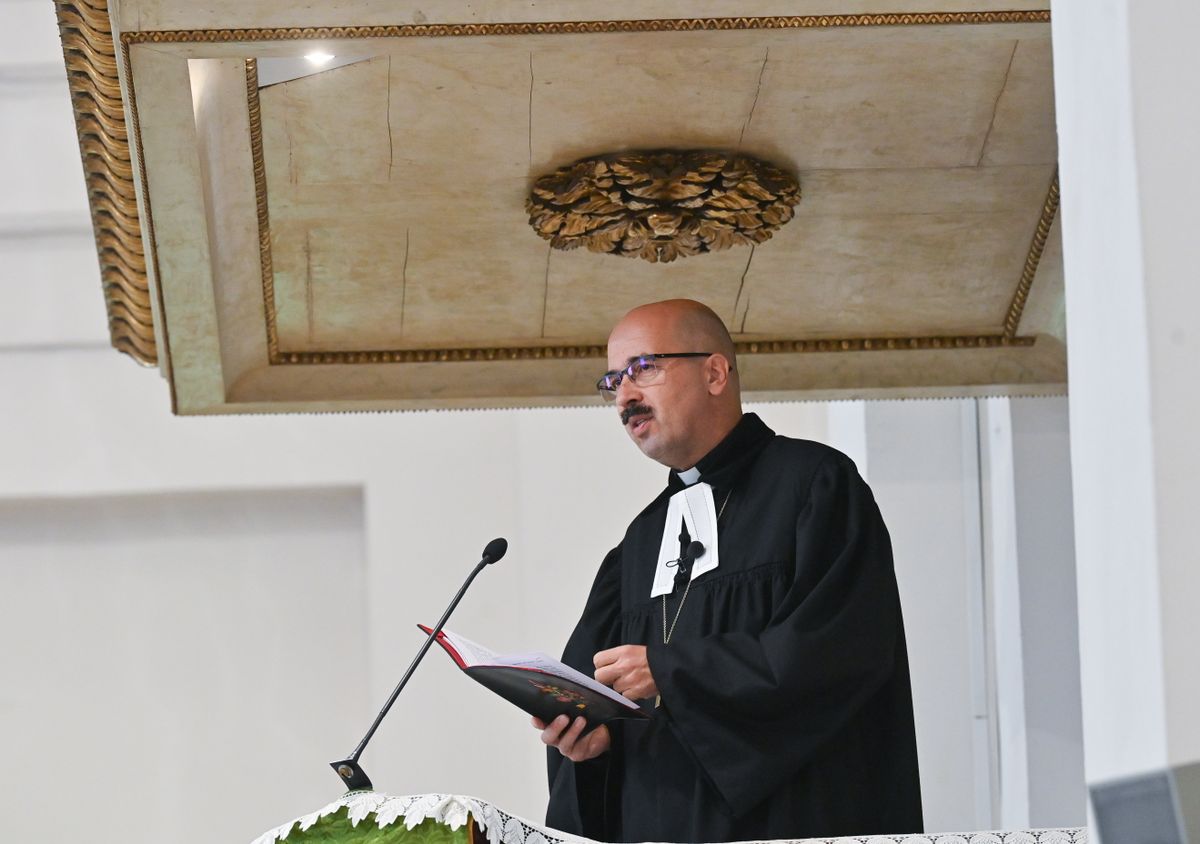
Budapest, 2024. augusztus 19.
Kondor Péter evangélikus püspök megáldja a kenyeret az államalapítás ünnepének előestéjén tartott ökumenikus istentiszteleten a budavári evangélikus templomban 2024. augusztus 19-én.
MTI/Lakatos Peter
(Photo: Peter Lakatos/MTI Photo Editorial Office)

What is typically overemphasized by believers at Christmas, and what is pushed into the background, making the joy of Christmas incomplete?

— We tend to focus on decorations, lights, and the festive atmosphere, but we don't get to where the holiday is truly born. It is easy to get caught up in customs, memories, or even feelings of loss, while the real encounter is missing. Yet Christmas comes alive when we go beyond all that is superficial and set out directly toward Jesus. However, this path cannot be traveled empty-handed. 

A genuine encounter always involves sacrifice: we must bring something, we must place something before Him. 

But it is not performance, nor fine words, nor appearances. It is the heart. The whole heart. With its joys and wounds. With its unspoken fears, hidden thoughts, burdens, and sins. This is what He does not reject. When we set out toward Him in this way, we are most certain to encounter Him, and then the words of the angels about joy and the Savior, the Preserver, will become understandable. Then it will become clear that Christmas is not a celebration of our human love, but of God's love for us, revealed in Christ.

As a pastor and bishop, how do you personally experience Christmas? What are the challenges of the season for you?

— Alongside my pastoral duties, I try to spend as much time as possible with my wife and children. During the year this is difficult, but the days between the holidays offer a rare opportunity. We also make time to gather with extended family and longtime friends, 

who, on these celebratory occasions graciously adapt to my responsibilities and schedule.

At the same time, I seek moments of spiritual renewal for myself, because I can only truly experience the miracle of Christmas if I am willing to place my life once again into God’s hands, grounding myself in Christ. Only then can I overcome challenges that once seemed insurmountable and carry burdens that once felt too heavy.

My hope is that many will experience the Christmas miracle—that God has drawn near to humanity. Not as an abstract idea or polished teaching, but as a living, tangible love that transforms lives. A light that shows the way and a blessing meant to be shared with others.

Cover photo: Lutheran Bishop Peter Kondor delivering his sermon at the ecumenical service at the Lutheran Church in Buda Castle Distict held on the eve of the national holiday celebrating the founding of Hungary (Photo: MTI/Lajos Soos)

Komment

Összesen 0 komment

A kommentek nem szerkesztett tartalmak, tartalmuk a szerzőjük álláspontját tükrözi. Mielőtt hozzászólna, kérjük, olvassa el a kommentszabályzatot.


Jelenleg nincsenek kommentek.

Szóljon hozzá!

Jelenleg csak a hozzászólások egy kis részét látja. Hozzászóláshoz és a további kommentek megtekintéséhez lépjen be, vagy regisztráljon!

A téma legfrissebb hírei

Tovább az összes cikkhez chevron-right

Ne maradjon le a Magyar Nemzet legjobb írásairól, olvassa őket minden nap!

Google News
A legfrissebb hírekért kövess minket az Magyar Nemzet Google News oldalán is!

Címoldalról ajánljuk

Tovább az összes cikkhez chevron-right

Portfóliónk minőségi tartalmat jelent minden olvasó számára. Egyedülálló elérést, országos lefedettséget és változatos megjelenési lehetőséget biztosít. Folyamatosan keressük az új irányokat és fejlődési lehetőségeket. Ez jövőnk záloga.