Hungary FM: The EU Is Not Ready for Peace

Peter Szijjarto, Hungary’s Minister of Foreign Affairs and Trade, said the leadership of the European Union has accepted Ukraine’s financial demands without criticism—demands that would be financed from the money of European citizens, including Hungarians. Speaking in Brussels, Szijjarto said that today marked the first open admission that Brussels and a significant number of member states want to go to war.

2026. 01. 30. 13:52
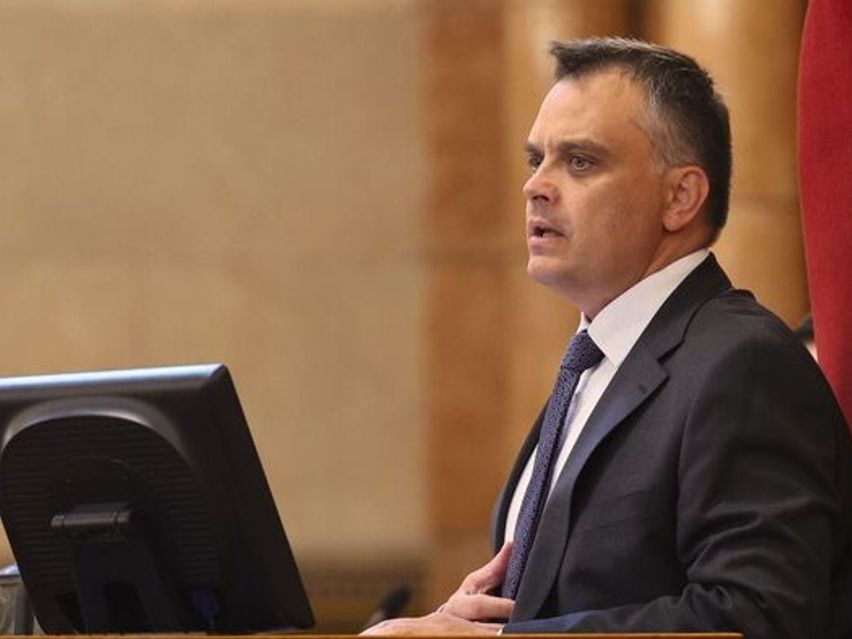
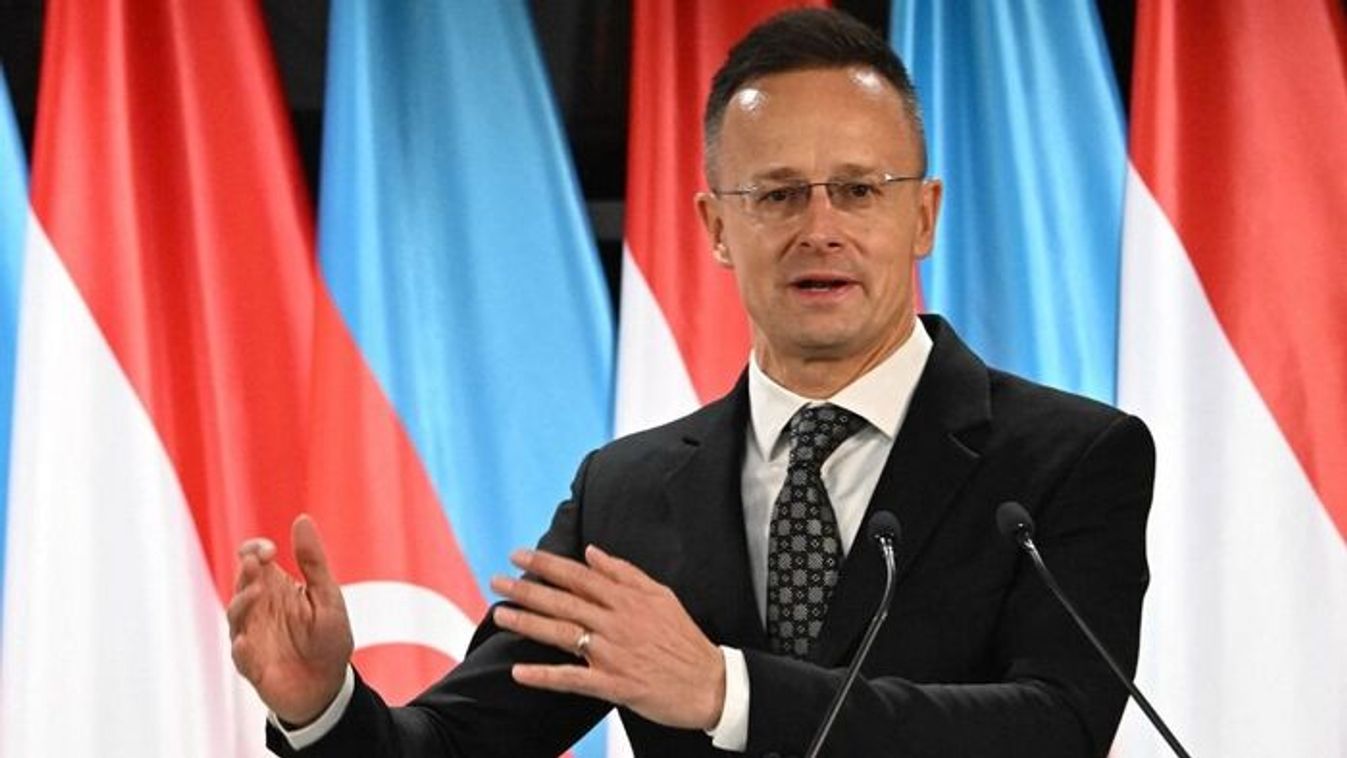
Hungary's Foreign Affairs and Trade Minister Peter Szijjarto (Photo: AFP)
VéleményhírlevélJobban mondva - heti véleményhírlevél - ahol a hét kiemelt témáihoz fűzött személyes gondolatok összeérnek, részletek itt.

According to the foreign minister, today’s meeting of the EU Foreign Affairs Council provided yet another piece of evidence that “war fanaticism has completely taken over Brussels, and common sense can no longer be found, even in traces.” He said “very harsh things” were said at the meeting.

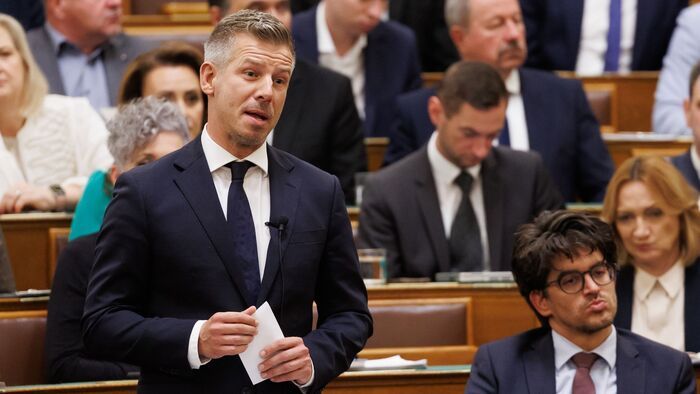
Szijjártó Péter (Fotó: Bencsik Ádám)

FM Szijjarto stated that the five most serious developments of the day were as follows. First, he said, there was an open admission—coming directly from several participants—that the EU wants war.

A number of participants said the EU is not ready for peace.

“This is the first time this has been said so clearly: the European Union is not ready for peace,” Szijjarto emphasized. “This makes the situation even clearer than before.”

Brussels Criticizes the United States

Szijjarto said that while the President of the United States is making enormous efforts to achieve peace, the greatest obstacle to those peace efforts is Brussels itself—the European Union.

The decision has therefore been made in Brussels: the European Union has chosen war over peace,

the minister declared.

He added that 

the second major issue was that several participants openly described the United States as a “challenge” to the European Union.

“What is more,” he said, “it happened openly and shamelessly today that, just like other geopolitical actors, the United States was accused of seeking to divide us. I believe the European Union is indulging in a naïve illusion when it thinks it still plays such a role in global politics that the United States would need to relate to it in any way—let alone attempt to divide it.”

He also said, 

It was stated that some believe the United States is offering too much to Russia during peace talks, and that this is another reason why the EU should not have a seat at the negotiating table. They openly admitted that the European Union is not ready for peace, and openly refer to the United States as a challenge from the EU’s perspective, 

Szijjarto said.

Brussels Would Send Enormous Sums to Ukraine

The third major issue, Szijjato said, was money.

“It is not enough that they are already treating the €1.5 trillion Ukrainian ‘welfare plan’ as a given,” he said. “In Brussels, it is taken as natural that €800 billion should be given to Ukraine to run the state and €700 billion for its military—€1.5 trillion in total. This is treated here as an established fact.”

He added that on top of this, 

the Brussels–Kyiv tandem came forward with additional financial demands beyond the €1.5 trillion in the Ukrainian 'welfare plan'.

According to the minister, proposals are being prepared to use the resources of the European Investment Bank to arm Ukraine, reallocating funds intended for European economic development to weapons purchases.

The European Investment Bank should finance railway construction, road construction, infrastructure development, and economic growth in Europe,” Szijjarto stressed. “Instead of improving the lives of Europeans and strengthening European economies, they want to redirect these funds to buy weapons for Ukraine.

He added that further demands were made to increase contributions to the fund supporting Ukraine’s energy system, with hundreds of millions and billions of euros being discussed. "So, above and beyond the €1.5 trillion compensation for Ukraine, they want to hand over the European Investment Bank funds to arm the country, and we are to increase contributions to the Ukraine energy support fund."

Europe Is Provoking World War

Hungary's foreign minister said the fourth serious development was the push to relocate EU military training missions to Ukraine. This is clearly in line with the earlier British-French commitment that they are also prepared to send troops to Ukraine.

Relocating EU military training missions to Ukraine, would cross a red line and could easily lead to direct military confrontation between EU countries and Russia. Since most EU countries are also NATO members, such a move could quickly result in a direct conflict between a NATO country and Russia—which we know would mean a NATO–Russia conflict, and that would mean World War III,

he warned. Hungary, he said, rejects this proposal and will not support relocating EU military training missions to Ukraine.

Brussels Wants a Long-Term War

The fifth issue, Szijjarto said, was a video address by Ukraine’s foreign minister, who congratulated the EU for banning Russian oil and gas purchases, despite the fact that this poses serious energy security risks for certain member states. He also demanded that the next EU sanctions package—planned by February 24—target Russian energy companies, which would effectively make it impossible for Hungary to purchase affordable oil and gas.

The European Union wants to send soldiers, even more money, and more weapons to Ukraine. It is clear they want a long-term war, financed with European taxpayers’ money.

 Szijjarto said. 

“They want to wage away the future in war” he added, “and push European young people—including Hungarians—into permanent debt servitude.”

Hungary, he said, will not allow this. “As long as there is a national government in Hungary, we will say no to this madness and to these reckless proposals.”

Hungary will not agree to transferring the European Union's military training mission to Ukraine. We will not agree to the immediately banning of cheap Russian oil and natural gas transports with a package of sanctions in February. We do not agree to sending more money to Ukraine, and you can be sure that as long as we are here, not a single cent of Hungarian taxpayers' money will be sent to Ukraine,

the minister stressed.

Interference in Hungarian Elections

FM Szijjarto also said it is no coincidence that what he described as a “very serious interference” in Hungary’s elections has begun in recent days. He claimed Ukraine has decided to openly intervene in Hungary’s election campaign on the side of the Tisza Party, which he said would support everything that the Fidesz government opposes.

Tisza would support financial and military aid to Ukraine and drag Hungary into the war if it came to power. We say no to this. I informed fellow foreign ministers that statements by Ukraine’s foreign minister comparing Hungary’s prime minister and government to Hitler and Ferenc Szalasi crossed every line and must have consequences. Hungary is ready to defend itself, to protect its sovereignty, and to safeguard the integrity of its elections. Only the Hungarian people can decide Hungary’s future,

the minister underlined.

Responding to a journalist's question, the minister said: Regarding Zelensky's speech in Davos, I can say the following. The Ukrainians cannot make such offensive remarks about the European Union that anyone here would be outraged by them. 

Despite the fact that Ukraine's existence is practically financed by the European Union from the money of European citizens. Not once did the Ukrainian president express his gratitude or show respect.

The fact that the Ukrainian president dares to speak about the European Union in this way, even after receiving hundreds of billions of euros in aid, clearly shows how much the European Union has weakened in recent times. 

He warned that politicizing and ideologizing energy—especially nuclear energy—is extremely dangerous and irresponsible.

And this is especially true for nuclear energy. Nuclear safety is not a game. Playing with nuclear technologies is extremely irresponsible. A nuclear tragedy could endanger large areas and the people living there for decades.

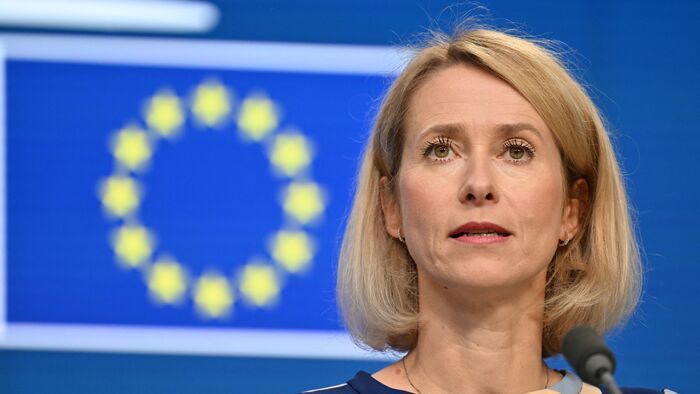
Responding to another question, he explained: As far as Kaja Kallas's statement is concerned, it is clear what they want in relation to the switch to a qualified majority in EU decision-making. 

They want the big members to decide everything, while the small ones will have the right to agree. The small ones will be silenced, and the big ones will sort things out. That is what they want to achieve. The thing is, at the moment, they could only do this by seriously violating European rules. I'm not saying that this will stop them, but at least we have something. In essence, a legal argument on our side,

the minister remarked.

“We, and a number of other member states will not agree to having major decisions made over our heads,” he said.

 In response to a press question Peter Szijjarto said:

Pressure is growing on EU member states to arm Ukraine instead of strengthening their own defenses, which is nonsense. Ukraine is not defending Europe, that's a blatant lie. It is a lie that European security begins in Ukraine. It is a lie that investing in the Ukrainian military industry will help Europe's security. These are all blatant lies. It is clear that they will stop at nothing, including legal tricks, to get Ukraine to join the EU. They are trying to push the Ukrainians into the European Union by 2027, by any means necessary. This would also import the war into the Union if peace has not been achieved by then.

As long as Hungary’s current government remains in office, he said, Ukraine will not make progress in its accession process.

“One of my colleagues—otherwise a very agreeable one—said today that he finds it unacceptable for anyone to boycott accession processes on national grounds, and that the situation of the Hungarian minority in Transcarpathia should not play a role in assessing Ukraine’s accession. That, too, was said today—just to illustrate how much we can count on European solidarity,

the minister explained.

Turning to the war, Szijjarto said: “We were informed today by Ukraine’s foreign minister that Russian forces are attacking along the entire length of the Ukrainian front, and that Ukraine’s energy situation is very poor. Meanwhile, President Zelensky is attacking the Hungarian prime minister, and the Ukrainian foreign minister is comparing us to Nazis—yet during all this, Hungarian electricity exports to Ukraine have increased by 50 percent.”

“Today, Hungary is Ukraine’s number one source of electricity,” 

he said. “Forty-one percent of Ukraine’s total electricity imports come from Hungary. Forty-five and a half percent of Ukraine’s natural gas imports come from Hungary. Hungary is Ukraine’s leading supplier of natural gas.”

“It is obvious that Ukraine must prepare for the fact that we will use every available means to defend our own sovereignty,” Szijjarto said. “We will use every available means to protect ourselves from Ukrainian interference.”

On peace talks Hungary fully supports negotiations. And of course colleagues here complain that the European Union cannot sit at the table—but why should it? After what was said today—that the Americans are a challenge, that they are offering too much to the Russians, that negotiations with Russia should not take place—what business would the European Union have at the negotiating table? Damaging relations with the United States to this extent is extremely reckless on the EU’s part, for many reasons, including those highlighted by the prime minister,

he stated.
Finally, Szijjarto also addressed the issue of Anita Orban, saying he knows her well and has met her several times.

I remember that she spent a great deal of time lobbying me, claiming she had excellent connections with the American Democrats—who are, of course, Donald Trump’s opponents. How tactically wise it is, during a strong and characteristic Trump presidency, to rely on someone who boasts of close ties to the Democrats—I don’t know whether that serves the national interest,” he said ironically.

“I also remember that she lobbied on behalf of major Western energy companies, urging us not to buy cheap oil and gas from Russia, but to switch to other sources—which, incidentally, are more expensive,

–  he added.

Komment

Összesen 0 komment

A kommentek nem szerkesztett tartalmak, tartalmuk a szerzőjük álláspontját tükrözi. Mielőtt hozzászólna, kérjük, olvassa el a kommentszabályzatot.


Jelenleg nincsenek kommentek.

Szóljon hozzá!

Jelenleg csak a hozzászólások egy kis részét látja. Hozzászóláshoz és a további kommentek megtekintéséhez lépjen be, vagy regisztráljon!

A téma legfrissebb hírei

Tovább az összes cikkhez chevron-right

Ne maradjon le a Magyar Nemzet legjobb írásairól, olvassa őket minden nap!

Google News
A legfrissebb hírekért kövess minket az Magyar Nemzet Google News oldalán is!

Címoldalról ajánljuk

Tovább az összes cikkhez chevron-right

Portfóliónk minőségi tartalmat jelent minden olvasó számára. Egyedülálló elérést, országos lefedettséget és változatos megjelenési lehetőséget biztosít. Folyamatosan keressük az új irányokat és fejlődési lehetőségeket. Ez jövőnk záloga.