PM Orban’s Plan Works: Hungarians’ Zest for Life Returns

Willingnedd to have children has improved in Hungary: two years ago, the country jumped from last place to third in Europe, all without migration, Tunde Furesz, president of the Kopp Maria Institute for Demography and Families (KINCS), told our newspaper. She emphasized that the vast majority of Hungarians and Hungarian families support the government’s family-friendly measures, and in recent months, the number of weddings has begun rising again. According to KINCS research, twice as many Hungarians had a good year in 2025 than a bad one, and most expect positive changes next year.

2026. 01. 02. 16:43
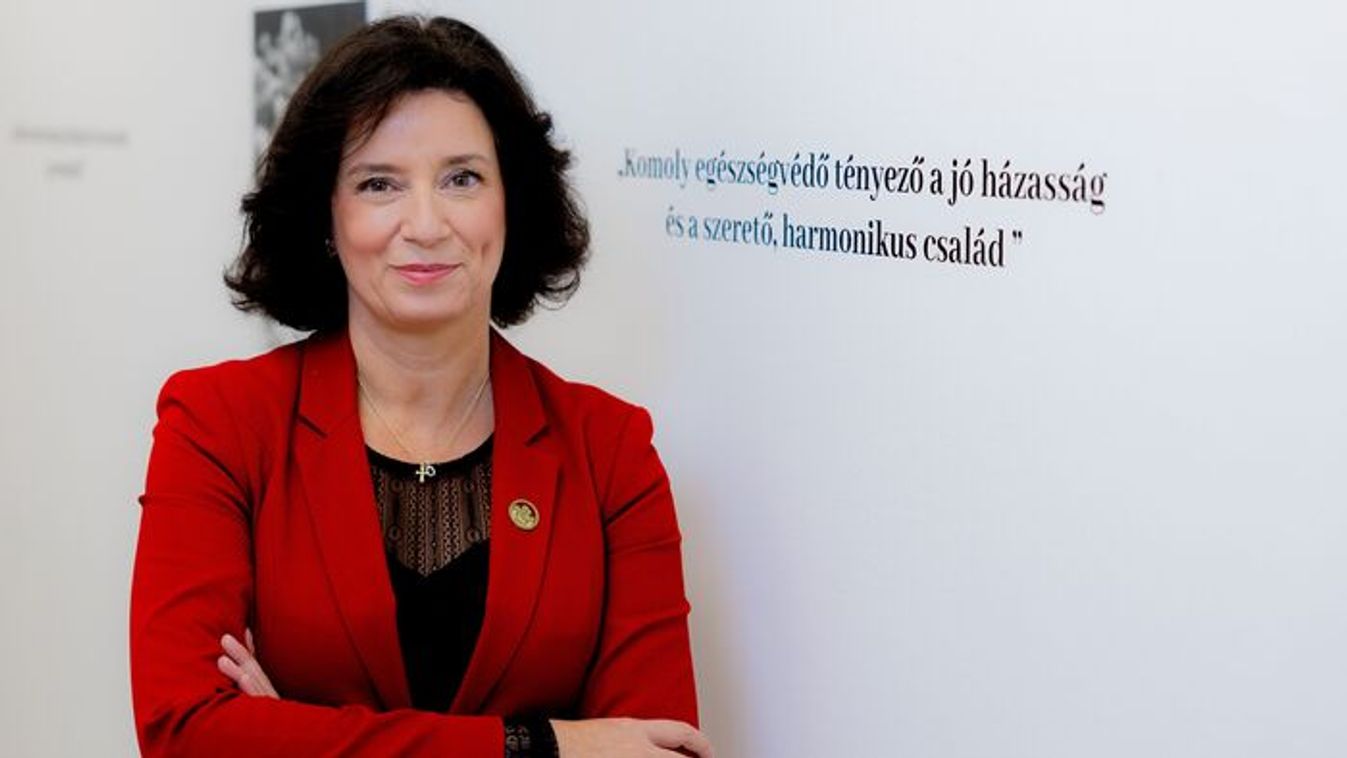
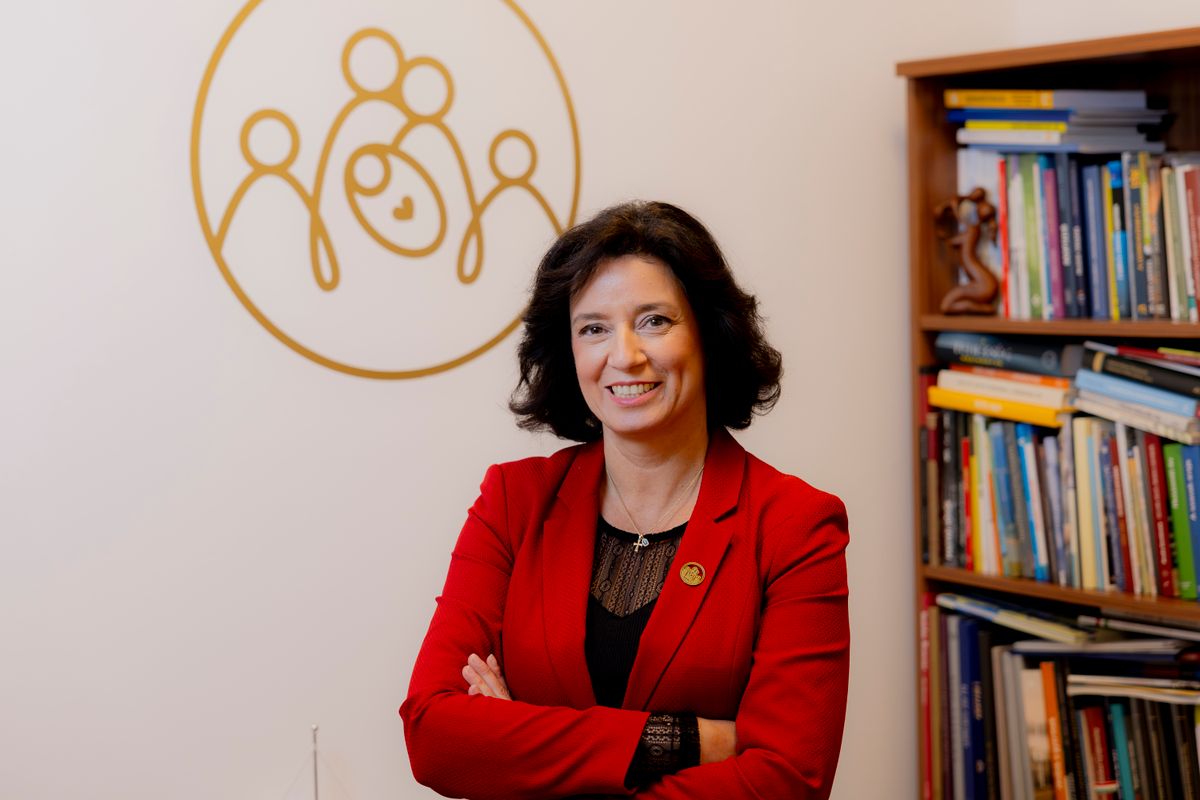
KINCS President Tunde Furesz (Photo: Sandor Csudai)
VéleményhírlevélJobban mondva - heti véleményhírlevél - ahol a hét kiemelt témáihoz fűzött személyes gondolatok összeérnek, részletek itt.

– How will Hungarian families be affected in their daily lives by the government’s measures coming into force on January 1, including tax exemptions for mothers under 40 with two children, full income tax exemptions for mothers under 30 with one child, and the second phase of doubling the family tax allowance?

– These are significant new steps in the family tax-reduction program. When a mother no longer has to pay the 15 percent personal income tax, her net salary rises by 22.5 percent. For example, a mother earning a gross 600,000 forints will take home 490,000 forints instead of 400,000, giving the family a real boost in income. In addition, doubling the family tax allowance means that a family with three children keeps an extra 198,000 forints, a two-child family 80,000 forints, and a single-child family 20,000 forints per month. The income tax exemption starting January 1 will affect roughly 500,000 Hungarian mothers, helping ensure they are not financially penalized for raising children.

The goal of supporting Hungarian families is to make childbearing and parenting advantageous (Photo: Sandor Csudai)

– Where do these concessions fit within the scope of Hungary’s pro-family measures?

– The family tax system in place since 2011 rests on three pillars: the flat-rate personal income tax, family tax allowances that can also be applied to social security contributions, and personal income tax exemptions. Together, these measures strengthen the financial position of Hungarian families who earn their living through work, 

reflecting one of the core goals of Hungary’s family support system: to ensure that having and raising children is not a financial burden, but a financial advantage.

The family tax system in place since 2011 is built on three pillars: the flat-rate personal income tax, family tax allowances that can also be applied to social security contributions, and personal income tax exemptions. Together, these measures reinforce the financial position of Hungarian families who earn their living through work.

It’s also important that the system focuses primarily on mothers, who typically step out of the workforce for extended periods after childbirth. The goal is that they feel supported, not penalized, when trying to balance between work and parenting.

– Beyond direct financial support, how do other government measures, like utility cost reductions, affect families? What would happen if those disappeared?

– Just the other day, I spoke with my mother about how 16 years ago, almost half of her pension went to utilities. At the time, Eurostat data showed Hungarians paid more for electricity and gas than anyone else in the EU relative to income. 

Today, for 12 years running, we pay the least, which is a huge improvement.

The government supports families not only in creating homes—through programs like CSOK, CSOK Plus and Rural CSOK, and starting this September, the Home Start program—but also in maintaining them via utility reductions. Today, household upkeep no longer represents a huge financial burden, making life easier for everyone from pensioners to families with children.

– How do Hungarians view the government’s direct and indirect family policies?

– KINCS regularly asks Hungarians about both past and more recent family support measures. Over the past seven to eight years, since we began this research, we have consistently observed that family policy measures enjoy broad social support in Hungary—even among those who do not personally benefit from them. Today, we see that three-quarters of Hungarians agree with the principle of family-based taxation—that parents raising children should pay less. This indicates that we are a family-oriented, child-loving nation, and that everyone who is eligible benefits from these supports.

The vast majority supports the government’s family-friendly measures, with countless large families taking advantage of the government's numerous options offered.

What non-financial tools can encourage young people to start families and have children?

– When we ask young Hungarians what they need to start a family, three factors consistently emerge. The first, and most important, is a stable partnership,

hence the recent rise in weddings is encouraging. 

The second is secure employment and income, and the third is owning a home. Average wages and the minimum wage rise year by year, as do family support amounts—many tied to the minimum wage, like childcare benefits. Additionally, since 2022, people under 25 enjoy personal income tax exemptions, improving youth income security.

– How is homeownership progressing?

– When it comes to owning a home, there are numerous opportunities that have provided substantial support to anyone who wanted to take advantage of them. The home creation program was launched in 2015, and even after the introduction of CSOK, it has continued to expand, offering new solutions—most recently the quickly popular Home Start program. This truly is a unique opportunity for first-time homebuyers: nowhere else in the world can someone purchase a home with such favorable terms—a fixed 3% mortgage—as in Hungary.

20251216 Budapest
Fűrész Tünde, a Kopp Mária Intézet a Népesedésért és a Családokért (KINCS) elnöke
Fotó: Csudai Sándor (CSS)
MW
In Hungary, people's enthusiasm to have children has improved over the past 15 years (Photo: Csudai Sandor)

– Mi lehet a kulcs a hazai demográfiai mutatók javításához? What is the key to improving Hungary’s demographic indicators?

– Hungary's pro-family measures are certainly necessary for improving demographic trends, but predictable and stable prospects—and a sense of security—are equally important. Raising children is a long-term commitment, so parents naturally think in longer horizons. Alongside financial security, it also matters whether we are surrounded by peace and calm. Predictability encourages young people to start families and have children. Looking at the past 15 years, we can say that

in European comparison, Hungary is among the few countries where enthusiasm for having children has actually increased: while we used to rank last in the EU by this measure, by 2023 we had risen to third place—all without relying on migration.

– What's the palpable trend in terms of Hungary’s birth rates?

– Looking at births per thousand women also shows improvement. This is important to highlight, because in the past 15 years the number of women of childbearing age in Hungary has dropped significantly—by more than 300,000. Despite this, enthusiasm for having children has increased, even if it hasn’t yet translated into higher birth numbers. Equally important is the family-friendly attitude and environment, which is increasingly visible across many areas of life. Family-friendly workplaces, companies, and certification programs have emerged. More and more people are embracing family-friendly values, helping make Hungary a genuinely good place to raise children and live in a family.

– What type of family-support measures are expected in the future?

– We eagerly await the continuation of the family tax-reduction program. It’s also worth mentioning continued support for retirees: the Nők40 program, sometimes called “grandmother pensions,” continues. Pensioners receive a 13th monthly pension and, starting in February, a 14th month’s worth of one week’s pension. The government strengthens intergenerational ties through support for both families and retirees, reflecting the broader, multi-generational concept of family. A recent research we conducted survey shows that 

despite the several critics, twice as many Hungarians had a good year in 2025 as had a bad one, and most expect positive changes in 2026. Only ten percent of respondents were pessimistic.

In spite of the global challenges — such as the war and the economic woes — Hungarians remain optimistic about their own lives, which in itself is a major achievement.

Cover photo: According to KINCS president, it’s no coincidence that more people are getting married again (Photo: Sandor Csudai)

Komment

Összesen 0 komment

A kommentek nem szerkesztett tartalmak, tartalmuk a szerzőjük álláspontját tükrözi. Mielőtt hozzászólna, kérjük, olvassa el a kommentszabályzatot.


Jelenleg nincsenek kommentek.

Szóljon hozzá!

Jelenleg csak a hozzászólások egy kis részét látja. Hozzászóláshoz és a további kommentek megtekintéséhez lépjen be, vagy regisztráljon!

A téma legfrissebb hírei

Tovább az összes cikkhez chevron-right

Ne maradjon le a Magyar Nemzet legjobb írásairól, olvassa őket minden nap!

Google News
A legfrissebb hírekért kövess minket az Magyar Nemzet Google News oldalán is!

Címoldalról ajánljuk

Tovább az összes cikkhez chevron-right

Portfóliónk minőségi tartalmat jelent minden olvasó számára. Egyedülálló elérést, országos lefedettséget és változatos megjelenési lehetőséget biztosít. Folyamatosan keressük az új irányokat és fejlődési lehetőségeket. Ez jövőnk záloga.