Although Hungary and Slovakia voted against it, the European Commission pushed through a draft regulation that would completely phase out Russian energy resources from the European Union in the coming period. The decision raises a number of concerns. First, although the ban is, in essence, a sanction, Brussels presented it as a trade policy measure. The reason is clear: while sanctions would have required unanimity from the member states, a trade policy decision could be adopted with a qualified majority. In doing so, the Commission acted unlawfully, Szazadveg writes.

Second, the composition of the energy and procurement mix falls within national competence. The ban restricts this right, and therefore the ban also seriously violates the sovereignty of the member states.
Finally, before drafting the regulation, the Commission had received a mandate from the member states to restore competitiveness. Excluding an entire group of suppliers artificially narrows energy market supply, drives prices upward, undermines supply security, and weakens competitiveness. In other words, the measure directly contradicts the original mandate.
Brussels Goes Against the Will of the People
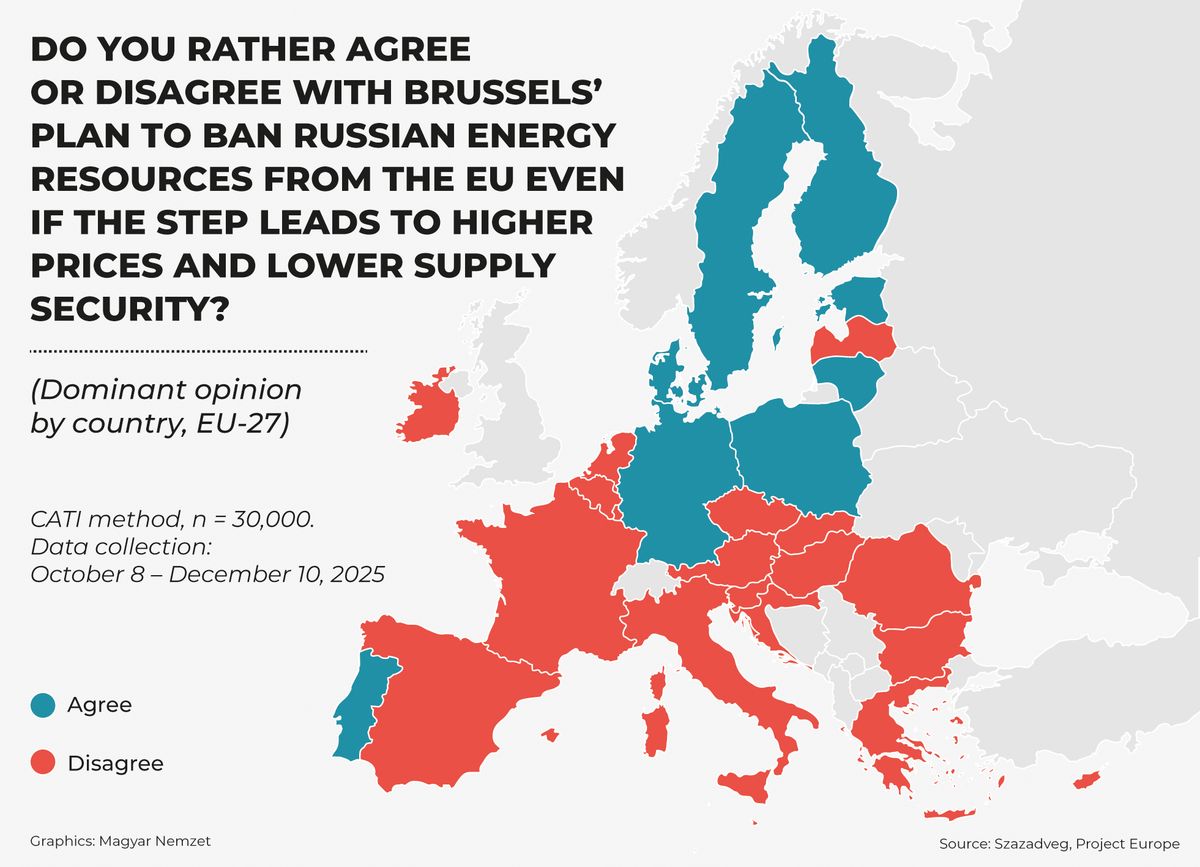
Brussels’ energy ban clashes not only with legal norms and national sovereignty, but also with the expectations of European citizens. New results from Szazadveg's Project Europe research show that a relative majority of EU citizens (45 percent) do not agree with a full embargo. In two-thirds of the member states, at least a relative majority rejects the measure. There are only three EU countries where an absolute majority supports Brussels’ decision: Poland, Lithuania, and Estonia.


Szóljon hozzá!
Jelenleg csak a hozzászólások egy kis részét látja. Hozzászóláshoz és a további kommentek megtekintéséhez lépjen be, vagy regisztráljon!