Janos Lazar: What Hungary Needs Is Integration, Not Migration

Hungary's minister for construction and transport says Roma integration is an opportunity, and it is the government’s duty to create opportunity and jobs for everyone.

2026. 02. 07. 12:58
VéleményhírlevélJobban mondva - heti véleményhírlevél - ahol a hét kiemelt témáihoz fűzött személyes gondolatok összeérnek, részletek itt.

“The most important point I want to make is that Hungary does not need migration—it needs integration. This country must uncover its internal 'gold reserves'. In many border regions, there are significant untapped human resources,” Janos Lazar said on Hir TV’s Pentek 8 program.


The Minister of Construction and Transport emphasized 

what could make Hungary even stronger, increase employment, and drive further economic growth. It is clear that if Hungary could create another 200,000–300,000 jobs—raising the number of people working from 4.9 million to as many as 5.2 million—it would represent a major step forward.

According to Lazar, achieving this requires mobilizing Hungary’s “gold reserves,” which represent a major opportunity for everyone. In this context, he said, the social advancement of Hungary’s Roma population and Roma integration constitute an enormous opportunity.

My words were not disrespectful, nor were they intended to be. I was saying that in Hungary, it is the government’s duty to create opportunity and work for every Hungarian,

the minister stated. Asked why he apologized for his remarks, Lazar said it was obvious to him that his words had been misinterpreted, misunderstood, and in some cases taken in the wrong direction.

I did not want to offend anyone, and if I caused pain to anyone, I wanted to apologize—and I did. My intention was to continue, together, the process launched by Fidesz over the past sixteen years to provide opportunities for social advancement and integration for Hungary’s Roma community,

he said.

Lazar added that since becoming a member of parliament, he has always worked to create opportunities for everyone, regardless of background.

I do not look at who is Roma and who is not. Opportunities must be created for everyone—that is our duty. In this regard, Fidesz has delivered a brilliant and outstanding performance. Over decades, very few have offered real opportunities for advancement to Hungary’s Roma population,

he said.

He noted that the governing parties have done exactly that: anyone who wants to work today can do so. The Fidesz–KDNP government has created one million new jobs, significantly increasing employment among Roma Hungarians. At the same time, the number and proportion of Roma students completing secondary education continues to rise.

We are continuously eliminating disadvantaged areas and segregated communities, working to dismantle them, and ensuring care for every child. From the age of three, we offer outstanding opportunities for every Roma child—up to and including university,

the politician said.

In Defense of the Past 16 Years

Speaking about his public forum series, known as Lazarinfo, the minister said these events are essentially town-hall meetings and conversations. “The host speaks very little, and I also try to briefly share a few thoughts, after which anyone can ask questions about anything,” he explained. Both government supporters and opposition voters attend, including people with political concerns and those with personal issues.

After sixteen years of governing, we must be able to defend those sixteen years, stand before the public, and account for our results,

He noted that at several Lazarinfo forums, tense situations developed, as opposition attendees verbally attacked Fidesz supporters.

“It is very important to remain calm. This country needs dialogue, and disputes must be resolved through dialogue—not violence. Everything can be discussed. Anyone may attend my forum and ask any question, including the most difficult and sensitive ones,”
he added.

Regarding the Lazarinfo event in Gyongyoss, Lazar said it was rare in recent decades to see such an atmosphere at any political gathering.

It was an organized provocation—there is no question about that. It was obvious that the Tisza activists brought in a dozen individuals who behaved in an extremely threatening and aggressive manner, many of whom had already been convicted of serious criminal offenses. It is a disgrace that we, who were the victims, are now being subjected to scrutiny,

he said. When asked who bears responsibility for the sharply polarized public mood, Lazar said the Tisza Party crossed a red line at the forum in Gyongyos.

“The Tisza people are professionals at inciting Hungarians against one another. But when they started talking about solutions and opportunities at their forums, interest collapsed. Fewer people showed up, and they could not say anything credible. That is why they stopped these events in December—and from December to February, Péter Magyar did not even leave Budapest,” Lazar claimed.

The Possible Return of ex-JM Judit Varga

The Hr TV program also addressed the resignation of former Justice Minister Judit Varga and the circumstances surrounding it. While several government politicians have said they would welcome her return to public life, Lazar stated clearly that Varga has no place in Fidesz as a leading politician.

He said, 

no one can deny that Varga has significant abilities. However, a serious mistake was made in connection with the presidential pardon case—one that underscores the responsibility ministers bear toward the country.

Lazar also noted the pardon scandal had very serious consequences for domestic politics and the life of the country, calling it a major problem.

“I am not being magnanimous on this issue, and my position puts me in the minority within Fidesz. This is not personal—I am making a principled argument. It is the duty of the justice minister to protect us, if necessary, even from bad decisions by the president of the republic,” he explained.

Asked whether Judit Varga could return to politics, Lazar said he is certain the former minister will return in some capacity.

Hungary Is Still a 'Half-Finished' Country

Reflecting on the government parties’ achievements over the past sixteen years, Lazar said that since 2010, more than one million new jobs have been created, over 1,000 kilometers of new motorways have been built, and the four-lane road network has expanded from 800 kilometers to 2,500 kilometers.

This is a different country—one that provides much better and higher-quality services. That said, let there be no misunderstanding: I am not satisfied. That is why I say Hungary is a half-finished country. We are halfway there. The final step—dotting our ‘i’s—still lies ahead.

He concluded that completing Hungary’s transformation requires a sovereigntist government—one that keeps the money generated in Hungary at home and does not allow it to be sent to Ukraine.

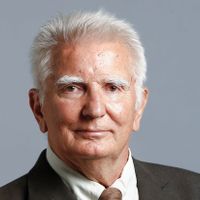
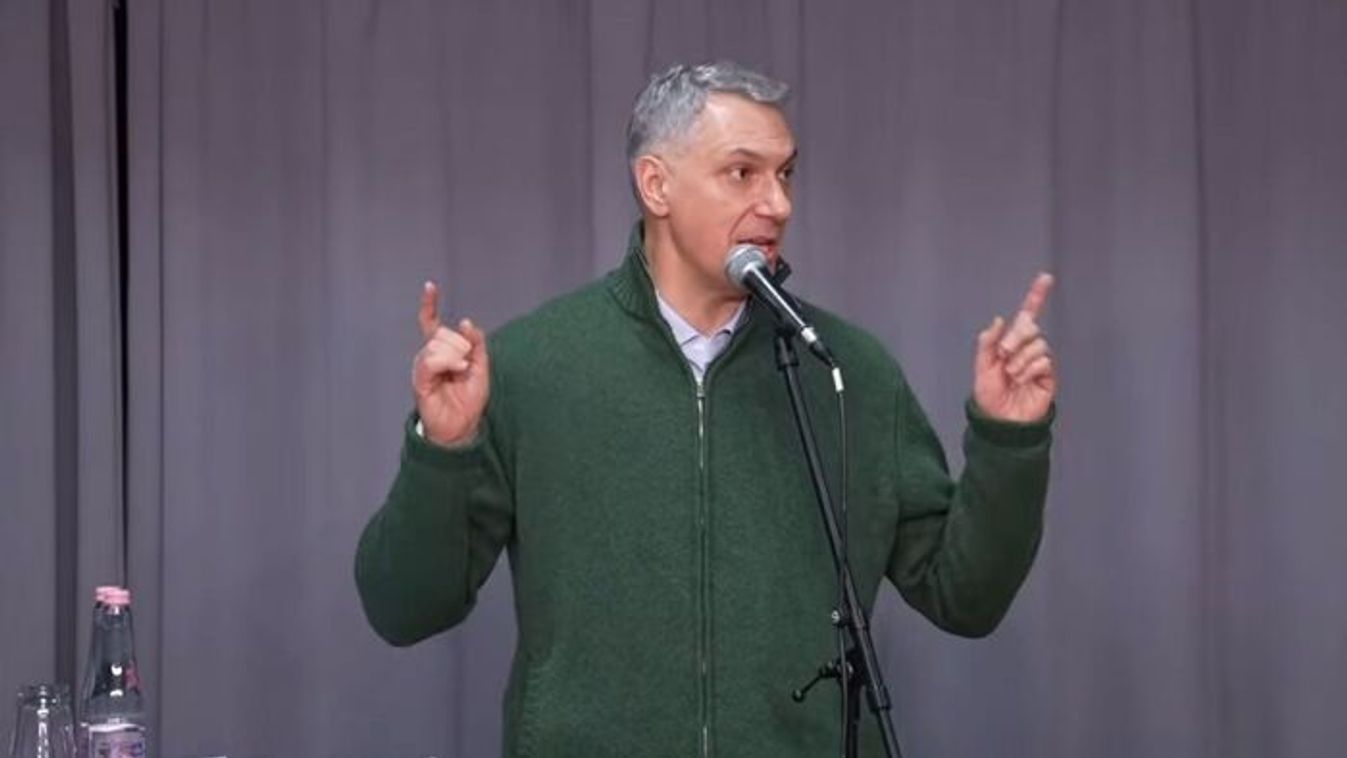
Cover photo: Janos Lazar, Hungary's Minister of Construction and Transport (Source: Facebook / Janos Lazar)

Komment

Összesen 0 komment

A kommentek nem szerkesztett tartalmak, tartalmuk a szerzőjük álláspontját tükrözi. Mielőtt hozzászólna, kérjük, olvassa el a kommentszabályzatot.


Jelenleg nincsenek kommentek.

Szóljon hozzá!

Jelenleg csak a hozzászólások egy kis részét látja. Hozzászóláshoz és a további kommentek megtekintéséhez lépjen be, vagy regisztráljon!

A téma legfrissebb hírei

Tovább az összes cikkhez chevron-right

Ne maradjon le a Magyar Nemzet legjobb írásairól, olvassa őket minden nap!

Google News
A legfrissebb hírekért kövess minket az Magyar Nemzet Google News oldalán is!

Címoldalról ajánljuk

Tovább az összes cikkhez chevron-right

Portfóliónk minőségi tartalmat jelent minden olvasó számára. Egyedülálló elérést, országos lefedettséget és változatos megjelenési lehetőséget biztosít. Folyamatosan keressük az új irányokat és fejlődési lehetőségeket. Ez jövőnk záloga.