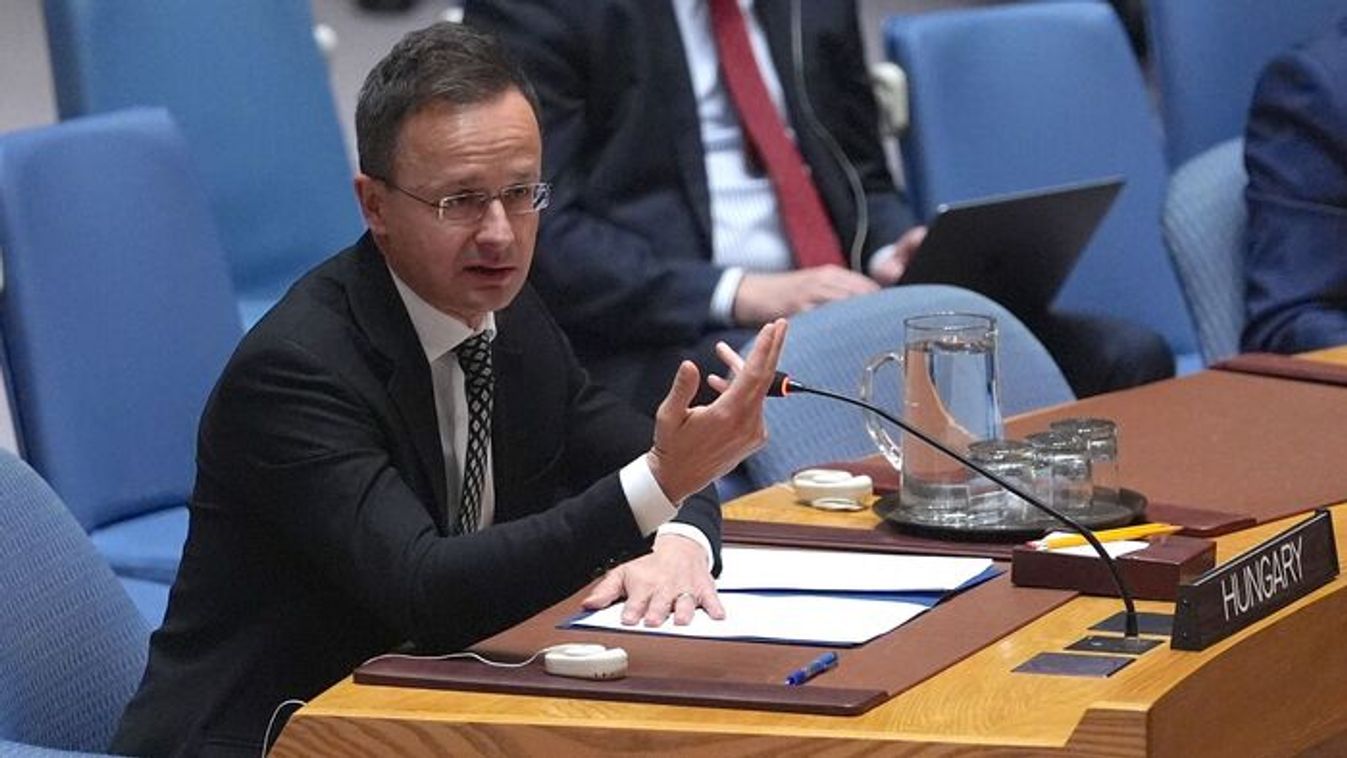
He stressed that all of this points toward a renewed global division into blocs. Hungary had already suffered a serious setback due to such division and therefore the national interest lies in connectivity, in the return of international cooperation based on mutual respect and mutual benefits. He argued that Hungary is a good example of this, being an important meeting point between East and West, with successful German–Chinese automotive cooperation and Russian–German–French nuclear cooperation taking place.
If I had to sum up Hungary’s approach to dealing with the main challenges, I would put it this way: no to war, no to migration, no to gender,
he said.
Szijjarto stressed that Hungary is part of the global pro-peace majority, and expressed hope that the UN General Assembly will help bring the war in Ukraine to an end, as Hungary has been facing the dramatic consequences of the conflict next door for three and a half years.
It is the duty and responsibility of the Hungarian government to ensure the security of the Hungarian people and the country. Since the outbreak of the war in Ukraine, Hungary has stood on the side of a ceasefire and peace negotiations. Unfortunately, because of this we have come under serious political attacks, accusations, and stigmatization by those who now in Europe themselves speak of the importance of a ceasefire and peace negotiations,
he said.
He added that if these countries had taken this position from the beginning, hundreds of thousands of lives could have been saved and enormous destruction avoided. “But the European Union chose a bad and flawed strategy, and instead of isolating it, they globalized the war in Ukraine,” he stated.