Fidesz Gains Momentum as Peter Magyar Falls Short

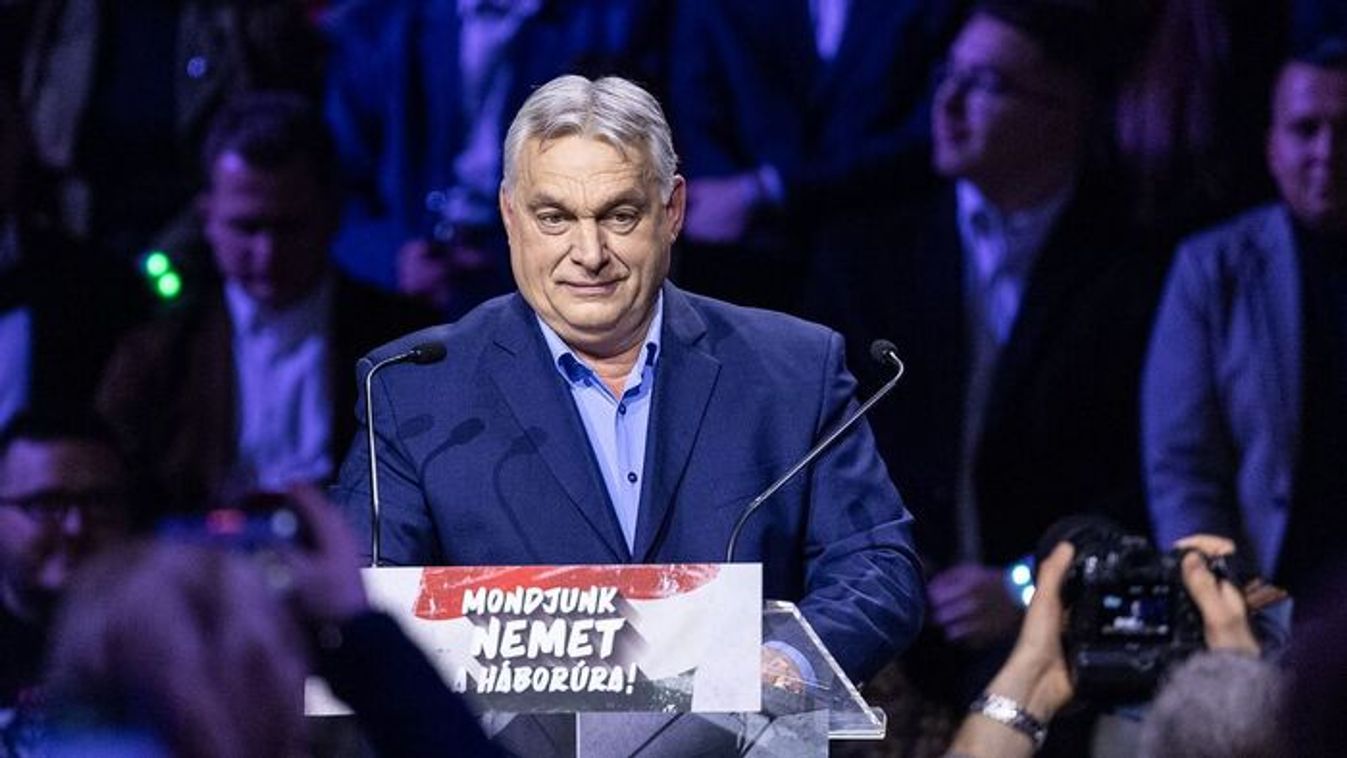
Prime Minister Viktor Orban appeared in a new format before a full house in Miskolc. Analysts say the prime minister’s interactive approach gave new energy to his nationwide tour, while Peter Magyar, after earlier setbacks, no longer followed the prime minister. Observers believe that alongside Orban’s confident presence and expertise, Magyar Peter’s previous failures were rendered especially visible.

2026. 01. 18. 16:51
Hungarian PM Viktor Orban (Photo: Attila Polyak)
VéleményhírlevélJobban mondva - heti véleményhírlevél - ahol a hét kiemelt témáihoz fűzött személyes gondolatok összeérnek, részletek itt.

“Viktor Orban spoke before a full house in Miskolc, while Magyar Peter, after earlier setbacks, chose not to follow the prime minister,” said Daniel Deak, senior analyst at the 21st Century Institute, who evaluated the weekend’s political events in five key points.

The prime minister addressed a massive crowd

As is known, Tisza chief Peter Magyar had previously decided to try to imitate PM Orban in every way. He attempted to copy the Peace March, the national consultation, Tusvanyos, Kotcse, and even the prime minister’s international press conferences. Despite repeated failures, the party leader initially resolved to attend every national-side anti-war event following Orban, appearing in Gyor, Kecskemet, and Szeged. However, it now seems Mr. Magyar grew tired of his repeated fiascos and setbacks.


Fidesz Gains Momentum in Miskolc

PM Orban addressed the first digital civic circles anti-war meeting of the year in Miskolc using a new format. The prime minister did not deliver a traditional speech; instead, he answered questions directly from the audience.

This interactive approach gave the nationwide tour new energy and dynamism,

analyst Daniel Deak emphasized, poiting out that PM Orban provided detailed and comprehensive answers on domestic, foreign, and economic issues, demonstrating that his knowledge and preparation are unmatched in the Hungarian political arena. 

He added thatm in his view, the prime minister possesses such deep and broad expertise that no opponent can compete with him.

The third point of the analysis focused on the political mood. According to weekend events, the patriotic political side has regained confidence and is clearly preparing for victory. Public opinion polls support this: according to the most accurate pollster, the Hungarian Society Research Institute, Fidesz leads by more than ten percentage points. Mr. Deak emphasized: 

it’s not the polls we need to win, it’s the election itself, and these events are primarily about mobilization.

Mr. Deak also addressed Magyar Peter’s role. He recalled that the Tisza Party leader had previously promised to follow the prime minister to every nationwide event with his own gatherings. However, he did not appear in Mohács, and he also did not hold an event in Miskolc. According to the analyst,

this is because previous events organized by Peter Magyar drew very little interest, whereas Orban consistently spoke to full houses. The Tisza leader thus opted to avoid another awkward situation.

The analyst pointed out that while PM Orban spoke about national interests and clearly outlined what was at stake in the election, Magyar Peter instead presented Istvan Kapitany as the Tisza Party’s economic expert. Kapitany, as Shell’s global vice president, belongs to the globalist political and economic circle previously represented domestically by Gordon Bajnai. Deak noted that it is no coincidence that Bajnai recently gave an interview and Kapitany appeared in the Tisza Party: this signals a return to the old leftist world alongside Peter Magyar.

Miklos Szantho also shared his evaluation of the Miskolc anti-war meeting on Facebook. The general director of the Budapest-based Center for Fundamental Rights highlighted that PM Orban outlined the Hungarian pro-peace success strategy and set concrete goals for the coming year. He wrote that at the first DPC meeting of the year, the prime minister demonstrated that the Hungarian right is still capable of innovation: presenting a pro-peace success strategy and concrete goals for the next cycle—unlike the increasingly hollow Tisza Party.

“The intellectual horizon of the pro-peace camp is that Hungarians should be great, rich, and strong!” he emphasized.

So far, Europe has already spent over 200 billion euros on the war, and now an $800 billion Ukrainian claim is being spread across member states.

- Mr. Szantho said, adding that this is no longer a foreign policy debate but an open financial risk in an increasingly unstable global environment, directly affecting national sovereignty, wages, pensions, and family security. PM Orban also laid out four fundamental pillars for Hungary’s future and success:

  1. Hungary must stay out of the war,
  2. Our money must not be given to Ukraine,
  3. Full employment must be maintained, and
  4. a family-based society must remain in the focus.

Together, these form the solid foundation on which any economic or social ambitions depend. If this foundation remains, progress is possible. Mr. Szantho noted that Hungary's civilian, national-minded government has set concrete tasks for the next cycle,

with clear objectives, predictable direction, and long-term development.

PM Orban plans an economic and national strategy built on peace, work, and stability, allowing for further growth. Key points include a one-million-forint average wage, a 400,000-forint minimum wage, continuation of the 14th-month pension, a new agricultural economy, energy independence, and smart, nationally oriented use of artificial intelligence. These are the most important goals for the next four years.

 

Peter Magyar’s Nationwide Tour Flops

According to the strategic director, the political dividing line is clear: either building Hungary’s future or financing the Ukrainian war. The Tisza Party would follow Brussels’ logic, while Hungarian interests dictate that resources remain at home to build a strong, wealthy, and sovereign nation.

“In an era when Europe is once again organized around war logic, the more than 35 years of foreign policy experience Viktor Orban brings is especially valuable. He knows the risks and can keep Hungary on a stable, independent growth path,”

– Mr. Szantho concluded. 

Fanni Lajko gave updates from Miskolc. The analyst from the Center for Fundamental Rights noted that Magyar Peter has flopped so badly on his nationwide tour that he did not even attend Miskolc. She added that the right-wing community has never been stronger. In another post, she wrote: “There is no other community in Europe where thousands stand up for peace every weekend, where anti-war rallies are organized, and where hundreds of thousands participate in the Peace March! 

The Hungarian people know that war is serious and dangerous, and our security is not guaranteed. That’s why we stand for peace today in Miskolc, and in April, we will do so in the voting booths as well!

– she declared.

Komment

Összesen 0 komment

A kommentek nem szerkesztett tartalmak, tartalmuk a szerzőjük álláspontját tükrözi. Mielőtt hozzászólna, kérjük, olvassa el a kommentszabályzatot.


Jelenleg nincsenek kommentek.

Szóljon hozzá!

Jelenleg csak a hozzászólások egy kis részét látja. Hozzászóláshoz és a további kommentek megtekintéséhez lépjen be, vagy regisztráljon!

A téma legfrissebb hírei

Tovább az összes cikkhez chevron-right

Ne maradjon le a Magyar Nemzet legjobb írásairól, olvassa őket minden nap!

Google News
A legfrissebb hírekért kövess minket az Magyar Nemzet Google News oldalán is!

Címoldalról ajánljuk

Tovább az összes cikkhez chevron-right

Portfóliónk minőségi tartalmat jelent minden olvasó számára. Egyedülálló elérést, országos lefedettséget és változatos megjelenési lehetőséget biztosít. Folyamatosan keressük az új irányokat és fejlődési lehetőségeket. Ez jövőnk záloga.