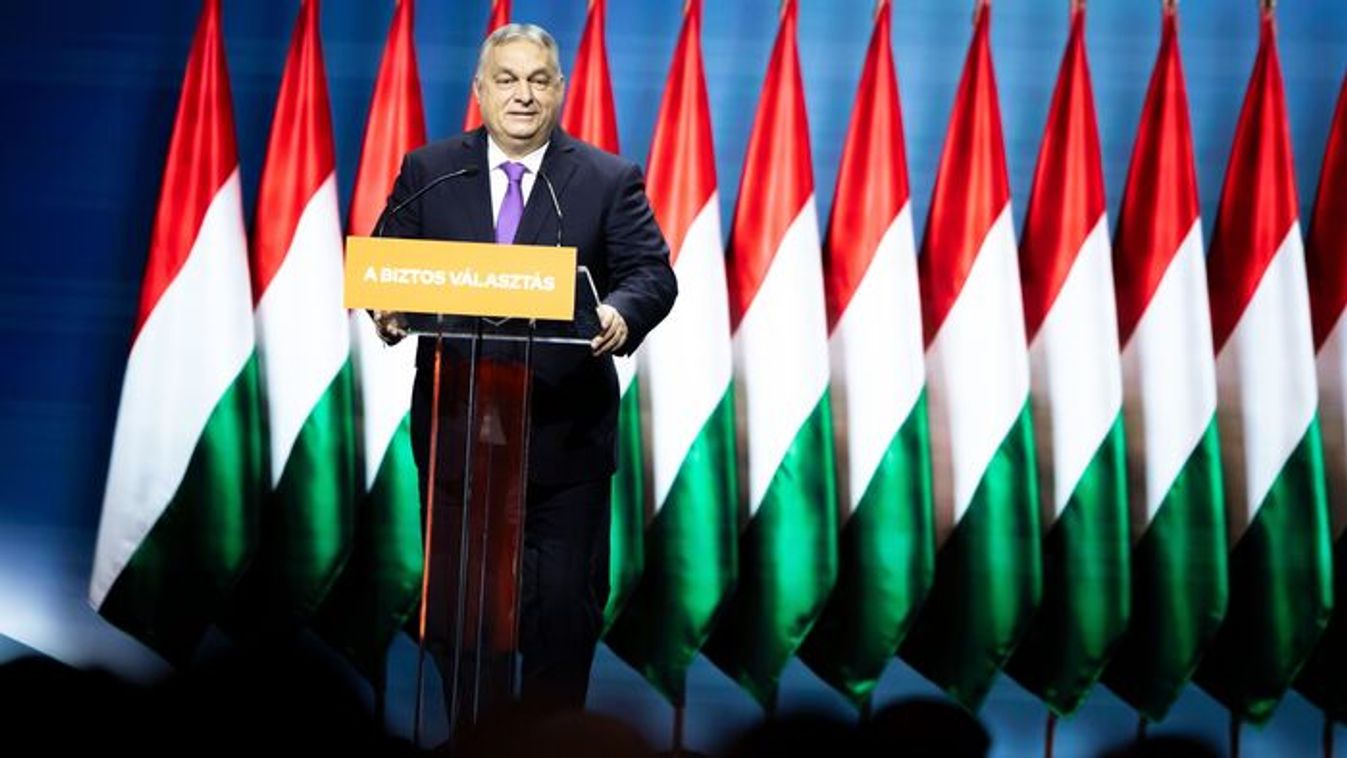
"The government has decided to introduce a cap on household utility bills," Viktor Orban announced in a video uploaded to his social media page.
The government will assume the costs of extra consumption caused by heating in January, relieving families of this burden,
the Prime Minister explained.
He recalled that the extreme weather in January has put Hungary to a serious test, resulting in unexpected and significant additional expenses for everyone. The freezing temperatures have led to high heating bills and placed a heavy burden on families. he noted that during the unusually cold spell the government ensured the supply of firewood and made heated shelters available to everyone. The necessary firewood and warming centers will continue to be available in the weeks ahead, he added. However, the freezing weather has also brought high heating bills, imposing a heavy burden on families, with everyone facing unexpected and significant extra costs. This is why the decision on the household utility price cap was made at the cabinet meeting.
Some Claim Utility Cost Reduction Is Not A Good Policy
The household utility cost reduction scheme has long been at the center of attacks from the Tisza Party.
Utility cost reduction is a hoax
claimed Peter Magyar when speaking about the fact that energy bills are the lowest in Hungary. It is not only the party chief but also numerous experts around the party have attacked the government measure.
"Utility cost reduction is in fact a lie," said Julia Kiraly, former deputy governor of the central bank, who is linked to the economic policy circle of the Tisza Party, when describing the government’s action.
According to Laszlo Keri, another Tisza expert, the utility cost cut scheme is the biggest bluff in the world. The party’s candidate, Kriszta Bodis, claims that utility cost reduction is a form of mind control, which she believes creates false expectations in people regarding energy prices.
Just think about what kind of mind control utility cost reduction is, conditioning people to believe that you have a right to pay less for energy, and that if you pay less, it equals something good. Yet there are times when paying more for something is a much better thing,
said Kriszta Bodis in a previous interview, attacking the policy.


Szóljon hozzá!
Jelenleg csak a hozzászólások egy kis részét látja. Hozzászóláshoz és a további kommentek megtekintéséhez lépjen be, vagy regisztráljon!