Gyorgy Nogradi: Impossible to Say Whether Iran War Is a Strategic Turning Point

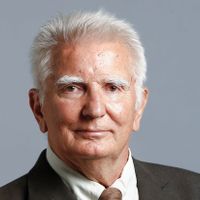
Today, it is impossible to say whether the US–Israeli strike against Iran is a historic turning point or the beginning of a protracted and unpredictable crisis, Gyorgy Nogradi told Magyar Nemzet. The widening of the conflict and a shock to the global energy market pose the greatest risks, said the security policy expert.

2026. 03. 01. 15:36
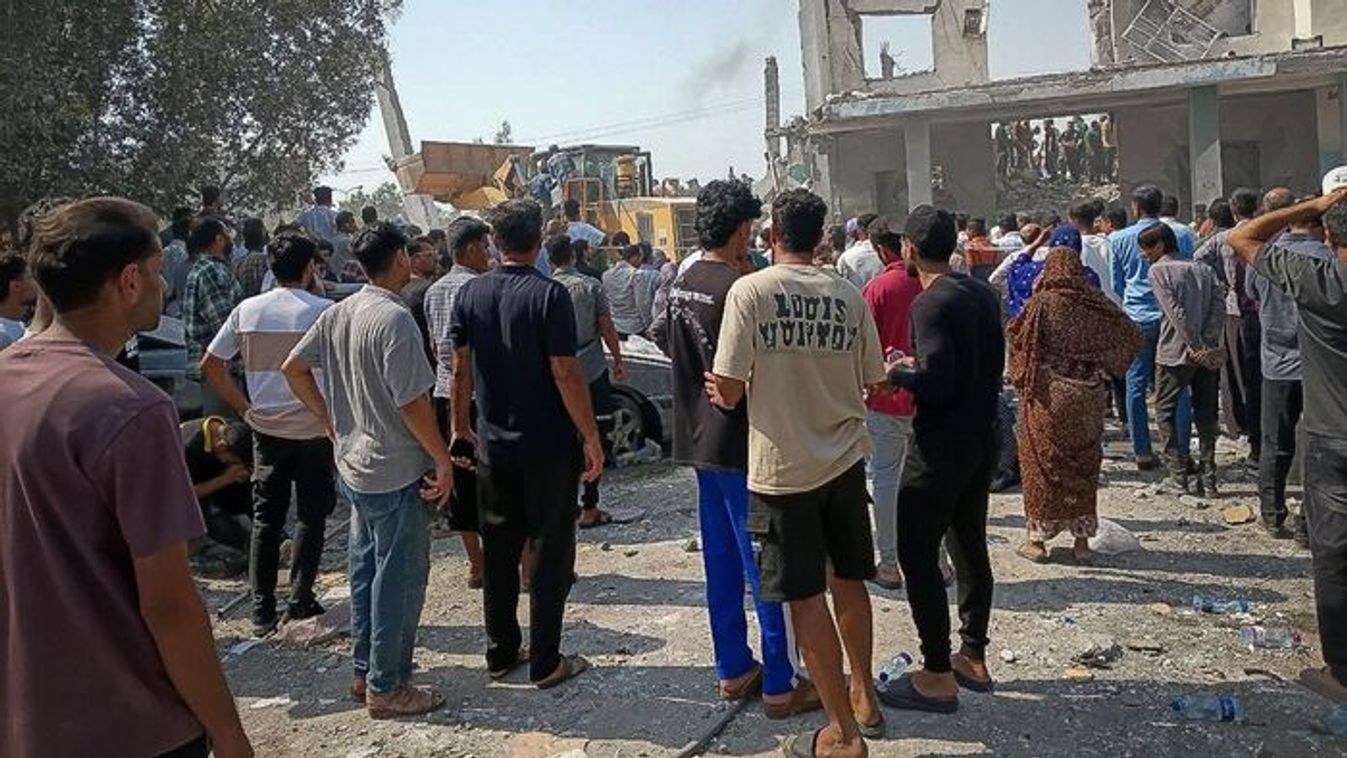
Minab, Hormozgan Province, southern Iran (Photo: AFP)
VéleményhírlevélJobban mondva - heti véleményhírlevél - ahol a hét kiemelt témáihoz fűzött személyes gondolatok összeérnek, részletek itt.

“My answer is that it is impossible to say,” the security policy expert said when asked whether he considers the American–Israeli strike against Iran a strategic turning point. Gyorgy Nogradi recalled that in the case of Venezuela the United States managed to weaken Nicolas Maduro in a way that “there were practically no American losses; there were Americans wounded, but no American died,” while “100 Venezuelan defenders, the majority of them Cuban officers, were killed.” At the same time, he emphasized that the current situation is completely different.

Az Egyesült Államok és Izrael február 28-án csapásokat indított Irán ellen
 The United States and Israel launched strikes against Iran on February 28 (Photo: AFP)

He pointed out that the next round of US–Iran negotiations had been scheduled for March 2, and that the talks mediated by Oman had achieved “wonderful progress.” However, no agreement was reached on the key issues of enriched uranium and the missile program. According to the expert, the current strike was preemptive in nature, although Iran had partly anticipated it.

Gyorgy Nogradi noted that in recent days an extremely large quantity of Russian weapons has arrived in Tehran by air. Several Iranian leaders have been eliminated, but the main target, Iran’s supreme religious leader, was not killed. (Hamenei has since died–editor’s note.)

He emphasized that Iran has carried out retaliatory strikes against US bases in the region as well as against Israel. Over the past 48 to 72 hours, US forces have been withdrawn westward from the Persian (Arab) Gulf region, while Israeli air defenses have destroyed the overwhelming majority of incoming attacks.

 Gyorgy Nogradi pointed out that Iran’s Islamic Revolutionary Guard Corps represents a force of around 180,000 personnel. He recalled the earlier killing of General Soleimani, after which “the war did not end within a few hours.” In his view, one of the problems for the American strategy is the lack of a unified Iranian opposition. Although serious protests against the religious leadership have taken place in recent weeks, they have not produced a breakthrough.

Reza Pahlavi, the exiled son of the former shah, has appeared as a potential leader, but he has no real social base behind him, Nogradi said. In Munich, 250,000 Iranians demonstrated against the regime, and even the shah’s son was booed.

According to the expert, the key question now is how long the series of military strikes will last. Iran has launched attacks against Saudi Arabia, Bahrain, and other Gulf states hosting American troops. Europe, he said, “as usual knew nothing,” and is now trying to find a role for itself, “with not more success, but rather less.” Russia has offered to mediate, but the United States currently holds no interest in that.

Eighty percent of Iran’s crude oil exports go to China, meaning the war directly affects Beijing as well.

The big question is whether Iran wants to close the exit of the Persian (Arab) Gulf,

said Nogradi, referring to the fact that Iran controls three key islands in the Strait of Hormuz. (Iran has since closed the Strait of Hormuz – editor’s note.)

There are currently more questions than answers, the expert said. “I do not yet see any real results,” he added.

Asked how far Iran might go if it feels the survival of the regime is under threat, Nogradi replied that the Persian (Arab) Gulf region is currently not a safe area. The danger of the conflict widening is real. He also pointed out that several parallel tensions are present across the broader region: fighting is taking place between Pakistan and Afghanistan, while China and India are also facing each other.

A very long time ago, an Arab leader said that between Morocco and Afghanistan everything is connected to everything else. That is visible now as well,

he said. In his view, the two main dangers posed by the war on Iran are escalation and the possibility that the price of crude oil could skyrocket.

For Hungary, the conflict could primarily have economic and political impacts. Gyorgy Nogradi considers the risk of migration to be limited, as it is very difficult to travel from Persia to Europe. The route passes through Turkey, and Ankara generally keeps its borders closed.

He added that the world’s attention is now focused on the Middle East, which “greatly disturbs Zelensky,” because the Russia–Ukraine war is being pushed into the background. Meanwhile, Europe has not lined up behind Hungary and Slovakia regarding the issue of the Druzhba oil pipeline, which he said indicates an open political conflict.

Cover photo: Minab, Hormozgan Province, southern Iran (Photo: AFP)

Komment

Összesen 0 komment

A kommentek nem szerkesztett tartalmak, tartalmuk a szerzőjük álláspontját tükrözi. Mielőtt hozzászólna, kérjük, olvassa el a kommentszabályzatot.


Jelenleg nincsenek kommentek.

Szóljon hozzá!

Jelenleg csak a hozzászólások egy kis részét látja. Hozzászóláshoz és a további kommentek megtekintéséhez lépjen be, vagy regisztráljon!

A téma legfrissebb hírei

Tovább az összes cikkhez chevron-right

Ne maradjon le a Magyar Nemzet legjobb írásairól, olvassa őket minden nap!

Google News
A legfrissebb hírekért kövess minket az Magyar Nemzet Google News oldalán is!

Címoldalról ajánljuk

Tovább az összes cikkhez chevron-right

Portfóliónk minőségi tartalmat jelent minden olvasó számára. Egyedülálló elérést, országos lefedettséget és változatos megjelenési lehetőséget biztosít. Folyamatosan keressük az új irányokat és fejlődési lehetőségeket. Ez jövőnk záloga.