The financing contract concluded with the HUN-REN network and the 25-year framework agreement represent the most significant research breakthrough of recent decades, Hungary's culture and innovation minister told our newspaper in a year-end interview. According to Balazs Hanko, it is absurd that an organization operating as a so-called Tisza island, with no scientific achievements to its name, should call on the leadership of HUN-REN to resign. Mr. Hanko also spoke about the transformation of Budapest University of Technology and Economics, the historic significance of the Pannonia and HU-rizont programs, achievements in youth policy and vocational training, and the successes of the government’s family and cultural policies.
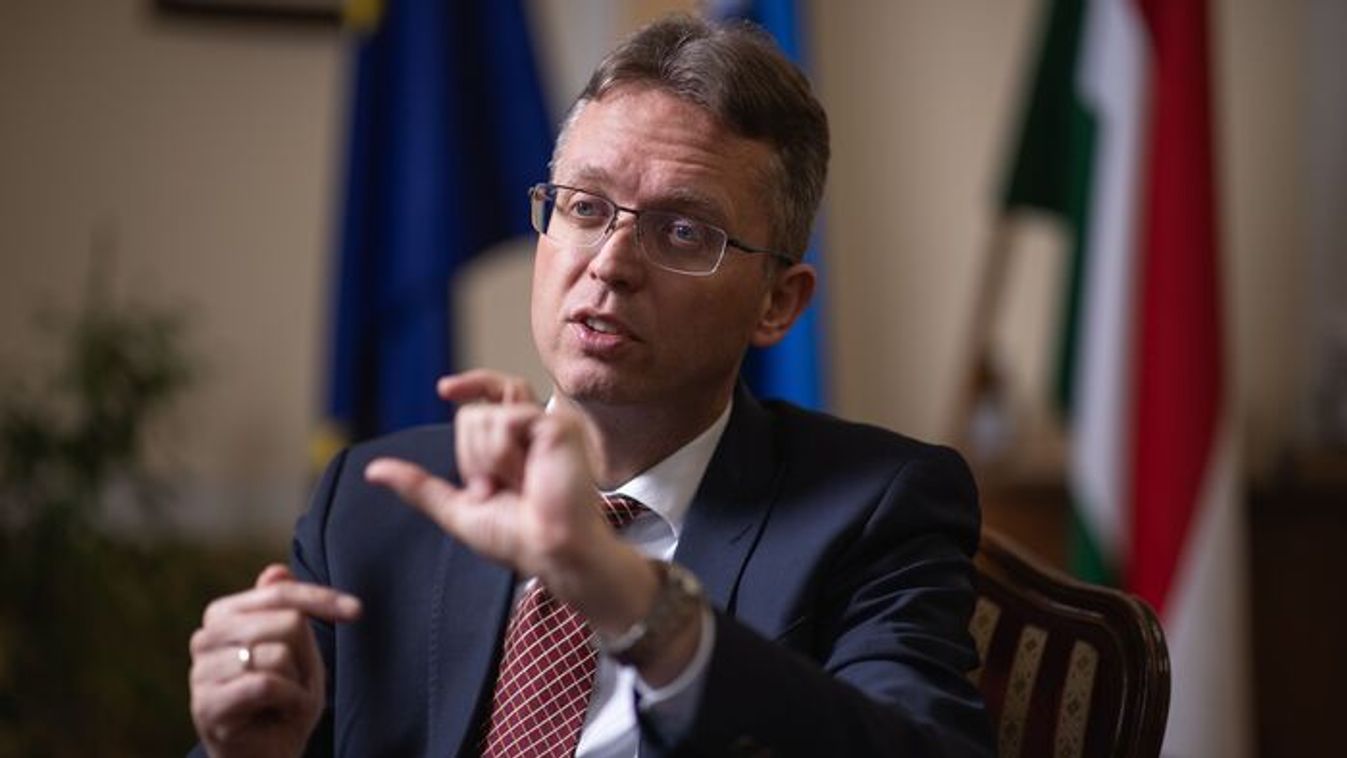
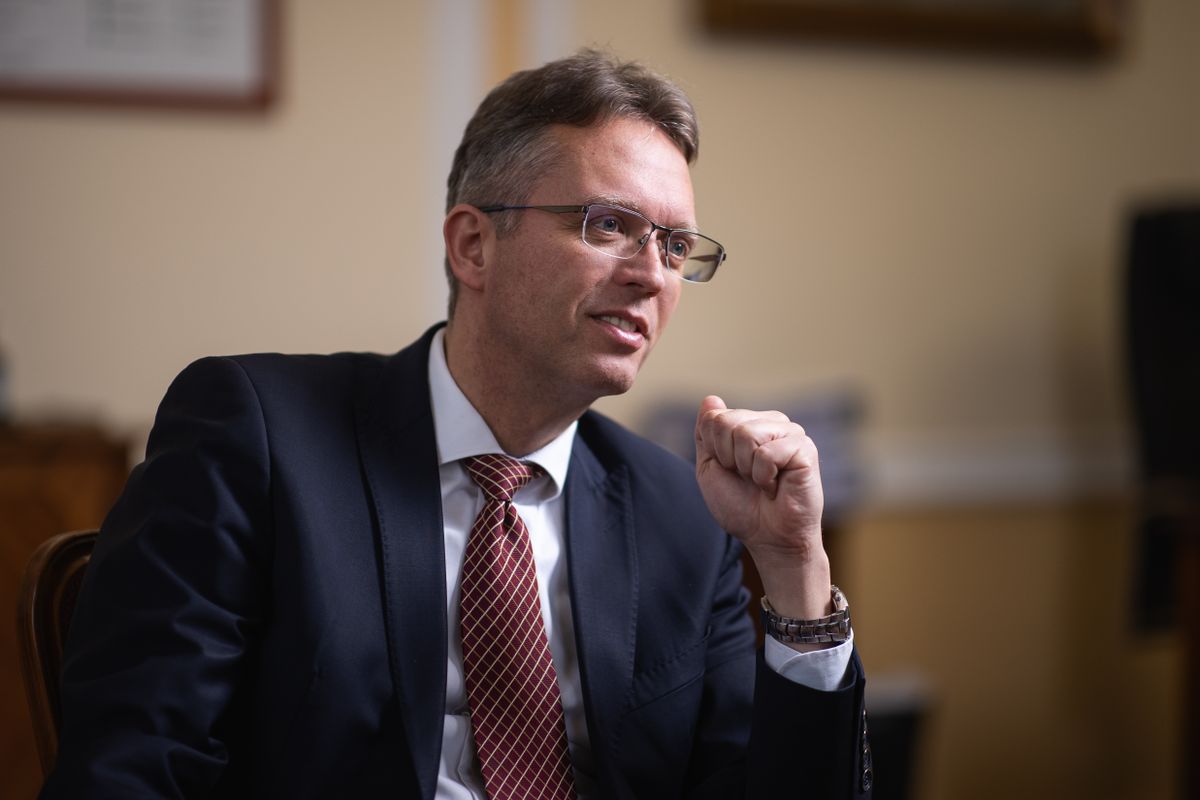
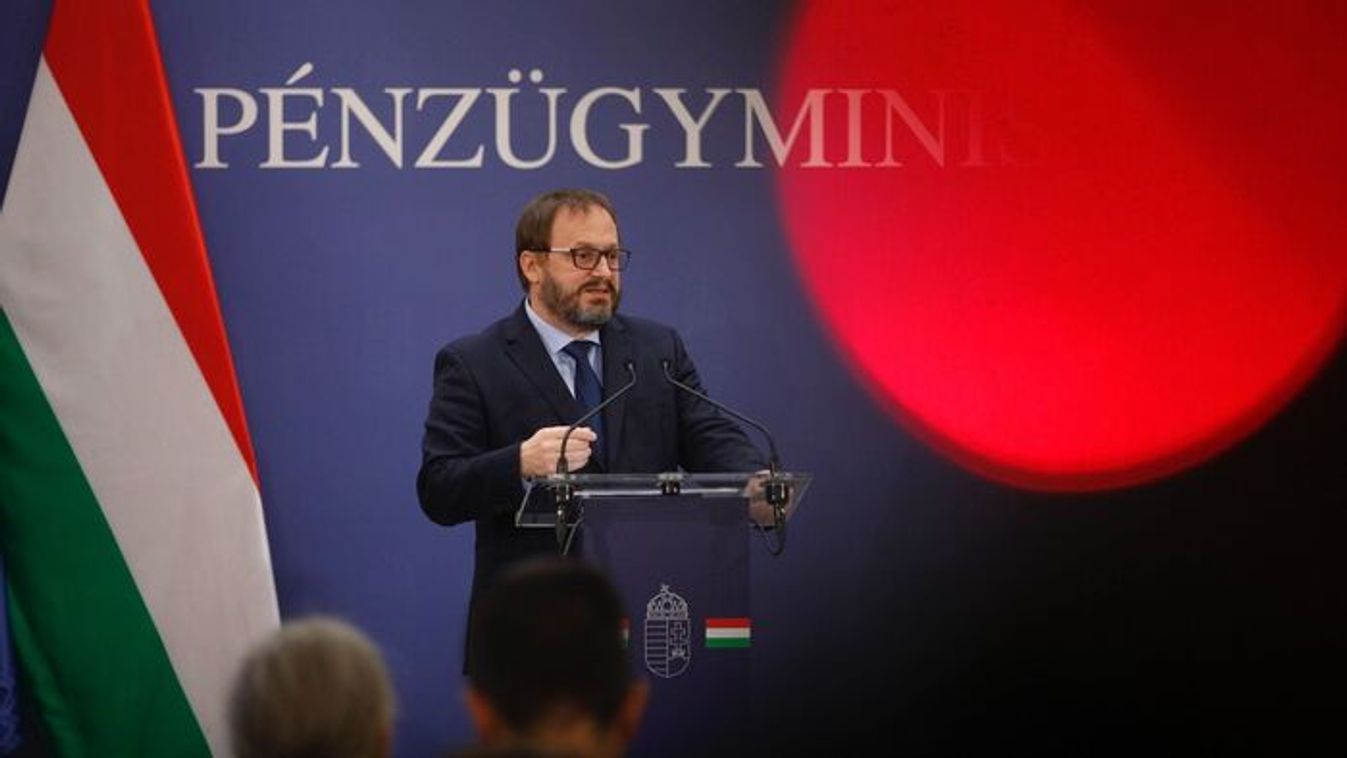
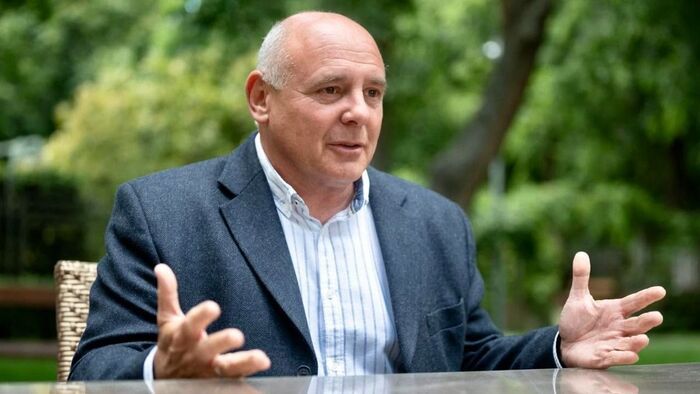
Balazs Hanko, Hungary's culture and innovation minister announced that HUN-REN’s annual funding will more than double from its current level (Photo: Attila Polyak)
– Who will sit on the new governing body, and what performance requirements must they meet?
– Outstanding individuals such as BalazsGulyas, who returned home from Singapore to lead the research network; research professor Botond Roska, one of the world’s leading figures in vision research; and Bela Molnar, representing a Hungarian-owned innovation company that is a leader in medical sciences. Every second forint is tied to performance. We have contracted for results: by the end of the first six-year period, the number of patents within the research network must triple annually, 20 technology companies commercializing innovation must be established, and HUN-REN’s innovation revenues must double. In addition, 3,500 high school students must be involved in research, the number of joint doctoral students with universities must rise to 600, 4,000 top-tier international publications must be produced—at least 80 percent in cooperation with universities—and 1,500 research collaborations must be established, ranging from the United States to East Asia and the Western Balkans.
The growth of research and innovation revenues serves to strengthen the Hungarian economy.
Although Hungary ranks 96th in the world by population, we rank tenth in terms of scientific talent, and eleventh globally in Nobel laureates per capita.
– What changes does the agreement bring to innovation and research and development compared to the past?
– HUN-REN’s annual funding increases from 41 billion to 90 billion forints. This year, an 18-billion-forint wage increase was implemented, raising average base salaries above 850,000 forints gross—so it is simply not true that researchers earn around 350,000 forints.
What truly is absurd is that people with no scientific achievements are calling on Wolf Prize–winning researchers to resign. Yet this is exactly what happens when the ADF calls for the resignation of HUN-REN’s leadership.
This kind of situation last occurred in the 1950s, when people unqualified in science sought to control it. We want to eliminate once and for all the policy of “daring to be small” in universities and in the world of science as well.
– What do you expect from international cooperation?
– The Frontline Advanced Research and Talent Development Foundation held its first meeting under the leadership of Ferenc Krausz, attended by three other Nobel laureates and Laszlo Lovasz, former president of the MTA and recipient of the Abel Prize, the equivalent of the Nobel Prize in mathematics. Over the next six years, 75 outstanding research hubs will come to Hungary to work with our universities and HUN-REN, engaging 15,000 high school talents and creating 4–6 technology companies annually to bring innovations to market.
We are watching with interest to see whether the European Commission will also exclude this foundation—along with its five Nobel laureates—from research funding.
In addition, we increased funding for the National Research Excellence Program from 13 billion to 40 billion forints. Under the HU-rizont program, Hungarian universities are leading 53 research projects, working with world-class institutions using 20 billion forints. More precisely, Hungarian researchers are leading collaborations in healthcare, artificial intelligence, agriculture, energy, and many other vital fields, involving researchers from Yale, Harvard, University College London, Oxford, Cambridge, and the National University of Singapore—institutions that all rank among the absolute global elite.
– How will ordinary Hungarian citizens feel the benefits of these changes in everyday life?
– By focusing not on gender studies, but on natural sciences, artificial intelligence, and digitalization. The essence of innovation is to make everyday life easier. In these months, we are allocating a total of 120 billion forints for research and 340 billion forints for innovation support.
Currently, every third Hungarian small or medium-sized enterprise is innovating. Together with the Hungarian Chamber of Commerce and Industry, our goal is for every second one to do so, because innovative companies drive the economy. Although they make up only one-third of businesses, they generate nearly two-thirds of added value, that is, GDP.
We have not forgotten doctoral students either. Based on international models, we have linked research programs with doctoral training, creating at least 400 new doctoral positions annually, with minimum gross salaries of 650,000 forints. Under the cooperative doctoral program, young people can expect the same pay while being doctoral students at universities and working on their research topics with industry partners.
The success of the Pannonia Program is shown by the fact that more than 11,000 participants reached the world’s leading universities through it (Photo: Attila Polyak)
– What results have Hungarian universities achieved internationally?
– Some try to deny the achievements of Hungarian higher education, but it is undeniable that 12 Hungarian universities now rank among the world’s top five percent, including the newly added Pazmany Peter Catholic University. Semmelweis University ranks 272nd worldwide, placing it in the top one percent; the University of Debrecen, the University of Szeged, and Eotvos Lorand University are all in the top two percent. In the cardiology subject ranking, Semmelweis University ranks 35th globally; the University of Veterinary Medicine ranks 59th; and Semmelweis University’s pharmacy program ranks 61st. I myself support its academic work and am frequently invited to speak internationally about the successes of Hungarian universities. Most recently, I attended the World Education Leaders Forum in London, followed by a visit to Azerbaijan.
– What were the most important developments in Hungarian higher education?
– It would take too long to list everything, but let me highlight a few points. The transformation of Budapest University of Technology and Economics (BME), proposed by its senate, was implemented this year, setting the institution on a new path. Quietly, I note that the change was initiated by the university itself. Our goal is for this prestigious institution to become Europe’s leading technical university. Its admissions system is also successful: 107,000 students applied to Hungarian universities, 77,000 state-funded places were announced, and every second student was admitted to a regional - or rural - university.
The success of the so-called Pannonia Program speaks for itself, with 11,355 participants reaching the world’s leading universities through it.
We have concluded a strategic higher education cooperation agreement with the U.S. government and are also paying close attention to Hungarian institutions beyond our borders. For example, we aim for Sapientia University to rank among Romania’s top ten universities, and the Ferenc Rakoczi II Transcarpathian Hungarian Hungarian College in Berehove has been elevated to university status. A key objective is to have universities ranked in the world’s top 100 and Europe’s top 100 by 2030—but even more important is what students see, feel, and want. That is why I launched campus forums titled Ask the Minister. So far, we have held 12 forums, totaling 24 hours of open discussion, with around 250 questions raised. Yes, there are often disagreements, but constructive discussions and debates can be held, and in several cases these have already led to decisions. We will continue next year.
– What developments can we expect in the field of vocational education and training?
– Hungarian vocational education is among the best in Europe. This September, our students finished third overall among EU countries at the European Championship of Vocational Education and Training, winning four gold, two silver, five bronze, and five excellence medals, performing outstandingly in both traditional and new professions. We have invested roughly 400 billion forints in vocational training, supplemented by an additional 70 billion forints in EU funding. Of this, 21.6 billion forints were allocated to sectoral knowledge centers, linking industry, universities, and vocational institutions. The 23-billion-forint Springboard Program (Dobbanto) supports catch-up education, and artificial intelligence education is already underway in 60 institutions, which will be further expanded in the next semester.
The success of Hungarian vocational training rests not only on modern infrastructure but also on students motivated by scholarships, who have also gained access to opportunities such as the four-million-forint worker loan, already used by 40,000 people. In addition, teachers’ salaries have been increased two-and-a-half times since 2020, with a further 10 percent rise coming on January 1, meaning average salaries will far exceed 880,000 forints.
– Where is the government’s youth policy headed?
– More than 300,000 young people under the age of 25 remain exempt from personal income tax this year as well. Never before has there been so much funding in the Children and Youth Fund: 250 million forints were allocated to the development of community programs, 130 million forints to drug prevention, and 100 million forints to a mental health roadshow. The initiative closest to my heart was the selection of the Youth Capital, where the Carpathian Basin dimension also appeared: as a result, Cegled and Gheorgheni were named Youth Capitals for 2026, while Kecskemet and Targu Mures will hold the title in 2027, following a televised quiz show. Early next year, we will announce a new youth strategy; here too, we traveled across the entire Carpathian Basin to speak directly with young people. That said,
the undeniable sensation of this year is the Otthon Start program, aimed primarily at young people, as the average age of applicants is 34. We have already approved 15,000 Otthon Start applications, with an average value of 34 million forints per applicant.
I also encourage everyone to visit ifistart.hu, where all 251 youth programs are available in one place.
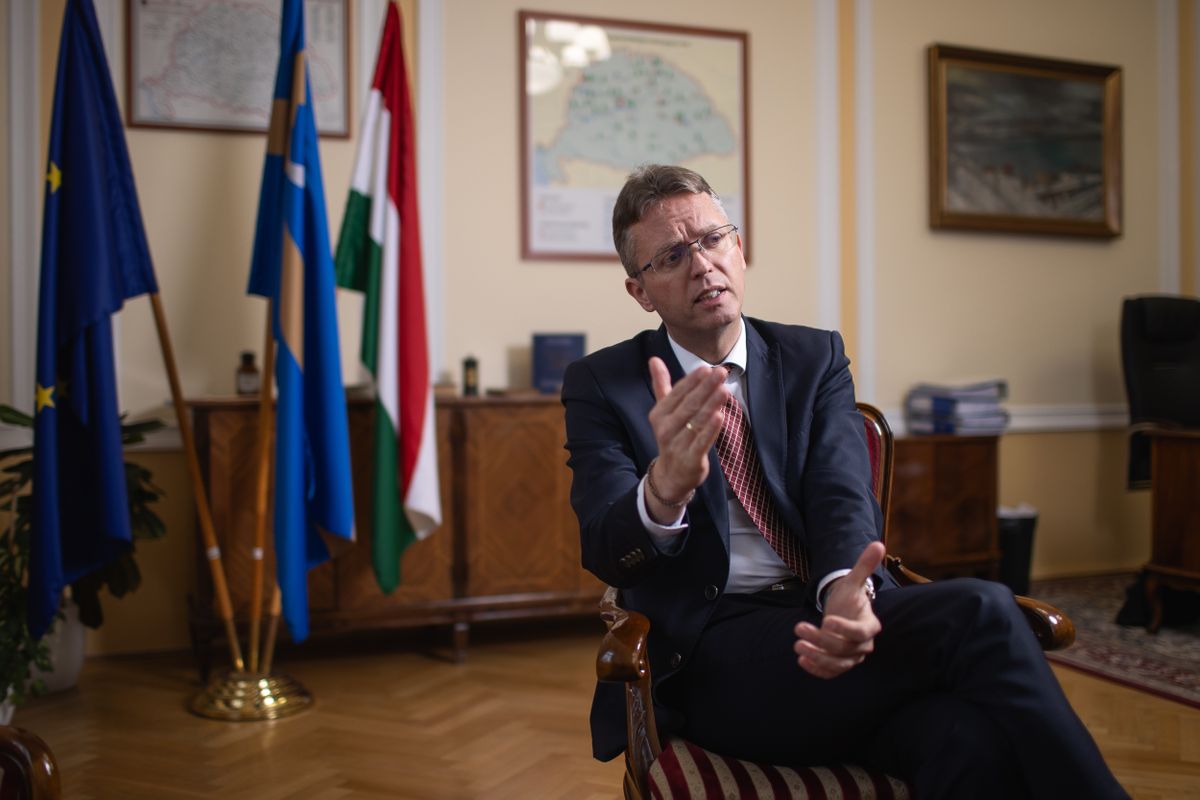
Half a million Hungarian mothers will become personal income tax-exempt, while the doubled family tax allowance will affect one million families (Photo: Attila Polyak)
– How has life for families changed?
– Every year has been the 'year of families' since 2010, but 2025 clearly stands out. Hungary is undergoing a family tax revolution unlike anything seen elsewhere. From July 1 this year, we increased the family tax allowance by 50 percent, and childbirth benefits (csed), child care benefits (gyed), and adoption benefits became exempt from personal income tax. On October 1, lifetime income tax exemption came into effect for 250,000 mothers with three children. From January 1, mothers under 40 with two children, as well as all mothers under 30, will pay no personal income tax on their full income, and the second 50 percent increase in the family tax allowance will also take effect. A one-child family under the age of 30 can save 1.5 million forints per year, families raising two kids can save 2.2 million, and three-child families 3.7 million forints.
Half a million mothers will be tax-exempt, one million families will benefit from the doubled family tax allowance, and by 2029, one million mothers will be exempt from personal income tax for life.
– How have demographic indicators developed?
– A turning point is visible in demographics. One month ago, the number of marriages rose by 16 percent; now it has increased by 4 percent, and there is also an upward trend in the number of 12-week ultrasound examinations, which points to an improvement in birth rates. That said, we must recognize that the number of births cannot rise significantly,
due to the fact that there are 322,000 fewer women of childbearing age; of the sins of the so-called Bokros package named after Mr. Bokros himself, who has since aligned himself with the Tisza party.
At the same time, it is to the credit of the family policy launched in 2010 that 200,000 more children have been born than would have been the case had fertility rates remained at previous levels. Last year was a record year for adoption, with nearly 1,300 adoptions completed, and the acceleration of the process has also proven successful. We have introduced many practical, everyday regulatory changes to support adoption, so that children can grow up in loving families.
– Which developments in the world of culture would you highlight from 2025, and what would you like to strengthen next year?
– All cultural support has a Carpathian Basin dimension. The 200th anniversary of the birth of Mor Jokai, the most Hungarian of writers, reminds us that every action and every word of his was about love of country. The 150th anniversary of the birth of Kuno Klebelsberg recalls that what we are doing today with university development and the repatriation of world-renowned Hungarian researchers mirrors his legacy.
The Pannonia and HU-rizont programs are comparable to the founding of the Collegium Hungaricum institutions in Klebelsberg’s time.
We have increased funding for 37 theaters and 11 classical music institutions, launched the operation of the new Erkel Theater, and from January 1 a 15 percent cultural wage increase will take effect. The circle of Cultural Strategic Institutions is expanding: the Csokonai Theater in Debrecen will be elevated to this status, and for the first time an institution beyond Hungary’s borders will join through the Hungarian Opera of Cluj-Napoca. We are funding Hungarian culture—at twice the level of the EU average as a share of GDP—that is rooted in national and folk traditions and in Christian culture.
– Minister Hanko, you recently visited the Vatican. What did you discuss with Pope Leo XIV and the Pontifical Academy for Life?
– I asked the Holy Father for his blessing for Hungarian families, young people, science, and culture, and I also briefed him on the 200 Hungarian programs planned for the Holy Year of Hope. With the president of the Pontifical Academy for Life, we discussed how a modern Christian government upholds these principles in the areas of family policy, science, universities, and youth affairs, and we also addressed the importance of the ethical use of artificial intelligence.
Cover photo: The Minister for Culture and Innovation announced that HUN-REN’s annual funding will be increased to more than double its current level (Photo: Attila Polyak)
A Magyar Nemzet konzervatív, nemzeti-kulturális hetilap, amely nemcsak híreket közöl, hanem értelmezi is a világot. Hiteles szerzőkkel, mélyebb összefüggésekkel és időtálló gondolatokkal segít eligazodni a közélet, a kultúra, a történelem és a mindennapi élet kérdéseiben.
Listákról suttognak a minisztériumok folyosóin, nevek, névsorok keringenek a közszférában, kiket kell eltávolítani, lehetetlenné téve, hogy bárhova, ahová az állam keze elér, felvegyék őket.
A Magyar Nemzet konzervatív, nemzeti-kulturális hetilap, amely nemcsak híreket közöl, hanem értelmezi is a világot. Hiteles szerzőkkel, mélyebb összefüggésekkel és időtálló gondolatokkal segít eligazodni a közélet, a kultúra, a történelem és a mindennapi élet kérdéseiben.
Portfóliónk minőségi tartalmat jelent minden olvasó számára. Egyedülálló elérést, országos lefedettséget és változatos megjelenési lehetőséget biztosít. Folyamatosan keressük az új irányokat és fejlődési lehetőségeket. Ez jövőnk záloga.