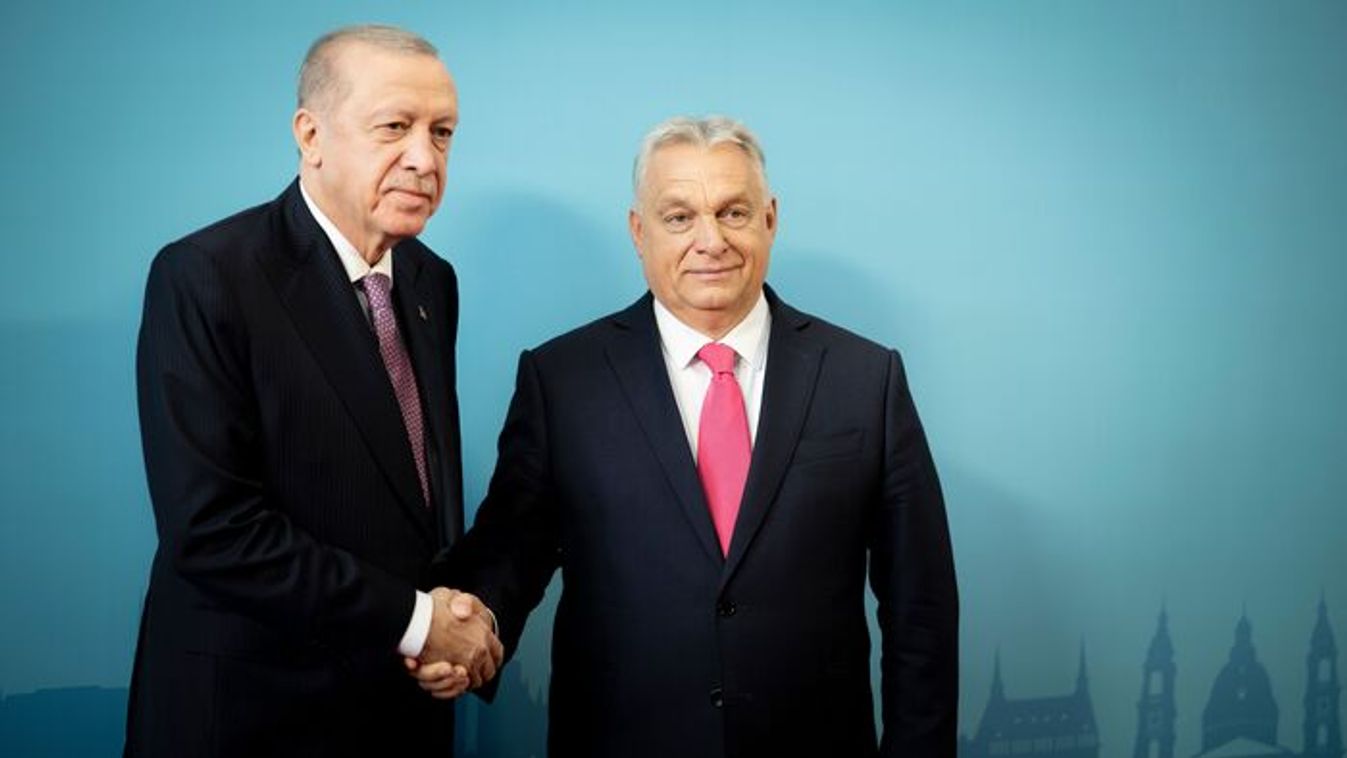
PM Orban Will Discuss Several Major Topics with the Turkish President
"There are four major topics with the Turks. The first is economy and trade, the second is migration, the third is the war, and the fourth is energy. When we introduced these annual meetings during our administration, at the first meeting we agreed with President Erdogan that the then 2–2.5 billion euro trade volume would be doubled, and we set the target of 5 billion euros in bilateral trade," the Prime Minister said, stressing:
Now we are between four and a half and five. We are progressing well, but of course the Turks said: 'all right, now let us make it six.' But the important thing is still to reach five. So it works. The trade volume has increased, Turkish companies have appeared in the Hungarian economy, and Hungarian presence has expanded in the Turkish economy.
Migration Will Also Be a Key Topic
Viktor Orban explained: "We have known this for a long time but in the meantime we have forgotten it, because we got used to the fact that we successfully protected Hungary against migration pressure. But this was only possible with the help of the Turks, and we tend to forget this. People should understand that if Turkiye were not an ally of Hungary, and if the Europeans did not maintain agreements with Turkiye, the migration pressure on Hungary would again be enormous. In this year alone, the Turks have held up 100,000 migrants, and Turkiye currently hosts 3 million migrants whom they did not allow to move onward."